
Vitamin D is an essential nutrient that plays an important role in bone health, calcium absorption, muscle function and normal immune system function. Unlike many vitamins, vitamin D can be produced by the body when skin is exposed to sunlight. However, diet can also provide vitamin D especially for people who have limited sun exposure or have difficulty getting enough from other sources.
Knowing which foods contain vitamin D can make it easier to build a balanced diet that supports adequate vitamin D intake. Fatty fish, egg yolks, fortified milk, fortified plant based beverages and certain mushrooms are among the most useful dietary sources.
This guide explains the best vitamin D foods, how much vitamin D different foods provide, how vitamin D supports health and practical ways to include more vitamin D rich foods in your everyday meals.
What is Vitamin D?
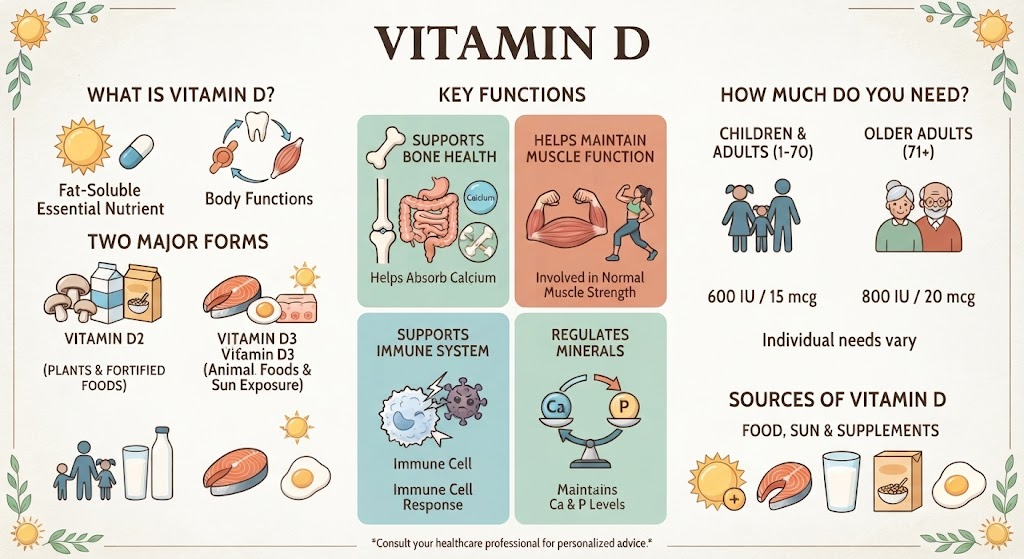
Vitamin D is a fat soluble vitamin that helps the body perform several important functions. One of its best known roles is helping the body absorb calcium and phosphorus, two minerals needed for maintaining healthy bones and teeth.
Vitamin D also contributes to normal muscle function and supports the proper functioning of the immune system.
There are two major forms of vitamin D:
- Vitamin D2 (ergocalciferol): Found naturally in some mushrooms and commonly used to fortify foods.
- Vitamin D3 (cholecalciferol): Found naturally in animal based foods such as fatty fish and egg yolks and also produced by the skin after sun exposure.
Both forms can contribute to vitamin D status although vitamin D3 is often used in supplements and fortified foods.
Why is Vitamin D Important?
Getting enough vitamin D is important throughout life. The nutrient has several key functions in the body.
Supports Bone Health
Vitamin D helps the body absorb calcium from the digestive tract. Calcium is essential for maintaining strong bones and teeth while vitamin D helps ensure that the body can use calcium effectively.
Long term inadequate vitamin D can contribute to poor bone mineralization and weakened bones.
Helps Maintain Muscle Function
Vitamin D is involved in normal muscle function. Maintaining adequate vitamin D status is particularly important as people age because muscle strength and bone health both contribute to physical function.
Supports the Immune System
Vitamin D plays a role in normal immune system activity. However it should not be viewed as a cure or guaranteed prevention for infections.
A balanced diet, adequate sleep, regular physical activity and appropriate medical care all contribute to overall health.
Supports Normal Calcium and Phosphorus Levels
Vitamin D helps regulate calcium and phosphorus metabolism. These minerals are important for bones, teeth, muscles and other physiological processes.
How Much Vitamin D Do You Need?
Vitamin D requirements vary according to age and individual circumstances.
For many adults and children, the recommended dietary allowance is approximately 600 IU (15 micrograms) per day. Adults over 70 generally need around 800 IU (20 micrograms) per day.
Individual needs may differ depending on factors such as age, health status, sun exposure, diet and certain medical conditions.
Because vitamin D is also produced through sun exposure, dietary intake does not have to provide the entire amount for everyone. However food becomes particularly important when sunlight exposure is limited.
If you are concerned about vitamin D deficiency a healthcare professional can determine whether testing or supplementation is appropriate.
Best Vitamin D Foods
Only a relatively small number of foods naturally contain significant amounts of vitamin D. However, several foods can make useful contributions to your daily intake.
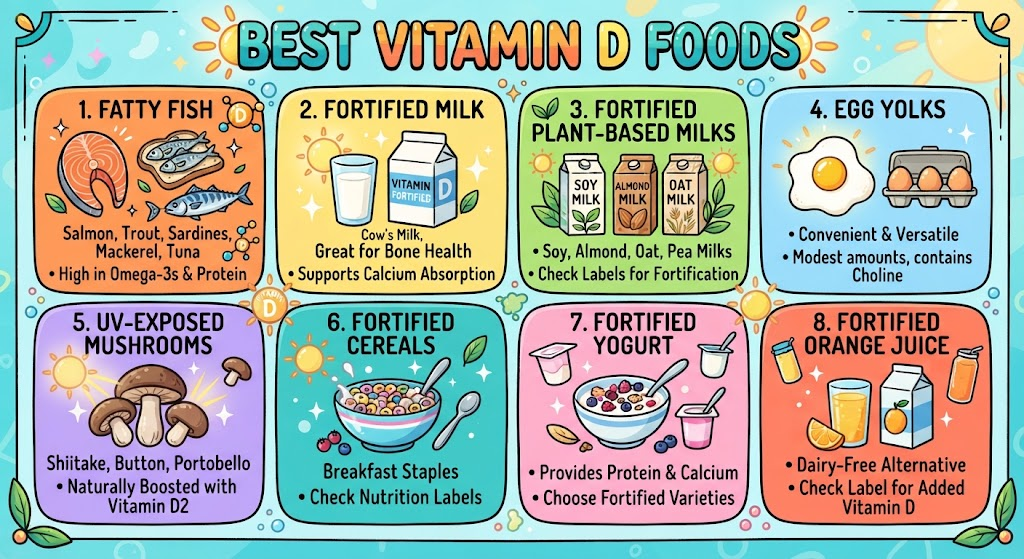
1. Fatty Fish
Fatty fish are among the best natural food sources of vitamin D.
Examples include:
- Salmon
- Trout
- Sardines
- Mackerel
- Herring
- Tuna
- Anchovies
These fish can provide vitamin D while also supplying high quality protein and omega-3 fatty acids.
Try adding baked salmon to dinner, sardines to whole grain toast or canned tuna to a balanced lunch.
Why fatty fish are a good choice
Fatty fish provide several nutrients at once. Along with vitamin D they can provide protein, omega-3 fats, selenium and other nutrients.
Including fish in meals regularly can therefore support an overall nutrient dense eating pattern.
2. Fortified Milk
Cow’s milk is often fortified with vitamin D. The exact amount can vary by brand and country so checking the nutrition label is useful.
Milk also provides calcium and protein making fortified milk particularly helpful for people looking for foods that support bone health.
You can use fortified milk in:
- Oatmeal
- Smoothies
- Coffee
- Whole grain cereal
- Homemade soups
- Healthy sauces
3. Fortified Plant Based Milk
Many plant based beverages are fortified with vitamin D and calcium.
Common examples include:
- Soy milk
- Almond milk
- Oat milk
- Pea milk
- Other fortified plant based beverages
Not every product contains the same amount of vitamin D. Look for products that list vitamin D on the nutrition facts label.
Fortified soy milk can be particularly useful because it also tends to provide a meaningful amount of protein.
4. Egg Yolks
Egg yolks contain vitamin D although the amount is relatively modest compared with fatty fish.
Eggs are nevertheless a convenient and versatile food that can contribute to overall vitamin D intake.
Try eggs with:
- Whole grain toast
- Vegetables
- Avocado
- Beans
- Spinach or other greens
Eggs also provide protein, choline, selenium and several B vitamins.
5. Mushrooms Exposed to UV Light
Certain mushrooms can provide vitamin D particularly mushrooms that have been exposed to ultraviolet light during production.
Some mushrooms naturally contain vitamin D2 while UV treated varieties may contain substantially more.
Because vitamin D content can vary significantly between mushroom varieties and products, check the packaging when available.
Mushrooms can be added to:
- Stir fries
- Omelets
- Soups
- Grain bowls
- Pasta dishes
- Vegetable side dishes
6. Fortified Breakfast Cereals
Some breakfast cereals are fortified with vitamin D. Fortification means the nutrient is added during food processing.
A fortified cereal can be combined with fortified milk or a fortified plant based beverage for a convenient breakfast.
When choosing cereal, look beyond vitamin D. Consider products that are also relatively low in added sugar and provide fiber or whole grains.
7. Fortified Yogurt
Some yogurts contain added vitamin D although fortification varies by product.
Yogurt can be a convenient source of protein and calcium and fortified varieties may provide additional vitamin D.
For a balanced snack combine yogurt with:
- Berries
- Chia seeds
- Nuts
- Fruit
- Oats
Check the nutrition label to determine whether the yogurt you choose contains vitamin D.
8. Fortified Orange Juice
Some orange juice products are fortified with vitamin D and calcium.
Fortified orange juice can be an option for people who do not consume dairy products. However, whole fruit generally provides more fiber than juice.
If choosing juice check the label for vitamin D fortification and consider portion size.
Vitamin D Foods: Natural vs. Fortified Sources
It is useful to understand the difference between naturally occurring and fortified vitamin D foods.
Natural vitamin D sources
These include:
- Fatty fish
- Egg yolks
- Certain mushrooms
Fortified vitamin D sources
These may include:
- Milk
- Plant based milk
- Breakfast cereals
- Yogurt
- Orange juice
- Other fortified foods
Fortified foods can be especially helpful because naturally occurring vitamin D is found in relatively few foods.
Can You Get Enough Vitamin D From Food Alone?
For some people diet can make a substantial contribution to vitamin D intake. However, getting enough vitamin D from food alone can be challenging because relatively few foods naturally contain large amounts.
Sun exposure is another source because the body can produce vitamin D when ultraviolet B radiation reaches the skin.
However, vitamin D production from sunlight varies based on factors such as:
- Time of year
- Geographic location
- Time of day
- Skin pigmentation
- Age
- Clothing
- Sunscreen use
- Amount of skin exposed
- Outdoor habits
Because excessive ultraviolet exposure can increase skin cancer risk, deliberately seeking excessive sun exposure is not a recommended strategy for obtaining vitamin D.
For people at risk of deficiency healthcare professionals may recommend dietary changes, testing or supplements.
How to Increase Vitamin D in Your Diet
Adding vitamin D foods to your meals does not have to be complicated.
Start With a Vitamin D Rich Breakfast
Try a breakfast containing:
- Fortified milk or plant milk
- Fortified whole grain cereal
- Eggs
- Yogurt
- Fruit
This combination can provide vitamin D along with protein, calcium, fiber and other nutrients.
Eat Fatty Fish Regularly
Include fatty fish in your weekly meal rotation.
For example:
- Baked salmon with vegetables
- Sardines on whole grain toast
- Tuna and bean salad
- Grilled trout with brown rice
- Mackerel with roasted vegetables
Fish can provide vitamin D while also supplying omega-3 fatty acids and protein.
Choose Fortified Foods
Check nutrition labels when shopping. Look for vitamin D in:
- Milk
- Plant based beverages
- Cereals
- Yogurt
- Orange juice
Fortified products can help fill dietary gaps.
Combine Vitamin D Foods With Other Nutrient Dense Foods
A healthy eating pattern is more important than relying on one food.
For example, pair salmon with vegetables and whole grains or combine fortified milk with oats, fruit and nuts.
This approach provides a broader range of nutrients.
Vitamin D and Calcium: Why They Work Together
Vitamin D and calcium are closely connected.
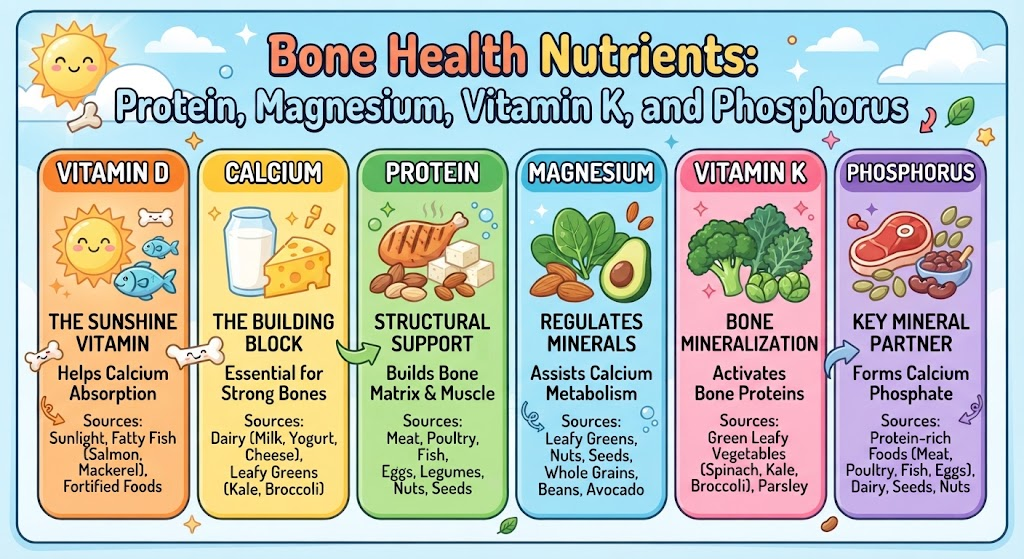
Calcium provides structural support for bones and teeth while vitamin D helps the body absorb calcium efficiently.
A diet designed to support bone health should therefore include sources of both nutrients.
Calcium rich foods include:
- Milk
- Yogurt
- Cheese
- Calcium fortified plant beverages
- Calcium set tofu
- Sardines with bones
- Canned salmon with bones
- Kale
- Collard greens
- Broccoli
- Some beans
Combining calcium rich foods with vitamin D sources can be a practical part of a balanced eating pattern.
Other Nutrients That Support Bone Health
Vitamin D is only one part of bone nutrition.
Protein
Protein provides amino acids needed for maintaining body tissues including bone and muscle.
Good sources include fish, eggs, dairy products, beans, lentils, tofu, nuts and seeds.
Magnesium
Magnesium contributes to normal bone structure and is found in foods such as nuts, seeds, whole grains, beans and leafy green vegetables.
Vitamin K
Vitamin K contributes to normal bone metabolism. Leafy greens such as kale, spinach and collard greens are good sources.
Phosphorus
Phosphorus is important for bones and teeth and is widely available in foods such as dairy products, meat, fish, beans, nuts and seeds.
Sample One Day Meal Plan With Vitamin D Foods
Here is an example of how vitamin D containing foods can fit into a balanced day.
Breakfast
- Fortified oatmeal made with fortified milk
- One egg
- Fresh berries
Lunch
- Tuna and chickpea salad
- Whole grain bread
- Mixed vegetables
Snack
- Fortified yogurt
- Chia seeds
- Fruit
Dinner
- Baked salmon
- Roasted vegetables
- Brown rice
Evening option
- A glass of fortified milk or fortified plant based beverage
This type of meal plan provides several opportunities to consume vitamin D foods while also including protein, fiber, healthy fats, vitamins and minerals.
Vitamin D Foods for Vegetarians and Vegans
People following vegetarian or vegan diets can still obtain vitamin D through fortified foods and selected mushrooms.
Useful options include:
- UV exposed mushrooms
- Fortified soy milk
- Fortified almond milk
- Fortified oat milk
- Fortified breakfast cereals
- Fortified plant based yogurt
- Fortified orange juice
Eggs and dairy products can provide additional options for vegetarians who consume animal products.
Because vitamin D can be harder to obtain through food on some restricted diets, people following vegan or highly restrictive diets may want to discuss nutrient planning with a registered dietitian or healthcare professional.
What Can Affect Vitamin D Status?
Several factors can influence vitamin D levels.
Limited Sun Exposure
People who spend little time outdoors may produce less vitamin D through their skin.
Age
The skin’s ability to produce vitamin D can decrease with age.
Skin Pigmentation
Higher levels of melanin can reduce vitamin D production from a given amount of UVB exposure.
Certain Health Conditions
Some digestive, liver or kidney conditions can affect vitamin D metabolism or absorption.
Dietary Restrictions
People who avoid fish, dairy, eggs and fortified foods may have fewer dietary sources of vitamin D.
If you have concerns about your vitamin D status a healthcare professional can help determine the appropriate next step.
Should You Take a Vitamin D Supplement?
Food is generally a good place to start but supplements may be appropriate for some people.
Vitamin D supplements can provide concentrated amounts of the nutrient but more is not necessarily better. Excessive vitamin D intake can cause harmful effects including excessively high blood calcium levels.
If you are considering a vitamin D supplement especially at high doses, discuss it with a healthcare professional.
A blood test may be recommended when deficiency is suspected or when a person has risk factors that make testing useful.
Tips for Getting More Vitamin D From Food
Here are simple strategies to increase your intake:
- Choose fatty fish regularly.
- Check labels for vitamin D fortified foods.
- Use fortified milk or plant based beverages.
- Include eggs when appropriate for your diet.
- Try UV exposed mushrooms.
- Choose fortified cereals with minimal added sugar.
- Include calcium rich foods throughout the day.
- Eat a varied diet instead of relying on one nutrient source.
- Talk with a healthcare professional if deficiency is suspected.
- Avoid taking high dose supplements without appropriate guidance.
Frequently Asked Questions About Vitamin D Foods
What foods are highest in vitamin D?
Fatty fish such as salmon, trout, mackerel, sardines and herring are among the richest natural food sources of vitamin D. Fortified foods such as milk, plant based beverages, cereals and some yogurts can also provide meaningful amounts.
Do eggs contain vitamin D?
Yes. Vitamin D is found in egg yolks although eggs generally contain less vitamin D than fatty fish.
Do fruits contain vitamin D?
Most fruits are not naturally significant sources of vitamin D. Some fruit products such as fortified orange juice may contain added vitamin D.
Are mushrooms a source of vitamin D?
Certain mushrooms can provide vitamin D particularly those exposed to ultraviolet light. The amount varies by mushroom type and processing.
Can milk provide vitamin D?
Many types of cow’s milk are fortified with vitamin D. Some plant based beverages are also fortified. Check the nutrition label because fortification varies among products.
Can you get vitamin D from food without drinking milk?
Yes. Fatty fish, eggs, UV exposed mushrooms, fortified plant based beverages, fortified cereals, fortified yogurt and other fortified foods can provide vitamin D.
Is vitamin D important for calcium absorption?
Yes. Vitamin D helps the body absorb calcium which is essential for maintaining healthy bones and teeth.
What happens if you do not get enough vitamin D?
Inadequate vitamin D can interfere with calcium metabolism and bone health. Severe deficiency can cause bone related problems. If you are concerned about deficiency speak with a healthcare professional rather than relying on symptoms alone.
Conclusion
Vitamin D is an essential nutrient that supports calcium absorption, bone health, normal muscle function and immune system function. Although the body can produce vitamin D through sun exposure, food is an important source for many people.
The best vitamin D foods include fatty fish such as salmon, trout, sardines and mackerel along with egg yolks, UV exposed mushrooms and vitamin D fortified foods such as milk plant based beverages, cereals, yogurt and some orange juices.
Because only a limited number of foods naturally contain substantial amounts of vitamin D, checking food labels and including a variety of vitamin D sources can help improve dietary intake. Pairing vitamin D foods with calcium rich foods, adequate protein and other nutrient dense foods can also support an overall eating pattern focused on bone and general health.
If you are at risk of vitamin D deficiency or are considering supplements it is best to speak with a qualified healthcare professional. A balanced diet can provide many important nutrients but individual vitamin D needs can vary.
4 Responses
[…] affects many aspects of development. Growing children need enough energy and nutrients to build muscles and bones, support brain function, maintain normal immune function and stay […]
[…] Vitamin D is unusual because the body can produce it through exposure to sunlight while relatively few foods naturally contain substantial amounts. […]
[…] Vitamin D helps the body absorb calcium and contributes to normal bone and muscle function. […]
[…] Vitamin D helps the body absorb calcium and contributes to normal bone and muscle function. […]