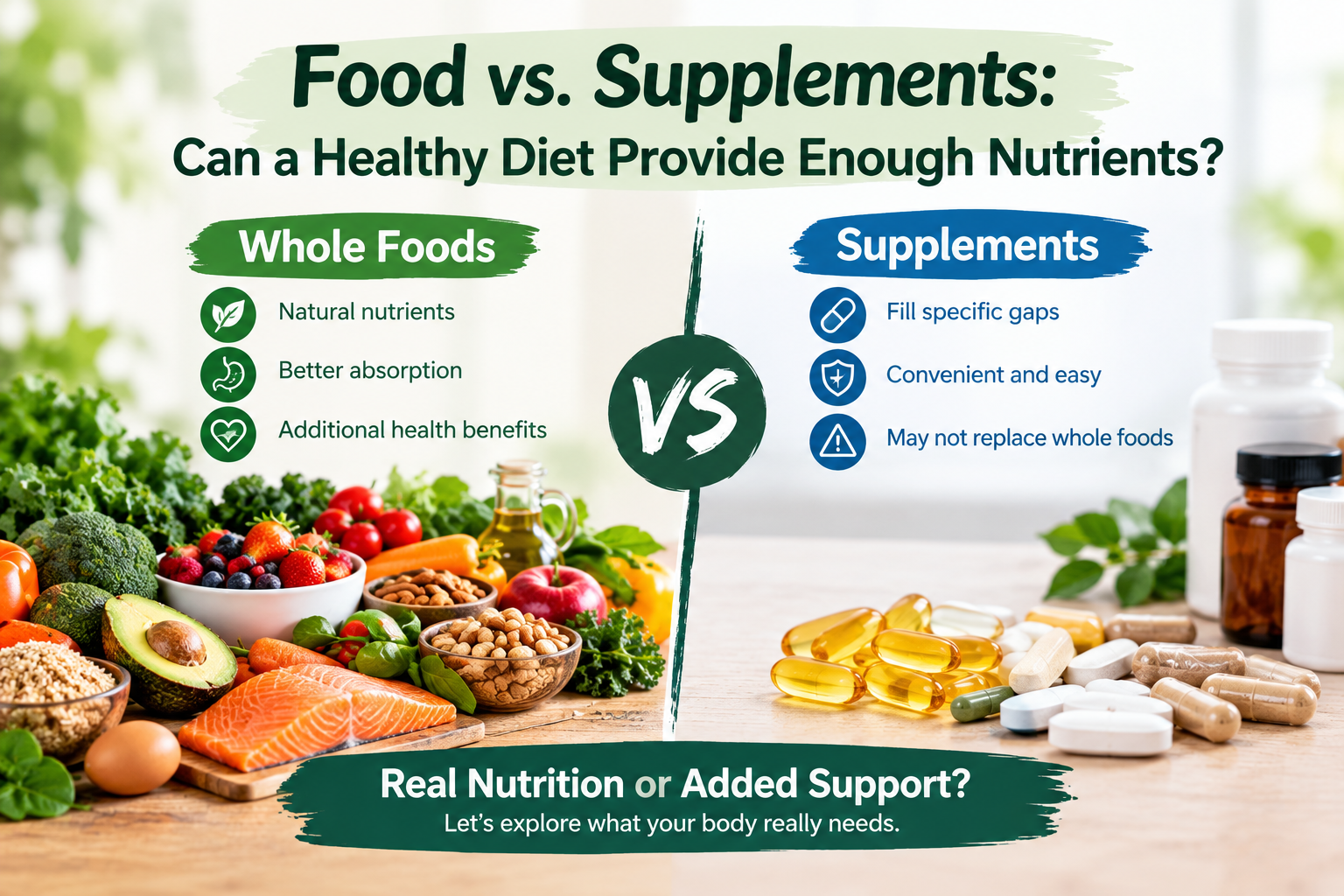
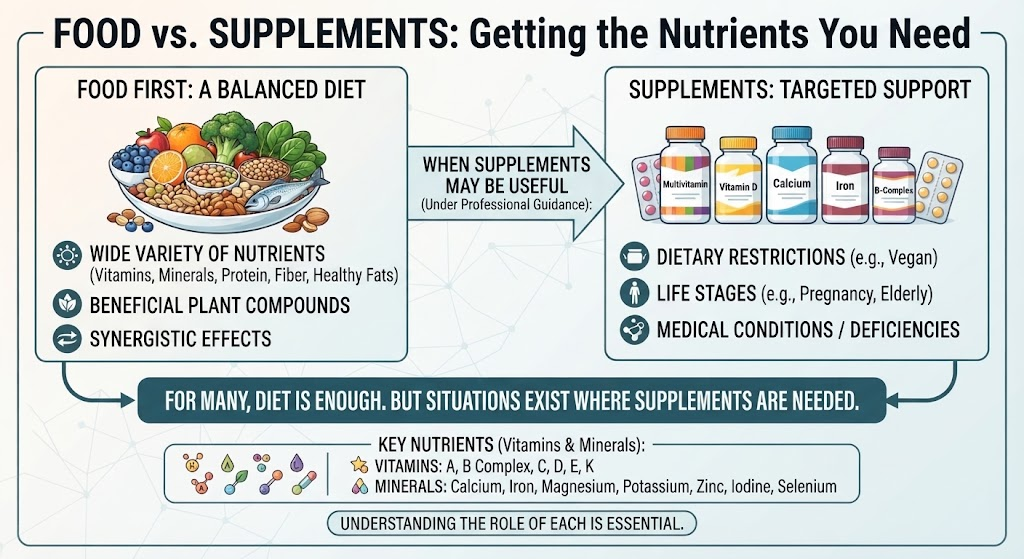
When it comes to getting the vitamins and minerals your body needs, food should generally be the starting point. A balanced diet can provide a wide variety of essential nutrients along with protein, fiber, healthy fats, carbohydrates and beneficial plant compounds.
At the same time, supplements can have an important role in certain situations. Some people may need additional nutrients because of dietary restrictions, life stages, medical conditions, medication use or a diagnosed nutrient deficiency.
This raises an important question: Can a healthy diet provide enough nutrients without supplements?
For many healthy people, a varied and balanced diet can provide most of the nutrients the body needs. However, there are situations where food alone may not provide enough of a particular nutrient making supplementation appropriate under professional guidance.
This guide explains the difference between nutrients from food and supplements, the advantages and limitations of both, when supplements may be useful and how to build a nutrient rich diet.
What are Essential Nutrients?
Essential nutrients are substances your body needs for normal growth, development, energy production, immune function and other biological processes.
They include:
- Vitamins
- Minerals
- Protein and amino acids
- Essential fatty acids
- Carbohydrates
- Water
Vitamins and minerals are often the nutrients people think about when discussing supplements.
Important vitamins include:
- Vitamin A
- Vitamin B vitamins
- Vitamin C
- Vitamin D
- Vitamin E
- Vitamin K
Important minerals include:
- Calcium
- Iron
- Magnesium
- Potassium
- Zinc
- Iodine
- Selenium
Your body needs these nutrients in different amounts and both too little and too much of certain nutrients can cause problems.
Why Food Should Usually Come First
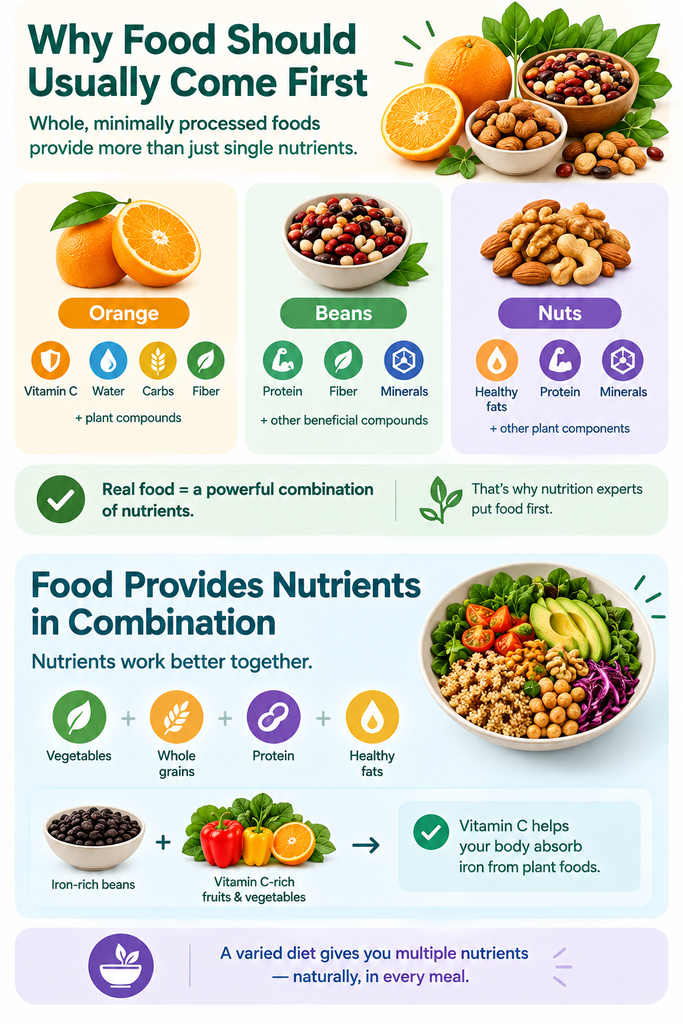
Whole and minimally processed foods provide much more than isolated vitamins and minerals.
For example an orange provides vitamin C along with water, carbohydrates, fiber and numerous plant compounds.
Beans provide protein, fiber, minerals and other beneficial compounds.
Nuts provide healthy fats, protein, minerals and other plant components.
This combination is one reason nutrition experts generally emphasize food as the foundation of a healthy eating pattern.
Food Provides Nutrients in Combination
Nutrients do not work in isolation.
A meal containing vegetables, whole grains, protein and healthy fats provides a combination of nutrients that can support overall dietary quality.
For example, eating iron rich beans with vitamin C rich vegetables or fruits can help improve the absorption of non-heme iron.
This is one advantage of obtaining nutrients through a varied diet. Foods naturally contain multiple nutrients that work together within meals.
What are Dietary Supplements?
Dietary supplements are products designed to provide nutrients or other dietary ingredients.
They can include:
- Multivitamins
- Individual vitamins
- Mineral supplements
- Fish oil
- Protein powders
- Fiber supplements
- Herbal products
- Specialized nutrient formulations
Supplements can be useful when dietary intake is insufficient or when a healthcare professional recommends them for a specific reason.
However, supplements are not intended to replace a varied diet.
A vitamin tablet can provide vitamin C for example but it does not provide the fiber, water and wide variety of plant compounds found in an orange.
Food vs. Supplements: Key Differences
Understanding the differences between food and supplements can help you make better nutrition decisions. Neither category is automatically “good” or “bad.” The appropriate choice depends on individual nutritional needs.

Can a Healthy Diet Provide Enough Vitamins and Minerals?
For many people, yes.
A well planned diet containing a variety of foods can provide most essential nutrients.
A nutrient rich eating pattern generally includes:
- Vegetables
- Fruits
- Whole grains
- Beans and lentils
- Nuts and seeds
- Eggs
- Fish and seafood
- Lean meats or poultry if included
- Dairy or fortified alternatives
- Healthy fats
The key is variety.
Eating the same small group of foods every day can make it harder to obtain a broad range of nutrients.
Nutrient Density Matters
Nutrient dense foods provide substantial amounts of nutrients relative to their calorie content.
Examples include:
- Leafy green vegetables
- Berries
- Beans
- Lentils
- Eggs
- Fish
- Yogurt
- Nuts
- Seeds
- Whole grains
- Colorful vegetables
Building meals around these foods can improve overall nutrient intake.
When Food May Not Be Enough
Although food can provide most nutrients for many people, there are circumstances in which supplementation may be useful or necessary.
Vitamin D
Vitamin D is unusual because the body can produce it through exposure to sunlight while relatively few foods naturally contain substantial amounts.
Dietary sources include:
- Fatty fish
- Egg yolks
- Fortified milk
- Fortified plant based beverages
- Fortified cereals
Some people may have difficulty maintaining adequate vitamin D levels through diet and sunlight alone.
Whether supplementation is appropriate can depend on factors such as blood levels, sun exposure, age, location, skin characteristics and other individual circumstances.
Vitamin B12
Vitamin B12 is naturally concentrated in animal derived foods.
People following a strict vegan diet may need fortified foods or a B12 supplement because reliable natural plant sources are limited.
B12 is important for:
- Red blood cell formation
- Normal nerve function
- DNA synthesis
Because B12 deficiency can have significant consequences. People at risk should discuss appropriate intake with a healthcare professional.
Iron
Iron is found in foods such as:
- Red meat
- Poultry
- Seafood
- Beans
- Lentils
- Tofu
- Fortified cereals
- Spinach
Some people have higher iron requirements or may develop iron deficiency.
Women who menstruate, pregnant individuals and people with certain medical conditions may be at increased risk.
Iron supplements should not be taken casually because excessive iron can be harmful.
If iron deficiency is suspected, testing and professional guidance are preferable to self prescribing high dose supplements.
Calcium
Calcium can be obtained from:
- Milk
- Yogurt
- Cheese
- Fortified plant based beverages
- Tofu made with calcium salts
- Some leafy greens
- Canned fish with edible bones
People who avoid dairy or have limited dietary variety may need to pay particular attention to calcium intake.
A supplement may sometimes be appropriate depending on overall intake and individual needs.
Iodine
Iodine is important for normal thyroid hormone production.
Important dietary sources include:
- Iodized salt
- Seafood
- Dairy products
- Eggs
People who avoid iodized salt and eat limited amounts of seafood or dairy may need to pay attention to iodine intake.
However, taking high dose iodine supplements without a medical reason is not advisable.
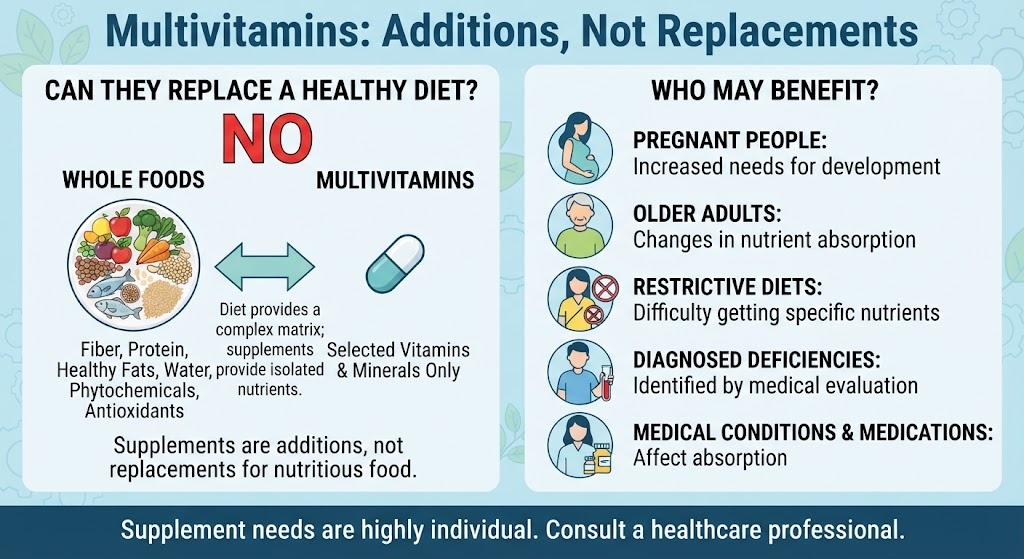
Can Multivitamins Replace a Healthy Diet?
No.
A multivitamin can provide several vitamins and minerals but it cannot reproduce everything found in a balanced diet.
Whole foods also provide:
- Fiber
- Protein
- Healthy fats
- Water
- Phytochemicals
- Antioxidants
- Other naturally occurring compounds
For example, a multivitamin may contain vitamin C but it does not provide the same combination of fiber, water and plant compounds found in fruits and vegetables.
Supplements should therefore be considered additions to a healthy diet rather than replacements for nutritious foods.
Who May Benefit From Supplements?
Supplement needs are highly individual but certain groups may require special consideration.
These can include:
Pregnant People
Pregnancy increases the need for several nutrients. Prenatal supplements are commonly recommended because obtaining adequate amounts of certain nutrients through food alone can be challenging.
Older Adults
Nutrient needs and nutrient absorption can change with age. Some older adults may benefit from specific supplements depending on dietary intake and medical guidance.
People Following Restrictive Diets
Strict vegan diets, elimination diets and other restrictive eating patterns can make certain nutrients harder to obtain.
People With Diagnosed Deficiencies
If blood tests or clinical evaluation identify a nutrient deficiency supplementation may be recommended.
People With Certain Medical Conditions
Some gastrointestinal and metabolic conditions can affect nutrient absorption or requirements.
People Taking Certain Medications
Some medications can affect nutrient absorption or metabolism.
In these situations, supplementation should be individualized rather than based solely on general internet recommendations.
The Risks of Taking Too Many Supplements
More nutrients are not always better.
Some vitamins and minerals can accumulate in the body particularly when consumed in excessive amounts.
Potential problems from excessive supplementation can include:
- Toxicity
- Digestive problems
- Medication interactions
- Nutrient imbalances
- Liver or kidney problems in certain circumstances
Fat soluble vitamins such as vitamins A, D, E and K require particular caution because the body can store them.
Minerals such as iron can also be harmful in excessive amounts.
Always follow recommended dosages and discuss high dose supplements with a qualified healthcare professional.
Food Sources of Important Nutrients
Instead of immediately reaching for a supplement consider the foods that naturally provide important nutrients.
Vitamin C
Good food sources include:
- Oranges
- Kiwi
- Strawberries
- Bell peppers
- Broccoli
- Tomatoes
Vitamin A
Sources include:
- Carrots
- Sweet potatoes
- Pumpkin
- Spinach
- Eggs
- Dairy products
Magnesium
Sources include:
- Nuts
- Seeds
- Beans
- Whole grains
- Leafy greens
Potassium
Sources include:
- Potatoes
- Sweet potatoes
- Bananas
- Beans
- Avocados
- Yogurt
Zinc
Sources include:
- Meat
- Seafood
- Dairy
- Beans
- Nuts
- Seeds
Omega-3 Fatty Acids
Food sources include:
- Salmon
- Sardines
- Mackerel
- Trout
- Chia seeds
- Flaxseeds
- Walnuts
Fiber
Excellent sources include:
- Beans
- Lentils
- Fruits
- Vegetables
- Oats
- Whole grains
- Nuts
- Seeds
Fiber is especially difficult to obtain from traditional vitamin supplements which is another reason whole foods remain important.
How to Build a Nutrient Rich Diet
You do not need to calculate every vitamin and mineral every day.
Instead, focus on variety and balance.
Use the Balanced Plate Method
A simple meal structure can include:
Half the plate: vegetables and/or fruit
One quarter: protein rich foods
One quarter: whole grains or other nutrient rich carbohydrates
Add a source of healthy fat when appropriate.
This framework can make it easier to obtain a broad range of nutrients.
Eat Different Colors
Different plant foods contain different phytochemicals.
Try including:
- Green leafy vegetables
- Red and orange vegetables
- Purple and blue fruits
- Yellow fruits and vegetables
- White vegetables such as onions and cauliflower
Color variety can encourage dietary variety.
Rotate Protein Sources
Instead of relying on one protein source include a mixture of:
- Beans
- Lentils
- Eggs
- Fish
- Poultry
- Lean meat
- Yogurt
- Tofu
- Nuts and seeds
Different protein foods provide different vitamins and minerals.
A One Day Food First Meal Plan
Here is an example of a nutrient-rich day.
Breakfast
Oatmeal topped with berries, chia seeds, walnuts and plain yogurt.
Morning Snack
An orange and a small handful of almonds.
Lunch
Lentil and vegetable bowl with spinach, tomatoes, carrots, brown rice and a yogurt based dressing.
Afternoon Snack
Apple slices with peanut butter.
Dinner
Grilled salmon or tofu with roasted broccoli, sweet potato and a mixed salad.
Evening
A glass of milk or a fortified plant based beverage if appropriate.
This example provides a broad variety of nutrients without relying heavily on supplements.
How to Know If You May Need a Supplement
You should not assume that fatigue or another symptom automatically means you have a vitamin deficiency.
Symptoms such as tiredness, weakness, hair changes or difficulty concentrating can have many possible causes.
A better approach is to consider:
- Your overall diet
- Your health history
- Your age and life stage
- Any dietary restrictions
- Medications you take
- Relevant laboratory testing
- Advice from a qualified healthcare professional
Testing can be especially useful when a deficiency is suspected.
Common Myths About Food and Supplements
Myth 1: Supplements Are Always Better Because They Are Concentrated
Concentration does not automatically mean better health outcomes. High doses can sometimes cause harm.
Myth 2: A Multivitamin Makes Up for Poor Eating
A supplement cannot replace fiber, protein, healthy fats and the wide variety of plant compounds found in nutritious foods.
Myth 3: Everyone Needs Supplements
Supplement needs vary. Some people may benefit from supplementation while others can obtain adequate nutrients from food.
Myth 4: Natural Supplements Cannot Be Harmful
“Natural” does not automatically mean safe. Supplements can have side effects and interact with medications.
Myth 5: You Can Diagnose a Deficiency From Symptoms Alone
Many nutrient deficiency symptoms overlap with other health conditions. Testing and professional evaluation may be necessary.
Tips for Getting More Nutrients From Food
If you want to rely primarily on food for nutrition, try these practical strategies:
- Eat a variety of vegetables every day.
- Include fruit regularly.
- Choose whole grains more often.
- Eat beans and lentils frequently.
- Include nuts and seeds in reasonable portions.
- Choose a variety of protein sources.
- Include healthy fats such as olive oil, nuts, seeds and avocado.
- Choose fortified foods when appropriate.
- Limit highly processed foods that provide few nutrients.
- Avoid unnecessarily restrictive diets.
- Drink enough water.
- Adjust your diet based on individual nutritional needs.
Frequently Asked Questions
Can you get all your nutrients from food?
Many healthy people can obtain the most essential nutrients from a varied and balanced diet. However, certain life stages, dietary patterns, health conditions and deficiencies may make supplementation appropriate.
Are supplements necessary if you eat healthy?
Not necessarily. A healthy diet can provide many essential nutrients but some people still need specific supplements depending on their circumstances.
Is food better than supplements?
Food and supplements serve different purposes. Food generally provides a broader range of nutrients and beneficial compounds while supplements can help fill specific nutritional gaps.
Can a multivitamin replace vegetables?
No. Vegetables provide fiber, water, vitamins, minerals and numerous plant compounds that a multivitamin does not reproduce.
When should you take supplements?
The appropriate supplement, dosage and timing depend on the nutrient and individual circumstances. Follow product instructions and professional advice when supplementation is medically indicated.
Can taking too many vitamins be harmful?
Yes. Some vitamins and minerals can cause harmful effects when consumed in excessive amounts. High dose supplementation should be approached carefully.
Should I take supplements without a blood test?
Some supplements may be appropriate without testing in certain circumstances while others are better guided by laboratory results or professional evaluation. Avoid assuming that a symptom automatically indicates a deficiency.
Conclusion
When comparing food vs. supplements, the most useful approach is not to think of them as competing choices. For most people a varied and balanced diet should be the foundation of nutrition while supplements can serve as targeted tools when dietary intake is insufficient or specific nutritional needs exist.
Whole foods provide much more than isolated vitamins and minerals. Fruits, vegetables, whole grains, legumes, nuts, seeds, dairy products or fortified alternatives, fish, eggs and other nutrient rich foods provide combinations of nutrients, fiber, healthy fats, protein, water and beneficial plant compounds.
At the same time, supplements can be valuable in certain circumstances. People following restrictive diets, pregnant individuals, people with diagnosed deficiencies, older adults and those with certain health conditions may have specific nutritional needs that are difficult to meet through food alone.
The key is to avoid the idea that more nutrients are always better. High dose vitamins and minerals can sometimes cause side effects or interact with medications. Supplements should therefore be chosen based on actual nutritional needs rather than marketing claims.
A practical food first approach to nutrition is simple: eat a wide variety of vegetables and fruits, choose whole grains including protein rich foods, consume healthy fats, eat a variety of legumes, nuts, and seeds and use fortified foods when appropriate.
If you suspect a nutrient deficiency or are considering a high dose supplement speak with a qualified healthcare professional. With the right balance of nutritious foods and appropriately targeted supplementation when needed it is possible to build a diet that supports long term health and adequate nutrient intake.
No responses yet