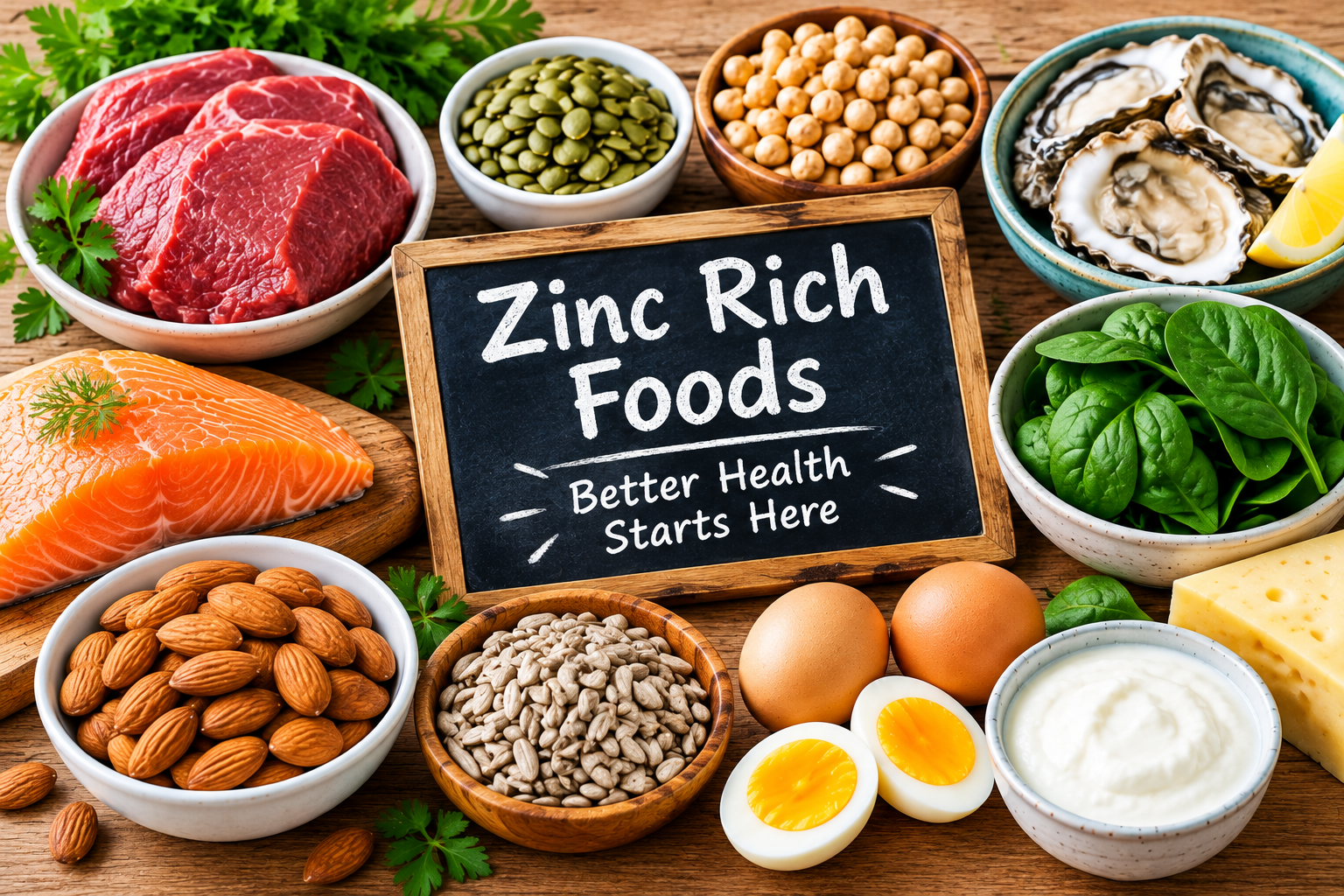
Zinc is an essential mineral that your body needs for many important functions including immune system support, wound healing, DNA production, protein synthesis and normal growth and development. Because the body does not store large amounts of zinc, getting enough through your diet on a regular basis is important.
Fortunately zinc is found in a wide range of foods. Oysters, meat, poultry, seafood, dairy products, beans, lentils, nuts, seeds and whole grains can all contribute to your daily zinc intake.
This guide explores the best zinc rich foods, explains why zinc matters, discusses zinc sources for vegetarians and vegans and provides practical ways to include more zinc in a balanced diet.
What is Zinc?
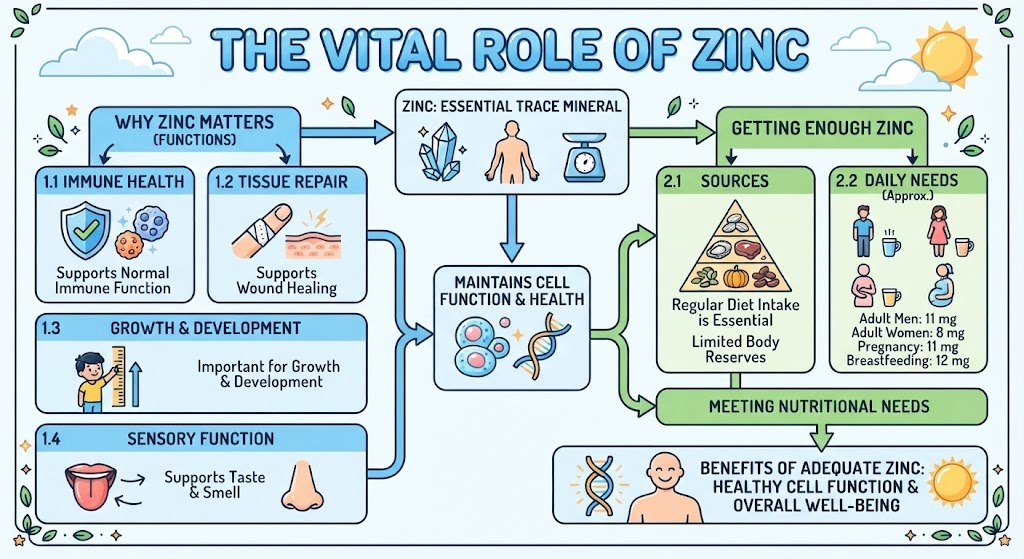
Zinc is an essential trace mineral meaning the body needs it in relatively small amounts but cannot make it on its own.
Zinc is involved in hundreds of enzymatic reactions throughout the body. It contributes to normal cell function and plays a role in processes ranging from immune responses to tissue repair.
Unlike some nutrients that can be stored in significant quantities, the body has limited zinc reserves. Regular dietary intake therefore matters.
A varied diet that includes zinc-rich foods can help most healthy people meet their nutritional needs.
Why Does Zinc Matter?
Zinc contributes to several essential processes in the body.
1. Supports Normal Immune Function
Zinc plays an important role in normal immune system function. Immune cells depend on zinc for proper development and activity.
Adequate zinc intake is therefore an important part of maintaining overall nutritional health. However, zinc should not be viewed as a cure or guaranteed prevention for infections.
A balanced diet, sufficient sleep, physical activity and appropriate medical care are also important for immune health.
2. Supports Wound Healing
Zinc contributes to normal tissue repair and wound healing.
The body needs zinc for cell division, protein production and other processes involved in repairing damaged tissues.
People who have inadequate zinc intake may have difficulty meeting their body’s needs during periods of tissue repair.
3. Helps With DNA and Protein Production
Zinc is involved in DNA synthesis and protein metabolism.
These processes are fundamental to the formation and maintenance of cells and tissues throughout the body.
This is one reason zinc is particularly important during periods of growth and development.
4. Supports Growth and Development
Zinc is important for normal growth and development during childhood, adolescence, pregnancy and other stages of life when the body is undergoing significant changes.
Adequate nutrition during these periods includes enough zinc as well as protein, iron, calcium, vitamin D and other essential nutrients.
5. Supports Normal Taste and Smell
Zinc contributes to normal sensory function including taste and smell.
Changes in taste or smell can have many different causes so these symptoms should not automatically be assumed to indicate zinc deficiency.
6. Helps Protect Cells From Oxidative Stress
Zinc contributes to normal cellular protection and participates in antioxidant defense systems.
Rather than focusing on individual nutrients alone, it is generally more useful to obtain zinc as part of an overall nutrient-dense eating pattern.
How Much Zinc Do You Need?
Zinc requirements vary by age, sex and life stage.
For many adults, recommended daily amounts are approximately:
- Adult men: 11 mg per day
- Adult women: 8 mg per day
- Pregnancy: 11 mg per day
- Breastfeeding: 12 mg per day
Children and teenagers have different requirements based on their age and development.
Individual needs can vary and people with certain health conditions or dietary restrictions may require additional nutritional guidance.
Best Zinc Rich Foods
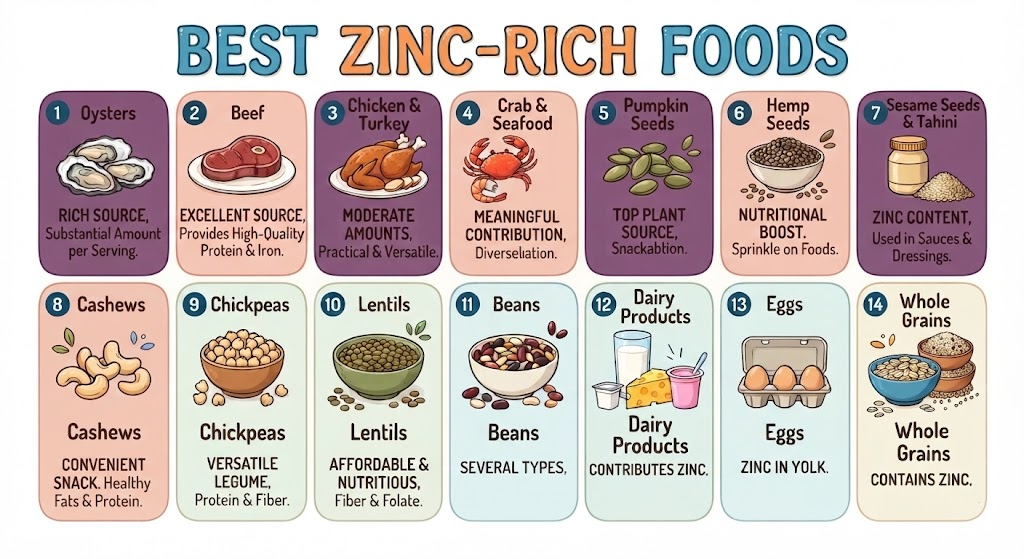
Zinc is available in both animal based and plant based foods. Some foods contain considerably more zinc than others.
1. Oysters
Oysters are among the richest dietary sources of zinc.
Even relatively small servings can provide a substantial amount of zinc making oysters an exceptionally concentrated source of this mineral.
Oysters also provide protein, vitamin B12, selenium and other nutrients.
If you enjoy seafood oysters can be an effective way to add zinc to your diet.
2. Beef
Beef is another excellent source of dietary zinc.
Lean beef can provide zinc along with high quality protein, iron, vitamin B12 and other nutrients.
Consider using lean cuts of beef in balanced meals with vegetables, beans or whole grains.
Examples include:
- Grilled lean beef with vegetables
- Beef and bean bowls
- Stir fried beef with vegetables
- Lean beef and whole grain wraps
3. Chicken and Turkey
Poultry provides moderate amounts of zinc along with protein.
Chicken and turkey can be included in many different meals making them practical sources for people who eat meat.
Choose grilled, baked, roasted or otherwise minimally processed poultry more often than highly processed meat products.
4. Crab and Other Seafood
Crab and some other types of seafood can contribute meaningful amounts of zinc.
Other seafood choices can also provide nutrients such as protein, selenium, iodine, vitamin B12, and omega-3 fatty acids depending on the species.
Adding a variety of seafood to your diet can help diversify your nutrient intake.
5. Pumpkin Seeds
Pumpkin seeds are one of the most useful plant based sources of zinc.
They can be eaten as a snack or added to:
- Oatmeal
- Yogurt
- Salads
- Smoothies
- Grain bowls
- Homemade energy bites
Pumpkin seeds also provide protein, magnesium, healthy fats and other minerals.
6. Hemp Seeds
Hemp seeds contain zinc as well as protein, healthy fats, magnesium and other nutrients.
Sprinkle them over oatmeal, salads, yogurt or vegetable dishes for an easy nutritional boost.
7. Sesame Seeds and Tahini
Sesame seeds contain zinc and can be used in many different dishes.
Tahini, a paste made from sesame seeds, can be used to prepare sauces, salad dressings, dips and spreads.
Try a simple tahini dressing with lemon juice, water and herbs over vegetables or grain bowls.
8. Cashews
Cashews provide zinc along with magnesium, copper, healthy fats and plant based protein.
A small handful can work as a convenient snack.
They can also be added to:
- Stir fries
- Oatmeal
- Salads
- Trail mixes
- Vegetable dishes
Because nuts are calorie dense, portion size can be useful to consider when incorporating them into your diet.
9. Chickpeas
Chickpeas are a versatile plant source of zinc.
They also provide protein and fiber making them useful for filling balanced meals.
Try chickpeas in:
- Hummus
- Salads
- Curries
- Soups
- Grain bowls
- Roasted snacks
10. Lentils
Lentils are another affordable and nutritious plant source of zinc.
They provide zinc along with protein, fiber, iron, folate, potassium and other nutrients.
Lentil soup, lentil curry and lentil salads are simple ways to incorporate them into meals.
11. Beans
Several types of beans provide zinc.
Examples include:
- Kidney beans
- Black beans
- Navy beans
- Pinto beans
- White beans
Beans can be added to soups, salads, chili, tacos, wraps and rice based dishes.
12. Dairy Products
Milk, cheese and yogurt can contribute zinc to the diet.
Dairy foods also provide protein and calcium making them useful components of a balanced eating pattern.
For example plain yogurt with pumpkin seeds and fruit can provide a combination of protein, zinc, calcium and other nutrients.
13. Eggs
Eggs contain zinc in addition to protein, choline, selenium and several vitamins.
Although eggs are not among the richest sources of zinc they can contribute to daily intake when consumed as part of a varied diet.
14. Whole Grains
Whole grains such as oats, quinoa, brown rice and whole wheat products contain zinc.
They also provide fiber, B vitamins, magnesium and other nutrients.
Replacing some refined grains with whole grains can help increase the overall nutrient density of your diet.
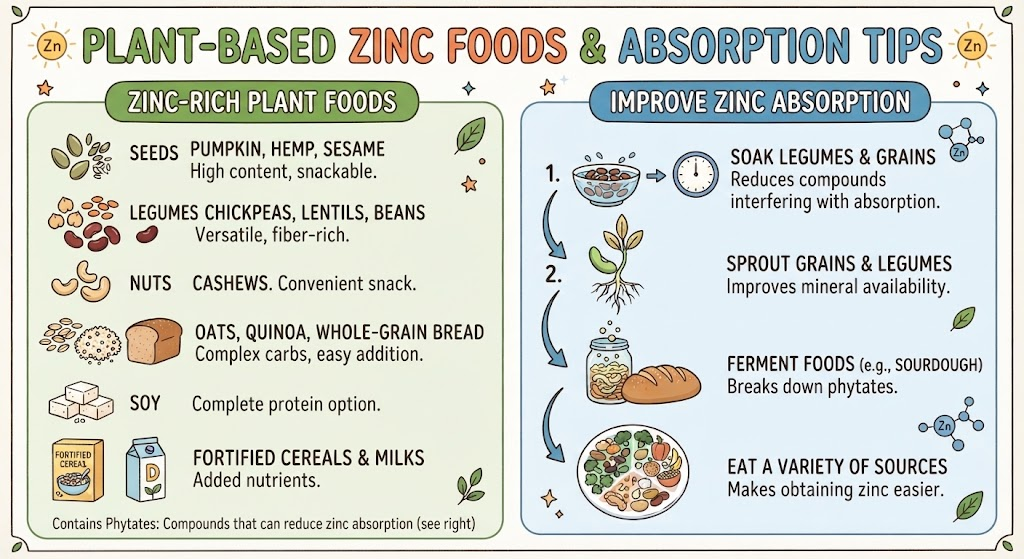
Plant Based Zinc Foods
People following vegetarian or vegan diets can obtain zinc from many plant foods.
Good plant based options include:
- Pumpkin seeds
- Hemp seeds
- Sesame seeds
- Cashews
- Chickpeas
- Lentils
- Beans
- Oats
- Quinoa
- Whole grain bread
- Tofu
- Fortified foods
However, plant foods also contain compounds called phytates which can reduce zinc absorption.
This does not mean plant based diets cannot provide enough zinc. Instead, people eating mostly or entirely plant based diets may benefit from consuming a variety of zinc rich foods regularly.
How to Improve Zinc Absorption From Plant Foods
The amount of zinc in a food and the amount your body absorbs are not always the same.
Plant foods often contain phytates which can bind minerals and reduce their absorption.
Traditional food preparation methods can help reduce phytate levels.
Soaking
Soaking beans, legumes, grains and some seeds before cooking can reduce certain compounds that interfere with mineral absorption.
Sprouting
Sprouting grains and legumes can also alter their nutrient composition and may improve mineral availability.
Fermentation
Fermentation can reduce phytate content in some foods.
For example traditional fermentation methods used to make certain breads can improve mineral availability.
Eating a Varied Diet
Rather than focusing heavily on one zinc rich food, include different sources throughout the week.
A varied diet makes it easier to obtain zinc and many other nutrients.
Zinc Rich Foods for Vegetarians
Vegetarians have several options for increasing zinc intake.
Try including:
- Yogurt
- Cheese
- Eggs
- Pumpkin seeds
- Cashews
- Chickpeas
- Lentils
- Beans
- Oats
- Whole grains
- Sesame seeds
- Tofu
A meal such as lentil curry with brown rice and a yogurt based side can provide zinc alongside protein, fiber and other nutrients.
Zinc Rich Foods for Vegans
Vegans can obtain zinc from plant-based foods.
Some useful options include:
- Pumpkin seeds
- Hemp seeds
- Sesame seeds
- Cashews
- Chickpeas
- Lentils
- Beans
- Tofu
- Tempeh
- Oats
- Quinoa
- Whole grains
People following highly restrictive diets should pay attention to overall nutrient intake, not just zinc.
Foods That Pair Well With Zinc-Rich Ingredients
One of the easiest ways to increase zinc intake is to build meals around foods that naturally contain the mineral.
Breakfast
Try:
- Oatmeal with pumpkin seeds and chia seeds
- Whole grain toast with eggs
- Yogurt topped with nuts and seeds
Lunch
Consider:
- Chickpea salad
- Lentil soup with whole grain bread
- Bean and vegetable bowl
- Chicken and quinoa salad
Dinner
Try:
- Lean beef with roasted vegetables
- Lentil curry with brown rice
- Tofu and vegetable stir-fry
- Baked chicken with quinoa and greens
Snacks
Good choices include:
- Pumpkin seeds
- Cashews
- Yogurt
- Hummus with vegetables
- Roasted chickpeas
Can Zinc Help Support the Immune System?
Zinc is essential for normal immune function but this does not mean that consuming large amounts of zinc will automatically prevent illness.
Adequate zinc is important because the immune system requires many nutrients to function properly.
The best approach is usually to obtain zinc through a varied diet that includes vegetables, fruits, whole grains, protein rich foods, healthy fats and appropriate mineral sources.
If you are sick or experiencing persistent symptoms seek appropriate medical advice rather than relying on zinc supplements alone.
Zinc Deficiency: Who May Be at Risk?
Zinc deficiency is more likely in certain populations.
Potential risk groups can include:
- People with highly restrictive diets
- People with certain digestive disorders
- Individuals with conditions that affect nutrient absorption
- People with increased nutritional needs
- Individuals with prolonged inadequate food intake
Symptoms associated with inadequate zinc can include impaired wound healing, changes in taste or smell, hair loss and reduced immune function although these symptoms can have many other causes.
A healthcare professional can help determine whether zinc deficiency is actually present.
Can You Get Too Much Zinc?
Yes. Although zinc is essential, excessive intake can be harmful.
Very high zinc intake can cause nausea, stomach discomfort, vomiting, headaches and other problems. Long term excessive intake can also interfere with copper absorption and potentially contribute to copper deficiency.
For this reason more zinc is not necessarily better.
Food is generally the preferred source of nutrients for healthy people while supplements should be used thoughtfully.
If you are considering high dose zinc supplements, discuss them with a healthcare professional.
Zinc Supplements vs. Zinc Rich Foods
Zinc supplements can be useful in specific situations particularly when a healthcare professional identifies or suspects inadequate intake.
However, supplements do not provide the fiber, protein, healthy fats, vitamins and other nutrients found in whole foods.
For most people building meals around zinc rich foods is a practical way to support adequate intake.
If you take medications or other supplements, professional advice is particularly important because nutrients can sometimes interact with medications or affect the absorption of other minerals.
Simple Ways to Eat More Zinc
Increasing zinc intake does not require major changes to your diet.
Try these simple strategies:
- Add pumpkin seeds to breakfast.
- Include beans or lentils in lunch or dinner.
- Choose whole grains more often.
- Use tahini as a salad dressing or dip.
- Snack on a small portion of cashews or seeds.
- Include eggs or dairy products if they fit your diet.
- Eat seafood or lean meat if you consume animal foods.
- Add chickpeas to salads and grain bowls.
- Use tofu or tempeh in plant based meals.
- Focus on dietary variety rather than a single “superfood.”
Frequently Asked Questions About Zinc Rich Foods
What foods are highest in zinc?
Oysters are among the richest dietary sources of zinc. Other useful sources include beef, seafood, poultry, dairy products, pumpkin seeds, sesame seeds, cashews, chickpeas, lentils, beans and whole grains.
What are the best plant based sources of zinc?
Pumpkin seeds, hemp seeds, sesame seeds, cashews, chickpeas, lentils, beans, tofu, oats, quinoa and other whole grains are useful plant based sources.
Do eggs contain zinc?
Yes. Eggs contain zinc although they are not considered one of the most concentrated sources.
Are beans good sources of zinc?
Yes. Beans contain zinc and can be especially useful for people following vegetarian or vegan diets. They also provide protein and fiber.
Does zinc support immunity?
Zinc is essential for normal immune system function. However consuming excessive zinc does not necessarily provide additional immune benefits and can cause adverse effects.
Can you get enough zinc from food?
Many people can meet their zinc needs through a varied diet. However requirements and absorption vary among individuals and some people may have a higher risk of inadequate intake.
Should I take a zinc supplement?
Not everyone needs a zinc supplement. If you have a restricted diet, a health condition affecting nutrient absorption or concerns about deficiency, speak with a healthcare professional before taking high dose zinc.
How can vegetarians get enough zinc?
Vegetarians can include pumpkin seeds, sesame seeds, cashews, beans, lentils, chickpeas, whole grains, dairy products, eggs and other zinc-containing foods regularly.
Conclusion
Zinc is a small but essential part of a healthy diet. It supports normal immune function, wound healing, cell division, DNA production, protein synthesis, growth and many other important processes.
The best zinc rich foods include oysters, beef, seafood, poultry, dairy products, pumpkin seeds, hemp seeds, sesame seeds, cashews, chickpeas, lentils, beans, eggs and whole grains. This wide variety means that both animal based and plant based diets can include meaningful sources of zinc.
For people following vegetarian or vegan diets, seeds, legumes, tofu, whole grains and nuts can be especially valuable. Because some plant foods contain phytates that can reduce zinc absorption, preparation methods such as soaking, sprouting and fermentation may improve mineral availability.
The goal is not to consume as much zinc as possible. Instead, focus on meeting your nutritional needs through a varied balanced diet. If you suspect zinc deficiency or are considering high dose supplements consult a qualified healthcare professional for personalized advice.
By regularly including a variety of zinc rich foods in your meals, you can support adequate zinc intake while also gaining protein, fiber, healthy fats, vitamins and other essential nutrients that contribute to overall wellness.
2 Responses
[…] Zinc is an essential mineral involved in normal immune function, wound healing, DNA synthesis, protein production and cell division. […]
[…] seeds provide protein, magnesium, zinc and healthy […]