

Good nutrition is one of the foundations of men’s health. The foods you eat provide the protein, vitamins, minerals, healthy fats, carbohydrates and fiber your body needs to produce energy, maintain muscle, support bones and keep normal body functions working properly.
Men’s nutritional needs can change with age, activity level, lifestyle and overall health. A young man who exercises regularly may have different nutritional priorities from an older adult who is focused on maintaining muscle and bone health. However the basic principles remain similar, eat a variety of nutrient dense foods and limit excessive amounts of highly processed foods, added sugars and unhealthy fats.
Some nutrients are particularly useful to pay attention to including protein, zinc, magnesium, vitamin D, calcium, omega-3 fatty acids, potassium, iron, selenium and fiber.
This guide explores the best foods for men’s health, explains why these nutrients matter and provides practical ways to incorporate them into a balanced everyday diet.
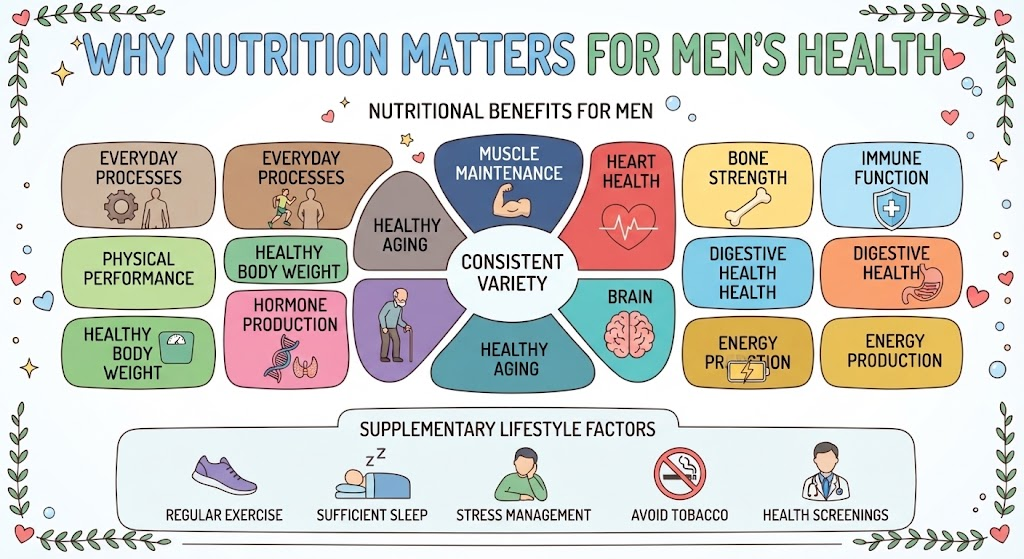
Why Nutrition Matters for Men’s Health
A healthy diet provides the nutrients needed for virtually every process in the body.
For men a nutritious eating pattern can help support:
- Muscle maintenance and physical performance
- Bone strength
- Heart health
- Normal immune function
- Digestive health
- Energy production
- Brain function
- Healthy aging
- Normal hormone production
- Healthy body weight
Good nutrition is not about finding a single food that solves every health concern. Instead, it is about consistently choosing a wide variety of foods that work together to provide different nutrients.
Lifestyle factors also matter. Regular exercise, sufficient sleep, stress management, avoiding tobacco and recommended health screenings can complement a nutritious diet.
Essential Nutrients for Men’s Health
Understanding key nutrients can make it easier to choose foods that support overall wellness.
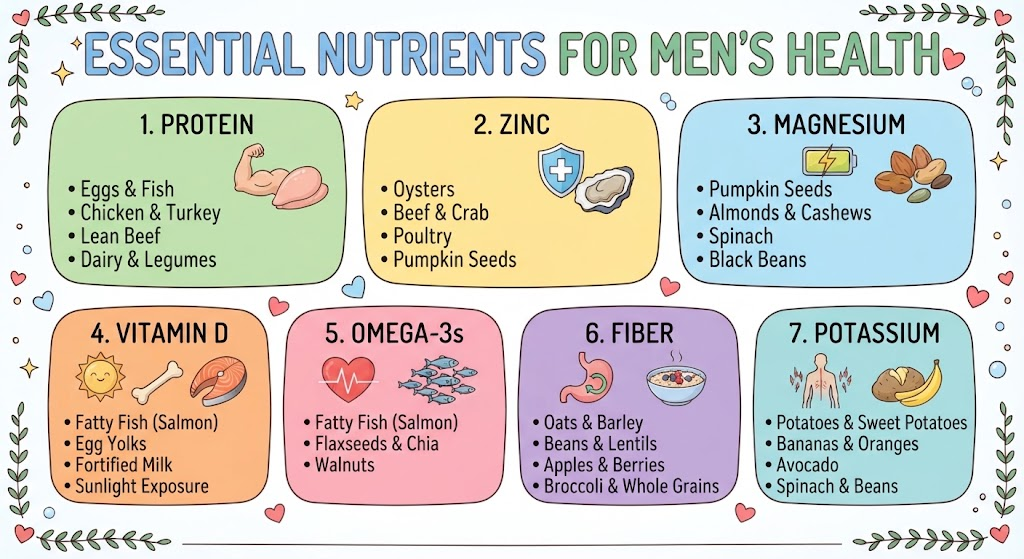
1. Protein
Protein is essential for maintaining and repairing body tissues. It is particularly important for muscle health but it also contributes to bones, skin, enzymes, hormones and other structures.
Good protein rich foods include:
- Eggs
- Fish
- Chicken
- Turkey
- Lean beef
- Greek yogurt
- Cottage cheese
- Milk
- Beans
- Lentils
- Chickpeas
- Tofu
- Tempeh
- Nuts and seeds
Protein needs vary depending on body size, age, physical activity and health status.
A simple strategy is to include a protein source at breakfast, lunch and dinner rather than concentrating all protein in one meal.
2. Zinc
Zinc is an essential mineral involved in normal immune function, wound healing, DNA synthesis, protein production and cell division.
Foods rich in zinc include:
- Oysters
- Beef
- Crab
- Poultry
- Dairy products
- Pumpkin seeds
- Sesame seeds
- Cashews
- Chickpeas
- Lentils
- Beans
Oysters are particularly concentrated in zinc. For plant based diets, legumes, seeds, nuts and whole grains can contribute to zinc intake.
Adequate zinc is important but taking excessive amounts through supplements is not necessarily beneficial and can cause problems.
3. Magnesium
Magnesium participates in hundreds of biochemical reactions and contributes to normal muscle and nerve function, energy metabolism and electrolyte balance.
Excellent food sources include:
- Pumpkin seeds
- Almonds
- Cashews
- Chia seeds
- Spinach
- Black beans
- Avocados
- Whole grains
- Peanuts
- Dark leafy vegetables
Adding seeds or nuts to oatmeal, yogurt, salads or smoothies is an easy way to increase magnesium intake.
4. Vitamin D
Vitamin D helps the body absorb calcium and contributes to normal bone and muscle function.
Food sources include:
- Salmon
- Sardines
- Trout
- Mackerel
- Egg yolks
- Fortified milk
- Fortified plant based beverages
- Fortified cereals
- Some mushrooms
The body can also produce vitamin D through exposure to sunlight. However, vitamin D production varies depending on factors such as skin pigmentation, age, season, location, clothing and sun exposure.
People concerned about vitamin D deficiency should discuss testing or supplementation with a healthcare professional.
5. Omega-3 Fatty Acids
Omega-3 fatty acids are important components of a balanced diet.
Fatty fish are particularly good sources including:
- Salmon
- Sardines
- Mackerel
- Herring
- Trout
Plant foods such as flaxseeds, chia seeds, walnuts and hemp seeds provide alpha linolenic acid, a plant based omega-3 fatty acid.
Including fish as part of a varied diet can provide omega-3 fats along with protein, selenium, vitamin D and other nutrients.
6. Fiber
Dietary fiber is important for digestive health and can help make meals more filling.
High fiber foods include:
- Oats
- Barley
- Beans
- Lentils
- Chickpeas
- Apples
- Pears
- Berries
- Broccoli
- Carrots
- Whole grains
- Chia seeds
- Flaxseeds
If your diet is currently low in fiber, increase your intake gradually and drink adequate fluids.
7. Potassium
Potassium contributes to normal muscle function, nerve signaling and fluid balance.
Good sources include:
- Potatoes
- Sweet potatoes
- Bananas
- Beans
- Lentils
- Spinach
- Avocados
- Yogurt
- Oranges
Eating more fruits, vegetables, legumes and other minimally processed foods can help increase potassium intake.
Best Foods for Men’s Heart Health
Heart health is important for men throughout adulthood. Rather than focusing on one “heart healthy” food, consider an overall dietary pattern rich in vegetables, fruits, whole grains, legumes, fish, nuts, seeds and unsaturated fats.
Fatty Fish
Salmon, sardines, trout and mackerel provide omega-3 fatty acids and protein.
Try adding baked or grilled fish to meals several times a week if it fits your dietary preferences and health needs.
Oats
Oats contain soluble fiber including beta glucan. They make a convenient breakfast and can be combined with fruit, nuts, seeds or yogurt.
Beans and Lentils
Legumes provide fiber, plant protein, potassium, magnesium and other nutrients.
Use them in soups, salads, curries, stews, wraps and grain bowls.
Nuts
Almonds, walnuts, pistachios and other nuts provide unsaturated fats, fiber, protein and minerals.
A small serving can make a convenient snack.
Leafy Greens
Spinach, kale, collard greens and other leafy vegetables provide folate, vitamin K, magnesium, potassium and other nutrients.
Best Foods for Muscle Health
Maintaining muscle is important for strength, mobility, physical performance and healthy aging.
Nutrition and exercise work together when it comes to muscle health.
Eggs
Eggs are a convenient source of high quality protein and provide choline, selenium and several vitamins.
Chicken and Turkey
Poultry can provide protein while fitting easily into many meals.
Fish
Fish provides high quality protein while fatty fish also supplies omega-3 fatty acids.
Greek Yogurt
Greek yogurt can provide protein and calcium. Choose unsweetened varieties if you want to minimize added sugar.
Beans and Lentils
Legumes combine protein and fiber with minerals such as iron and magnesium.
Tofu and Tempeh
Soy foods provide plant based protein and can be used in stir fries, salads, bowls and other meals.
Nuts and Seeds
Nuts and seeds provide protein, healthy fats, magnesium and other nutrients.
For people trying to build or maintain muscle, adequate total calories, protein, resistance exercise and recovery are all important.
Best Foods for Men’s Bone Health
Bone health is not only a concern for women. Men also need adequate calcium, vitamin D, protein, magnesium and other nutrients throughout life.
Good foods for supporting bone nutrition include:
- Milk
- Yogurt
- Cheese
- Calcium fortified plant beverages
- Calcium set tofu
- Sardines with bones
- Canned salmon with bones
- Kale
- Collard greens
- Broccoli
- Beans
- Nuts and seeds
- Fatty fish
Weight bearing exercise and strength training can complement a nutritious diet.
Best Foods for Men’s Brain Health
The brain requires a steady supply of nutrients to function normally.
A balanced eating pattern that includes vegetables, fruits, whole grains, fish, nuts, seeds and healthy fats can provide a broad range of nutrients.
Useful choices include:
- Fatty fish
- Walnuts
- Berries
- Leafy greens
- Eggs
- Whole grains
- Beans
- Avocados
- Olive oil
No individual food can guarantee protection against cognitive decline. Overall dietary patterns and lifestyle habits are more important than relying on one ingredient.
Best Foods for Digestive Health
A diet containing adequate fiber and fluids can support normal digestion.
Fiber rich foods include:
- Oatmeal
- Barley
- Beans
- Lentils
- Chickpeas
- Whole grain bread
- Brown rice
- Apples
- Pears
- Berries
- Broccoli
- Carrots
- Chia seeds
- Flaxseeds
Plant foods also provide a range of compounds that interact with the microorganisms living in the digestive tract.
If you have persistent digestive symptoms speak with a healthcare professional instead of assuming they are caused by diet alone.
Best Foods for Energy
The body needs carbohydrates, fats and protein for energy and normal metabolism.
Nutrient dense foods that can contribute to steady meals include:
- Oats
- Brown rice
- Quinoa
- Whole-grain bread
- Sweet potatoes
- Beans
- Lentils
- Bananas
- Eggs
- Yogurt
- Nuts
- Seeds
Highly sugary foods and drinks may provide quick energy but are generally less nutrient dense than balanced meals.
Combining complex carbohydrates with protein, healthy fats and fiber can make meals more satisfying.
Foods Rich in Antioxidants
Many fruits, vegetables, nuts and seeds contain compounds with antioxidant activity.
Good choices include:
- Blueberries
- Strawberries
- Oranges
- Tomatoes
- Bell peppers
- Spinach
- Kale
- Carrots
- Nuts
- Seeds
Eating fruits and vegetables in different colors is a simple way to increase dietary variety.
Foods Rich in Selenium
Selenium is a trace mineral that contributes to normal thyroid function and antioxidant defense.
Food sources include:
- Seafood
- Fish
- Eggs
- Poultry
- Meat
- Dairy products
- Whole grains
- Brazil nuts
Brazil nuts can contain very high amounts of selenium so large quantities are unnecessary.
Foods Rich in B Vitamins
B vitamins play important roles in energy metabolism, cell function and other physiological processes.
Food sources include:
- Eggs
- Fish
- Poultry
- Lean meat
- Whole grains
- Beans
- Lentils
- Leafy greens
- Dairy products
- Nuts and seeds
Eating a diverse diet is generally more effective than trying to obtain all B vitamins from one food.
Best Plant Based Foods for Men
Men following vegetarian or vegan diets can obtain many important nutrients from plant foods.
Useful choices include:
- Lentils
- Chickpeas
- Beans
- Tofu
- Tempeh
- Quinoa
- Oats
- Whole grains
- Pumpkin seeds
- Chia seeds
- Flaxseeds
- Walnuts
- Leafy greens
- Fruits
- Vegetables
People following vegan diets should pay particular attention to vitamin B12 because reliable natural plant sources are limited. Fortified foods or supplements may be necessary.
Other nutrients that may require attention include vitamin D, calcium, iodine, zinc, iron and omega-3 fats depending on food choices.
Foods That Support Healthy Aging
As men get older, maintaining muscle mass, bone strength, cardiovascular health and adequate nutrition becomes increasingly important.
A healthy aging diet can emphasize:
- Protein rich foods
- Vegetables
- Fruits
- Whole grains
- Beans
- Lentils
- Fish
- Nuts
- Seeds
- Calcium rich foods
- Vitamin D sources
- Healthy unsaturated fats
Older adults may also need to pay attention to appetite, hydration and meal quality.
If chewing, swallowing, mobility or appetite makes eating difficult, individualized nutrition support can be helpful.
Foods Men Should Limit
Healthy eating does not mean completely avoiding certain foods. However, consuming some foods less frequently can improve overall dietary quality.
Consider limiting excessive amounts of:
- Sugary beverages
- Highly processed snacks
- Processed meats
- Refined grains
- Foods high in added sugars
- Foods high in sodium
- Excessive alcohol
- Deep fried foods
Instead, make minimally processed nutrient dense foods the foundation of most meals.
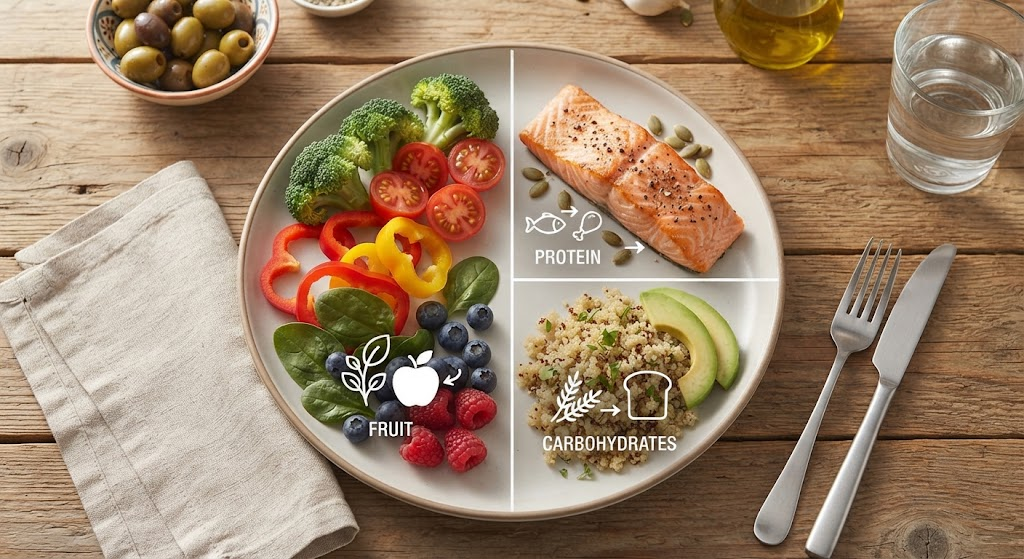
How to Build a Balanced Plate
A simple plate method can make healthy eating easier.
Half the plate
Fill about half the plate with vegetables and fruit with an emphasis on vegetables.
One quarter of the plate
Add a protein source such as:
- Fish
- Chicken
- Eggs
- Lean meat
- Beans
- Lentils
- Tofu
One quarter of the plate
Choose a nutrient rich carbohydrate such as:
- Brown rice
- Quinoa
- Oats
- Whole grain bread
- Sweet potatoes
Then add a source of healthy fat such as olive oil, avocado, nuts or seeds.
Sample One Day Meal Plan for Men’s Health
Breakfast
Oatmeal prepared with fortified milk, topped with blueberries, walnuts and chia seeds with a boiled egg on the side.
Lunch
Grilled chicken and quinoa bowl with spinach, tomatoes, cucumber, chickpeas and an olive oil based dressing.
Afternoon Snack
Plain Greek yogurt with pumpkin seeds and fresh fruit.
Dinner
Baked salmon with roasted sweet potato, broccoli and a mixed vegetable salad.
Evening Snack
An apple with a small portion of natural peanut or almond butter.
This is simply an example. Portion sizes and food choices should be adjusted according to individual energy needs, dietary preferences, activity levels and health considerations.
Practical Tips for Better Nutrition
You do not need to completely redesign your diet to eat more nutritiously.
Try these simple habits:
- Include protein in every main meal.
- Add vegetables to lunch and dinner.
- Eat fruit as a snack or part of breakfast.
- Choose whole grains more often.
- Include beans or lentils regularly.
- Eat a variety of nuts and seeds.
- Choose fish when appropriate.
- Drink water throughout the day.
- Read nutrition labels on packaged foods.
- Limit highly processed foods and excessive added sugar.
Small changes that are maintained consistently are often easier to sustain than extreme diets.
Do Men Need Supplements?
Not every man needs supplements.
A varied diet can provide many essential nutrients and supplements should not automatically replace nutritious foods.
Supplements may be useful in certain circumstances such as a diagnosed deficiency, restricted diet, increased nutritional requirement or healthcare professional recommendation.
Taking high doses of individual nutrients without guidance can be harmful. For example excessive zinc can interfere with copper absorption while excessive vitamin D can lead to abnormally high calcium levels.
If you are considering supplements, discuss your needs with a doctor or registered dietitian.
Frequently Asked Questions About Men’s Health Foods
What are the best foods for men’s health?
The best foods for men’s health include a variety of vegetables, fruits, whole grains, beans, lentils, fish, lean proteins, dairy or fortified alternatives, nuts, seeds and healthy fats.
What foods are high in zinc?
Oysters are particularly rich in zinc. Other sources include beef, crab, poultry, dairy products, pumpkin seeds, sesame seeds, cashews, chickpeas and lentils.
What foods help support muscle health?
Protein rich foods such as eggs, fish, chicken, lean meat, Greek yogurt, beans, lentils, tofu, tempeh, nuts and seeds can support muscle maintenance when combined with adequate overall nutrition and resistance exercise.
What are good foods for men over 50?
Men over 50 can emphasize protein rich foods, vegetables, fruits, whole grains, legumes, fish, calcium rich foods, vitamin D sources, nuts, seeds and healthy fats.
Are eggs good for men?
Eggs can be part of a balanced diet and provide protein, choline, selenium, vitamin B12 and other nutrients. Whether a particular amount is appropriate depends on the individual’s overall diet and health circumstances.
What foods support men’s heart health?
Vegetables, fruits, oats, whole grains, beans, lentils, fatty fish, nuts, seeds and foods rich in unsaturated fats can all fit into a heart supportive eating pattern.
Can certain foods increase testosterone?
No, individual food can reliably or dramatically increase testosterone in healthy men. Adequate overall nutrition, healthy body weight, physical activity, sufficient sleep and appropriate medical evaluation are more important for hormone health.
How can men get more magnesium from food?
Pumpkin seeds, almonds, cashews, chia seeds, spinach, beans, avocados and whole grains are useful sources of magnesium.
When to Seek Professional Nutrition Advice
General nutrition information cannot account for every person’s individual needs.
Consider speaking with a healthcare professional or registered dietitian if you:
- Have a diagnosed nutrient deficiency
- Have unexplained weight changes
- Experience persistent fatigue or weakness
- Follow a highly restrictive diet
- Have digestive problems affecting nutrient absorption
- Take medications that may interact with supplements
- Have difficulty eating enough food
- Have specific athletic or muscle-building goals
- Are managing a chronic health condition
Personalized guidance can help determine which dietary changes are appropriate for your circumstances.
Conclusion
The best foods for men’s health are not limited to one particular ingredient, supplement or eating plan. A balanced diet that includes vegetables, fruits, whole grains, legumes, fish, lean proteins, dairy or fortified alternatives, nuts, seeds and healthy fats can provide a broad range of essential nutrients.
Protein, zinc, magnesium, vitamin D, calcium, omega-3 fatty acids, potassium, selenium, fiber and B vitamins all have important roles in maintaining normal body functions. Fortunately, these nutrients are available from many everyday foods making it possible to build a nutrient rich diet without relying on a single “superfood.”
Men’s nutritional priorities can also change with age. Younger adults may focus on building healthy habits and supporting active lifestyles while older men may place greater emphasis on maintaining muscle, bone strength, cardiovascular health and adequate nutrient intake.
The most sustainable approach is to focus on overall dietary quality. Build meals around minimally processed foods include a variety of plant foods, consume adequate protein, choose healthy fat sources, stay hydrated and limit excessive amounts of highly processed foods and added sugars.
Nutrition is only one part of men’s health. Regular physical activity, sufficient sleep, stress management, avoiding tobacco and routine healthcare are also important.
If you have a nutrient deficiency, specific health concern or questions about supplements seek advice from a qualified healthcare professional. With consistent healthy food choices and an overall balanced lifestyle, nutrition can play an important role in supporting men’s health and well being at every stage of life.
No responses yet