

Eating well is one of the simplest ways to support overall health and wellness. But with so much nutrition advice available online it can be difficult to know which foods deserve a regular place on your plate. One useful approach is to focus on nutrient dense food, foods that provide a high amount of vitamins, minerals, fiber, protein, healthy fats and other beneficial compounds relative to their calories.
Nutrient dense foods can support many aspects of health including heart health, digestive health, immune function, energy production, healthy aging and maintaining a healthy weight. They don’t need to be exotic or expensive. Many everyday foods including vegetables, fruits, legumes, whole grains, nuts, seeds, eggs and fish are naturally rich in essential nutrients.
In this guide, we’ll explore 20 nutrient dense foods that can support overall wellness, explain their nutritional benefits and share simple ways to include them in a balanced diet.
What are Nutrient Dense Foods?
Nutrient density refers to how many beneficial nutrients a food provides relative to the amount of energy or calories it contains.
For example, leafy green vegetables provide vitamins, minerals, fiber and plant compounds while generally being relatively low in calories. On the other hand, foods high in added sugar may provide calories without supplying many essential nutrients.
Nutrient dense foods commonly include:
- Fruits and vegetables
- Whole grains
- Beans and lentils
- Nuts and seeds
- Fish and seafood
- Eggs
- Dairy or fortified alternatives
- Lean sources of protein
A healthy diet doesn’t require avoiding all foods that aren’t particularly nutrient dense. Instead, the goal is to make nutrient rich foods a major part of your overall eating pattern.
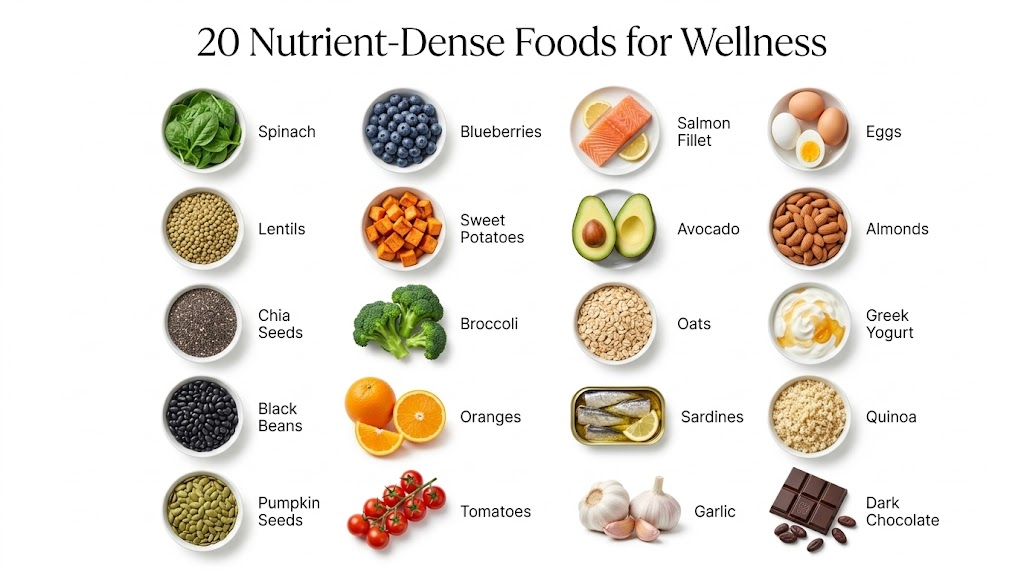
20 Nutrient Dense Foods for Overall Wellness
1. Spinach
Spinach is a leafy green vegetable packed with vitamins, minerals, fiber and plant compounds.
It provides nutrients such as vitamin K, folate, vitamin A, vitamin C and minerals including iron and magnesium.
Spinach is versatile and can be added to:
- Salads
- Omelets
- Soups
- Curries
- Smoothies
- Stir fries
Adding a handful of leafy greens to meals is an easy way to increase the nutritional variety of your diet.
2. Blueberries
Blueberries are small but nutritionally valuable fruits. They provide dietary fiber, vitamin C, vitamin K and naturally occurring plant compounds known as polyphenols.
Their sweet flavor makes them a convenient alternative to highly processed desserts.
Try adding blueberries to oatmeal, yogurt, smoothies or whole grain breakfast bowls.
Other berries including strawberries, raspberries and blackberries can also be excellent choices.
3. Salmon
Salmon is a nutrient rich source of high quality protein and omega-3 fatty acids.
It also provides nutrients such as vitamin B12, vitamin D and selenium.
Including fish as part of a balanced diet can contribute to an overall healthy eating pattern.
Salmon can be baked, grilled, steamed or served with vegetables and whole grains for a complete meal.
4. Eggs
Eggs are an affordable and versatile source of high quality protein.
They also contain several important nutrients including vitamin B12, choline, selenium, riboflavin and vitamin A.
Eggs can be prepared in many ways including:
- Boiled
- Scrambled
- Poached
- Baked
- Added to vegetable dishes
Combining eggs with vegetables and whole grains can create a nutrient rich breakfast or lunch.
5. Lentils
Lentils are among the most useful plant based nutrient dense foods.
They provide plant protein, dietary fiber, folate, iron, potassium and other nutrients.
Because they are inexpensive and easy to store, lentils can be a practical staple for many households.
Use them in:
- Soups
- Curries
- Salads
- Stews
- Lentil burgers
- Grain bowls
They are particularly useful for people looking for more plant based protein options.
6. Sweet Potatoes
Sweet potatoes provide complex carbohydrates, fiber, potassium and carotenoids such as beta- carotene.
Beta-carotene can be converted by the body into vitamin A which is important for normal vision, immune function and other biological processes.
Sweet potatoes can be baked, roasted, mashed or added to soups and stews.
Their natural sweetness also makes them a satisfying alternative to highly processed carbohydrate rich foods.
7. Avocado
Avocados are rich in monounsaturated fats and provide fiber, potassium, folate and other nutrients.
Healthy fats can help make meals more satisfying and help the body absorb certain fat soluble vitamins.
Add avocado to:
- Whole grain toast
- Salads
- Sandwiches
- Grain bowls
- Wraps
- Homemade dips
Because avocados are relatively calorie dense, portion size can still matter depending on individual energy needs.
8. Almonds
Almonds are nutrient rich nuts containing protein, fiber, healthy fats, magnesium and vitamin E.
A small handful can make a convenient snack between meals.
You can also add chopped almonds to oatmeal, yogurt, salads or whole grain cereals.
Other nuts such as walnuts and pistachios, can also contribute valuable nutrients to a balanced diet.
9. Chia Seeds
Chia seeds may be tiny but they provide a useful combination of fiber, protein, minerals and healthy fats.
They are particularly known for their high fiber content and their plant based omega-3 fatty acid, alpha-linolenic acid.
Try adding chia seeds to:
- Oatmeal
- Yogurt
- Smoothies
- Overnight oats
- Homemade puddings
Because chia seeds absorb liquid they can also add texture and thickness to foods.
10. Broccoli
Broccoli is a cruciferous vegetable containing fiber, vitamin C, vitamin K, folate and various plant compounds.
Regularly including cruciferous vegetables can add nutritional variety to your meals.
Broccoli can be:
- Steamed
- Roasted
- Stir fried
- Added to soups
- Served with grains and protein
Pairing broccoli with other colorful vegetables makes it easier to consume a broad range of nutrients.
11. Oats
Oats are a nutritious whole grain and an excellent source of dietary fiber.
They contain a type of soluble fiber called beta glucan, as well as minerals and other nutrients.
A bowl of oatmeal can be topped with nutrient rich ingredients such as:
- Berries
- Bananas
- Nuts
- Seeds
- Yogurt
- Cinnamon
Choosing minimally processed oats and limiting excessive amounts of added sugar can help keep breakfast nutrient dense.
12. Greek Yogurt
Greek yogurt provides protein and nutrients such as calcium, phosphorus, vitamin B12 and riboflavin.
Some varieties also contain live cultures that can contribute to a healthy diet.
Choose plain or lightly sweetened varieties when possible and add fruit or nuts for flavor.
Greek yogurt can work as:
- A breakfast food
- A snack
- A smoothie ingredient
- A salad dressing base
- A healthier alternative to some creamy sauces
People who avoid dairy can choose appropriately fortified plant based alternatives.
13. Beans
Beans are affordable, filling, and nutritionally versatile.
Black beans, kidney beans, chickpeas, navy beans and other varieties provide protein, fiber, folate, iron, potassium, and other nutrients.
Eating beans regularly can make meals more satisfying while increasing plant based protein and fiber intake.
Add beans to soups, salads, chili, wraps, curries and rice dishes.
14. Oranges
Oranges are well known for their vitamin C content but they also provide fiber, folate, potassium and other beneficial compounds.
Whole oranges are generally more filling than juice because they contain the fruit’s natural fiber.
Other citrus fruits such as grapefruit, mandarins, lemons and limes can also add variety to your diet.
Try adding orange segments to salads or enjoying an orange as a simple snack.
15. Sardines
Sardines are another nutrient dense seafood choice.
They provide high quality protein, omega-3 fatty acids, vitamin B12, vitamin D and minerals such as calcium when the edible bones are included.
They can be added to:
- Salads
- Whole grain toast
- Pasta
- Rice dishes
- Sandwiches
For people who enjoy seafood, sardines can be a practical way to increase dietary variety.
16. Quinoa
Quinoa is technically a seed but is commonly prepared and eaten like a grain.
It provides protein, fiber, magnesium, iron and other nutrients. It is also naturally gluten free.
Quinoa can replace rice or other grains in many meals.
Try combining it with roasted vegetables, beans, leafy greens, eggs or grilled fish for a balanced meal.
17. Pumpkin Seeds
Pumpkin seeds are rich in nutrients such as magnesium, zinc, iron, protein and healthy fats.
They can be eaten as a snack or sprinkled over meals.
Add pumpkin seeds to:
- Salads
- Soups
- Oatmeal
- Yogurt
- Smoothie bowls
- Homemade trail mixes
Choose unsalted or lightly salted versions if you’re trying to reduce sodium intake.
18. Tomatoes
Tomatoes provide vitamin C, potassium, folate and carotenoids including lycopene.
They are also incredibly versatile.
Fresh tomatoes can be added to salads and sandwiches while cooked tomatoes can be used in soups, sauces, curries and stews.
Using tomatoes in different forms can make it easier to include more vegetables in your everyday meals.
19. Garlic
Garlic is a flavorful ingredient that can make healthy foods more enjoyable.
It contains sulfur containing compounds and provides small amounts of several nutrients.
Adding garlic to vegetables, beans, soups, sauces, fish and whole grain dishes can increase flavor without relying heavily on salt or highly processed sauces.
Garlic should be viewed as part of an overall healthy diet rather than a treatment for a specific disease.
20. Dark Chocolate
Dark chocolate can provide minerals such as magnesium, iron and copper along with naturally occurring plant compounds.
However, not all chocolate products have the same nutritional profile.
Products with higher cocoa content generally contain more cocoa derived compounds while many chocolate products can also contain substantial amounts of added sugar and saturated fat.
Enjoying a small portion of dark chocolate can fit into an overall balanced diet.
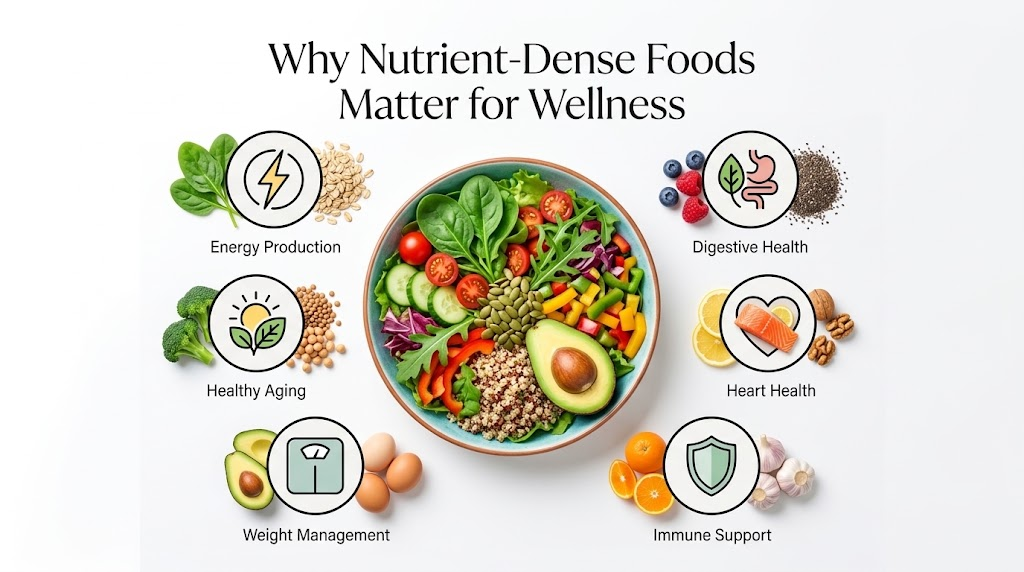
Why Nutrient Dense Foods Matter for Wellness
A diet built around nutrient dense foods can support many areas of health.
Supports Energy Production
Your body requires nutrients such as B vitamins, iron, magnesium and protein to support normal energy metabolism.
Eating a varied diet helps provide the nutrients involved in these processes.
Supports Digestive Health
Fiber rich foods such as vegetables, fruits, beans, lentils, seeds and whole grains can support normal digestive function.
Fiber also contributes to feelings of fullness and can support a healthy gut microbiome.
Supports Heart Health
Many nutrient rich foods provide fiber, potassium, unsaturated fats and other nutrients associated with a heart healthy eating pattern.
Foods such as oats, beans, nuts, seeds, vegetables, fruits and fatty fish can all fit into a balanced approach to cardiovascular wellness.
Supports Immune Function
The immune system requires numerous nutrients to function normally.
Foods containing vitamins A, C, D, E, zinc, selenium, protein and other nutrients can contribute to an adequate nutritional intake.
However, no individual food can guarantee protection from illness.
Supports Healthy Weight Management
Nutrient dense foods can make meals more satisfying because they often provide combinations of protein, fiber, water and healthy fats.
Replacing some highly processed, low nutrient foods with nutrient rich alternatives can be one part of a healthy weight management strategy.
Supports Healthy Aging
As people age, obtaining enough protein, vitamins, minerals, fiber and healthy fats becomes increasingly important.
A varied diet containing vegetables, fruits, whole grains, legumes, seafood, nuts, seeds and other nutrient rich foods can help support nutritional needs throughout adulthood.
How to Build a Nutrient Dense Plate
You don’t need to calculate every vitamin and mineral you consume.
Instead, use a simple plate building strategy.
Aim to include:
Half the plate: vegetables and/or fruit
One quarter: protein such as fish, eggs, beans, lentils, poultry or tofu
One quarter: whole grains or other nutrient rich carbohydrates
Then add a source of healthy fat, such as olive oil, avocado, nuts or seeds.
This approach can be adjusted based on your dietary preferences, cultural foods, health needs and energy requirements.
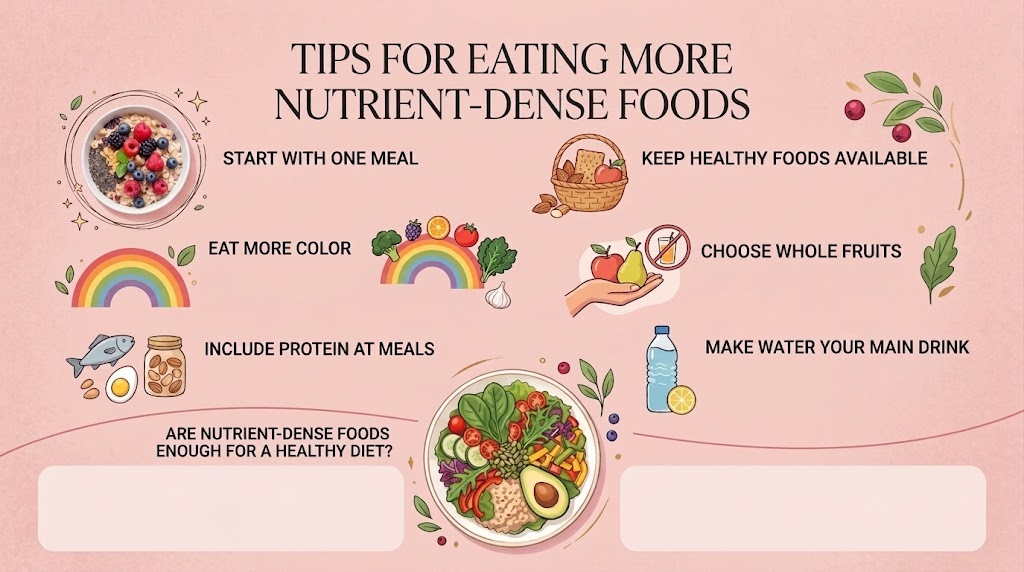
Tips for Eating More Nutrient Dense Foods
Start With One Meal
You don’t need to completely change your diet overnight. Start by improving one meal each day.
Keep Healthy Foods Available
Having fruit, nuts, yogurt, vegetables and whole grains readily available can make nutritious choices easier.
Eat More Color
Different colors often indicate different plant compounds and nutrients. Try including several colors throughout the day.
Choose Whole Fruits
Whole fruits generally provide more fiber and satiety than fruit juices.
Include Protein at Meals
Protein can come from fish, eggs, dairy, poultry, beans, lentils, tofu, nuts and seeds.
Make Water Your Main Drink
Water is an essential part of a healthy lifestyle. Limiting sugary drinks can also reduce unnecessary added sugar intake.
Are Nutrient Dense Foods Enough for a Healthy Diet?
Nutrient density is an important concept but healthy eating involves more than individual foods.
Overall dietary patterns matter.
A healthy diet should provide adequate calories, protein, essential fats, vitamins, minerals, fiber and fluids. It should also be enjoyable and practical enough to maintain over time.
Individual nutritional needs can vary based on age, activity level, medical conditions, allergies, pregnancy, dietary preferences and other factors.
If you have specific health concerns or dietary restrictions, a registered dietitian or qualified healthcare professional can help you develop an eating pattern suited to your needs.
Frequently Asked Questions
What is the most nutrient dense food?
There isn’t one universally “most nutrient dense” food. Different foods provide different combinations of nutrients. Leafy greens, seafood, eggs, legumes, nuts, seeds, fruits and vegetables can all contribute valuable nutrients.
Are nutrient dense foods good for weight management?
They can be. Foods rich in protein, fiber, and water can help meals feel more satisfying. However, healthy weight management depends on overall dietary intake, physical activity, sleep and individual factors.
How many nutrient dense foods should I eat each day?
There is no required number. A better goal is to include a variety of nutrient rich foods throughout the day, particularly vegetables, fruits, whole grains, legumes, protein sources and healthy fats.
Are frozen vegetables nutrient dense?
Yes. Frozen vegetables can be a convenient and nutritious option. Freezing can preserve many nutrients and frozen produce can sometimes be more practical than fresh produce because it has a longer shelf life.
Can nutrient dense foods prevent disease?
A healthy diet can contribute to lower risk of certain chronic health problems as part of an overall healthy lifestyle but no food can guarantee disease prevention.
Are expensive foods more nutritious?
Not necessarily. Many affordable foods including beans, lentils, oats, eggs, seasonal vegetables, frozen produce and whole grains can be highly nutritious.
Conclusion
Choosing nutrient dense foods is a practical foundation for building a healthier eating pattern. Foods such as spinach, berries, salmon, eggs, lentils, sweet potatoes, avocado, almonds, chia seeds, broccoli, oats, yogurt, beans, oranges, sardines, quinoa, pumpkin seeds, tomatoes, garlic and dark chocolate can provide a wide range of essential nutrients.
The key isn’t to eat every food on this list every day. Instead, focus on variety, balance and consistency. Include different fruits and vegetables, choose whole grains, eat adequate protein, add healthy fats and select minimally processed foods more often.
Nutrient dense eating can support digestion, energy metabolism, immune function, heart health, healthy weight management and overall wellness. It can also be affordable and accessible when you rely on everyday foods such as beans, lentils, oats, eggs, seasonal produce and whole grains.
Most importantly, healthy eating doesn’t have to be perfect. Small, sustainable changes can make a meaningful difference over time. By making nutrient rich foods a regular part of your meals, you can create an eating pattern that supports your body’s nutritional needs and contributes to long term overall wellness.
15 Responses
[…] some sources of saturated fat with unsaturated fats can improve the overall nutritional profile of a […]
[…] healthy blood sugar levels is an important part of overall wellness. The foods you eat can influence how quickly blood glucose rises after meals, how satisfied you […]
[…] diet rich in vitamins, minerals, antioxidants, healthy fats and plant based foods can provide nutrients that support normal eye […]
[…] The benefits depend on the type and amount of omega-3 as well as a person’s overall diet and health. […]
[…] this guide, we’ll explore how protein rich foods support muscle, recovery and overall health, the best high protein foods to include in your diet, how to combine protein with other nutrients […]
[…] Choosing a variety of magnesium rich foods can help you build a balanced diet while also providing fiber, protein, healthy fats, vitamins and other essential nutrients. […]
[…] foods are highly nutritious but flavor variety is important for long term […]
[…] healthy fats contain calories so portion size remains […]
[…] Nutrient dense foods provide substantial amounts of nutrients relative to their calorie content. […]
[…] a balanced meal, combine a sweet potato with beans, leafy greens and a protein […]
[…] balanced diet that supports the gut microbiome may help […]
[…] tomatoes with a source of healthy fat can increase the availability of some […]
[…] balanced eating pattern can therefore support overall kidney function as part of a healthy […]
[…] They provide plant protein, fiber, magnesium and other minerals that contribute to a balanced diet. […]
[…] a variety of plant foods can increase exposure to different types of fibers and other […]