
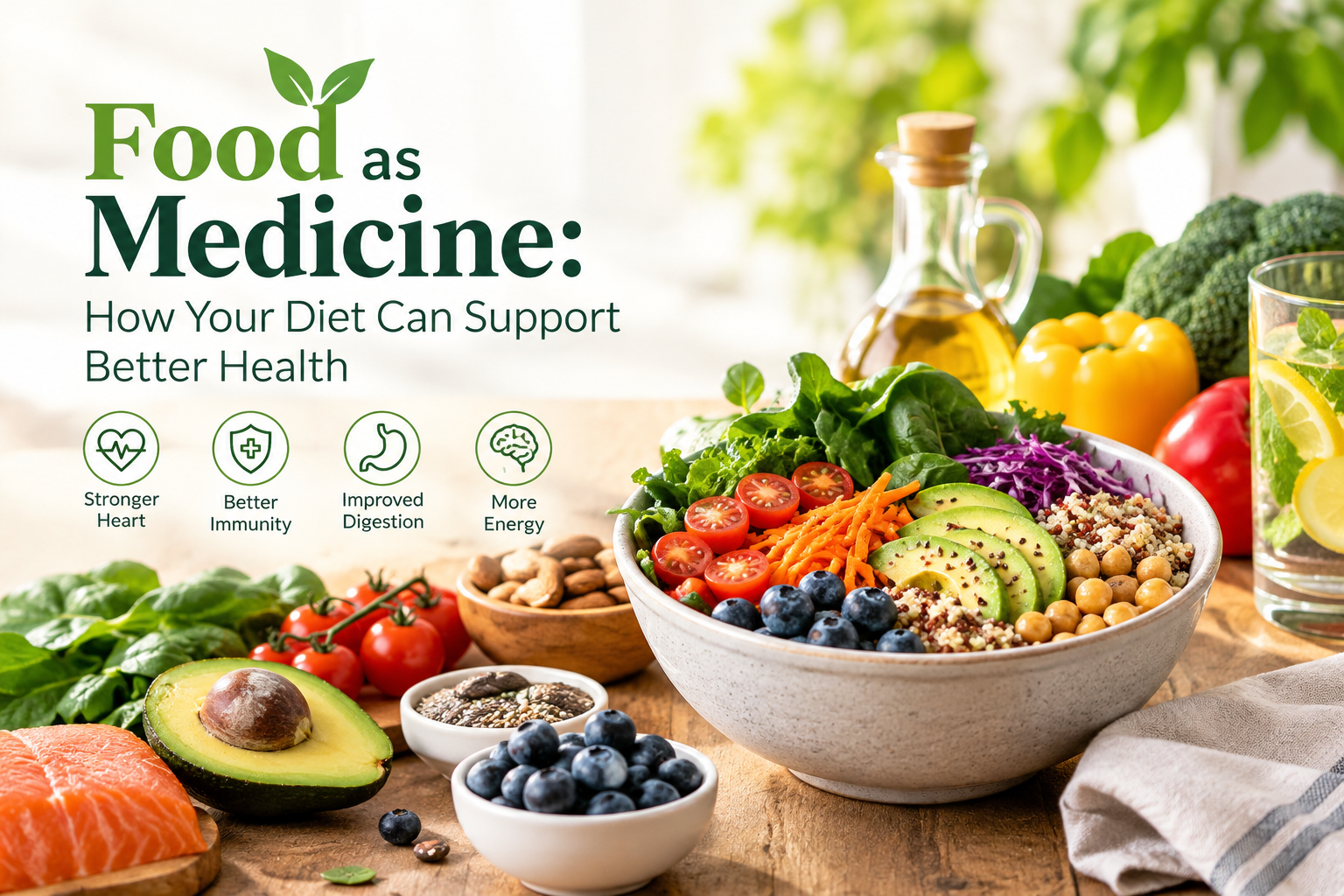
Food as medicine provides more than energy. It also supplies nutrients needed to support your immune system, maintain strong muscles and bones and aid digestion.
A balance diet also helps your body work as it should. Eating a variety of nutritious foods provides vitamins, minerals, protein, fiber and healthy fats.
However, food is not a replacement for medical treatment. The goal is to build healthy eating habits that support your overall well being.
In this guide, you will learn what food as medicine means, which foods to eat and how simple changes can improve your daily diet.
What Does Food as Medicine Mean?
Food as medicine is a nutrition approach that recognizes the connection between dietary choices and overall health.
Your body depends on nutrients from food for thousands of body functions. Protein supplies amino acids needed for muscles and tissues. Carbohydrates provide energy. Dietary fats support cell structures and help the body absorb certain vitamins. Vitamins and minerals contribute to processes ranging from bone maintenance to normal immune function.
A diet that regularly includes a wide range of nutrient rich foods can help provide the nutrients required for these functions.
However, the phrase “food as medicine” should be understood carefully. Food is not a substitute for medical diagnosis, prescription medication, surgery or other appropriate treatments.
Instead, think of food as one important part of a complete approach to health.
A healthy eating pattern can help support your body while medical care can address specific diseases or health conditions when necessary.
Why Nutrition is Important for Better Health
Nutrition affects many aspects of health from energy levels and digestion to cardiovascular and metabolic health.
A balanced diet can help provide:
- Protein for tissue maintenance and repair
- Fiber for digestive health
- Carbohydrates for energy
- Healthy fats for essential body functions
- Vitamins for numerous biological processes
- Minerals for bones, muscles, nerves and other functions
- Water for hydration and normal physiological processes
No single food provides everything your body needs. This is why dietary variety is so important.
For example, vegetables can provide fiber, vitamins, minerals and plant compounds. Fruits provide carbohydrates, fiber, various vitamins and minerals. Beans and lentils provide protein and fiber. Nuts and seeds provide healthy fats and minerals. Fish can provide protein and depending on the variety, omega-3 fatty acids.
A healthy diet is therefore less about individual foods and more about the overall pattern.
Nutrient Dense Foods to Include in Your Diet
One of the best ways to apply the food as medicine concept is to focus on Foods rich in nutrients.
Nutrient dense foods provide significant amounts of essential nutrients relative to their calorie content. They can help you meet nutritional requirements without relying heavily on foods that provide large amounts of calories with relatively few nutrients.
Vegetables
Vegetables are among the most important foods in a healthy diet.
Leafy greens such as spinach, kale and other dark green vegetables can provide folate, vitamin K, fiber and other nutrients.
Broccoli, cauliflower, cabbage, carrots, tomatoes, bell peppers, pumpkin and sweet potatoes also provide a range of nutrients and naturally occurring plant compounds.
Try adding vegetables to soups, salads, sandwiches, curries, stir fries, omelets and grain based meals.
Eating different colors of vegetables can also help increase dietary variety.
Fruits
Fruits provide carbohydrates, fiber, vitamins, minerals and naturally occurring plant compounds.
Examples include apples, oranges, bananas, berries, grapes, pears, mangoes and many others.
Whole fruits are generally a more nutritious choice than relying heavily on fruit drinks or products containing added sugars because whole fruits provide fiber and other components of the food.
Rather than searching for one “healthiest fruit” aim to enjoy a variety of fruits.
Whole Grains
Whole grains can provide fiber and other nutrients.
Examples include:
- Oats
- Brown rice
- Barley
- Quinoa
- Whole wheat bread
- Whole grain pasta
- Whole grain cereals
Replacing some refined grains with whole grains can be a simple way to increase fiber intake.
For example, you could choose oatmeal for breakfast or include brown rice or another whole grain with lunch or dinner.
Beans and Lentils
Beans, chickpeas, peas and lentils are excellent sources of plant based protein and dietary fiber.
They can be added to soups, salads, curries, stews, wraps and grain bowls.
Because legumes provide both protein and fiber they can make meals more satisfying while contributing important nutrients.
They are also affordable and versatile, making them practical ingredients for many different diets.
Nuts and Seeds
Nuts and seeds contain combinations of protein, fiber, unsaturated fats, vitamins and minerals.
Almonds, walnuts, pistachios, peanuts, chia seeds, flaxseeds, pumpkin seeds and sunflower seeds are examples.
You can add them to oatmeal, yogurt, salads, smoothies or snacks.
Because nuts and seeds are energy dense, portion sizes should still be considered as part of your overall eating pattern.
Healthy Protein Sources
Protein is important for maintaining and repairing tissues and supporting many biological processes.
Nutritious protein sources include fish, eggs, poultry, yogurt, milk, beans, lentils, chickpeas, tofu, nuts and seeds.
Including protein as part of meals can also help create a more balanced diet.

Food as Medicine and Heart Health
Diet is an important component of heart health.
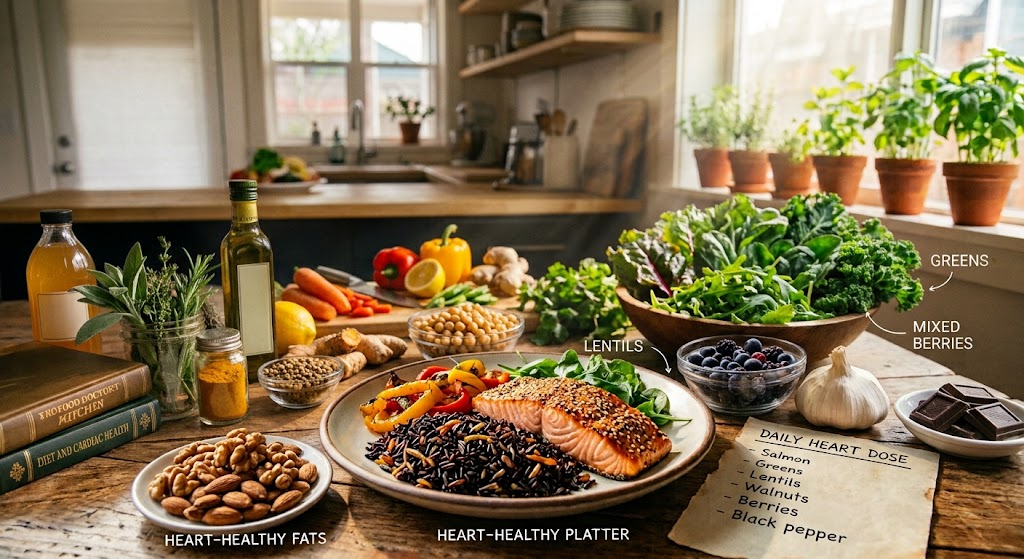
Eating patterns that emphasize vegetables, fruits, whole grains, legumes, nuts, seeds, fish and unsaturated fats can provide nutrients and dietary components associated with heart supportive eating.
Dietary fiber is particularly important. Foods such as oats, beans, lentils, vegetables, fruits and whole grains can help increase fiber intake.
It is also useful to pay attention to excessive amounts of sodium, added sugars and saturated fat.
Instead of attempting to completely change your eating habits overnight, make gradual substitutions.
For example, you can:
- Add vegetables to more meals.
- Choose whole grains more frequently.
- Include beans or lentils in meals.
- Eat fish when it fits your dietary preferences.
- Choose unsalted nuts more often.
- Reduce sugary drinks.
- Pay attention to sodium levels in packaged foods.
These small changes can become sustainable habits when practiced consistently.
Food as Medicine and Digestive Health
The foods you eat can have an important relationship with digestive health.
Dietary fiber is one of the key components to consider. Fiber is found in vegetables, fruits, whole grains, legumes, nuts and seeds.
Adequate fiber can support normal bowel function and contribute to a healthy eating pattern.
If you currently consume very little fiber, increase your intake gradually. A sudden increase can cause digestive discomfort for some people.
Drinking adequate fluids can also be important when increasing fiber.
Some fermented foods including yogurt, kefir, kimchi and sauerkraut may contain live microorganisms. Their nutritional content varies and they should be considered part of a varied diet rather than a treatment for digestive diseases.
If you experience ongoing digestive symptoms consult an appropriate healthcare professional instead of attempting to manage persistent symptoms through diet alone.
Anti Inflammatory Food as Medicine and Healthy Eating
The term anti inflammatory foods is widely used in nutrition and wellness discussions.
Inflammation is a normal biological response that helps the body respond to injury and infection. Long term inflammation however is associated with several chronic health conditions.
Rather than searching for one food that can eliminate inflammation it is more useful to focus on an overall healthy dietary pattern.
Foods commonly found in nutritious dietary patterns include:
- Berries and other fruits
- Leafy green vegetables
- Tomatoes
- Broccoli
- Beans and lentils
- Whole grains
- Nuts and seeds
- Fish
- Olive oil
- Herbs and spices
These foods can provide fiber, unsaturated fats, vitamins, minerals and various naturally occurring plant compounds.
At the same time, regularly consuming large amounts of highly processed foods, added sugars, and excessive sodium can make it harder to maintain a balanced dietary pattern.
Importantly, no individual food should be viewed as a cure for inflammatory conditions.
Food as Medicine and Blood Sugar Management
Diet can also influence blood glucose levels.
Carbohydrates generally have a direct effect on blood glucose but the effect of a meal can depend on the type and amount of carbohydrate as well as the presence of fiber, protein and fat.
Whole grains, legumes, vegetables and whole fruits can provide carbohydrates along with fiber and other nutrients.
Creating balanced meals that combine carbohydrates with protein, vegetables and healthy fats can be a practical approach to overall nutrition.
For example instead of eating a refined carbohydrate on its own you might combine it with vegetables and a protein source.
People with diabetes or other conditions affecting blood glucose should work with a qualified healthcare professional to develop an individualized nutrition plan.
How Food as Medicine Supports the Immune System
Your immune system requires adequate amounts of many nutrients to function normally.
Nutrients including vitamin C, vitamin A, vitamin D, zinc, selenium, iron and protein have important roles in normal immune function.
A varied diet can help provide these nutrients.
Citrus fruits, berries, peppers, leafy green vegetables, eggs, fish, dairy products, beans, nuts and seeds can all contribute nutrients to a balanced diet.
Rather than relying on a single “immune boosting” food focus on dietary variety.
Adequate sleep, physical activity, stress management and other lifestyle factors also contribute to overall health.
Food as Medicine and Brain Health
The brain requires energy and nutrients to function normally.
A balanced diet containing vegetables, fruits, whole grains, legumes, nuts, seeds, healthy fats and protein sources provides a variety of nutrients that support normal physiological functions.
Fish is often discussed in relation to brain health because some types contain omega-3 fatty acids.
Nuts, seeds, legumes, leafy greens and colourfull fruits and vegetables can also contribute important nutrients.
However, eating one specific food does not guarantee better memory or protection from neurological disease.
A broader healthy lifestyle including regular physical activity, adequate sleep and balanced nutrition is a more useful approach.
How to Build a Healthy Plate
Healthy eating does not have to involve complicated calculations.
One simple method is to think about the different food groups on your plate.
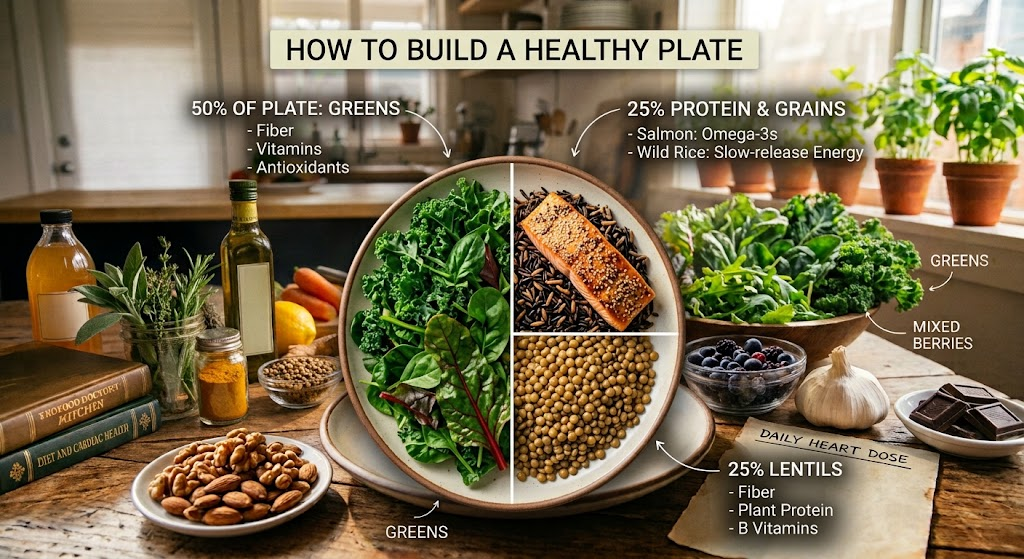
A general balanced plate approach might look like:
Half the plate: vegetables and fruit
One quarter: protein such as fish, eggs, poultry, beans, lentils, tofu and yogurt
One quarter: whole grains or another nutritious carbohydrate
You can also include a moderate amount of healthy fat from foods such as nuts, seeds, avocado or olive oil.
These proportions are a general guide rather than a strict rule. Individual nutritional needs vary depending on age, activity level, health status, culture and other factors.
Foods to Limit for Better Health
A healthy diet is not only about what you add. It is also about how often you consume foods that may provide fewer essential nutrients when eaten frequently.
Consider limiting excessive intake of:
- Sugar sweetened beverages
- Foods high in added sugars
- Highly processed snack foods
- Excessively salty foods
- Processed meats
- Foods high in saturated fat
- Highly refined grains
- Large portions of highly processed desserts
This does not mean these foods must be completely eliminated.
A sustainable approach to healthy eating allows room for enjoyment while making nutritious foods the foundation of most meals.
Simple Food as Medicine Swaps for a Healthier Diet
Small changes can make healthy eating easier.
Here are some practical examples:
Food provides more than energy. It also supplies nutrients that help your body function well.
A balanced diet provides vitamins, minerals, protein, fiber, and healthy fats.
Eating a variety of foods can support digestion, muscle health, and normal immune function.
Include beans, lentils, fish, eggs or tofu as alternative protein sources.
Use herbs and spices to add flavor while being mindful of excessive sodium.
These swaps are not about making your diet perfect. They are about making healthier choices more frequently.
How to Start Using Food as Medicine
You do not need to completely change your diet in one day.
Start with a few realistic habits.
Eat More Vegetables
Add one additional serving of vegetables to a meal each day.
Increase Dietary Variety
Try different fruits, vegetables, legumes, whole grains, nuts and seeds throughout the week.
Choose More Whole Foods
Make minimally processed, nutrient dense foods the foundation of your meals.
Plan Meals in Advance
Planning meals can make it easier to maintain healthy eating habits and reduce reliance on convenient highly processed foods.
Drink Enough Water
Keep water available throughout the day and choose it regularly as your primary beverage.
Pay Attention to Portions
Even nutritious foods can contribute significant calories when consumed in very large portions. Aim for balanced portions that fit your individual needs.
Make Changes Gradually
Small changes are often easier to maintain than extreme diets.
Can Food Replace Medicine?
The answer depends on what you mean by “medicine.”
Food can provide nutrients that support normal body functions and may play an important role in preventing or managing some nutrition related health risks. However, food should not automatically replace prescribed medical treatment.
People with diabetes, kidney disease, heart conditions, food allergies, digestive diseases or other medical conditions may have specific nutritional requirements.
If you have a health condition or take prescription medication talk with a qualified healthcare professional before making major dietary changes.
A healthy diet works alongside appropriate medical care rather than necessarily replacing it.
Frequently Asked Questions About Food as Medicine
What is food as medicine?
Food as medicine is the idea that nutritious foods and healthy dietary patterns can support overall health and normal body functions. It does not mean that food can replace medical treatment.
What are the best foods for health?
There is no single best food. A healthy dietary pattern can include vegetables, fruits, whole grains, legumes, nuts, seeds, healthy fats and nutritious protein sources.
Can food cure disease?
Food should not be assumed to cure disease. Nutrition may support health and can be part of managing certain conditions but medical treatment should be guided by qualified healthcare professionals.
What are nutrient dense foods?
Nutrient dense foods provide important nutrients relative to their calorie content. Examples include vegetables, fruits, legumes, whole grains, nuts, seeds, fish, eggs and other minimally processed foods.
How can I make my diet healthier?
Start by adding more vegetables and fruits, choosing whole grains more often including protein in meals, drinking water and limiting excessive consumption of added sugars and highly processed foods.
Are anti-inflammatory foods a cure for inflammation?
No, a single food should not be considered a cure for inflammation. A balanced dietary pattern containing a variety of nutrient rich foods is a more appropriate approach to healthy eating.
Conclusion
Food as medicine is a useful way to understand the powerful relationship between nutrition and overall health. The foods you eat provide the nutrients your body needs to support energy production, digestion, immune function, muscles, bones and many other essential processes.
Rather than searching for one miracle ingredient, focus on your overall dietary pattern. Include plenty of vegetables and fruits, whole grains, legumes, nuts, seeds, healthy fats and nutritious protein sources. At the same time, be mindful of excessive added sugars, sodium, highly processed foods and other foods that provide relatively few nutrients when consumed frequently.
Healthy eating does not require perfection or extreme restrictions. Small, consistent changes can make a meaningful difference in your daily nutrition. Adding more vegetables, choosing whole grains including a quality protein source drinking water and planning meals can all help create sustainable habits.
Most importantly, remember that food is one part of a larger health picture. Regular physical activity, adequate sleep, stress management, preventive healthcare and appropriate medical treatment also matter.
When nutritious foods become a regular part of your lifestyle your diet can provide valuable nutritional support for better health one meal at a time.
17 Responses
[…] Whole fruits can provide carbohydrates, fiber, vitamins, minerals and naturally occurring plant compounds. […]
[…] Beans and lentils are nutritional powerhouses that can fit into almost any healthy eating pattern. […]
[…] of these foods provide dietary fiber, unsaturated fats, vitamins, minerals and plant compounds such as polyphenols […]
[…] different fruits and vegetables to your meals can make it easier to get vitamin C through your […]
[…] healthy diet doesn’t require avoiding all foods that aren’t particularly nutrient dense. Instead, […]
[…] the best foods for heart health can help you build a balanced eating pattern rich in fiber, healthy fats, vitamins, minerals, […]
[…] the right foods that support brain health can help provide the nutrients your brain needs to function normally. A balanced diet rich in […]
[…] this reason, choosing the best foods for gut health can be an important part of maintaining a healthy lifestyle. A balanced diet rich in fiber, whole […]
[…] you are looking for the best foods for strong bones and healthy joints, building a varied balanced diet is a practical place to start. Dairy products, […]
[…] and added sugars may provide quick energy but may not keep you satisfied for very long. A balanced meal containing complex carbohydrates, protein, fiber and healthy fats can provide a broader range of […]
[…] you are searching for the best foods for healthy skin, focus on foods that provide vitamins, minerals, antioxidants, healthy fats, protein and plenty of […]
[…] process many substances. Because the liver works continuously supporting it with a balanced and nutritious diet is an important part of overall […]
[…] specialty products. One of the simplest ways to improve everyday nutrition is to include more whole foods in your regular […]
[…] food should not be considered a replacement for medical treatment. A healthy eating pattern can support general well being and may help reduce certain health risks but it cannot diagnose, […]
[…] ginger is a food as well as a traditional ingredient it fits naturally into the concept of food as medicine. However, ginger should not be as a cure for disease or a replacement for professional medical […]
[…] idea of food as medicine is based on a simple principle. The foods we eat regularly can provide nutrients and plant […]
[…] Eating a colorful variety is more useful than focusing on one specific “superfood.” […]