
The phrase “food as medicine” has become increasingly popular in conversations about nutrition wellness and preventive health. But what does food as medicine actually mean? Does it suggest that certain foods can cure disease or is it simply a way of thinking about nutrition differently?
For beginners, the concept can sometimes be confusing. Food provides the nutrients your body needs to function but it is not a replacement for professional medical care. Instead, the food as medicine approach focuses on how nutritious foods and healthy dietary patterns can support overall health and may contribute to reducing certain health risks.
From vegetables and fruits to whole grains, legumes, nuts, seeds and protein rich foods, everyday dietary choices can influence your nutritional status and support important body functions.
This beginner’s guide explains what food as medicine means, how nutrition affects the body, which foods are considered nutrient dense, how to create healthier meals and what you should know before making major dietary changes.
What Does “Food as Medicine” Mean?
Food as medicine is a concept that recognizes the connection between food, nutrition and health.
Your body needs a wide range of nutrients to maintain normal functions. These include protein, carbohydrates, fats, vitamins, minerals, fiber and water. Food provides these nutrients, which are involved in processes such as energy production, tissue maintenance, immune function, digestion and cellular activity.
The concept does not mean that eating a particular food will automatically cure an illness.
Instead, it encourages people to think of food as an important part of a broader health strategy.
For example, regularly eating vegetables, fruits, whole grains, legumes, nuts, seeds and nutritious protein sources can help provide essential nutrients. At the same time limiting excessive amounts of added sugars, sodium and highly processed foods can help improve overall dietary quality.
In simple terms:
Food as medicine means using nutritious eating patterns to support your body’s health while recognizing that food does not replace appropriate medical treatment.
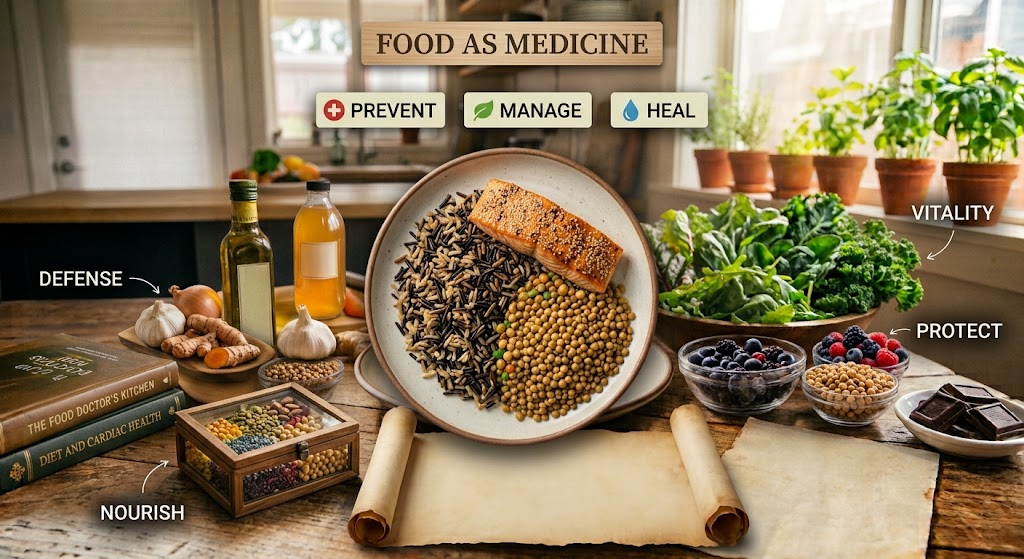
Why is Food Important for Your Health?
Food provides the raw materials your body needs every day.
Protein supplies amino acids used to maintain and repair tissues. Carbohydrates provide energy. Dietary fats support cell structures and help the body absorb certain fat soluble vitamins. Vitamins and minerals participate in numerous biological processes.
Fiber supports a healthy dietary pattern and normal digestive function while water is essential for hydration and many physiological processes.
Because no single food contains every nutrient your body needs, eating a variety of foods is important.
For example:
- Vegetables provide fiber, vitamins, minerals and plant compounds.
- Fruits provide carbohydrates, fiber, vitamins and minerals.
- Whole grains provide carbohydrates, fiber and other nutrients.
- Beans and lentils provide protein and fiber.
- Nuts and seeds provide healthy fats, protein and minerals.
- Fish can provide protein and depending on the variety of omega-3 fatty acids.
- Eggs and dairy products can provide protein and several essential nutrients.
This is why healthy eating is generally about dietary patterns rather than individual foods.
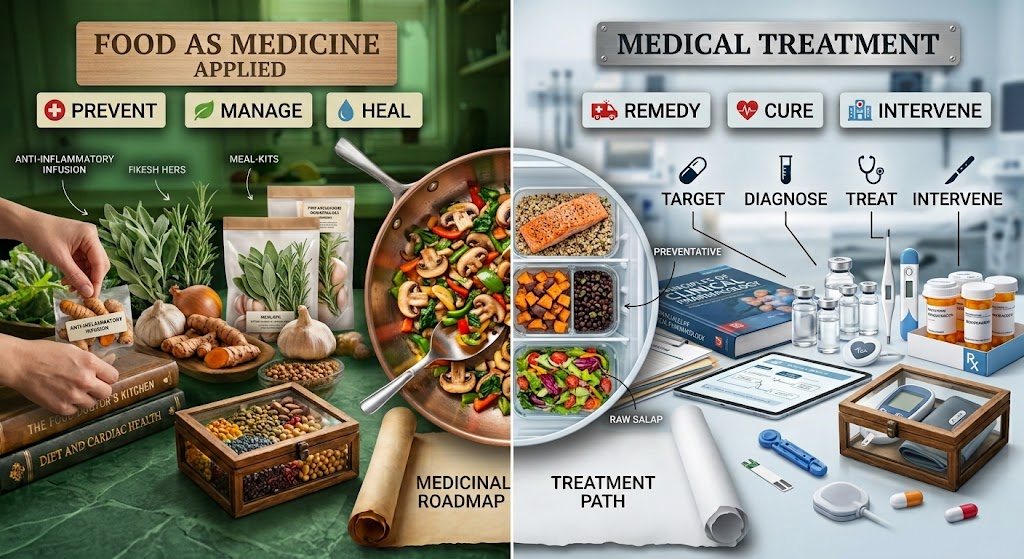
Food as Medicine vs. Medical Treatment
One of the most important things beginners should understand is the difference between nutrition and medical treatment.
Food can support normal body functions and contribute to a healthy lifestyle. However, it should not automatically be used as a replacement for medication or professional medical care.
For example, a person with diabetes may benefit from a carefully planned diet but they may also need medication monitoring and professional guidance.
Someone with a serious infection cannot safely assume that eating certain foods will replace appropriate treatment.
Similarly, people with kidney disease, food allergies, digestive disorders or other medical conditions may have specific nutritional requirements.
The food as medicine approach works best when nutrition is viewed as one component of a larger health strategy.
The Role of Nutrient Dense Foods
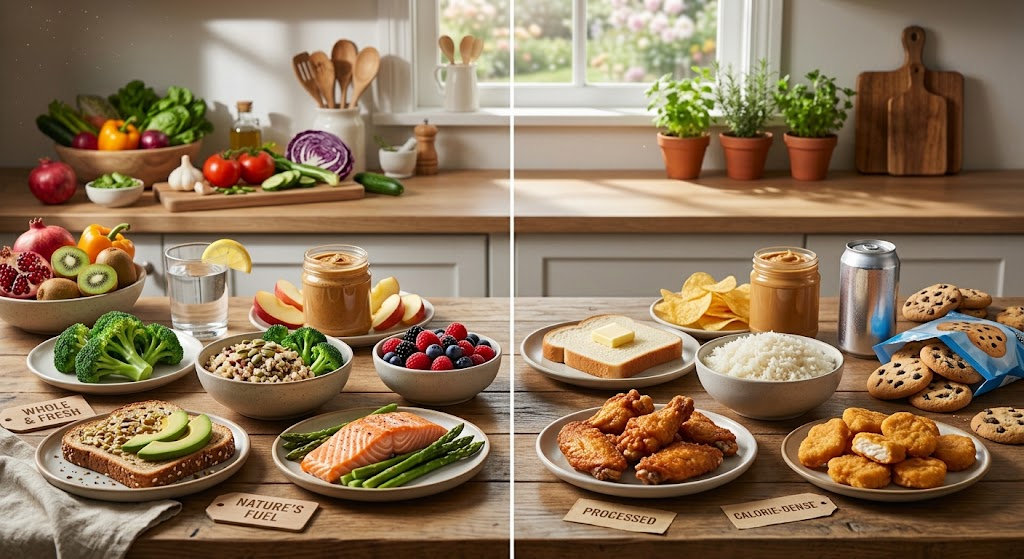
A major part of food as medicine is choosing nutrient dense foods.
Nutrient dense foods provide significant amounts of important nutrients relative to their calorie content.
Examples include vegetables, fruits, legumes, whole grains, nuts, seeds, fish, eggs and other minimally processed foods.
Vegetables
Vegetables are an important source of fiber, vitamins, minerals and naturally occurring plant compounds.
Dark leafy greens such as spinach and kale can provide nutrients including folate and vitamin K.
Broccoli, cauliflower, cabbage, tomatoes, carrots, peppers, pumpkin and other vegetables can contribute additional nutrients.
Try to include vegetables in different meals throughout the day.
Fruits
Whole fruits can provide carbohydrates, fiber, vitamins, minerals and naturally occurring plant compounds.
Apples, oranges, bananas, berries, pears, mangoes and many other fruits can fit into a healthy diet.
Choosing different types of fruit helps add variety to your nutritional intake.
Whole Grains
Whole grains can provide fiber and other nutrients.
Common examples include oats, brown rice, barley, quinoa, whole wheat bread and whole grain pasta.
Replacing some refined grains with whole grains can be a simple way to increase fiber intake.
Legumes
Beans, lentils, chickpeas and peas are excellent sources of plant based protein and fiber.
They can be included in soups, salads, curries, stews, wraps and other meals.
Legumes are also relatively affordable and versatile making them practical foods for many households.
Nuts and Seeds
Nuts and seeds provide combinations of protein, fiber, healthy fats, vitamins and minerals.
Almonds, walnuts, peanuts, chia seeds, flaxseeds, pumpkin seeds and sunflower seeds are examples.
They can be added to oatmeal, yogurt and salads as snacks.
Because nuts and seeds are energy dense, reasonable portions are important.
How Food as Medicine Can Support Heart Health
Diet is one part of maintaining cardiovascular health.
A healthy dietary pattern can emphasize vegetables, fruits, whole grains, legumes, nuts, seeds, fish and unsaturated fats.
Fiber rich foods such as oats, beans, lentils, fruits, vegetables and whole grains can contribute to a heart supportive diet.
It is also useful to be aware of excessive intake of sodium, added sugars and saturated fats.
Instead of trying to completely change your diet immediately, make gradual changes.
For example, you could:
- Eat vegetables with more meals.
- Add beans or lentils to your weekly menu.
- Choose whole grains more frequently.
- Select unsalted or lightly salted nuts.
- Reduce sugary beverages.
- Include fish when appropriate for your diet.
These changes can help improve overall dietary quality.
Food as Medicine and Digestive Health
Your digestive system is influenced by the foods you eat.
Dietary fiber is especially important. Fiber naturally occurs in plant foods such as vegetables, fruits, legumes, whole grains, nuts and seeds.
Adequate fiber contributes to normal bowel function and can be part of a healthy dietary pattern.
If your diet is currently low in fiber, increase your intake gradually. A sudden increase may cause bloating or other digestive discomfort.
Adequate fluid intake can also be helpful when increasing fiber.
Some fermented foods, such as yogurt, kefir, kimchi and sauerkraut may contain live microorganisms. Their nutritional characteristics vary so they should be considered part of a diverse diet rather than a treatment for digestive disease.
If you have persistent digestive symptoms seek advice from a qualified healthcare professional.
What are Anti-Inflammatory Foods?
You may also hear the term anti-inflammatory foods when researching food as medicine.
Inflammation is a normal process that helps the body respond to injury and infection. However, persistent inflammation can be associated with various chronic health conditions.
Instead of looking for one food that can “stop inflammation” focus on an overall nutritious eating pattern.
Foods frequently included in healthy dietary patterns include:
- Berries
- Leafy green vegetables
- Tomatoes
- Broccoli
- Whole grains
- Beans and lentils
- Nuts and seeds
- Fish
- Olive oil
- Herbs and spices
These foods can provide fiber, healthy fats, vitamins, minerals and naturally occurring plant compounds.
However, it is important not to treat “anti-inflammatory” foods as medical cures. Nutrition is one part of overall health and should not replace appropriate medical treatment.
Food and Immune System Support
Your immune system requires adequate nutrition to function normally.
Several nutrients including protein, vitamin C, vitamin A, vitamin D, zinc, selenium and iron play important roles in immune function.
A varied diet can help provide these nutrients.
Foods that can contribute to a nutrient rich diet include citrus fruits, berries, leafy green vegetables, peppers, eggs, fish, dairy products, beans, nuts and seeds.
Rather than searching for one food that can “boost” your immune system, focus on meeting your nutritional needs through dietary variety.
Other lifestyle factors, such as adequate sleep, regular physical activity, and stress management also contribute to overall health.
Food and Blood Sugar
Food choices can influence blood glucose levels.
Carbohydrate containing foods generally have a direct effect on blood sugar but the response can vary depending on the type and amount of carbohydrate and what other foods are eaten at the same time.
Whole grains, legumes, vegetables and whole fruits provide carbohydrates along with other nutrients and in many cases fiber.
Combining carbohydrate rich foods with protein, vegetables and healthy fats can help create more balanced meals.
For example a meal containing vegetables, beans and whole grains provides a different nutritional combination from a meal based primarily on refined carbohydrates.
People with diabetes should work with qualified healthcare professionals to develop an eating plan that meets their individual needs.
Can Food Support Brain Health?
The brain needs energy and nutrients to function normally.
A balanced diet containing vegetables, fruits, whole grains, legumes, nuts, seeds, healthy fats and protein sources provides a wide variety of nutrients.
Fish is often included in discussions about brain health because certain varieties provide omega-3 fatty acids.
Nuts, seeds, leafy greens, legumes and colorful fruits and vegetables can also contribute nutrients to a healthy eating pattern.
However, no single food can guarantee better memory, concentration or protection from neurological disease.
A broader lifestyle approach that includes nutritious food, physical activity, sufficient sleep and other healthy habits is more appropriate.
How to Create a Food as Medicine Plate
You do not need a complicated meal plan to start eating healthier.
One practical method is to build meals around different food groups.
A general healthy plate approach is:
Half of your plate: vegetables and/or fruit
One quarter: a protein source such as fish, eggs, poultry, beans, lentils, tofu or yogurt
One quarter: whole grains or another nutritious carbohydrate
You can also include a moderate amount of healthy fat from foods such as nuts, seeds, avocado or olive oil.
This is a general framework not a universal prescription. Your individual nutritional needs can differ based on age, activity level, health conditions, cultural dietary patterns and other factors.
Foods to Limit
Food as medicine is not only about adding nutritious foods. It can also involve reducing excessive consumption of foods that provide fewer essential nutrients.
Consider limiting frequent or excessive intake of:
- Sugar sweetened beverages
- Foods high in added sugars
- Highly processed snack foods
- Excessively salty foods
- Processed meats
- Foods high in saturated fat
- Highly refined grains
- Large amounts of highly processed desserts
You do not necessarily need to completely eliminate these foods.
A sustainable approach allows flexibility while making nutritious foods the foundation of your everyday diet.
Simple Food Swaps for Beginners
If you are new to healthy eating, simple substitutions can be easier than following a complicated diet.
Try these ideas:
Swap sugary drinks for water more often.
Choose whole grain bread or cereals instead of refined versions when practical.
Choose fruit, yogurt, nuts or vegetables for snacks more often.
Add beans or lentils to soups, salads, curries and other meals.
Add an extra serving of vegetables to lunch or dinner.
Use herbs and spices to add flavor while being mindful of sodium.
The objective is not to make every meal perfect. It is to improve your overall eating pattern gradually.
How to Start a Food as Medicine Lifestyle
You can begin with a few simple habits.
1. Focus on Variety
Eat different types of vegetables, fruits, grains, legumes, nuts, seeds and protein sources.
2. Eat More Whole Foods
Make minimally processed foods a larger part of your regular meals.
3. Plan Your Meals
Planning meals and shopping lists can help you make nutritious foods readily available.
4. Read Food Labels
Food labels can help you understand serving sizes and amounts of nutrients such as protein, fiber, sodium and added sugars.
5. Drink Water Regularly
Water is essential for hydration and normal body functions. Make it a regular beverage choice.
6. Make Gradual Changes
Changing everything at once can be difficult to maintain. Start with one or two habits and build from there.
Common Myths About Food as Medicine
The popularity of food as medicine has also created several misconceptions.
Myth 1: One Food Can Cure a Disease
No single food should be treated as a universal cure.
Health conditions are complex and may require professional diagnosis and treatment.
Myth 2: Natural Foods Are Always Safe
Natural does not automatically mean safe for everyone.
Some foods can cause allergies or interact with medications. People with specific medical conditions may also need dietary restrictions.
Myth 3: Healthy Eating Means Avoiding All Treats
A healthy diet does not need to be perfect.
Occasional foods that are higher in sugar, sodium or calories can fit into an overall balanced eating pattern.
Myth 4: Supplements Are Better Than Food
Supplements can be useful in certain situations, but they should not automatically be considered superior to whole foods.
The best approach depends on individual nutritional needs.
Frequently Asked Questions
What does food as medicine mean for beginners?
Food as medicine means recognizing that nutritious foods and healthy dietary patterns can support normal body functions and overall health. It does not mean that food replaces medical treatment.
What foods are considered healing foods?
The term “healing foods” is often used informally for nutrient rich foods such as vegetables, fruits, whole grains, legumes, nuts, seeds and nutritious protein sources. These foods support nutrition but should not be considered cures for disease.
What is the most important part of a healthy diet?
Dietary variety, balance and adequate nutrient intake are important. There is no single food that provides everything your body needs.
Can food prevent disease?
A healthy diet can contribute to reducing the risk of some health problems but disease risk is influenced by many factors including genetics, physical activity, environment and other lifestyle factors.
Should I change my diet if I have a medical condition?
Major dietary changes should be discussed with a qualified healthcare professional if you have a medical condition, take medication, are pregnant or have specific nutritional requirements.
Conclusion
Food as medicine is a simple concept with an important message: the foods you eat can provide the nutrients your body needs to function and can be an important part of a healthy lifestyle.
The key is to think beyond individual “superfoods.” A healthy dietary pattern is built from a variety of vegetables, fruits, whole grains, legumes, nuts, seeds, healthy fats and nutritious protein sources. At the same time, limiting excessive amounts of added sugars, sodium and highly processed foods can help improve overall diet quality.
Food is not a magic cure and it should not replace appropriate medical care. Instead, nutrition can work alongside healthcare and other healthy lifestyle habits to support your long term well-being.
If you are a beginner, start small. Add more vegetables to your meals, choose whole grains more often, include a source of protein, eat a variety of fruits, drink water regularly and make gradual improvements that you can maintain.
Ultimately, food as medicine is not about eating perfectly, it is about using everyday food choices to give your body the nutrition it needs to support better health.
20 Responses
[…] balanced diet should include different food groups because each contributes different […]
[…] than focusing on a single food, build your diet around a wide range of nutrient rich […]
[…] are among the most useful plant based nutrient dense […]
[…] food you eat can influence several factors associated with cardiovascular health including blood pressure, blood cholesterol, body weight, blood sugar regulation and overall […]
[…] creates a simple, nutrient rich breakfast or […]
[…] healthy lifestyle that combines nutritious food, regular physical activity, sufficient sleep and appropriate […]
[…] beginner’s guide explains some of the best foods for kidney health, important nutrients to understand foods that may need to be limited and simple ways to build […]
[…] overall meal matters. A baked potato topped with beans and vegetables is very different nutritionally from deep […]
[…] the best iron rich foods and how to combine them can help you build meals that provide more nutritional […]
[…] balanced diet that regularly provides calcium can help support normal bone […]
[…] is no single “perfect diet” for women. Instead a balanced eating pattern built around vegetables, fruits, whole grains, legumes, […]
[…] best vegetable is often the one you enjoy eating […]
[…] fats are important components of a balanced diet and can help make meals […]
[…] However, it is important to avoid exaggerated claims. Eating a particular spice does not automatically prevent or cure disease. Spices are best viewed as one small part of an overall healthy dietary pattern. […]
[…] phrase food as medicine refers to the idea that nutritious foods can play an important role in supporting health and […]
[…] is no single antioxidant that does everything. Different foods provide different […]
[…] Foods such as tofu, tempeh, edamame and certain soy products can contribute to an overall nutritious diet. […]
[…] healthy diet cannot guarantee that liver disease will be prevented but it can contribute to better overall […]
[…] you are looking for vegetables for eye health, leafy greens are an excellent category to […]
[…] Black beans, kidney beans, chickpeas and other legumes can contribute carbohydrates, protein, fiber, iron, magnesium and other nutrients. […]