
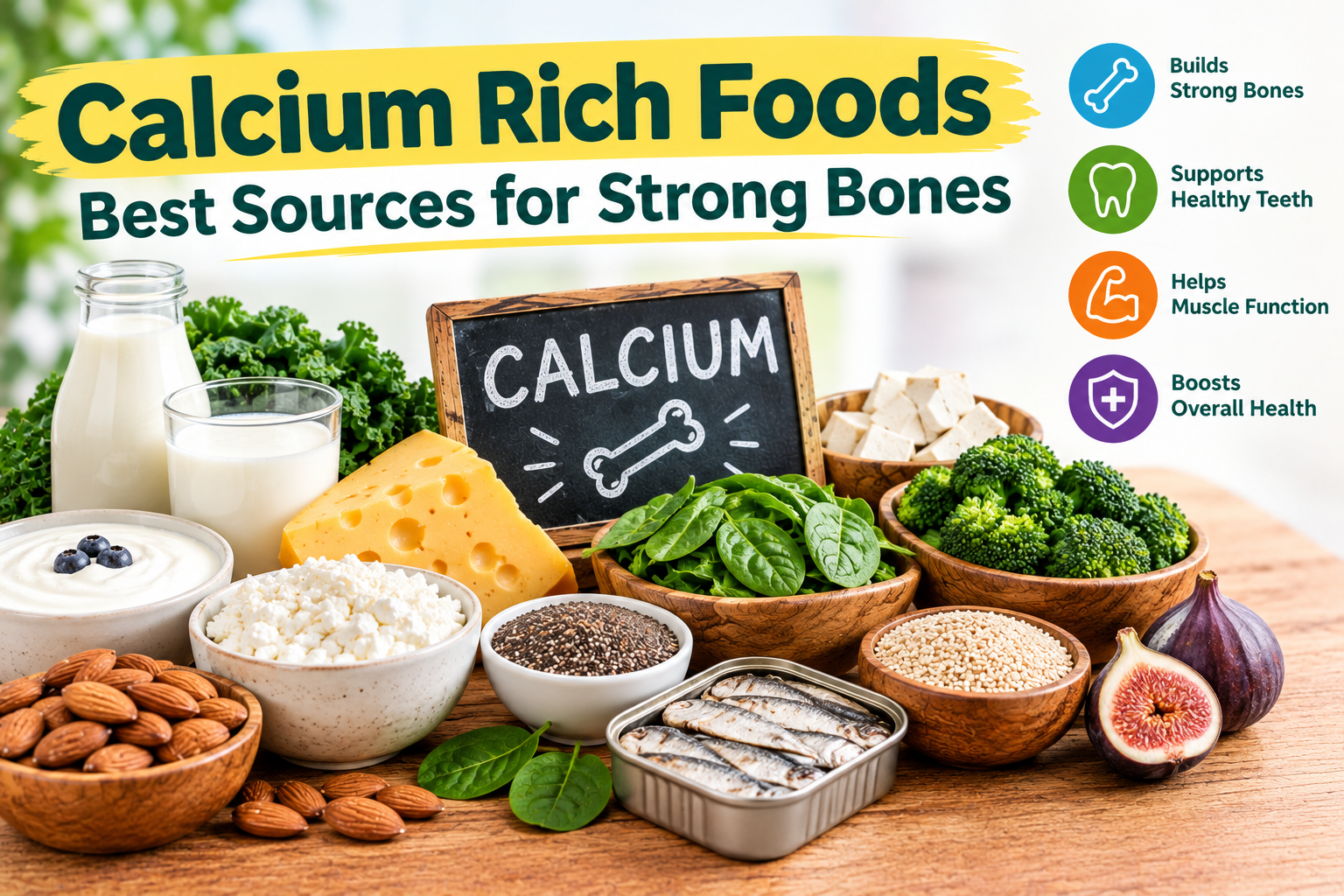
Calcium is an essential mineral that plays a major role in maintaining strong bones and teeth. It is also involved in normal muscle contraction, nerve signaling, blood clotting and other important functions throughout the body. Because the body cannot produce calcium it must be obtained through food and when necessary supplements.
Dairy products such as milk, yogurt and cheese are well known sources of calcium but they are not the only options. Leafy green vegetables, calcium fortified plant milks, tofu, canned fish with edible bones, beans, seeds and some nuts can also contribute calcium to the diet.
Getting enough calcium is particularly important during childhood and adolescence when bones are developing rapidly. Adults also need adequate calcium to help maintain bone strength throughout life.
This guide explains the best calcium rich foods, how calcium supports bone health, which nutrients work alongside calcium, how to improve calcium intake through everyday meals and what to know about calcium supplements.
What is Calcium?
Calcium is the most abundant mineral in the human body. Most of the body’s calcium is stored in bones and teeth where it provides structural strength.
The remaining calcium is involved in important functions such as muscle contraction, nerve transmission, blood clotting and normal cellular activity.
When dietary calcium intake is inadequate the body can draw calcium from bones to help maintain the level needed in the bloodstream. Over time consistently inadequate calcium intake can contribute to reduced bone mineral density.
A balanced diet that regularly provides calcium can help support normal bone maintenance.
Why is Calcium Important for Strong Bones?
Calcium is best known for its role in bones but its functions extend beyond skeletal health.
1. Helps Build and Maintain Bones
Bones are living tissues that continuously undergo remodeling. Old bone is broken down and replaced with new bone.
Calcium is an important component of bone tissue and is essential for maintaining normal bone structure.
2. Supports Healthy Teeth
Calcium contributes to the structure and strength of teeth. Adequate calcium intake together with good oral hygiene and other nutrients supports overall dental health.
3. Supports Muscle Function
Calcium is involved in normal muscle contraction.
It works alongside other electrolytes and minerals to help muscles function properly.
4. Supports Nerve Signaling
Calcium plays a role in communication between nerve cells and contributes to normal nervous system function.
5. Supports Blood Clotting
Calcium is involved in normal blood clotting processes.
This is another reason the body carefully regulates calcium levels in the blood.
How Much Calcium Do You Need?
Calcium requirements vary depending on age and life stage.
For many adults the recommended intake is approximately 1,000 mg of calcium per day. Women over 50 and adults over 70 generally have higher recommended intakes of around 1,200 mg per day.
Teenagers and younger people may also require relatively high amounts because of rapid bone development.
Individual needs can differ based on health conditions, medications, diet and other factors.
Rather than relying on supplements automatically, most people can obtain calcium through a varied diet containing dairy products or fortified alternatives, vegetables, legumes, seafood, nuts, seeds and other calcium containing foods.

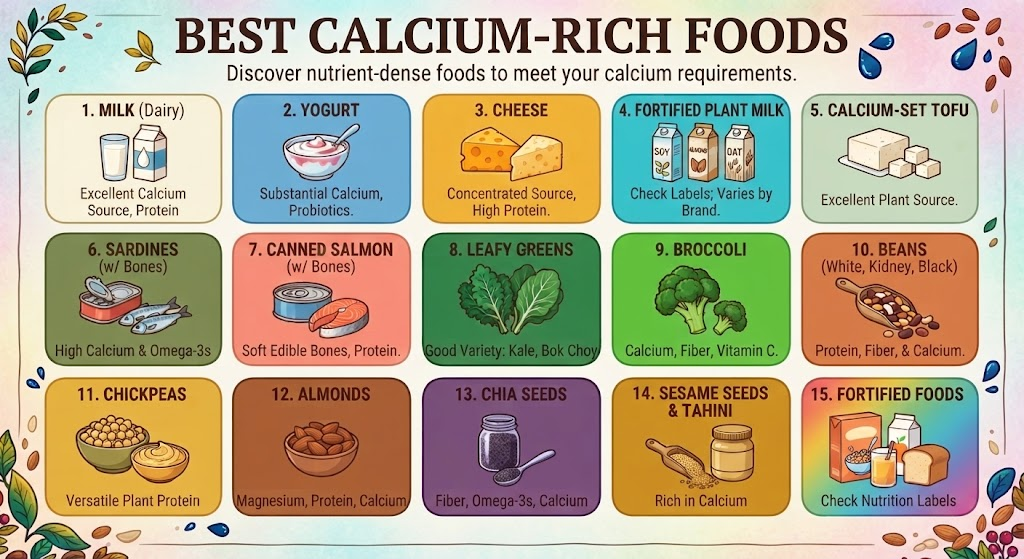
Best Calcium Rich Foods
There are many nutritious foods that can help you meet your calcium requirements.
1. Milk
Milk is one of the most familiar calcium rich foods. It provides calcium along with protein and other nutrients.
Cow’s milk can be consumed on its own or added to:
- Oatmeal
- Smoothies
- Whole grain cereal
- Soups
- Sauces
Choose the type of milk that fits your dietary preferences and nutritional needs.
2. Yogurt
Yogurt can provide a substantial amount of calcium while also offering protein.
Plain yogurt can be combined with fruit, nuts, seeds or whole grains for a nutrient dense snack or breakfast.
Greek yogurt can be particularly useful when you want a higher protein option although calcium content varies between products.
Always check the nutrition label because calcium amounts differ among brands and varieties.
3. Cheese
Cheese can be a concentrated source of calcium.
Examples include:
- Mozzarella
- Cheddar
- Parmesan
- Swiss cheese
Because many cheeses can also be high in sodium and saturated fat, portion size and overall dietary balance matter.
Use cheese as part of meals rather than relying on it as your only calcium source.
4. Calcium Fortified Plant Milk
Fortified soy, almond, oat and other plant based beverages can provide calcium.
The calcium content varies considerably between brands so check the nutrition facts label.
Choose unsweetened versions when possible if you want to limit added sugar.
Fortified soy milk can also provide protein comparable to dairy milk while other plant beverages may contain considerably less protein.
5. Tofu Made With Calcium
Some types of tofu are prepared using calcium salts and can be excellent sources of calcium.
Check the product’s nutrition label to determine its calcium content.
Tofu can be added to:
- Stir fries
- Curries
- Soups
- Salads
- Grain bowls
- Scrambles
It is also a useful plant-based protein source.
6. Sardines With Bones
Canned sardines with edible bones are an excellent source of calcium.
The small bones become soft during processing and can be eaten safely when the product is properly prepared.
Sardines also provide protein and omega-3 fatty acids.
Use them in salads, sandwiches, whole grain toast or pasta dishes.
7. Canned Salmon With Bones
Some canned salmon products contain soft edible bones and can provide calcium.
Salmon also provides protein and omega-3 fats.
Check the product label and choose preparations that fit your sodium and overall dietary needs.
8. Leafy Green Vegetables
Certain leafy greens contain calcium.
Useful options include:
- Kale
- Collard greens
- Bok choy
- Turnip greens
- Mustard greens
However not all leafy greens provide calcium equally well. Some vegetables such as spinach contain calcium but also have compounds that can substantially reduce calcium absorption.
Eating a variety of vegetables is therefore more useful than depending on one specific leafy green.
9. Broccoli
Broccoli provides calcium along with vitamin C, fiber, vitamin K and other nutrients.
It can be steamed, roasted, stir fried or added to soups and salads.
Combining broccoli with other calcium containing foods can help create balanced meals.
10. Beans
Beans can contribute calcium as well as protein, fiber, iron, magnesium and other nutrients.
Good options include:
- White beans
- Kidney beans
- Black beans
- Navy beans
Add them to soups, salads, chili, wraps, grain bowls and vegetable dishes.
11. Chickpeas
Chickpeas provide calcium along with plant based protein and fiber.
Hummus is a simple way to include chickpeas in your diet.
You can also add chickpeas to curries, salads, soups and roasted vegetable dishes.
12. Almonds
Almonds contain calcium, magnesium, protein, healthy fats and vitamin E.
A moderate serving makes a convenient snack or topping for yogurt, oatmeal, salads and grain bowls.
Because nuts are energy dense, portion size is important if you are monitoring calorie intake.
13. Chia Seeds
Chia seeds are small but nutrient dense and provide calcium, magnesium, fiber and plant based omega-3 fatty acids.
Add them to:
- Overnight oats
- Yogurt
- Smoothies
- Puddings
- Whole grain cereal
They can be an especially useful addition to plant based diets.
14. Sesame Seeds and Tahini
Sesame seeds contain calcium and other minerals. Tahini made from ground sesame seeds, can be used in hummus, sauces, dressings and spreads.
Try mixing tahini with lemon juice and water to create a simple dressing for vegetables or grain bowls.
15. Fortified Foods
Some foods are fortified with calcium to help increase nutrient intake.
These can include:
- Plant based milk
- Certain fruit juices
- Breakfast cereals
- Some breads
- Fortified nutritional products
Check the nutrition label to determine how much calcium a product actually provides.
Calcium and Vitamin D: A Key Partnership
Calcium and vitamin D are closely connected when it comes to bone health.
Vitamin D helps the body absorb calcium from the digestive tract and contributes to maintaining healthy bones.
Sources of vitamin D include:
- Fatty fish
- Egg yolks
- Fortified milk
- Fortified plant beverages
- Some fortified cereals
- Sunlight exposure
However factors such as skin type, geographic location, season, clothing, age and sunscreen use can affect vitamin D production from sunlight.
If you are concerned about vitamin D status, discuss testing or supplementation with a healthcare professional.
Other Nutrients Important for Bone Health
Strong bones require more than calcium alone.
A balanced diet should also provide:
Protein
Protein is an important component of bone tissue and supports muscle mass which can help with physical function and stability.
Sources include:
- Fish
- Eggs
- Poultry
- Dairy
- Beans
- Lentils
- Tofu
- Nuts and seeds
Magnesium
Magnesium contributes to bone structure and overall mineral metabolism.
Good sources include nuts, seeds, legumes, whole grains and leafy greens.
Vitamin K
Vitamin K is involved in normal bone related processes.
Leafy green vegetables are particularly good sources.
Phosphorus
Phosphorus is another mineral found in bones and teeth. It is widely available in foods including dairy, meat, fish, legumes, nuts and seeds.

Calcium Rich Foods for Vegetarians
Vegetarians have many options for meeting calcium needs.
Consider:
- Milk
- Yogurt
- Cheese
- Calcium fortified plant milk
- Calcium set tofu
- Kale
- Bok choy
- Broccoli
- Beans
- Chickpeas
- Almonds
- Chia seeds
- Tahini
A varied vegetarian diet can provide calcium alongside protein, magnesium, vitamin K and other nutrients important for overall nutrition.
Calcium Rich Foods for Vegans
People following a vegan diet can obtain calcium without dairy.
Useful options include:
- Fortified soy milk
- Fortified plant beverages
- Calcium set tofu
- Kale
- Collard greens
- Bok choy
- Broccoli
- Beans
- Chickpeas
- Chia seeds
- Tahini
- Almonds
- Fortified cereals
When following a vegan diet, reading nutrition labels is particularly helpful because calcium levels in plant based products vary widely.
Calcium Rich Breakfast Ideas
Breakfast can provide an easy opportunity to increase calcium intake.
Yogurt and Fruit Bowl
Combine plain yogurt with berries, chia seeds and almonds.
Fortified Oatmeal
Prepare oatmeal with calcium fortified milk or a fortified plant beverage. Add fruit and seeds for additional nutrients.
Smoothie
Blend fortified milk or plant milk with fruit, yogurt and chia seeds.
Whole Grain Toast
Serve whole grain toast with tahini or cheese and a side of fruit.
Calcium Rich Lunch Ideas
For lunch try meals such as:
- Chickpea and kale salad
- Bean and cheese whole grain wrap
- Tofu and vegetable stir fry
- Sardine salad with leafy greens
- Lentil soup with yogurt
- Quinoa bowl with broccoli and calcium set tofu
Combining several food groups can make meals more nutritious and satisfying.
Calcium Rich Dinner Ideas
Dinner can include a calcium rich food alongside protein, vegetables and whole grains.
Examples include:
- Salmon with broccoli and quinoa
- Tofu stir fry with bok choy
- Chicken with roasted vegetables and yogurt based sauce
- Bean and cheese tacos with leafy greens
- Lentil curry with vegetables and yogurt
- Sardines with whole grain bread and a vegetable salad
Calcium Rich Snack Ideas
For snacks consider:
- Plain yogurt with fruit
- Almonds and fruit
- Cheese with whole grain crackers
- Chia pudding made with fortified milk
- Fortified plant milk smoothie
- Hummus with vegetables
- Whole grain toast with tahini
Choose portions that fit your individual nutritional needs.
What Can Reduce Calcium Absorption?
Not all calcium consumed from food is absorbed equally.
Certain naturally occurring compounds can reduce calcium absorption from particular foods.
For example, oxalates in spinach can significantly reduce calcium absorption while phytates in some grains, seeds and legumes can also affect mineral absorption.
This does not mean you should avoid these nutritious foods. Instead consume a variety of calcium sources.
Cooking and food preparation can also affect nutrient availability.
The overall diet matters much more than worrying about the absorption of calcium from every individual meal.
Calcium Supplements: Are They Necessary?
Many people can meet their calcium requirements through food.
Supplements may be appropriate for some individuals who cannot obtain enough calcium through their diet but they should not automatically be considered necessary.
Taking excessive calcium supplements can have potential risks and calcium can interact with certain medications.
If you are considering supplementation, talk with a healthcare professional about your diet, health history, medications and appropriate dosage.
Lifestyle Habits for Strong Bones
Calcium is only one part of maintaining bone health.
Other helpful lifestyle habits include:
- Regular weight bearing physical activity
- Strength training
- Adequate protein intake
- Sufficient vitamin D
- Avoiding smoking
- Limiting excessive alcohol consumption
- Maintaining a balanced diet
- Getting adequate sleep
Walking, jogging, dancing, resistance training and other appropriate forms of exercise can support bone and muscle health.
People with medical conditions or a high risk of fractures should discuss appropriate exercise with a healthcare professional.
Frequently Asked Questions
What foods are highest in calcium?
Some excellent calcium sources include milk, yogurt, cheese, calcium fortified plant beverages, calcium set tofu, sardines with bones, canned salmon with bones, leafy greens such as kale and collard greens, chia seeds and certain fortified foods.
Is milk the best source of calcium?
Milk is a convenient and well absorbed source of calcium but it is not the only option. Many dairy and non dairy foods can contribute significant amounts of calcium.
What fruits are high in calcium?
Most fruits are not particularly high in calcium compared with dairy products, fortified foods, leafy greens, seeds and tofu. Some fruits can contribute small amounts but fruit is generally better viewed as part of an overall balanced diet rather than a primary calcium source.
Can vegans get enough calcium?
Yes. Vegans can obtain calcium from fortified plant beverages, calcium set tofu, kale, collard greens, bok choy, broccoli, beans, tahini, chia seeds, almonds and fortified foods.
Is yogurt high in calcium?
Yes. Many types of yogurt provide significant amounts of calcium. The exact amount varies by product so checking the nutrition label is useful.
Do leafy greens contain calcium?
Yes. Vegetables such as kale, collard greens and bok choy can provide calcium. However, calcium absorption differs between vegetables.
Does vitamin D help calcium absorption?
Yes. Vitamin D helps the body absorb calcium and plays an important role in maintaining healthy bones.
Can you get enough calcium without dairy?
Yes. Calcium fortified plant beverages, calcium set tofu, leafy greens, beans, seeds, nuts, fortified foods and canned fish with edible bones can all contribute calcium.
Should I take a calcium supplement?
Not necessarily. Many people can meet their calcium requirements through food. Supplements may be appropriate in some situations but they should be discussed with a healthcare professional.
When to Talk to a Healthcare Professional
Consider speaking with a doctor or registered dietitian if you are concerned about calcium intake or bone health particularly if you:
- Follow a highly restrictive diet
- Avoid dairy and fortified alternatives
- Have a history of fractures
- Have been diagnosed with low bone density
- Have digestive conditions affecting nutrient absorption
- Take medications that affect bone health
- Are considering calcium or vitamin D supplements
- Have concerns about your vitamin D status
Professional advice can help you determine your individual nutrient needs and develop an appropriate nutrition and lifestyle plan.
Conclusion
Calcium rich foods play an important role in maintaining strong bones and healthy teeth while also supporting normal muscle function, nerve signaling and blood clotting. Although dairy products such as milk, yogurt and cheese are familiar calcium sources there are many other options available.
Calcium fortified plant beverages, calcium set tofu, sardines with bones, canned salmon with bones, leafy green vegetables, beans, chickpeas, almonds, chia seeds and tahini can all contribute to daily calcium intake.
For strong bones however calcium should not be considered in isolation. Vitamin D, protein, magnesium, vitamin K, phosphorus, regular physical activity and other lifestyle factors also contribute to overall bone health.
The most practical approach is to include several calcium containing foods throughout the day. Add yogurt or fortified milk to breakfast, include leafy greens or calcium set tofu at lunch and choose dairy, fortified foods, beans or fish at dinner.
Most people can obtain the calcium they need through a varied nutrient dense diet. If you have specific health concerns, dietary restrictions, low bone density or questions about supplements consult a qualified healthcare professional for personalized guidance.
A balanced diet that consistently provides calcium and other essential nutrients can help support bone health throughout every stage of life.
4 Responses
[…] known roles is helping the body absorb calcium and phosphorus, two minerals needed for maintaining healthy bones and […]
[…] Calcium and phosphorus contribute to normal bone and tooth development while protein supports growing tissues. […]
[…] yogurt is a protein rich food that can be useful for healthy weight management. It can also provide calcium and other […]
[…] Calcium is important for maintaining strong bones and teeth. It also contributes to normal muscle contraction and nerve function. […]