

Omega-3 fatty acids are essential fats that play important roles throughout the body. They are involved in heart health, brain function, eye health, cell membranes and normal immune processes. Because the body cannot produce enough of certain omega-3 fatty acids on its own, getting them from food is an important part of a balanced diet.
Fortunately, you don’t need complicated supplements or unusual ingredients to increase your omega-3 intake. Many everyday foods including fatty fish, seafood, walnuts, chia seeds, flaxseeds and certain fortified foods can provide omega-3 fatty acids.
Understanding the different types of omega-3 and knowing which foods contain them can make it easier to build a nutritious eating pattern.
This guide explains the best omega-3 foods, the health benefits associated with omega-3 fatty acids, the difference between EPA, DHA, and ALA and simple ways to include more omega-3-rich foods in your diet.
What are Omega-3 Fatty Acids?
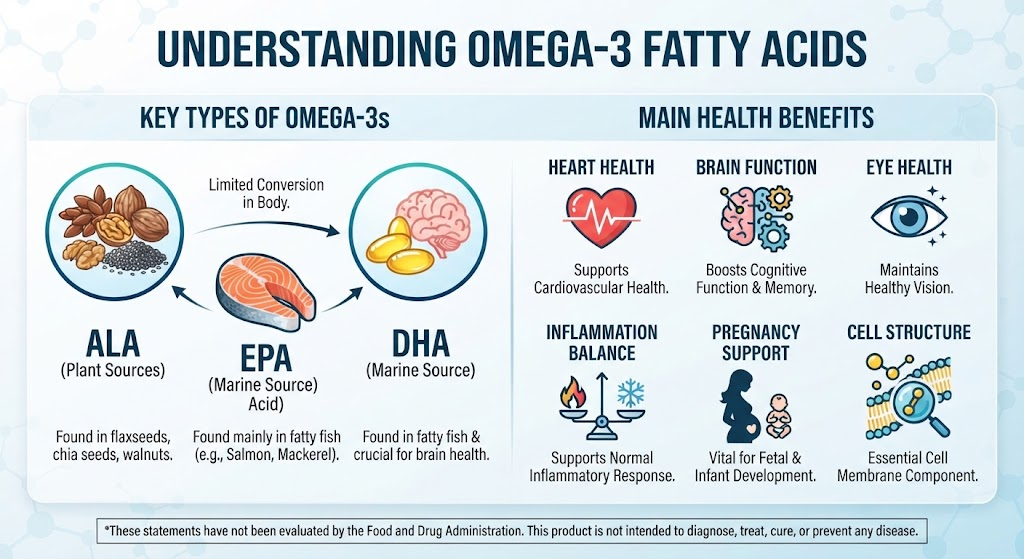
Omega-3 fatty acids are a family of polyunsaturated fats. Three forms are particularly important in human nutrition:
- ALA (alpha-linolenic acid)
- EPA (eicosapentaenoic acid)
- DHA (docosahexaenoic acid)
ALA is found mainly in plant foods while EPA and DHA are found primarily in fish and seafood.
The body can convert ALA into EPA and DHA but this conversion is limited. Therefore eating foods that directly provide EPA and DHA can be an effective way to increase these specific omega-3 fats.
Why Are Omega-3 Important?
Omega-3 fatty acids are components of cell membranes and contribute to many normal bodily processes.
Research has particularly examined omega-3 in relation to:
- Cardiovascular health
- Brain function
- Eye health
- Normal inflammatory processes
- Pregnancy and infant development
- Triglyceride levels
- Overall nutritional health
The benefits depend on the type and amount of omega-3 as well as a person’s overall diet and health.
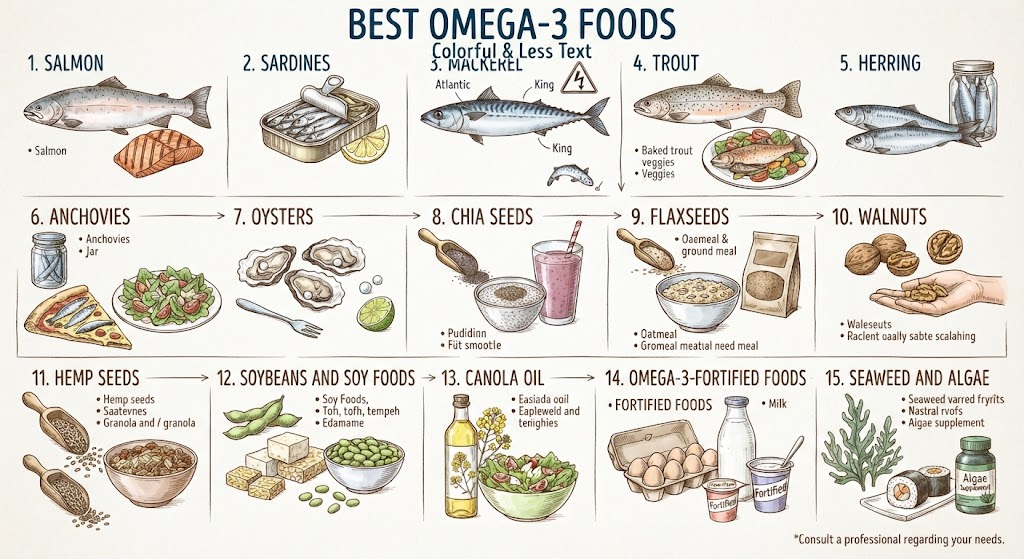
Best Omega-3 Foods to Add to Your Diet
1. Salmon
Salmon is one of the most well known dietary sources of EPA and DHA.
It also provides high quality protein, vitamin B12, selenium and other nutrients.
Fresh, frozen or appropriately prepared canned salmon can be used in:
- Salads
- Grain bowls
- Sandwiches
- Wraps
- Pasta dishes
- Baked meals
Choose preparation methods such as baking, grilling or roasting rather than deep frying.
2. Sardines
Sardines are small oily fish that can provide substantial amounts of EPA and DHA.
They also contain protein, vitamin B12, vitamin D, and minerals.
Because sardines are small fish they are often considered a practical seafood choice in terms of mercury exposure.
Look for canned sardines with lower sodium when possible.
3. Mackerel
Mackerel is another fatty fish that provides EPA and DHA.
It can be grilled, baked or incorporated into salads and other meals.
However, fish species differ considerably in mercury content. Some types of mackerel, particularly king mackerel can contain high mercury levels and should be distinguished from lower mercury varieties.
4. Trout
Trout provides omega-3 fatty acids along with protein and several vitamins and minerals.
Baked trout can make a simple dinner when served with vegetables and a whole grain or other suitable side.
Using herbs, garlic, lemon and black pepper can add flavor without relying heavily on salt.
5. Herring
Herring is another oily fish that contains EPA and DHA.
It can be eaten fresh, canned or prepared in various traditional dishes.
As with other seafood preparation matters. Smoked or heavily salted versions may contain significantly more sodium.
6. Anchovies
Anchovies are small fish that can add concentrated flavor and omega-3 fats to meals.
They can be added to:
- Salads
- Whole grain pizzas
- Pasta
- Sauces
- Vegetable dishes
Because anchovies are commonly preserved in salt, check the sodium content and use appropriate portions.
7. Oysters
Oysters provide omega-3 fats along with protein, zinc, vitamin B12 and other nutrients.
Seafood can be a nutrient dense addition to a balanced diet when properly sourced and prepared.
People who are pregnant or have certain health conditions should follow appropriate food safety guidance regarding raw or undercooked seafood.
8. Chia Seeds
Chia seeds are one of the most convenient plant based sources of ALA omega-3.
They also contain fiber, protein and minerals.
Add chia seeds to:
- Oatmeal
- Smoothies
- Yogurt
- Overnight oats
- Chia pudding
Because chia seeds absorb liquid, consuming them with adequate fluids is helpful.
9. Flaxseeds
Flaxseeds are another excellent plant source of ALA.
Ground flaxseed is particularly easy to add to foods.
Try mixing it into:
- Oatmeal
- Smoothies
- Yogurt
- Whole grain cereal
- Homemade baked goods
Store ground flaxseed appropriately to help maintain freshness.
10. Walnuts
Walnuts provide ALA along with healthy fats, fiber, protein and minerals.
A small serving can make a convenient snack.
You can also sprinkle walnuts over oatmeal, yogurt, salads or roasted vegetables.
Choose unsalted walnuts when possible.
11. Hemp Seeds
Hemp seeds provide ALA along with protein, healthy fats and minerals.
They have a mild flavor that works well in smoothies, oatmeal, salads and grain bowls.
12. Soybeans and Soy Foods
Soybeans provide ALA along with plant protein.
Foods such as tofu, tempeh, edamame and certain soy products can contribute to an overall nutritious diet.
They can be particularly useful for people who eat mostly plant based diets.
13. Canola Oil
Canola oil contains ALA and can be used as a cooking oil or in homemade salad dressings.
It can be an alternative to fats higher in saturated fat.
As with all oils, portion size matters because oils are calorie dense.
14. Omega-3-Fortified Foods
Some foods are fortified with omega-3 fatty acids.
Examples may include:
- Certain eggs
- Some milk products
- Certain plant based beverages
- Some yogurts
Check the nutrition label to determine whether a product actually provides omega-3 and which type is included.
15. Seaweed and Algae
Seaweed and algae are particularly interesting plant based sources because some algae products provide DHA and sometimes EPA.
Algae derived omega-3 products can be useful for people following vegetarian or vegan diets.
The amount of omega-3 can vary significantly between products so check nutrition labels.
Types of Omega-3: ALA vs. EPA vs. DHA
Understanding the three major omega-3 can make nutrition labels easier to interpret.
ALA
ALA is an essential fatty acid, meaning your body needs it from food.
Plant foods such as chia seeds, flaxseeds, walnuts, hemp seeds and canola oil contain ALA.
The body can convert some ALA into EPA and DHA but the conversion is limited.
EPA
EPA is found primarily in fatty fish and seafood.
It has been extensively studied for its role in cardiovascular health and normal inflammatory processes.
DHA
DHA is also found in fatty fish and seafood.
It is an important structural component of the brain and retina.
DHA is particularly important during periods of rapid growth and development including pregnancy and infancy.
Health Benefits of Omega-3 Foods
1. Supports Heart Health
Omega-3 fatty acids have been extensively studied in relation to cardiovascular health.
Eating fish as part of a balanced diet can provide omega-3 fats along with protein, vitamins and minerals.
Some omega-3 interventions can also lower triglyceride levels although effects vary depending on dose, formulation and individual health status.
2. Supports Brain Health
DHA is an important structural fat in the brain.
Adequate omega-3 intake contributes to normal brain structure and function.
Eating fish and other nutrient rich foods as part of an overall balanced diet is one way to support nutritional needs associated with brain health.
3. Supports Eye Health
DHA is an important component of the retina.
Including DHA containing foods such as fatty fish in a balanced diet can help provide this essential fatty acid.
4. Supports Normal Inflammatory Processes
EPA and DHA participate in the body’s regulation of inflammatory processes.
This does not mean omega-3 foods should be considered treatments for inflammatory diseases but they can be part of a healthy dietary pattern.
5. Supports Pregnancy and Infant Development
Omega-3 fatty acids, particularly DHA, play important roles in fetal and infant brain and eye development.
Pregnant and breastfeeding individuals should discuss seafood choices with their healthcare provider and follow current guidance on low mercury fish.
6. Provides Nutrient Dense Protein
Many omega-3-rich foods, especially fish and seafood also provide high quality protein.
This makes fatty fish particularly useful as part of meals designed to support muscle maintenance and overall nutrition.
How Much Omega-3 Do You Need?
There is no single recommended daily amount for EPA and DHA for every person.
For ALA nutritional recommendations exist and vary by age and sex.
Rather than focusing exclusively on a specific number, most people can benefit from including a variety of omega-3-containing foods regularly.
A practical strategy is to include fatty fish in meals several times per week while also incorporating plant sources such as chia seeds, flaxseeds, walnuts and soy foods.
Individual recommendations may differ based on health conditions, dietary preferences, pregnancy, medications and other factors.
Omega-3 Foods for Vegetarians and Vegans
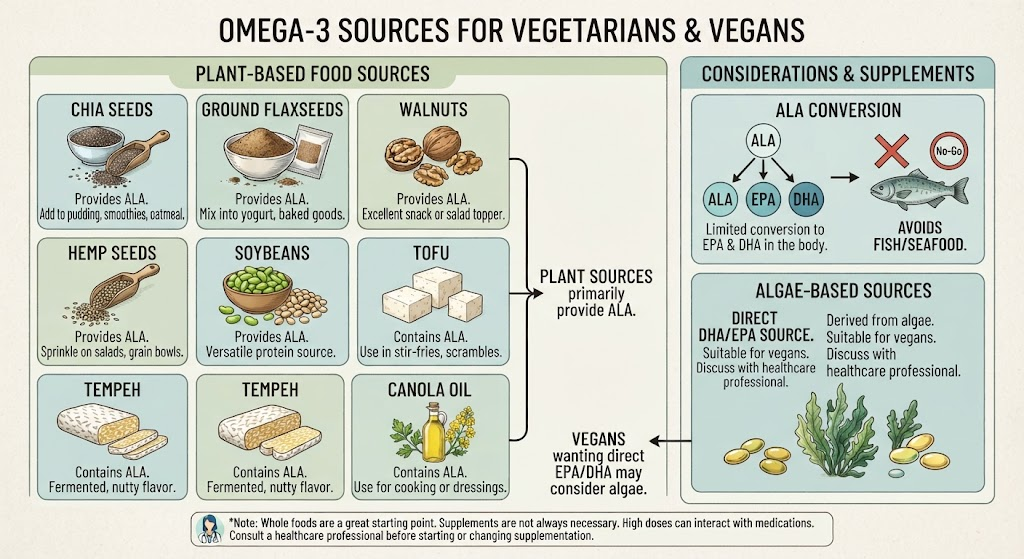
People who avoid fish and seafood can still obtain omega-3 fatty acids.
Plant based options include:
- Chia seeds
- Ground flaxseeds
- Walnuts
- Hemp seeds
- Soybeans
- Tofu
- Tempeh
- Canola oil
- Algae based foods or supplements
The main consideration is that most plant sources provide ALA rather than EPA and DHA.
For people following a vegan diet who want direct DHA or EPA, algae derived products may be an option to discuss with a healthcare professional.
Omega-3 Foods vs. Supplements
Whole foods are generally a useful starting point for improving nutritional quality.
Eating fatty fish provides omega-3 along with protein, vitamins, minerals and other nutrients.
Supplements can provide concentrated amounts of EPA and DHA, but they are not automatically necessary for everyone.
High dose omega-3 supplements may also interact with certain medications or affect bleeding risk in some circumstances.
If you take blood thinning medication, have a medical condition or are considering high dose omega-3 supplementation speak with a healthcare professional.
How to Add More Omega-3 Foods to Your Diet
Increasing omega-3 intake can be simple.
Breakfast
Add chia seeds or ground flaxseed to oatmeal, yogurt or a smoothie.
Lunch
Make a salmon salad using leafy greens, vegetables, beans and an olive oil based dressing.
Snack
Choose a small serving of walnuts instead of highly processed snacks.
Dinner
Prepare baked salmon, trout or sardines with vegetables and a whole grain side.
Plant Based Meal
Try tofu or tempeh with vegetables, brown rice and a sprinkle of hemp seeds.
Sample Omega-3 Rich One Day Meal Plan
Breakfast:
Oatmeal topped with blueberries, chia seeds and walnuts.
Morning snack:
Plain yogurt with ground flaxseed.
Lunch:
Large vegetable salad with chickpeas, avocado and an olive oil dressing.
Afternoon snack:
A small handful of walnuts and a piece of fruit.
Dinner:
Baked salmon with roasted broccoli and brown rice.
Beverage:
Water or unsweetened tea.
This is a general example rather than a medical diet. Portions and food choices should be adapted to individual nutritional needs.
Choosing Fish Safely
Fish can be an excellent source of omega-3 but species differ in mercury content.
When selecting seafood consider choosing a variety of fish that are lower in mercury.
Generally, smaller oily fish such as sardines and anchovies can be useful choices while certain large predatory fish can contain higher mercury levels.
Pregnant individuals, breastfeeding individuals and young children should follow current seafood safety recommendations from appropriate health authorities.
Preparation also matters. Baked, grilled, steamed or roasted fish is generally preferable to deep fried preparations when the goal is an overall nutrient rich diet.
Frequently Asked Questions
What foods are highest in omega-3?
Fatty fish such as salmon, sardines, trout, herring and certain types of mackerel are among the best dietary sources of EPA and DHA. Chia seeds, flaxseeds, walnuts and hemp seeds provide plant based ALA.
What is the best plant based source of omega-3?
Chia seeds and flaxseeds are particularly rich in ALA. Walnuts and hemp seeds are also useful sources. Algae derived products can provide direct DHA and sometimes EPA.
Is salmon a good source of omega-3?
Yes. Salmon is rich in EPA and DHA and also provides high quality protein and several vitamins and minerals.
Are walnuts high in omega-3?
Walnuts contain ALA, the plant based essential omega-3 fatty acid. They are also a source of fiber and unsaturated fats.
Do omega-3 foods help your heart?
Omega-3 fatty acids have been extensively studied for cardiovascular health. Fatty fish can be part of a heart conscious dietary pattern particularly when it replaces less nutritious protein sources.
Can you get enough omega-3 without eating fish?
Yes, you can obtain ALA from plant foods such as chia seeds, flaxseeds, walnuts, hemp seeds and soy foods. However, ALA is converted to EPA and DHA only to a limited extent. Algae derived products can provide direct DHA and sometimes EPA.
Are omega-3 supplements necessary?
Not necessarily. Many people can obtain omega-3 fats through a varied diet. Whether supplementation is appropriate depends on individual dietary intake and health needs.
Conclusion
Omega-3 foods can be an important part of a balanced and nutrient rich diet. Fatty fish such as salmon, sardines, trout, herring and appropriate varieties of mackerel provide EPA and DHA while plant foods such as chia seeds, flaxseeds, walnuts, hemp seeds and soy products provide ALA.
Omega-3 fatty acids support normal functions throughout the body and have been studied extensively for their roles in heart health, brain health, eye health, normal inflammatory processes and healthy development.
You don’t need to completely redesign your diet to increase omega-3 intake. Start with simple changes, add chia or ground flaxseed to breakfast, snack on walnuts, choose fatty fish regularly or use tofu and other soy foods in plant based meals.
For most people, the best approach is to focus on variety and overall dietary quality rather than relying on one “superfood” or high dose supplement. If you are pregnant, take medications, have a medical condition or are considering concentrated omega-3 supplements, discuss your individual needs with a qualified healthcare professional.
By regularly including nutritious sources of omega-3 fatty acids alongside vegetables, fruits, whole grains, legumes and other healthy foods you can build a balanced eating pattern that supports overall wellness and long term health.
3 Responses
[…] fats include omega-3 and omega-6 fatty […]
[…] Walnuts are notable for their plant based omega-3 fatty acid content. […]
[…] Omega-3 fatty acids are important components of cell membranes and play roles in brain and eye health. […]