Inflammation is a natural process that plays an important role in protecting the body. When someone experience an injury or infection, your immune system activates inflammatory responses that help your body respond to the problem. Inflammation that persists over a long period can be associated with a variety of chronic health conditions.
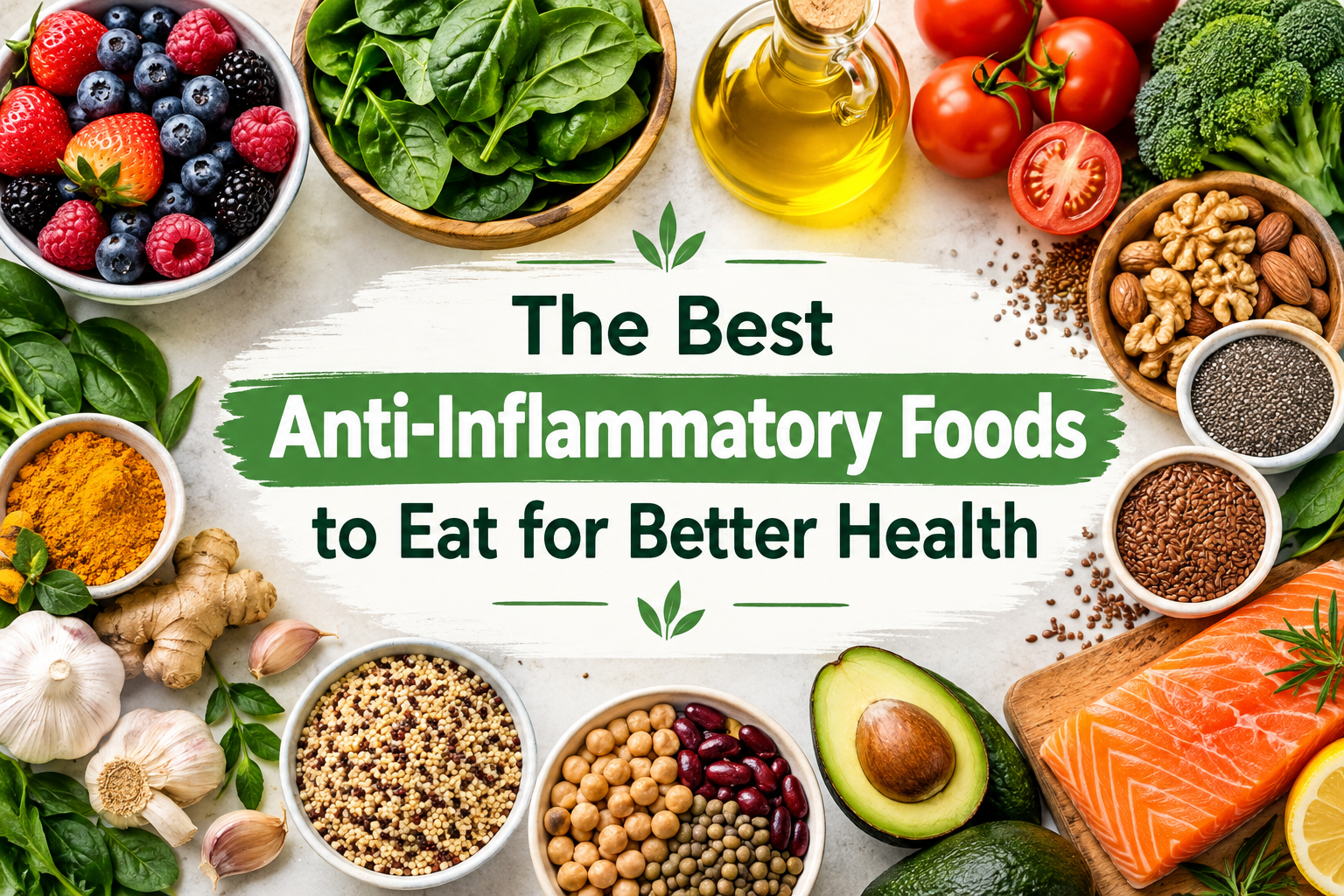
Diet influences many aspects of health, researchers and nutrition professionals have increasingly focused on the relationship between food and inflammation. For example, certain dietary patterns emphasize vegetables, fruits, whole grains, legumes, fish, nuts, seeds and healthy fats. At the same time, limiting excessive amounts of highly processed foods, added sugars and unhealthy fats.
These foods are often described as anti-inflammatory foods.
It is important to understand that no individual food can eliminate inflammation or cure a disease. Instead, the goal is to build an overall eating pattern that provides a wide range of nutrients and supports good health.
This guide explains what inflammation is, how diet may influence it, the best anti-inflammatory foods to include in your meals, foods to limit and practical ways to follow an anti-inflammatory diet.
What is Inflammation?
Inflammation is part of the body’s natural defense system.
When your body detects an injury, infection or other threat, the immune system responds by activating a series of processes. As a result, you ,may experience temporary symptoms such as redness, warmth, swelling or discomfort.
Short term inflammation can be beneficial because it helps the body respond to immediate problems.
The situation is different when inflammatory activity remains elevated for extended periods. In contrast, Long term inflammation has been associated with several chronic health conditions although the relationship is complex and involves many factors.
Diet is only one part of this picture. Physical activity, sleep, stress, genetics, environmental factors, body composition and existing health conditions can also influence inflammatory processes.
What are Anti-Inflammatory Foods?
Anti-inflammatory foods is a general nutrition term rather than a formal medical category.
It usually refers to foods that provide nutrients and naturally occurring compounds associated with healthy dietary patterns.
These foods often include:
- Vegetables
- Fruits
- Whole grains
- Beans and lentils
- Nuts and seeds
- Fatty fish
- Healthy plant oils
- Herbs and spices
Many of these foods provide dietary fiber, unsaturated fats, vitamins, minerals and plant compounds such as polyphenols and carotenoids.
Rather than focusing on one food, it is more useful to think about the overall quality of your diet.
1. Fatty Fish
Fatty fish is one of the most commonly discussed foods in an anti-inflammatory diet.
Examples include:
- Salmon
- Sardines
- Mackerel
- Trout
- Herring
These fish provide protein and omega-3 fatty acids.
Omega-3 fatty acids are essential fats involved in numerous functions throughout the body. Including sources of omega-3 fats in a balanced diet can contribute to a heart healthy dietary pattern.
Try adding fish to your meals by baking, grilling, steaming or roasting it.
Avoid relying primarily on heavily fried preparations if your goal is to build an overall nutrient rich eating pattern.
2. Berries
Berries are colorful fruits that can add flavor and nutrients to an anti-inflammatory diet.
Blueberries, strawberries, raspberries and blackberries provide fiber vitamins and various plant compounds including polyphenols.
Their natural colors come partly from compounds such as anthocyanins.
You can easily include berries in your diet by adding them to:
- Oatmeal
- Plain yogurt
- Smoothies
- Salads
- Whole grain cereals
- Snacks
Fresh and frozen berries can both be convenient choices.
3. Leafy Green Vegetables
Leafy greens are among the most nutrient dense vegetables available.
Spinach, kale, collard greens, Swiss chard and similar vegetables can provide fiber, folate, vitamin K, carotenoids and other nutrients.
Eating leafy greens regularly can help increase your intake of vegetables and important micronutrients.
If you do not enjoy salads try adding greens to:
- Soups
- Omelets
- Curries
- Stir fries
- Sandwiches
- Smoothies
The best vegetable is often the one you enjoy eating consistently.
4. Extra Virgin Olive Oil
Olive oil is a major component of several healthy dietary patterns.
It is rich in monounsaturated fat and contains naturally occurring plant compounds.
Extra virgin olive oil can be used as a salad dressing, cooking ingredient or finishing oil.
Try using it with vegetables, whole grains, beans or fish.
However, even healthy oils are calorie dense so portions still matter.
5. Tomatoes
Tomatoes are another useful addition to a nutrient rich diet.
They provide vitamin C, potassium, folate and carotenoids including lycopene.
Tomatoes can be enjoyed raw or cooked.
Add them to:
- Salads
- Soups
- Sauces
- Sandwiches
- Curries
- Grain bowls
Using tomatoes regularly can make it easier to increase your overall vegetable intake.
6. Broccoli and Other Cruciferous Vegetables
Cruciferous vegetables include broccoli, cauliflower, cabbage, Brussels sprouts, bok choy and similar vegetables.
They provide fiber, vitamins, minerals and naturally occurring plant compounds.
Try roasting broccoli with olive oil and herbs adding cauliflower to soups or including cabbage in salads and stir fries.
Eating different types of vegetables is more important than focusing on one specific vegetable.
7. Nuts
Nuts can be an excellent source of healthy fats, protein, fiber, vitamins and minerals.
Walnuts, almonds, pistachios and other nuts can fit into a balanced anti-inflammatory eating pattern.
Walnuts are particularly notable because they provide alpha linolenic acid, a plant based omega-3 fatty acid.
Try adding a small portion of nuts to:
- Oatmeal
- Yogurt
- Salads
- Whole grain cereals
- Fruit snacks
Choose unsalted or lightly salted varieties when possible if you are trying to reduce sodium intake.
8. Seeds
Seeds can provide healthy fats, fiber, protein and minerals.
Useful options include:
- Chia seeds
- Flaxseeds
- Pumpkin seeds
- Sunflower seeds
- Sesame seeds
Ground flaxseed can be added to oatmeal or smoothies. Chia seeds can be mixed into yogurt or overnight oats.
Seeds are small but they can make meals more nutrient dense.
9. Beans and Lentils
Beans and lentils are important foods for plant based and mixed diets.
They provide fiber, protein, complex carbohydrates, vitamins and minerals.
Examples include:
- Chickpeas
- Kidney beans
- Black beans
- Pinto beans
- Green lentils
- Red lentils
Legumes can be added to soups, curries, salads, stews, wraps and grain bowls.
Their combination of protein and fiber can also make meals more satisfying.
10. Whole Grains
Whole grains can be an important part of an anti-inflammatory eating pattern.
Examples include:
- Oats
- Brown rice
- Barley
- Quinoa
- Whole wheat bread
- Whole grain pasta
Whole grains contain fiber and other nutrients that may be reduced during extensive refining.
Try replacing some refined grains with whole grains throughout the week.
For example, use oatmeal for breakfast or choose brown rice with a vegetable and protein based meal.
11. Avocados
Avocados provide monounsaturated fats, fiber, potassium and other nutrients.
They can be added to salads, whole grain toast, sandwiches, grain bowls or used as a base for dips.
Their creamy texture can also make meals satisfying without relying heavily on highly processed sauces.
Because avocados are energy dense, portion size can still be considered as part of your overall diet.
12. Garlic
Garlic has been used in traditional cuisines for centuries.
It contains sulfur containing compounds and can provide a strong flavor to foods without requiring large amounts of salt.
Use garlic in:
- Vegetable dishes
- Soups
- Beans
- Lentils
- Fish
- Sauces
- Curries
Garlic is best viewed as a nutritious culinary ingredient rather than a replacement for medical treatment.
13. Ginger
Ginger is another flavorful ingredient commonly used in many cuisines.
Fresh ginger can be added to soups, stir fries, curries, sauces and beverages.
Its distinctive flavor can help make nutritious meals more enjoyable.
Like other herbs and spices, ginger can contribute naturally occurring plant compounds to the diet but it should not be treated as a cure for an inflammatory disease.
14. Green Tea
Green tea contains naturally occurring polyphenols and can be a low calorie beverage when consumed without added sugar.
Replacing sugary beverages with unsweetened tea can be one practical way to improve the overall quality of your diet.
However, green tea contains caffeine so people who are sensitive to caffeine should consider their individual tolerance.
15. Dark Chocolate
Dark chocolate with a relatively high cocoa content contains cocoa derived polyphenols.
However, chocolate products can also contain substantial amounts of added sugar and calories.
If you enjoy dark chocolate, a small portion can fit into an otherwise balanced diet.
The goal is not to eat large amounts because a food contains beneficial compounds. Overall dietary patterns matter more.
Foods That May Work Against an Anti-Inflammatory Eating Pattern
Building an anti-inflammatory diet is not only about what you add to your plate.
It can also involve reducing excessive intake of certain foods.
Consider limiting frequent consumption of:
Highly Processed Foods
Many ultra processed foods contain combinations of refined carbohydrates, added sugars, sodium and unhealthy fats.
Examples include certain packaged snacks, highly processed desserts and some fast food products.
Sugary Beverages
Soft drinks, sweetened teas, energy drinks and other sugary beverages can contribute significant amounts of added sugar.
Choosing water or unsweetened beverages more often can be a practical change.
Processed Meats
Processed meats can be high in sodium and saturated fat.
Examples include certain sausages, hot dogs, bacon and other processed meat products.
Excessive Added Sugar
Eating large amounts of foods and drinks high in added sugars can make it harder to maintain a nutrient rich diet.
This does not mean eliminating all sweets. Instead, consider how frequently and how much you consume.

How to Build an Anti-Inflammatory Meal
Creating an anti-inflammatory meal does not require expensive ingredients or complicated recipes.
Try combining several food groups.
For example:
Breakfast: Oatmeal topped with berries, walnuts and chia seeds.
Lunch: A large salad containing leafy greens, tomatoes, chickpeas, avocado and olive oil.
Snack: Plain yogurt with berries and ground flaxseed.
Dinner: Grilled salmon with roasted broccoli, sweet potatoes and a whole grain.
These are simply examples. You can adapt the approach to your preferences, budget, culture and dietary requirements.
Benefits of Following an Anti-Inflammatory Eating Pattern
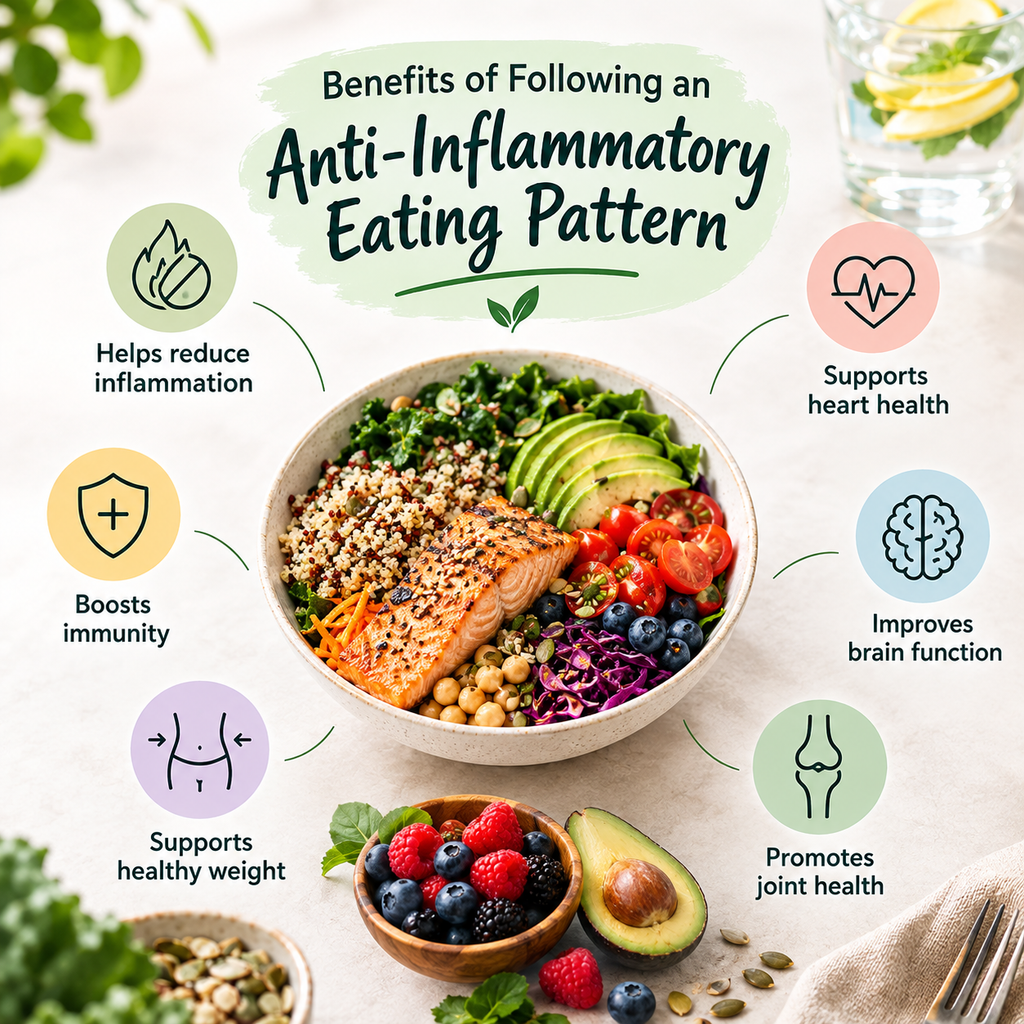
An overall nutrient rich dietary pattern may support several aspects of health.
Supports Heart Health
Vegetables, fruits, whole grains, legumes, nuts, seeds, fish and unsaturated fats can contribute to a heart supportive diet.
Supports Digestive Health
Fiber rich foods such as legumes, vegetables, fruits and whole grains contribute to healthy digestion.
Supports Healthy Weight Management
Many nutrient dense foods provide fiber or protein which can contribute to fullness and help create satisfying meals.
Provides Essential Nutrients
A varied diet increases opportunities to obtain vitamins, minerals, healthy fats, protein and other nutrients.
Encourages Healthy Eating Habits
Focusing on whole and minimally processed foods can make nutritious choices the foundation of everyday meals.
Tips for Starting an Anti-Inflammatory Diet
You do not have to change everything at once.
Start With Vegetables
Add an extra serving of vegetables to one meal each day.
Eat More Whole Fruits
Keep fruit available as a convenient snack.
Choose Whole Grains
Replace some refined grains with oats, brown rice, barley, quinoa or whole wheat products.
Include Fish
If you eat fish consider including fatty fish as part of your regular meal rotation.
Add Nuts and Seeds
Sprinkle nuts or seeds over oatmeal, yogurt, salads or whole grain dishes.
Use Herbs and Spices
Garlic, ginger, turmeric, cinnamon and other herbs and spices can add flavor to nutritious meals.
Drink More Water
Water can be your primary beverage while sugary drinks can be limited.
Focus on Consistency
Healthy eating is about what you do regularly, not one individual meal.
Is an Anti-Inflammatory Diet Right for Everyone?
A healthy eating pattern can benefit many people but individual nutritional needs vary.
People with diabetes, kidney disease, food allergies, digestive disorders, eating disorders or other medical conditions may require personalized dietary guidance.
If you have a medical condition or take prescription medication consult a doctor or registered dietitian before making major changes to your diet.
Also remember that inflammation is not automatically harmful. Short term inflammation is part of the body’s normal response to injury and infection.
The goal is not to eliminate inflammation completely but to support overall health through balanced nutrition and healthy lifestyle habits.
Frequently Asked Questions About Anti-Inflammatory Foods
What are the best anti-inflammatory foods?
Commonly recommended foods within healthy dietary patterns include fatty fish, berries, leafy greens, vegetables, whole grains, beans, lentils, nuts, seeds, olive oil and other minimally processed foods.
What foods should I avoid to reduce inflammation?
Rather than completely banning foods consider limiting excessive consumption of highly processed foods, sugary beverages, added sugars, processed meats and foods high in unhealthy fats.
Can anti-inflammatory foods cure inflammation?
No, Individual foods should not be considered cures. A healthy dietary pattern may support overall health but persistent or medically significant inflammation requires appropriate professional evaluation.
How quickly does an anti-inflammatory diet work?
There is no universal timeline. Nutrition affects people differently, and health outcomes depend on many factors. Healthy dietary changes are best viewed as long term habits rather than a quick treatment.
Can I eat meat on an anti-inflammatory diet?
Yes, an anti-inflammatory eating pattern does not necessarily require eliminating meat. You can emphasize a variety of protein sources including fish, poultry, legumes, eggs, nuts and seeds while limiting excessive intake of processed meats.
Conclusion
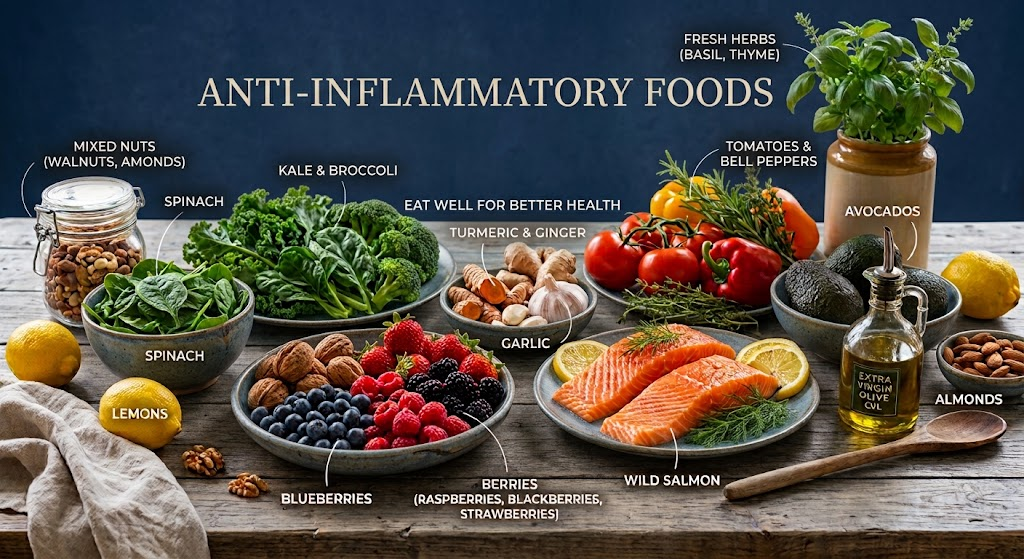
An anti-inflammatory diet is less about finding a single powerful food and more about creating a balanced eating pattern built around nutritious ingredients. Foods such as fatty fish, berries, leafy green vegetables, tomatoes, broccoli, nuts, seeds, beans, lentils, whole grains, olive oil, garlic, ginger and other minimally processed foods can contribute valuable nutrients to your diet.
These anti-inflammatory foods provide combinations of fiber, healthy fats, vitamins, minerals and naturally occurring plant compounds. At the same time limiting excessive consumption of sugary drinks, highly processed foods, processed meats and foods high in added sugars can help improve overall dietary quality.
Remember that food is only one part of your health. Regular physical activity, adequate sleep, stress management, maintaining a healthy lifestyle and appropriate medical care also matter.
Most importantly do not aim for dietary perfection. Start with practical changes you can maintain. Add more vegetables to your meals, choose whole grains more often, include sources of healthy fats, eat a variety of fruits and make nutritious foods the foundation of your everyday diet.
Over time, these consistent choices can help create a balanced eating pattern that supports your overall health and well-being.
2 Responses
[…] your immune system isn’t only about what you add to your diet. It can also be useful to moderate foods that […]
[…] Inflammation is a normal part of the body’s immune response. It helps the body respond to injury, infection and other challenges. […]