
Iron is an essential mineral that plays a central role in transporting oxygen throughout the body. It is also involved in energy production, normal cellular function and several important biological processes. Because the body cannot make enough iron on its own, getting adequate amounts from food is an important part of a balanced diet.
Fortunately, many foods contain iron, including meat, seafood, poultry, beans, lentils, leafy green vegetables, nuts, seeds and fortified grains. However not all dietary iron is absorbed by the body at the same rate. The type of iron in a food and the other foods eaten at the same meal can affect absorption.
Understanding the best iron rich foods and how to combine them can help you build meals that provide more nutritional value.
In this guide, you’ll learn about the best dietary sources of iron, the difference between heme and non-heme iron, foods that can improve iron absorption, foods that may reduce absorption and practical ways to include more iron in your everyday diet.
What is Iron and Why Does the Body Need It?
Iron is a mineral required for the production of hemoglobin, a protein in red blood cells that helps carry oxygen from the lungs to tissues throughout the body.
Iron is also part of myoglobin, a protein that helps supply oxygen to muscles. In addition iron participates in various cellular and metabolic processes.
When dietary iron intake is consistently too low, the body’s iron stores can become depleted. Severe or prolonged deficiency can contribute to iron deficiency anemia.
Maintaining adequate iron intake is therefore important for normal energy metabolism, oxygen transport and overall health.
Heme Iron vs. Non-Heme Iron
There are two main forms of dietary iron: heme iron and non-heme iron.
Heme Iron
Heme iron is found primarily in animal foods. It is generally more readily absorbed by the body.
Common sources include:
- Beef
- Lamb
- Chicken
- Turkey
- Fish
- Shellfish
- Organ meats
Non-Heme Iron
Non-heme iron is found in both plant foods and animal foods. It is not absorbed as efficiently as heme iron but it can still make an important contribution to total iron intake.
Common sources include:
- Lentils
- Beans
- Chickpeas
- Tofu
- Spinach
- Pumpkin seeds
- Sesame seeds
- Nuts
- Whole grains
- Fortified cereals
People following vegetarian or vegan diets can obtain iron from a variety of plant foods by eating enough iron containing foods and using strategies that improve absorption.

The Best Iron Rich Foods
A wide range of foods can help you increase your dietary iron intake. Here are some of the most useful options to include in a balanced diet.
1. Beef
Beef is a well known source of heme iron and can contribute significantly to daily iron intake.
Lean cuts can be incorporated into balanced meals alongside vegetables, whole grains or legumes.
Try adding lean beef to:
- Stir fries
- Grain bowls
- Salads
- Tacos
- Soups
- Vegetable based meals
Portion sizes should be appropriate for your overall dietary needs and a variety of protein sources can provide broader nutritional benefits.
2. Liver and Other Organ Meats
Organ meats particularly liver can contain very high amounts of iron along with other nutrients such as vitamin B12 and vitamin A.
Because liver can be exceptionally nutrient dense, it does not need to be eaten frequently to contribute nutrients. Pregnant individuals should discuss liver consumption with a healthcare professional because excessive vitamin A from certain animal sources can be a concern during pregnancy.
3. Shellfish
Shellfish such as oysters, clams and mussels can be excellent sources of iron.
It also provide protein and other nutrients making them a nutrient dense addition to meals.
They can be served with vegetables, whole grains or salads for a balanced meal.
4. Fish
Some fish provide iron while also supplying high quality protein and depending on the species beneficial omega-3 fatty acids. Examples include sardines and tuna.
Including fish as part of a varied diet can provide multiple nutrients rather than focusing on iron alone.
5. Chicken and Turkey
Poultry contains iron although generally less than many red meats and certain seafood options.
Chicken and turkey are versatile and can be used in sandwiches, salads, soups, wraps, stir fries and grain bowls.
Dark meat generally contains more iron than very lean white meat.
6. Lentils
Lentils are one of the most practical plant based iron rich foods.
They provide non-heme iron along with protein, fiber, folate and other nutrients.
Use lentils in:
- Soups
- Curries
- Salads
- Grain bowls
- Stews
- Vegetable burgers
Adding tomatoes, bell peppers, lemon juice or other vitamin C rich foods can help improve absorption of the non heme iron in lentils.
7. Beans
Beans are another valuable source of plant based iron.
Kidney beans, black beans, white beans and other varieties can contribute iron while also providing protein and dietary fiber.
Add beans to chili, soups, salads, wraps, rice dishes or vegetable bowls.
8. Chickpeas
Chickpeas provide iron, protein, fiber and other nutrients.
They can be used to make hummus, added to salads, roasted as a snack or incorporated into curries and stews.
For a simple iron supportive meal, combine chickpeas with tomatoes, leafy greens and lemon juice.
9. Tofu
Tofu is a versatile plant based protein that can contribute iron to vegetarian and vegan diets.
It works well in stir fries, soups, curries, grain bowls and salads.
Pairing tofu with vegetables rich in vitamin C can be a useful way to support non-heme iron absorption.
10. Spinach
Spinach contains iron along with folate, vitamin K, carotenoids and other nutrients.
Although spinach is a nutritious food its iron is non-heme iron and some compounds in spinach can reduce iron absorption.
Eating spinach as part of a varied diet is still a useful way to increase overall nutrient intake.
Try combining spinach with tomatoes, bell peppers, citrus or other vitamin C containing foods.
11. Pumpkin Seeds
Pumpkin seeds are a convenient source of plant based iron and also provide protein, magnesium and healthy fats.
Add them to:
- Oatmeal
- Yogurt
- Salads
- Smoothies
- Homemade trail mixes
- Whole grain bowls
Because seeds are calorie dense, moderate portions can fit easily into a balanced diet.
12. Sesame Seeds and Tahini
Sesame seeds contain iron and can be used in many different dishes. Tahini, a paste made from sesame seeds, is especially useful for adding flavor and nutrients to meals.
Use tahini in hummus, salad dressings, sauces or grain bowls.
13. Cashews
Cashews contain iron as well as protein, magnesium, copper and healthy fats.
A small serving can work as a snack or topping for oatmeal, yogurt, salads and stir fries.
14. Quinoa
Quinoa is a whole grain like seed that provides iron, protein, fiber and other nutrients.
Use it as a base for grain bowls or combine it with beans, vegetables and a vitamin C rich dressing.
15. Fortified Breakfast Cereals
Some breakfast cereals are fortified with iron and can provide a substantial amount of the mineral.
Check the nutrition facts label to determine how much iron a particular product contains.
For a more balanced breakfast pair fortified cereal with fruit milk or a fortified alternative and nuts or seeds.
16. Oatmeal
Oatmeal contains some iron and can contribute to overall dietary intake.
Top oatmeal with pumpkin seeds, strawberries, kiwi or another fruit to combine iron containing foods with vitamin C rich produce.
17. Dark Chocolate
Cocoa and dark chocolate can contain iron although they should be viewed as an occasional food rather than a primary strategy for meeting iron requirements.
Choose products with a higher cocoa content and be mindful of added sugar and portion size.

How Vitamin C Helps Iron Absorption
One of the most useful strategies for getting more benefit from plant based iron is pairing non-heme iron foods with vitamin C.
Vitamin C can increase the absorption of non-heme iron.
Good vitamin C rich foods include:
- Bell peppers
- Oranges
- Kiwi
- Strawberries
- Guava
- Tomatoes
- Broccoli
- Papaya
- Lemon
- Lime
For example, you could combine:
Lentils + tomatoes + bell peppers
Chickpeas + spinach + lemon juice
Beans + tomato salsa + fresh peppers
Tofu + broccoli + bell peppers
These combinations can make nutritious meals while supporting iron absorption.
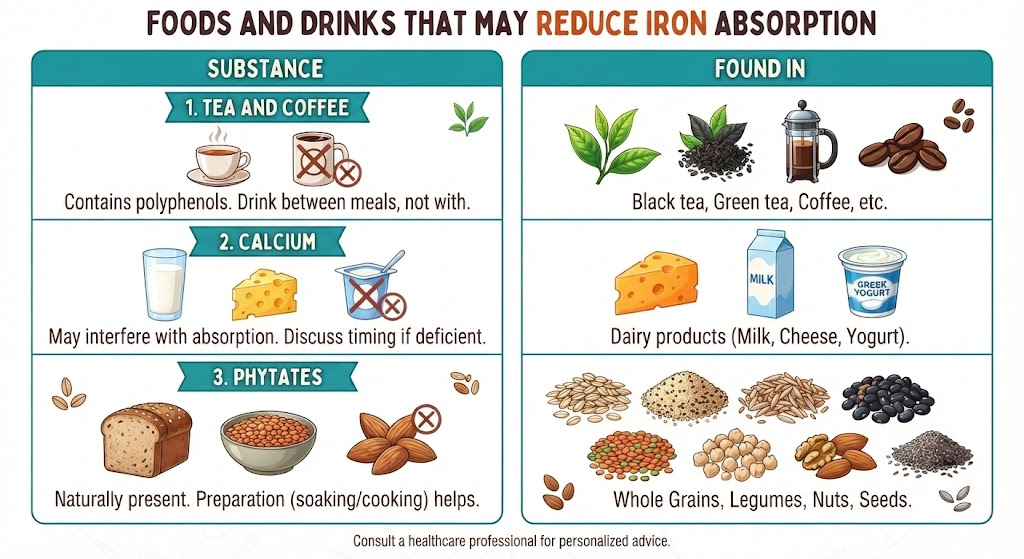
Foods and Drinks That May Reduce Iron Absorption
Some compounds can interfere with the absorption of non-heme iron when consumed around the same meal.
Tea and Coffee
Tea and coffee contain polyphenols that can reduce non-heme iron absorption when consumed with meals.
If you are specifically trying to improve iron absorption consider drinking tea or coffee between meals rather than immediately with iron rich meals.
Calcium
Calcium can interfere with iron absorption under certain circumstances. Dairy foods are nutritious and do not necessarily need to be avoided but people with diagnosed iron deficiency may benefit from discussing meal timing and supplementation with a healthcare professional.
Phytates
Phytates occur naturally in foods such as whole grains, legumes, nuts and seeds. They can reduce absorption of certain minerals including iron.
However foods containing phytates are also highly nutritious and provide fiber, protein, vitamins, minerals and other beneficial compounds.
Preparation methods such as soaking, sprouting, fermenting and cooking can alter phytate levels.
The goal should be a varied diet rather than eliminating healthy plant foods.
Iron Rich Foods for Vegetarians and Vegans
People who do not eat meat can still obtain iron from plant foods.
Good vegetarian and vegan iron sources include:
- Lentils
- Beans
- Chickpeas
- Tofu
- Tempeh
- Pumpkin seeds
- Sesame seeds
- Quinoa
- Fortified cereals
- Spinach
- Kale
- Dried fruits
Because plant based iron is non-heme iron, meal planning can be particularly helpful.
A simple approach is to combine an iron rich plant food with a vitamin C rich fruit or vegetable.
For example a lentil curry with tomatoes and bell peppers can provide both non-heme iron and vitamin C.
Iron Rich Foods for Breakfast
Breakfast can be an easy opportunity to increase iron intake.
Try:
- Iron fortified cereal with strawberries
- Oatmeal with pumpkin seeds and kiwi
- Whole grain toast with tahini and fruit
- Tofu scramble with bell peppers
- Greek yogurt with fortified cereal and berries
The exact nutritional content depends on the products and portions you choose so checking nutrition labels can be useful.
Iron Rich Foods for Lunch
For lunch consider meals such as:
- Lentil soup with a tomato salad
- Chickpea and quinoa bowl with bell peppers
- Bean tacos with tomato salsa
- Chicken and vegetable salad
- Tofu stir fry with broccoli and peppers
- Lean beef with vegetables and whole grains
Adding colorful vegetables can increase the overall nutrient density of your meal.
Iron Rich Foods for Dinner
Dinner can include a combination of protein, iron containing foods, vegetables and whole grains.
Examples include:
- Grilled lean beef with broccoli and brown rice
- Lentil curry with tomatoes and whole grains
- Baked fish with spinach and potatoes
- Chicken with roasted vegetables
- Tofu and vegetable stir fry
- Bean and quinoa bowls
Building meals around several nutritious ingredients is generally more useful than relying on one food.
How Much Iron Do You Need?
Iron requirements vary according to age, sex, life stage and individual circumstances.
For many adults, commonly used dietary reference values are around 8 mg per day for adult men and postmenopausal women, while premenopausal women generally need around 18 mg per day because of menstrual iron losses.
Requirements are higher during pregnancy.
Individual needs can vary especially for people with certain health conditions, heavy menstrual bleeding, restrictive diets or increased nutritional requirements.
If you are concerned about iron deficiency a healthcare professional can assess your situation and determine whether dietary changes, testing or supplementation may be appropriate.
Signs of Possible Iron Deficiency
Iron deficiency can develop gradually and may not cause obvious symptoms at first.
Possible signs include:
- Fatigue
- Weakness
- Difficulty concentrating
- Dizziness
- Pale skin
- Shortness of breath during activity
- Headaches
- Cold hands and feet
These symptoms can have many different causes and do not necessarily mean that you have low iron.
Iron deficiency anemia requires appropriate evaluation. Taking high dose iron supplements without medical guidance is not recommended because excessive iron can be harmful.
Iron Supplements vs. Iron Rich Foods
Food should generally be the first place to obtain nutrients when possible.
Iron rich foods provide iron along with other valuable nutrients such as protein, fiber, vitamins, minerals and beneficial plant compounds.
However some people may require iron supplements when dietary intake is insufficient or when a healthcare professional identifies iron deficiency.
Iron supplements can cause side effects such as constipation, nausea, stomach discomfort or other digestive symptoms. They should be used according to professional advice.
Tips for Getting More Iron From Your Diet
Here are simple strategies for increasing iron intake:
- Include an iron containing food at most main meals.
- Eat lentils, beans or chickpeas regularly.
- Add seeds such as pumpkin or sesame seeds to meals.
- Pair plant based iron with vitamin C rich foods.
- Choose iron fortified foods when appropriate.
- Avoid drinking tea or coffee immediately with iron focused meals if improving absorption is a priority.
- Eat a varied diet rather than depending on one food.
- Use different protein sources throughout the week.
- Include both animal and plant sources if they fit your dietary preferences.
- Consult a healthcare professional if you suspect iron deficiency.
Frequently Asked Questions
What foods are highest in iron?
Some of the richest dietary sources include organ meats, shellfish, certain red meats, fortified cereals, lentils, beans, tofu, pumpkin seeds and other legumes and seeds. The exact amount varies by food and serving size.
What is the best source of iron for vegetarians?
Lentils, beans, chickpeas, tofu, fortified cereals, pumpkin seeds, sesame seeds and quinoa are useful plant based sources of iron. Pairing them with vitamin C rich foods can improve absorption.
Which fruit is high in iron?
Most fruits are not especially high in iron compared with legumes, seeds, meat or fortified foods. However dried fruits such as raisins and apricots can contribute some iron. Fruits such as oranges, kiwi, strawberries and guava are particularly useful because their vitamin C can help improve absorption of plant based iron eaten with the meal.
Does vitamin C increase iron absorption?
Yes. Vitamin C can improve absorption of non-heme iron found primarily in plant foods. Pairing legumes, tofu or seeds with foods such as bell peppers, tomatoes, citrus fruits or broccoli can be helpful.
Does coffee reduce iron absorption?
Coffee contains compounds that can reduce non-heme iron absorption when consumed with a meal. If improving iron absorption is a priority, drinking coffee between meals rather than alongside iron rich foods may be useful.
Are eggs high in iron?
Eggs contain some iron but they are not among the richest dietary sources. They can still contribute to overall nutrient intake as part of a balanced diet.
Can you get enough iron without eating meat?
Yes. Many people can obtain iron from plant foods and fortified products. Vegetarians and vegans may need to pay particular attention to total intake and meal combinations because non-heme iron is less readily absorbed than heme iron.
Is spinach a good source of iron?
Spinach contains iron and is a nutritious vegetable but its iron is non-heme and some compounds in spinach can limit absorption. Combining spinach with vitamin C rich foods can help improve non-heme iron absorption.
Conclusion
Iron rich foods are an important part of a balanced diet because iron supports oxygen transport, energy metabolism, normal cellular function and other essential processes.
Animal foods such as lean beef, poultry, fish, shellfish and organ meats provide heme iron which is generally well absorbed. Plant foods such as lentils, beans, chickpeas, tofu, spinach, pumpkin seeds, quinoa and fortified cereals provide non-heme iron and can be especially valuable for vegetarian and vegan diets.
For better absorption of plant based iron, combine iron rich foods with sources of vitamin C such as bell peppers, tomatoes, citrus fruits, kiwi, strawberries and broccoli. At the same time be mindful that tea, coffee, calcium and certain naturally occurring compounds can affect iron absorption when consumed with meals.
The best approach is to focus on dietary variety rather than a single “superfood.” Include iron containing foods regularly, build balanced meals and choose foods that fit your dietary preferences and nutritional needs.
If you experience persistent fatigue, weakness, dizziness or other symptoms associated with possible iron deficiency talk with a healthcare professional rather than starting high dose iron supplements on your own. With a varied and well planned diet many people can obtain the iron they need while enjoying a wide range of nutritious foods.
One response
[…] Iron is essential for producing hemoglobin, a protein in red blood cells that carries oxygen throughout the body. […]