

Your gut is home to trillions of microorganisms that make up what is commonly called the gut microbiome. Therefore, microorganisms interact with the foods you eat and play important roles in digestion, nutrient metabolism and the overall gut environment.
A healthy gut microbiome is supported by dietary variety, adequate fiber and a balanced eating pattern. You don’t need an expensive diet or complicated supplement routine to support your gut. Many everyday foods can provide fiber, prebiotic compounds, fermented foods and other nutrients that contribute to a diverse diet.
In this guide, we’ll explore the best foods for a healthy gut microbiome, how they support digestive health, what foods to limit and simple ways to build gut friendly meals.
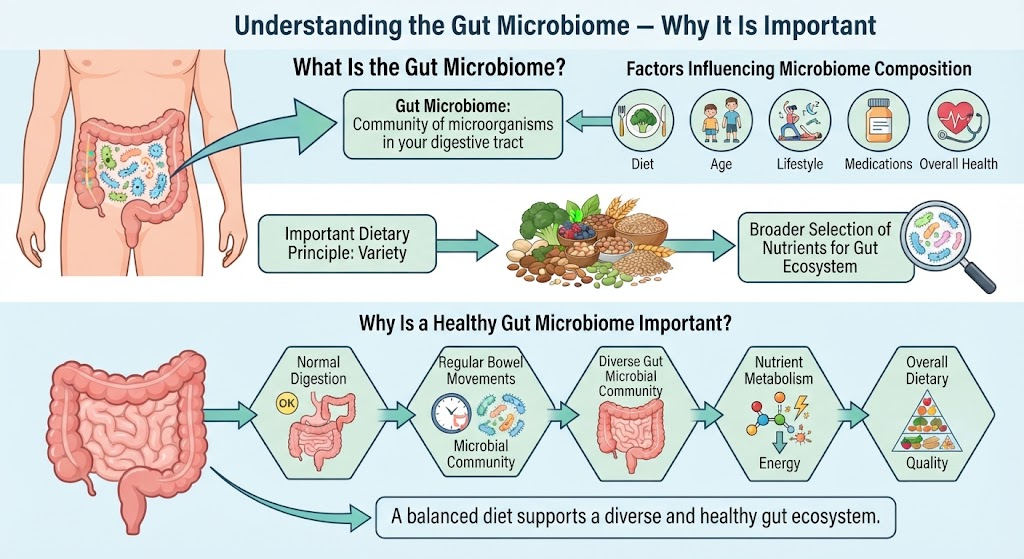
What is the Gut Microbiome?
The gut microbiome refers to the community of microorganisms living in your digestive tract. These include bacteria and other microorganisms that interact with each other and with your body.
The composition of the gut microbiome varies from person to person. In addition, Factors such as diet, age, lifestyle, medications and overall health can influence the microorganisms present in the digestive system.
One important dietary principle is variety. In fact, Different microorganisms can use different types of dietary fibers and plant compounds so eating a wide range of plant foods can provide a broader selection of nutrients for your gut ecosystem.
Why is a Healthy Gut Microbiome Important?
The gut microbiome is closely connected to digestion and the environment of the gastrointestinal tract. Because of this, Gut microorganisms can ferment certain types of dietary fiber and produce metabolites such as short chain fatty acids.
A balanced diet that supports the gut microbiome may help support:
- Normal digestion
- Regular bowel movements
- A diverse gut microbial community
- Healthy intestinal function
- Nutrient metabolism
- Overall dietary quality
It’s important to remember that there is no single definition of a “perfect” microbiome. A healthy gut is influenced by many factors and individual dietary responses can vary.
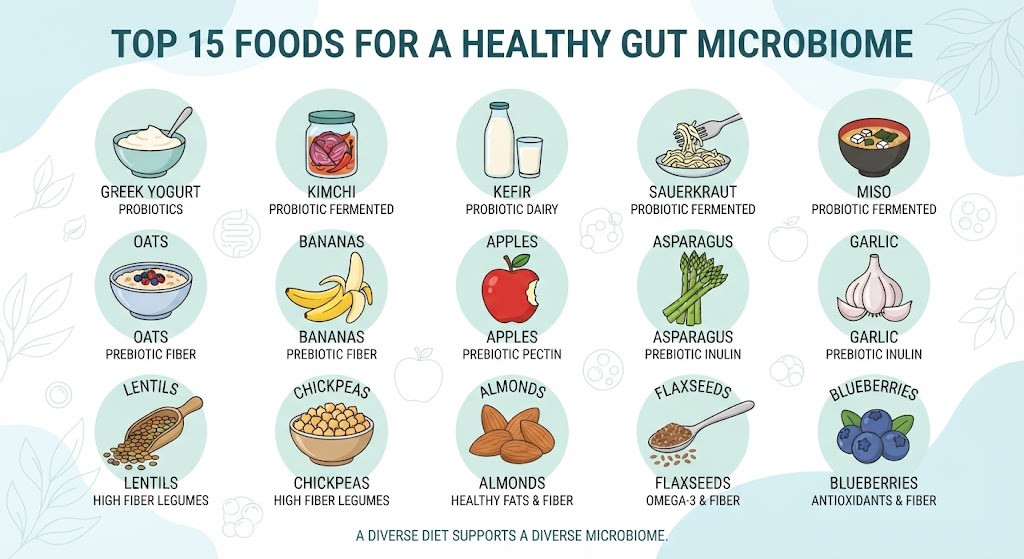
15 Best Foods for a Healthy Gut Microbiome
The following foods can help you build a diverse, fiber rich diet while providing nutrients and compounds that interact with gut microorganisms.
1. Yogurt With Live Cultures
Yogurt containing live and active cultures is one of the easiest fermented foods to include in a gut friendly diet.
Certain yogurts contain live microorganisms that may support the gut environment. Yogurt also provides nutrients such as protein and calcium.
For a simple breakfast combine plain yogurt with:
- Berries
- Oats
- Chia seeds
- Walnuts
- Banana
Choose varieties with little or no added sugar when possible.
2. Kefir
Kefir is a fermented milk beverage that can contain a variety of microorganisms. It has a thinner consistency than yogurt and can be enjoyed as a drink or added to smoothies.
Kefir can provide protein and calcium depending on the product.
If you don’t consume dairy some plant based fermented beverages may be available although their nutritional and microbial profiles vary.
3. Oats
Oats are an excellent source of dietary fiber and contain beta glucan, a type of soluble fiber.
Its can be an easy foundation for a gut friendly breakfast. Try combining them with fruit, nuts, seeds and plain yogurt.
A bowl of oatmeal topped with berries and chia seeds provides several different types of plant based fiber in one meal.
4. Beans
Beans are among the most useful foods for increasing dietary fiber and plant protein.
Examples include:
- Black beans
- Kidney beans
- Navy beans
- Pinto beans
- Cannellini beans
Add beans to soups, salads, chili, grain bowls or wraps.
If you’re not accustomed to eating many legumes, start with smaller portions and increase gradually to help your digestive system adjust.
5. Lentils
Lentils provide fiber, plant protein, folate, iron and other nutrients.
They can be added to curries, soups, salads, stews and grain bowls.
Because lentils contain fermentable carbohydrates and fiber, some people may experience gas when they first increase their intake. Gradual increases can make them easier to tolerate.
6. Garlic
Garlic contains compounds and fibers that can contribute to a diet rich in prebiotic substrates.
Use garlic to add flavor to roasted vegetables, soups, sauces, beans, fish and whole grain dishes.
Using herbs and spices to flavor meals can also help reduce dependence on heavily processed sauces and excessive amounts of salt.
7. Onions
Onions are another flavorful plant food containing fibers and compounds that can be utilized by gut microorganisms.
Include onions in:
- Omelets
- Soups
- Salads
- Stir fries
- Bean dishes
- Grain bowls
Red, yellow and white onions can all contribute to dietary variety.
8. Bananas
Bananas are convenient, affordable and easy to add to meals.
Less ripe bananas contain more resistant starch while ripening changes the carbohydrate composition. Resistant starch can reach the large intestine and be fermented by microorganisms.
Add bananas to oatmeal, smoothies, yogurt bowls or whole grain toast.
9. Berries
Berries provide fiber and plant compounds called polyphenols.
Good options include:
- Blueberries
- Strawberries
- Raspberries
- Blackberries
Raspberries and blackberries are particularly useful sources of dietary fiber.
Add berries to breakfast bowls, salads, smoothies or eat them as a simple snack.
10. Apples
Apples provide dietary fiber and plant compounds particularly when eaten with the skin.
Their natural fiber can contribute to a varied diet that supports gut microorganisms.
Try pairing an apple with nuts or nut butter for a snack containing fiber, healthy fats and protein.
11. Broccoli and Other Cruciferous Vegetables
Broccoli, cauliflower, cabbage, Brussels sprouts and similar vegetables provide fiber and a variety of plant compounds.
Eating different vegetables rather than relying on just one can increase the diversity of plant nutrients in your diet.
Roast broccoli with garlic and olive oil, add cabbage to salads or include cauliflower in soups and grain bowls.
12. Leafy Green Vegetables
Spinach, kale, collard greens, Swiss chard and other leafy greens provide fiber, vitamins, minerals and plant compounds.
Try adding leafy greens to:
- Smoothies
- Omelets
- Soups
- Salads
- Grain bowls
- Stir fries
Eating vegetables in different forms can make it easier to include them consistently.
13. Chia Seeds
Chia seeds are small but nutrient dense. They provide fiber, plant based omega-3 fatty acid ALA and minerals.
Because chia seeds absorb water and expand, they can be used in overnight oats, yogurt bowls, smoothies and chia pudding.
Start with a modest amount and increase gradually if your diet is currently low in fiber.
14. Flaxseeds
Ground flaxseeds provide fiber, ALA omega-3 fatty acids and other plant compounds.
Ground flaxseed is generally easier to incorporate into meals than whole flaxseed.
Add it to:
- Oatmeal
- Yogurt
- Smoothies
- Whole grain muffins
- Homemade energy bites
15. Whole Grains
Whole grains can provide fiber and other nutrients that are reduced when grains are heavily refined.
Examples include:
- Barley
- Oats
- Brown rice
- Whole wheat bread
- Whole grain pasta
- Quinoa
- Bulgur
Try replacing some refined grain products with whole grain alternatives.
Prebiotics and the Gut Microbiome
One of the most important connections between diet and gut microorganisms involves prebiotic compounds.
Prebiotics are substances that are used by microorganisms and can support the growth or activity of beneficial microbes.
Many prebiotic foods are plant based and contain specific fibers or resistant carbohydrates.
Examples include:
- Garlic
- Onions
- Asparagus
- Oats
- Bananas
- Beans
- Lentils
- Apples
This is one reason a diverse plant based diet can be useful for gut health.
What about Probiotic Foods?
Probiotic foods contain live microorganisms that can provide health benefits when consumed in adequate amounts.
Common examples include yogurt with live cultures and certain fermented foods.
However, not every fermented food automatically qualifies as a probiotic food. The microorganisms and processing methods matter.
For example, some fermented vegetables may contain live microorganisms while heat treated products may not.
When choosing fermented foods, check the product label when applicable.
Fiber: The Foundation of a Gut Friendly Diet
Fiber is one of the most important nutrients to focus on when building a diet for a healthy gut microbiome.
There are different types of dietary fiber and different fibers can interact with gut microorganisms in different ways.
Good sources include:
- Beans
- Lentils
- Oats
- Barley
- Fruits
- Vegetables
- Nuts
- Seeds
- Whole grains
Rather than focusing on one “superfood” aim to eat several different plant foods throughout the week.
How Much Fiber Do You Need?
General dietary guidance often recommends roughly 25–30 grams of fiber per day for many adults although individual needs can differ.
If your current intake is low, don’t suddenly double your fiber consumption.
Instead:
- Add one extra serving of vegetables each day.
- Choose whole fruit instead of juice.
- Add beans or lentils to several meals each week.
- Replace refined grains with whole grains.
- Add nuts and seeds to breakfasts and snacks.
- Increase portions gradually.
Drink adequate fluids as you increase fiber.
Foods to Limit for Better Gut Health
A gut friendly diet isn’t just about what you add. Overall dietary quality matters.
Try to limit excessive consumption of:
- Sugar sweetened beverages
- Highly processed snack foods
- Foods high in added sugars
- Heavily refined grains
- Highly processed meats
- Excessive alcohol
- Meals consistently low in fiber
You don’t need to completely eliminate processed foods. The goal is to make nutrient dense whole and minimally processed foods the foundation of your eating pattern.
Build a Gut Friendly Plate
A simple meal building formula can make healthy eating easier.
Aim for:
½ plate vegetables and/or fruit
¼ plate protein
¼ plate whole grains or other high fiber carbohydrates
Then add a source of healthy fat when appropriate.
For example:
Grilled salmon + roasted broccoli + barley + avocado
This meal provides protein, healthy fats, fiber and a variety of plant foods.
Sample One Day Gut Friendly Meal Plan
Breakfast
Plain yogurt with oats, blueberries, banana, chia seeds and walnuts.
Morning Snack
An apple with a small handful of almonds.
Lunch
Lentil and vegetable bowl with brown rice, spinach, tomatoes, carrots and a simple olive oil dressing.
Afternoon Snack
Kefir with strawberries.
Dinner
Grilled fish with roasted broccoli, asparagus and a serving of barley or quinoa.
Evening Option
A small serving of fruit or plain yogurt depending on hunger and individual needs.
This is only an example. Portion sizes and food choices should reflect your energy needs, preferences, allergies and dietary requirements.
Tips for improving Gut Microbiome Diversity
Supporting your gut microbiome doesn’t require a complicated routine. Try these practical habits.
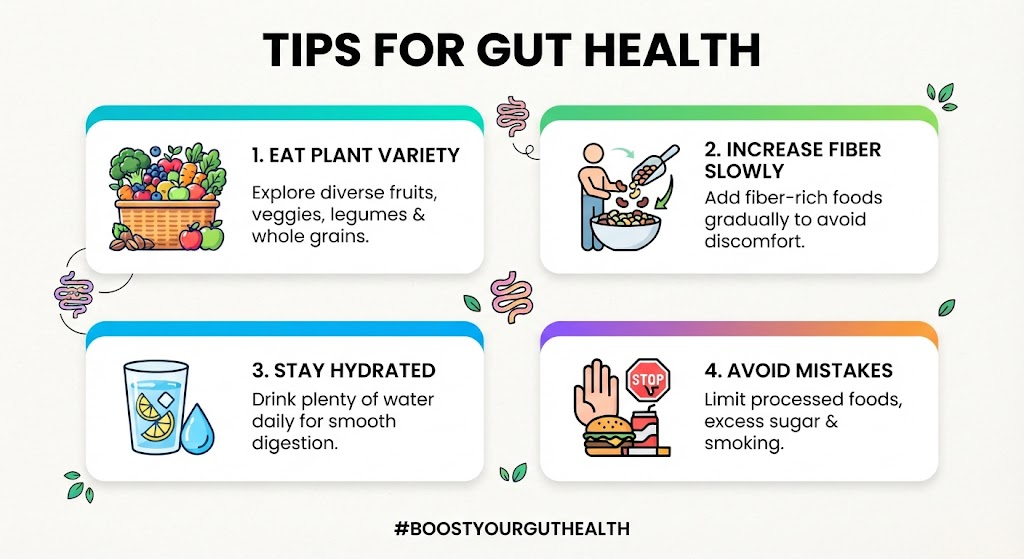
Eat More Plant Variety
Instead of eating the same few vegetables and fruits every week, rotate your choices.
Different plants provide different fibers and phytochemicals.
Try a “Plant Variety” Challenge
Keep track of the different plant foods you eat during the week.
Include:
- Fruits
- Vegetables
- Beans
- Lentils
- Whole grains
- Nuts
- Seeds
- Herbs
- Spices
The goal isn’t perfection. It’s a variety.
Increase Fiber Slowly
If you’re not used to high fiber foods, gradually increase your intake.
A sudden increase may cause temporary gas, bloating or changes in bowel habits.
Stay Hydrated
Adequate fluid intake can support normal digestion particularly when increasing dietary fiber.
Include Fermented Foods
If you tolerate them, consider incorporating yogurt with live cultures, kefir or suitable fermented vegetables into your meals.
Limit Unnecessary Dietary Restriction
Eliminating large groups of foods without a specific reason can reduce dietary variety.
If certain foods consistently cause digestive symptoms, discuss the issue with a qualified healthcare professional rather than unnecessarily restricting your diet.
Do You Need Probiotic Supplements?
Not necessarily.
For example, Probiotic supplements contain specific microorganisms and can be useful in some situations, However their effects vary according to the strain, dose, individual and health condition.
In fact, A supplement that works for one digestive issue may not have the same effect for another.
For many healthy adults, focusing first on dietary variety, adequate fiber, nutritious foods, sleep, physical activity and other healthy habits provides a strong foundation.
If you’re considering a probiotic supplement for a specific health concern, talk with a healthcare professional.
Common Gut Health Mistakes
Eating Too Little Fiber
A diet based mainly on refined grains, processed foods and animal products may provide less dietary fiber.
Increasing Fiber Too Quickly
More fiber is generally helpful but a sudden increase can cause digestive discomfort.
Relying on One “Gut Healthy” Food
No single food can create a healthy microbiome by itself.
in fact, Variety is more useful than obsessing over one particular ingredient.
Assuming All Fermented Foods Are Probiotics
Fermented foods vary in their microorganisms and processing. Some may not contain live cultures by the time they reach your plate.
Depending Entirely on Supplements
Supplements should not replace a varied nutrient dense diet unless there is a specific reason and professional guidance.
Frequently Asked Questions
What are the best foods for a healthy gut microbiome?
Some useful choices include yogurt with live cultures, kefir, oats, beans, lentils, garlic, onions, bananas, berries, apples, broccoli, leafy greens, chia seeds, flaxseeds and whole grains.
What foods feed good gut bacteria?
Many high fiber plant foods can provide substrates that gut microorganisms use. Beans, lentils, oats, onions, garlic, asparagus, fruits, vegetables, nuts and seeds are good examples.
Is yogurt good for the gut microbiome?
Yogurt containing live cultures can be included in a gut friendly diet. It also provides nutrients such as protein and calcium.
Are bananas good for gut health?
Bananas provides fiber and resistant starch particularly when they are less ripe. They can be part of a varied fiber rich diet.
What is the number one food for gut health?
There isn’t one universally best food for the gut microbiome. A diverse diet containing many types of plant foods is generally more useful than relying on a single food.
How long does it take to improve gut health?
There is no universal timeline. The gut microbiome can respond to dietary changes relatively quickly, but long-term health depends on consistent dietary and lifestyle habits.
Can too much fiber be bad for your gut?
A very rapid increase in fiber can cause gas, bloating or abdominal discomfort. Increasing fiber gradually and drinking adequate fluids can help.
When to Seek Professional Advice
Occasionally digestive discomfort can have many causes but persistent or severe symptoms should not simply be blamed on an unhealthy microbiome.
Consider speaking with a healthcare professional if you experience persistent:
- Abdominal pain
- Severe bloating
- Diarrhea
- Constipation
- Blood in the stool
- Unexplained weight loss
- Vomiting
- Significant changes in bowel habits
People with diagnosed digestive conditions may need individualized nutrition advice.
Conclusion
The best foods for a healthy gut microbiome are not necessarily exotic or expensive. Many everyday foods can help create a varied, fiber rich eating pattern that supports the microorganisms living in your digestive tract.
Focus on foods such as beans, lentils, oats, whole grains, fruits, vegetables, nuts, seeds, garlic, onions and fermented foods containing live cultures. Increasing plant variety is particularly useful because different foods provide different types of fiber and plant compounds.
Moreover, a healthy gut supporting diet is about more than one food, probiotic product or supplement. Therefore, aim for variety, gradually increase fiber, stay hydrated, also include nutritious fermented foods when appropriate and make minimally processed foods the foundation of your meals.
By consistently choosing a diverse range of nutritious foods you can build eating habits that support digestive health and a healthy gut microbiome as part of your overall wellness.
One response
[…] yogurt and cheese can provide protein, calcium, vitamin B12, phosphorus and other […]