
How Spices Can Add Flavor and Nutrients to a Healthy Diet
Spices can do much more than make food taste better. Therefore, from turmeric and cinnamon to ginger, garlic, cumin and black pepper, spices add distinctive flavors. While contributing small amounts of vitamins, minerals, plant compounds and antioxidants to the diet.
For people trying to eat healthier, spices can also make nutritious foods more enjoyable. Vegetables, whole grains, beans, lean proteins and other nutrient rich foods can sometimes seem repetitive when prepared the same way. Adding herbs and spices can create variety without relying heavily on added sugar, excess salt or calorie dense sauces.
This guide explains how spices can add flavor and nutrients to a healthy diet, which spices are worth including, how to use them in everyday meals and practical ways to make healthy eating more flavorful.
What are Spices?
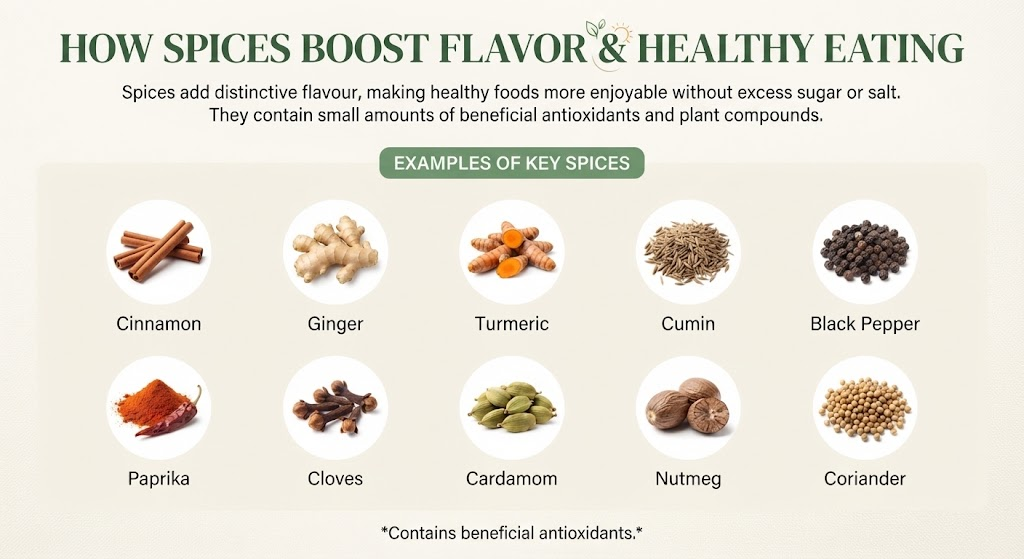
Spices are plant derived ingredients used primarily to flavor, color or preserve food. They can come from seeds, bark, roots, fruits or other parts of plants.
Examples include:
- Cinnamon from tree bark
- Ginger from a plant root
- Turmeric from a rhizome
- Cumin from seeds
- Black pepper from dried peppercorns
- Paprika from dried peppers
- Cloves from flower buds
- Cardamom from seed pods
- Nutmeg from a seed
- Coriander from plant seeds
Spices are usually consumed in relatively small amounts so they should not be considered a major source of essential nutrients. However, many contain naturally occurring plant compounds that can contribute to an overall nutrient rich eating pattern.
Why Spices Matter in a Healthy Diet
Healthy eating does not have to mean eating bland or boring food. Flavor plays an important role in making nutritious meals satisfying and enjoyable.
Spices can help improve meals in several ways.
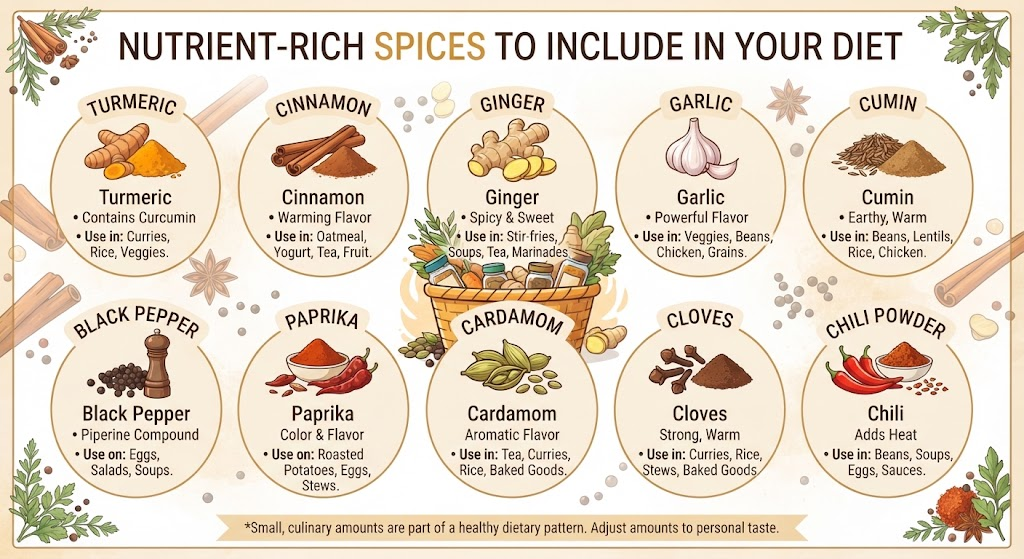
1. They Add Flavor Without Many Calories
Most spices are used in small quantities and contribute relatively few calories to a meal.
For example, adding cumin, paprika, black pepper, garlic or turmeric can dramatically change the flavor of vegetables, beans, rice, chicken, fish or soups without requiring large amounts of butter, creamy sauces or sugar.
This makes spices useful for people who want to improve the flavor of nutritious foods while keeping meals relatively balanced.
2. They Help Reduce Reliance on Excess Salt
Many people use salt as their primary way to enhance flavor. While sodium is an essential mineral consuming too much sodium can be a concern particularly for people who need to follow a lower sodium eating pattern.
Spices can provide alternative flavors.
Try combining:
- Garlic and black pepper
- Cumin and coriander
- Paprika and oregano
- Turmeric and ginger
- Cinnamon and nutmeg
- Chili powder and lime
Using different flavor combinations can make food more interesting without depending entirely on salt.
3. They Provide Plant Compounds
Many spices contain naturally occurring compounds called phytochemicals. These substances are produced by plants and may have antioxidants or other biological activities.
Examples include curcumin in turmeric and various aromatic compounds in cinnamon, cloves, ginger and other spices.
However, it is important to avoid exaggerated claims. Eating a particular spice does not automatically prevent or cure disease. Spices are best viewed as one small part of an overall healthy dietary pattern.
Nutrient Rich Spices to Include in Your Diet
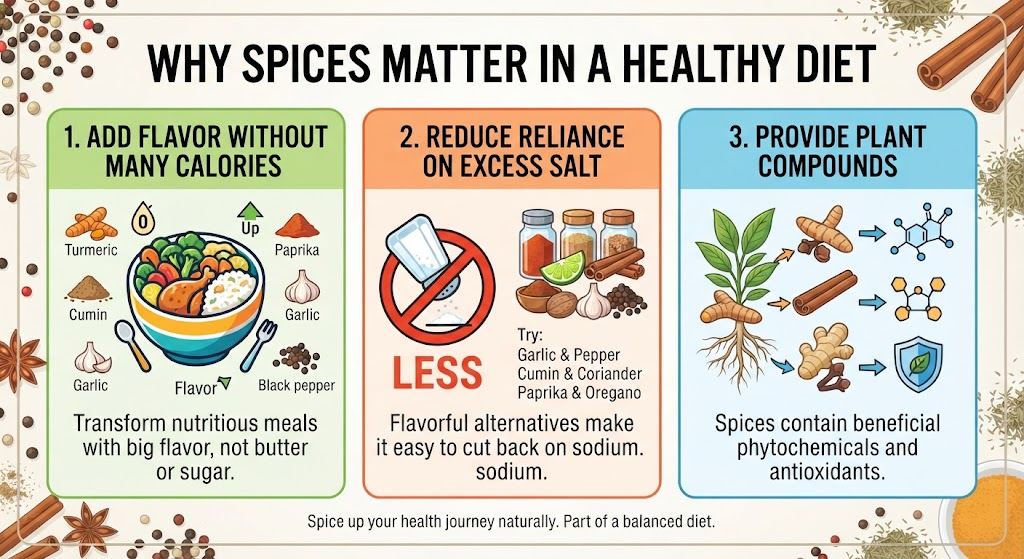
Different spices contain different compounds and nutrients. Here are some popular options to consider.
1. Turmeric
Turmeric is a bright yellow orange spice commonly used in South Asian, Middle Eastern and Southeast Asian cooking.
It contains a plant compound called curcumin which has been widely studied for its biological properties.
Turmeric works well in:
- Curries
- Lentil dishes
- Vegetable soups
- Rice
- Roasted vegetables
- Egg dishes
- Smoothies in small amounts
Turmeric can also be combined with black pepper and a source of healthy fat when cooking.
Although turmeric is nutritious, culinary amounts should not be treated as equivalent to concentrated supplements.
2. Cinnamon
Cinnamon has a naturally sweet and warming flavor making it useful for both sweet and savory foods.
Try adding cinnamon to:
- Oatmeal
- Plain yogurt
- Apples
- Pears
- Whole grain cereal
- Smoothies
- Tea
- Roasted sweet potatoes
Using cinnamon can help create sweetness and complexity without needing as much added sugar.
Cinnamon also contains plant compounds with antioxidant activity.
3. Ginger
Ginger has a spicy, slightly sweet flavor and is widely used in Asian and other cuisines.
Fresh ginger can be added to:
- Stir fries
- Soups
- Curries
- Tea
- Marinades
- Smoothies
- Vegetable dishes
Ginger is particularly useful when you want to add a strong flavor without many additional ingredients.
4. Garlic
Garlic is technically a bulb rather than a spice in the strict botanical sense but it is commonly used alongside herbs and spices as a culinary flavoring.
Fresh garlic can add powerful flavor to:
- Vegetables
- Beans
- Lentils
- Chicken
- Fish
- Whole grains
- Soups
- Sauces
Garlic contains sulfur containing compounds that contribute to its characteristic smell and flavor.
5. Cumin
Cumin has an earthy warm flavor and is common in Mexican, Middle Eastern, Indian, African and Asian cuisines.
It pairs especially well with:
- Beans
- Lentils
- Chickpeas
- Rice
- Roasted vegetables
- Chicken
- Fish
- Soups
Cumin is an easy way to make plant-based meals more flavorful.
6. Black Pepper
Black pepper is one of the world’s most commonly used spices.
Its active compound piperine contributes to its characteristic pungency. Black pepper can be used with almost any savory meal.
Try freshly ground black pepper on:
- Eggs
- Salads
- Vegetables
- Soups
- Fish
- Chicken
- Beans
- Whole grains
It can also complement turmeric in many recipes.
7. Paprika
Paprika is made from dried and ground peppers. Depending on the variety, it can range from mild and sweet to smoky or hot.
Paprika can add color and flavor to:
- Roasted potatoes
- Eggs
- Chicken
- Fish
- Vegetables
- Soups
- Stews
- Beans
Smoked paprika is particularly useful when you want a smoky flavor without using processed meats.
8. Cardamom
Cardamom has a distinctive aromatic flavor and is frequently used in South Asian and Middle Eastern cooking.
It can be added to:
- Tea
- Oatmeal
- Rice dishes
- Curries
- Yogurt
- Fruit
- Homemade spice blends
Because cardamom has a strong flavor a small amount can go a long way.
9. Cloves
Cloves have a strong warm flavor and are often used in small quantities.
They can be used in:
- Curries
- Rice dishes
- Stews
- Baked goods
- Warm beverages
- Spice blends
Cloves are particularly rich in plant compounds including eugenol which contributes to their characteristic aroma.
10. Chili Peppers and Chili Powder
Chili peppers add heat and flavor to food. Capsaicin is one of the compounds responsible for the burning sensation associated with hot peppers.
Chili can be added to:
- Beans
- Soups
- Eggs
- Vegetables
- Fish
- Chicken
- Rice
- Homemade sauces
If you are sensitive to spicy foods, start with a small amount and adjust gradually.
How Spices Can Make Healthy Foods More Enjoyable
One of the biggest advantages of spices is their ability to transform simple ingredients.
Consider a basic bowl of roasted vegetables. Without seasoning, it may taste repetitive. Add garlic, paprika, black pepper, cumin and a little olive oil and the same vegetables can become a flavorful side dish.
The same principle works with other healthy foods.
Vegetables
Try:
- Broccoli + garlic + black pepper
- Carrots + cumin + paprika
- Sweet potatoes + cinnamon
- Cauliflower + turmeric + cumin
- Green beans + garlic + chili
Beans and Lentils
Beans and lentils are excellent sources of plant protein and fiber but some people find them bland.
Try seasoning them with:
- Cumin
- Coriander
- Turmeric
- Paprika
- Garlic
- Ginger
- Chili
Whole Grains
Brown rice, oats, quinoa and other whole grains can be paired with different spice combinations.
For savory dishes, try cumin, turmeric, paprika or black pepper.
For breakfast grains, try cinnamon, nutmeg, ginger or cardamom.
Lean Proteins
Spices can add flavor to chicken, fish, eggs, tofu and other protein rich foods.
A simple homemade seasoning might include:
- Paprika
- Garlic powder
- Black pepper
- Cumin
- Dried oregano
This can create a flavorful coating without relying heavily on bottled sauces.
Spices and Antioxidants
Many spices contain antioxidant compounds. Antioxidants are substances that can help protect cells from oxidative damage caused by reactive molecules.
Spices such as cloves, cinnamon, turmeric, ginger and oregano contain various antioxidant compounds.
However, the antioxidant content of a spice does not mean that eating large amounts provides unlimited health benefits. Spices are typically consumed in small quantities.
The bigger picture matters: a diet containing vegetables, fruits, whole grains, legumes, nuts, seeds and other nutrient rich foods provides a wide variety of beneficial plant compounds.
How to Use More Spices in Everyday Cooking
Increasing your spice intake does not require complicated recipes.
Start With a Basic Spice Collection
A useful beginner collection might include:
- Black pepper
- Cinnamon
- Turmeric
- Cumin
- Paprika
- Garlic powder
- Ginger
- Oregano
- Chili powder
- Coriander
You can expand your collection as you experiment with different cuisines.
Make Homemade Spice Blends
Homemade blends allow you to control the ingredients.
For example, a simple savory blend could combine paprika, cumin, garlic powder, black pepper, oregano and a small amount of chili powder.
A breakfast blend might combine cinnamon, ginger and nutmeg.
Store spice blends in airtight containers away from heat, moisture and direct sunlight.
Season Food in Layers
Instead of adding all your spices at the end consider adding some during cooking and adjusting the seasoning near the end.
This can create more depth of flavor.
For example sautéing onions, garlic and spices before adding beans or vegetables can produce a richer flavor than adding all the seasoning at the end.
Spices Can Help Make Plant Based Meals More Appealing
Plant based eating patterns often emphasize vegetables, fruits, beans, lentils, nuts, seeds and whole grains.
These foods are highly nutritious but flavor variety is important for long term enjoyment.
Spices can help transform the same basic ingredients into meals inspired by different cuisines.
For example:
- Cumin and chili can create a Mexican inspired bean dish.
- Turmeric, cumin and coriander can create an Indian inspired lentil meal.
- Oregano and garlic can give vegetables a Mediterranean style flavor.
- Ginger and garlic can create an Asian inspired stir fry.
- Cinnamon and cardamom can add warmth to breakfast foods.
This variety can make healthy eating feel less repetitive.
Healthy Spice Pairings to Try
Experimenting with combinations is one of the easiest ways to improve your cooking.
For Vegetables
Try paprika + garlic + black pepper.
For Lentils
Try turmeric + cumin + coriander.
For Chicken
Try paprika + garlic + oregano + black pepper.
For Fish
Try black pepper + garlic + paprika + lemon.
For Oatmeal
Try cinnamon + ginger + berries.
For Roasted Sweet Potatoes
Try cinnamon + paprika + black pepper.
For Chickpeas
Try cumin + paprika + garlic.
Spices vs. Spice Heavy Processed Foods
Not every food containing spices is automatically healthy.
Some packaged products may contain large amounts of sodium, added sugar, refined oil or other ingredients.
For example a heavily seasoned packaged snack may contain spices but still be high in sodium and calories.
When choosing foods consider the entire nutritional profile rather than assuming that a product is healthy simply because it contains herbs or spices.
Homemade meals often give you greater control over ingredients.
Are Spices Safe for Everyone?
Most culinary spices are safe for most people when consumed in normal food amounts.
However, individual tolerance varies.
Very spicy foods may cause discomfort in some people. Certain concentrated spice supplements can also interact with medications or cause side effects.
Pregnant people, individuals with specific medical conditions and those taking medications should discuss concentrated herbal or spice supplements with a qualified healthcare professional.
Food allergies and intolerances should also be taken seriously.
Importantly, culinary spices should not be viewed as substitutes for prescribed medications or professional medical care.
A Simple One Day Meal Plan Using Spices
Here is an example of how spices can be incorporated throughout the day.
Breakfast
Oatmeal topped with berries, walnuts and cinnamon.
Mid Morning Snack
Plain yogurt with fruit and a small amount of cinnamon or cardamom.
Lunch
Lentil and vegetable bowl seasoned with cumin, turmeric, garlic and black pepper.
Afternoon Snack
Fresh fruit with a handful of unsalted nuts.
Dinner
Grilled fish or tofu with roasted vegetables seasoned with paprika, garlic, oregano and black pepper served with brown rice or another whole grain.
Evening
A warm ginger or cinnamon beverage without excessive added sugar.
This type of meal plan demonstrates that spices can complement a wide variety of nutritious foods.
Common Mistakes When Using Spices
Using Too Much Salt With Spices
Spices can add flavor on their own. Avoid automatically adding large amounts of salt to every seasoned dish.
Relying on Packaged Seasoning Blends
Some commercial blends contain significant amounts of sodium. Check the nutrition label when purchasing packaged seasonings.
Keeping Spices for Too Long
Ground spices gradually lose their flavor and aroma. Store them properly and replace older spices when their aroma becomes weak.
Assuming More Is Always Better
Spices are powerful flavoring ingredients. Large quantities are not necessarily better for health.
Using Spices Instead of a Balanced Diet
Spices can complement healthy eating but they cannot compensate for a diet lacking vegetables, fruits, protein, fiber or essential nutrients.
Tips for Building a Flavorful Healthy Diet
A healthy diet can be both nutritious and enjoyable. Consider these simple habits:
- Eat a variety of vegetables and fruits.
- Choose whole grains regularly.
- Include beans, lentils, nuts, and seeds.
- Add adequate protein to meals.
- Use herbs and spices to create flavor variety.
- Limit excessive added sugar.
- Keep highly processed foods moderate.
- Watch sodium intake when needed.
- Drink enough water.
- Experiment with different cuisines and seasoning combinations.
The goal is not to find one “super spice.” Instead, use a variety of flavorful plant foods as part of an overall balanced eating pattern.
Frequently Asked Questions
What are the healthiest spices to eat?
There is no single healthiest spice for everyone. Turmeric, cinnamon, ginger, garlic, cumin, black pepper, paprika, cloves and oregano can all contribute flavor and plant compounds to a varied diet.
Can spices help you eat healthier?
Yes. Spices can make nutrient rich foods more enjoyable and may reduce the need for large amounts of added sugar, rich sauces or excessive salt.
Do spices contain nutrients?
Yes. Some spices contain small amounts of vitamins, minerals and plant compounds. However, because spices are usually eaten in small amounts. They should complement rather than replace nutrient rich foods.
Can spices replace salt?
Spices can help reduce dependence on salt by providing additional flavor although they do not completely replace the culinary function of salt in every recipe.
Is turmeric good for a healthy diet?
Turmeric can be part of a healthy diet and contains curcumin and other plant compounds. However, it should not be considered a cure or replacement for medical treatment.
How can I add more spices to my meals?
Start by adding small amounts of spices to vegetables, soups, beans, lentils, eggs, whole grains, fish, chicken, tofu, yogurt and oatmeal. Experiment with different combinations until you find flavors you enjoy.
Conclusion
Spices are a simple and flavorful way to make a healthy diet more enjoyable. From turmeric and ginger to cinnamon, cumin, paprika, garlic and black pepper, different spices can add aroma, color, complexity and small amounts of beneficial plant compounds to everyday meals.
The biggest value of spices may be their ability to help people enjoy nutritious foods without depending heavily on excessive salt, added sugar, rich sauces or highly processed flavorings. They can make vegetables, beans, whole grains, lean proteins and other healthy ingredients more appealing and versatile.
However, spices are not magic ingredients or substitutes for medical treatment. Their benefits are best understood as part of an overall healthy eating pattern that includes a variety of vegetables, fruits, whole grains, legumes, protein rich foods, nuts, seeds and healthy fats.
By experimenting with different spices and homemade seasoning combinations. You can create flavorful meals while supporting a balanced and nutrient rich diet.
One response
[…] Turmeric is a flowering plant belonging to the ginger family. Its underground stem, called a rhizome, is dried and ground into the familiar yellow orange spice used in many cuisines. […]