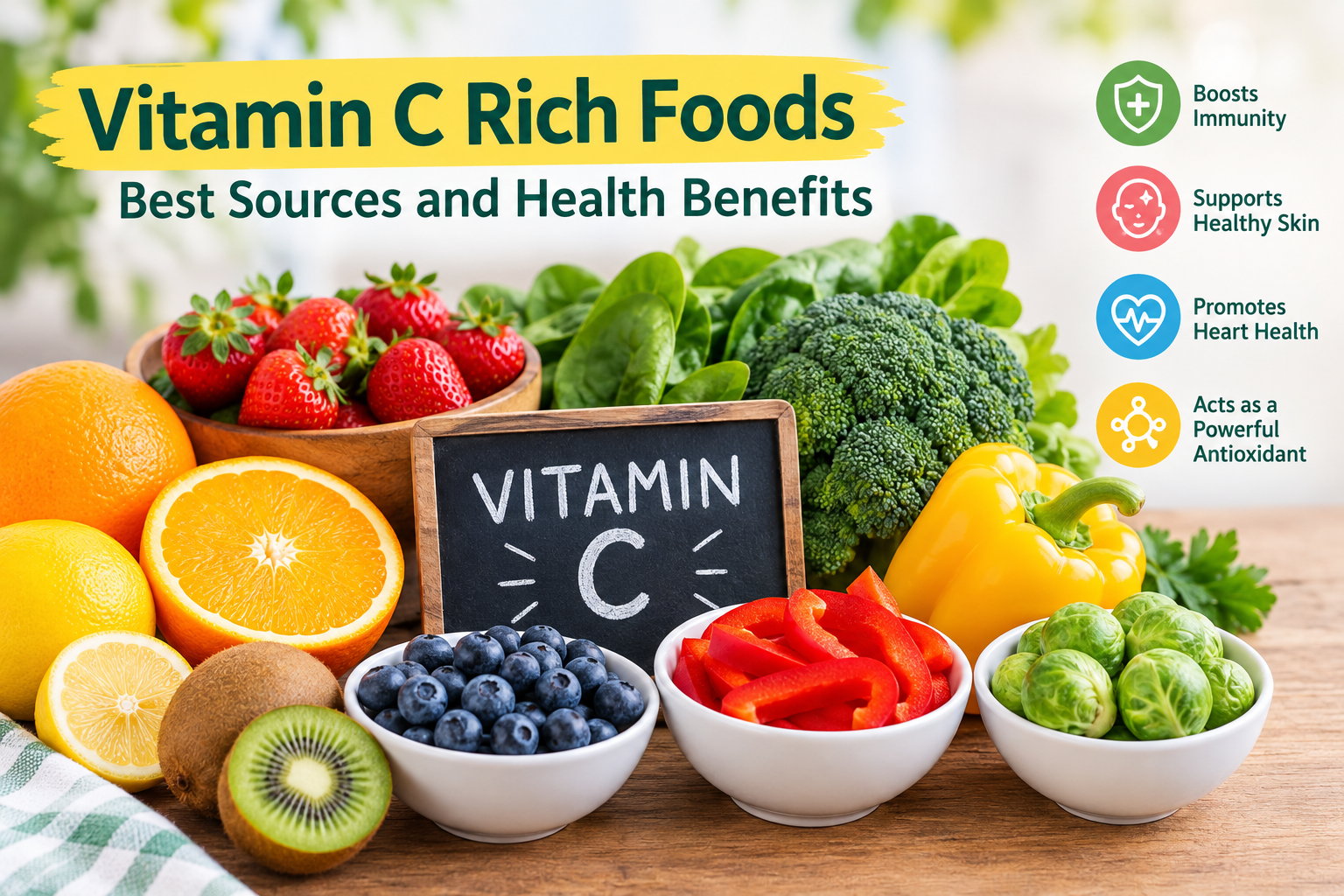
Vitamin C is an essential nutrient that plays an important role in immune function, collagen production, iron absorption and overall health. Because the human body cannot produce vitamin C on its own, it must be obtained through food or supplements.
Fortunately, many everyday fruits and vegetables are naturally rich in vitamin C. Citrus fruits such as oranges and grapefruit are well known sources but foods like bell peppers, kiwi, strawberries, broccoli, guava and tomatoes can also provide significant amounts.
Adding a variety of vitamin C rich foods to your diet can help you meet your daily nutritional needs while providing fiber, antioxidants, vitamins, minerals and other beneficial plant compounds.
This guide explains the best foods high in vitamin C, their potential health benefits, how to include them in your meals and practical tips for getting more vitamin C from your diet.
What is Vitamin C?
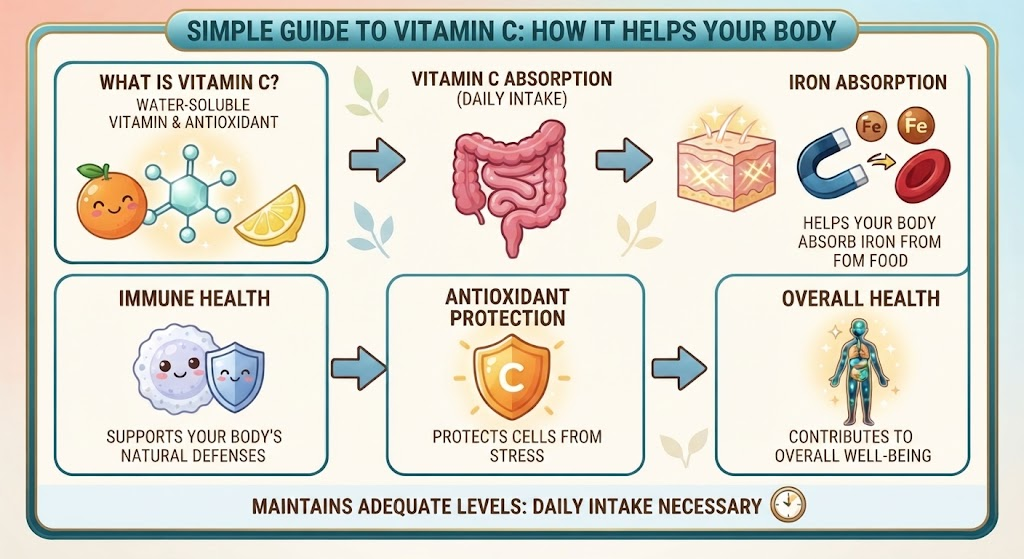
Vitamin C, also called ascorbic acid, is a water soluble vitamin and antioxidant. It is essential for several processes in the body including the formation of collagen, absorption of iron from plant foods, wound healing and normal immune system function.
Unlike fat soluble vitamins, vitamin C is not stored in large amounts in the body. Regularly eating foods that contain vitamin C can therefore help maintain adequate levels.
Vitamin C is naturally found in many fruits and vegetables. Fresh, frozen and some lightly cooked foods can contribute to your daily intake.
Why is Vitamin C Important?
Vitamin C supports several important functions in the body.
1. Supports Normal Immune Function
Vitamin C contributes to normal immune system function. It helps support various cellular processes involved in the body’s natural defenses.
Eating a diet that provides enough vitamin C is therefore an important part of overall nutrition. However, vitamin C is not a guaranteed way to prevent infections and it should not be viewed as a replacement for medical treatment.
2. Supports Collagen Production
Collagen is a structural protein found throughout the body. It contributes to the structure of skin, blood vessels, bones, cartilage and connective tissues.
Vitamin C is required for normal collagen formation, making adequate vitamin C intake important for maintaining healthy tissues and supporting normal wound healing.
3. Helps With Iron Absorption
Vitamin C can improve the absorption of non heme iron, the form of iron primarily found in plant foods.
Combining vitamin C rich foods with plant sources of iron can be a useful nutrition strategy. For example, adding bell peppers, tomatoes or lemon juice to a meal containing beans or lentils can increase vitamin C intake.
4. Provides Antioxidant Protection
Vitamin C functions as an antioxidant. Antioxidants help protect cells from oxidative stress caused by unstable molecules called free radicals.
A diet rich in antioxidants containing foods including fruits and vegetables can contribute to overall health.
5. Supports Skin Health
Because vitamin C is involved in collagen production and antioxidant protection, getting enough vitamin C is important for normal skin health.
Rather than relying on a single food or nutrient for skin appearance, focus on a balanced diet containing fruits, vegetables, protein, healthy fats, whole grains and adequate fluids.
Best Vitamin C Rich Foods
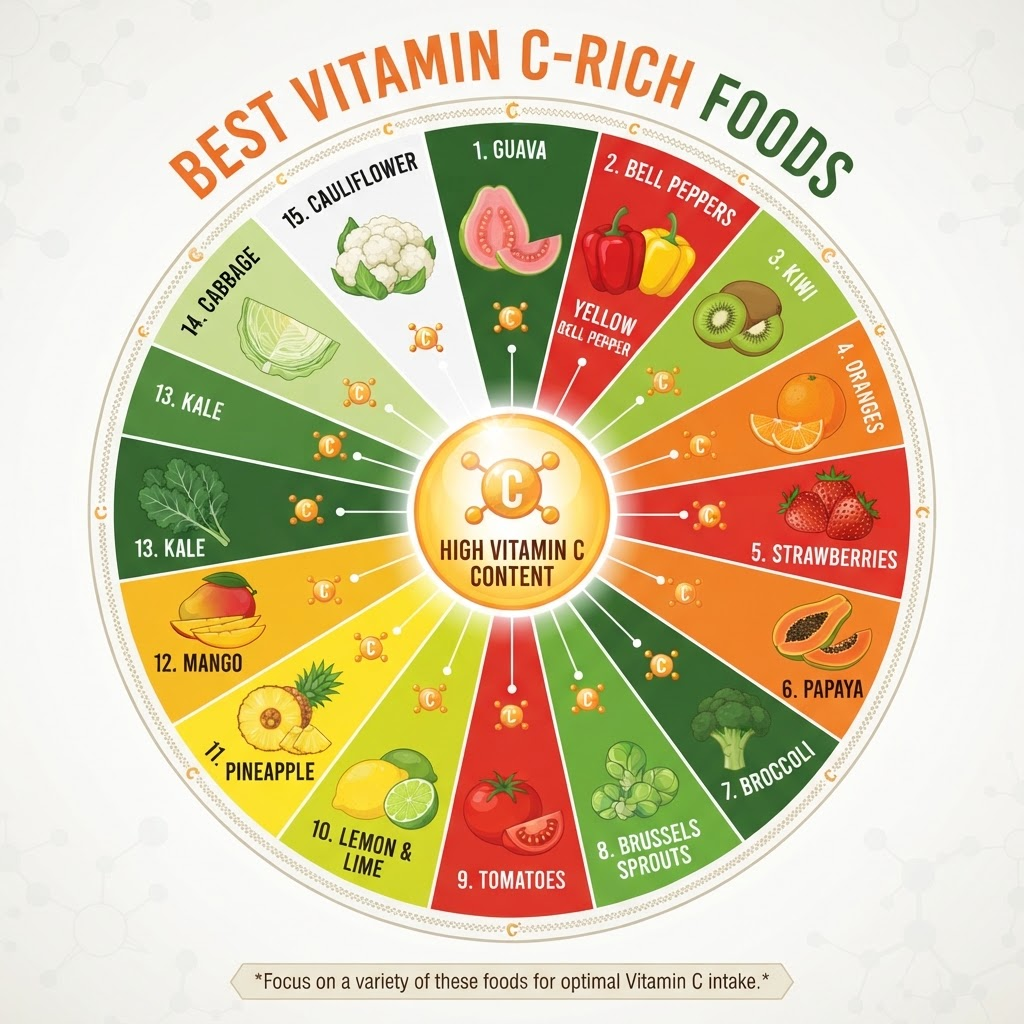
Many foods can help you increase your vitamin C intake. Here are some of the best dietary sources to consider.
1. Guava
Guava is one of the most concentrated fruit sources of vitamin C. It also provides dietary fiber and other antioxidants.
You can eat guava fresh, add it to fruit salads, blend it into smoothies or enjoy it as a snack.
2. Red and Green Bell Peppers
Bell peppers are excellent foods high in vitamin C particularly red and yellow varieties.
They can be eaten raw in salads, sliced as a snack, added to stir fries or roasted with other vegetables.
Because vitamin C can be reduced by prolonged cooking, using some bell peppers raw or lightly cooked can help preserve more of their vitamin C.
3. Kiwi
Kiwi provides vitamin C along with fiber and other nutrients. Its naturally sweet and slightly tart flavor makes it an easy addition to breakfast or snacks.
Try adding sliced kiwi to oatmeal, yogurt, smoothies or fruit bowls.
4. Oranges
Oranges are among the most familiar vitamin C rich foods. They also provide water and dietary fiber particularly when eaten whole rather than consumed only as juice.
Whole oranges can make a convenient snack and can be added to salads or breakfast meals.
5. Strawberries
Strawberries contain vitamin C and beneficial plant compounds. They are also relatively easy to incorporate into meals.
Add fresh or frozen strawberries to oatmeal, yogurt, smoothies or whole grain cereal.
6. Papaya
Papaya provides vitamin C along with fiber, carotenoids and other nutrients.
Enjoy fresh papaya on its own, add it to fruit salads or blend it into a smoothie.
7. Broccoli
Broccoli is a nutrient dense vegetable that provides vitamin C, fiber and several other vitamins and minerals.
Steaming broccoli lightly can make it tender while helping preserve nutrients better than prolonged boiling.
8. Brussels Sprouts
Brussels sprouts are another useful vegetable source of vitamin C. They also contain fiber and other plant compounds.
Roast, steam or saute them as a side dish or add them to grain bowls and salads.
9. Tomatoes
Tomatoes can contribute vitamin C to your diet and are extremely versatile.
Use fresh tomatoes in salads, sandwiches, wraps, salsa or cooked dishes. Tomato based foods can also contribute to overall vegetable intake.
10. Lemon and Lime
Lemons and limes contain vitamin C and can make meals more flavorful without adding much sugar or sodium.
Add fresh lemon or lime juice to water, salads, vegetables, beans, fish or grain based meals.
Although these fruits can contribute vitamin C, they are usually eaten in relatively small amounts so they may work best as part of a broader variety of vitamin C rich foods.
11. Pineapple
Pineapple provides vitamin C along with naturally occurring carbohydrates and other plant compounds.
Fresh pineapple makes a convenient snack and can be added to smoothies, fruit salads or meals.
12. Mango
Mango contains vitamin C and other nutrients. Its naturally sweet flavor makes it useful in breakfast dishes, smoothies, salads and snacks.
Choose whole mango more often than heavily sweetened mango products.
13. Kale
Kale is a nutrient rich leafy green that can contribute vitamin C to your diet.
Use it in salads, soups, stir fries, wraps or smoothies. Massaging raw kale with a little lemon juice and olive oil can make it softer and easier to eat.
14. Cabbage
Cabbage provides vitamin C and dietary fiber while being inexpensive and versatile.
It can be eaten raw in slaws, lightly cooked as a side dish or added to soups, stir fries and wraps.
15. Cauliflower
Cauliflower is another vegetable that can contribute vitamin C.
Roast it, steam it, add it to soups or combine it with other vegetables for a nutrient rich side dish.
Vitamin C Content Can Vary
The exact amount of vitamin C in a food depends on several factors including the variety, growing conditions, storage, preparation and cooking method.
Fresh foods are not always automatically more nutritious than frozen foods. Properly frozen fruits and vegetables can retain many nutrients and can be a convenient option when fresh produce is unavailable.
Eating a variety of fruits and vegetables is more useful than focusing on one “superfood.”
Raw vs. Cooked Foods: Which Is Better?
Vitamin C is sensitive to heat and can be lost during prolonged cooking or when foods are cooked in large amounts of water.
To help preserve vitamin C:
- Eat some fruits and vegetables raw.
- Steam vegetables instead of boiling them for long periods.
- Avoid overcooking vegetables.
- Use cooking water in soups when appropriate.
- Store fresh produce properly.
- Eat a variety of fresh, frozen and minimally processed produce.
This does not mean you should avoid cooked vegetables. Cooking can make some foods easier to digest and can increase the availability of certain nutrients. A combination of raw and cooked produce can provide nutritional variety.
Vitamin C Rich Foods and iron Absorption
One of the most useful nutritional benefits of vitamin C is its ability to improve absorption of non- heme iron.
Plant based sources of iron include:
- Lentils
- Beans
- Chickpeas
- Tofu
- Spinach
- Pumpkin seeds
- Fortified cereals
Pairing these foods with vitamin C sources can be a simple way to build a more nutrient conscious meal.
For example:
Lentils + tomatoes + bell peppers
or
Chickpeas + lemon juice + leafy greens
or
Beans + salsa + fresh peppers
These combinations provide a mixture of nutrients while making meals more flavorful.
How Much Vitamin C Do You Need?
Vitamin C requirements vary by age, sex, life stage and individual circumstances.
For healthy adults commonly cited dietary reference values are approximately 75 mg per day for women and 90 mg per day for men. People who smoke generally have higher vitamin C requirements because smoking increases oxidative stress and can lower vitamin C levels.
Rather than trying to reach a specific number through one food aim to include fruits and vegetables throughout the day.
For personalized nutrition advice, especially during pregnancy, breastfeeding or certain medical conditions consult a qualified healthcare professional.
Easy Ways to Eat More Vitamin C Rich Foods
Increasing vitamin C intake does not have to require major changes to your diet.
Add Fruit to Breakfast
Start your day with strawberries, kiwi, oranges, papaya or another vitamin C rich fruit.
You can add fruit to:
- Oatmeal
- Yogurt
- Whole grain cereal
- Smoothies
- Chia pudding
Add Vegetables to Lunch
Include bell peppers, tomatoes, broccoli, cabbage or leafy greens in sandwiches, wraps, salads, or grain bowls.
Use Citrus as a Flavor Booster
Fresh lemon or lime juice can add flavor to vegetables, beans, salads, fish and grains.
Keep Fruit Available for Snacks
Keeping washed fruit where it is easy to see can make nutritious snacks more convenient.
Choose a Variety of Colors
A simple strategy is to eat fruits and vegetables in different colors throughout the week. Red peppers, green vegetables, orange fruits, berries and other colorful produce provide a variety of nutrients and plant compounds.
Sample One Day Meal Plan With Vitamin C Rich Foods
Here is an example of how you could include vitamin C rich foods throughout a day.
Breakfast:
Oatmeal topped with strawberries and kiwi, plus plain yogurt.
Mid morning snack:
An orange or guava.
Lunch:
Lentil and vegetable bowl with tomatoes, bell peppers, leafy greens and lemon juice.
Afternoon snack:
Fresh papaya or a fruit smoothie.
Dinner:
Grilled chicken, tofu, fish or beans with steamed broccoli, roasted cauliflower and a whole grain.
Evening:
A small serving of fresh fruit if desired.
This is only an example. Portion sizes and food choices should be adjusted according to individual nutritional needs, preferences, activity levels and health considerations.
Foods to Limit for Better Overall Nutrition
Eating vitamin C rich foods is only one part of a healthy diet.
For overall wellness, consider limiting excessive intake of foods and drinks that are high in added sugars, refined carbohydrates, sodium or unhealthy fats.
Instead, build most meals around:
- Vegetables and fruits
- Whole grains
- Beans and legumes
- Lean protein sources
- Nuts and seeds
- Healthy fats
- Adequate fluids
A balanced dietary pattern provides a much broader range of nutrients than focusing on a single vitamin.
Can Vitamin C Prevent Colds?
Vitamin C is often associated with cold prevention but the evidence does not support the idea that taking large amounts of vitamin C reliably prevents the common cold in most people.
Regular vitamin C intake is still important for normal immune function. Some research suggests that vitamin C supplementation may modestly shorten the duration or reduce symptom severity of colds in certain circumstances but results vary.
Eating vitamin C rich foods should be viewed as part of a balanced diet rather than a guaranteed strategy for preventing illness.
Vitamin C Supplements vs. Food Sources
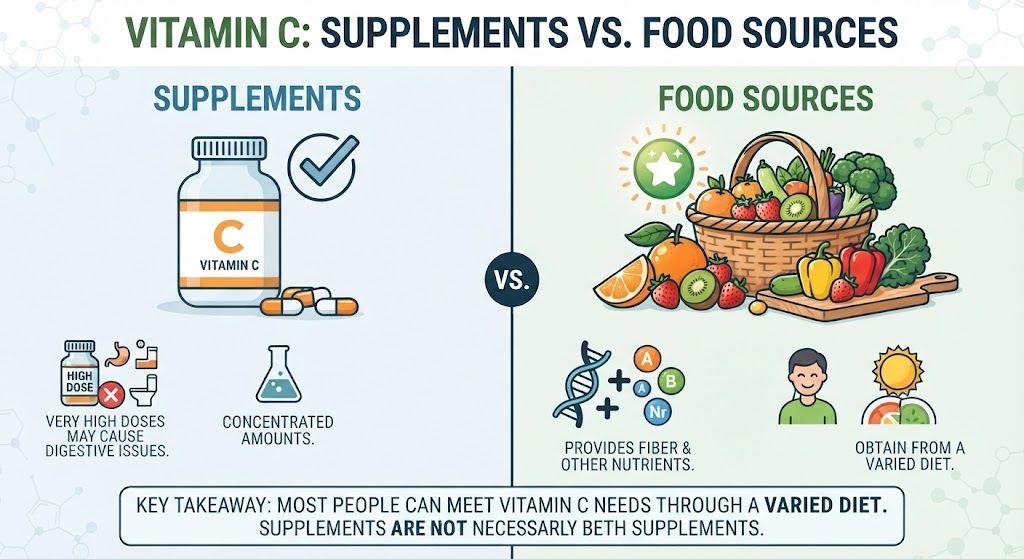
Most people can obtain vitamin C from a varied diet that includes fruits and vegetables.
Supplements can provide vitamin C in concentrated amounts but more is not necessarily better. Very high supplemental doses may cause digestive problems such as diarrhea, nausea or abdominal discomfort.
Food sources also provide fiber and many other nutrients that supplements generally do not.
If you are considering a high dose vitamin C supplement especially if you take medications or have a medical condition speak with a healthcare professional first.
Signs of Low Vitamin C Intake
Severe vitamin C deficiency is uncommon in many populations but inadequate intake over time can cause health problems.
Possible signs of severe deficiency include:
- Fatigue
- Weakness
- Swollen or bleeding gums
- Easy bruising
- Slow wound healing
- Joint or muscle discomfort
These symptoms can have many possible causes so they should not automatically be attributed to vitamin C deficiency.
If you are concerned about your nutrient intake or experience persistent symptoms consult a healthcare professional.
Frequently Asked Questions
What foods are highest in vitamin C?
Guava, bell peppers, kiwi, strawberries, citrus fruits, papaya, broccoli, Brussels sprouts and several other fruits and vegetables are good sources of vitamin C.
Are oranges the best source of vitamin C?
Oranges are a good source but they are not the only option. Foods such as guava, bell peppers, kiwi, strawberries and papaya can also provide substantial amounts of vitamin C.
Can I get enough vitamin C from food?
Many people can meet their vitamin C needs through a varied diet containing fruits and vegetables. Individual requirements can differ so people with specific health or dietary concerns should seek personalized advice.
Does cooking destroy vitamin C?
Heat and water can reduce vitamin C levels especially with prolonged cooking. Shorter cooking methods such as steaming can help preserve more vitamin C.
Is lemon water a good source of vitamin C?
Lemon water can contribute some vitamin C but the amount depends on how much lemon juice is used. Since people typically use relatively small amounts of lemon it is better to consume a variety of vitamin C rich fruits and vegetables.
Are frozen fruits and vegetables healthy?
Yes. Frozen fruits and vegetables can be nutritious and convenient. They can be especially useful when fresh produce is unavailable.
Can vitamin C improve skin health?
Vitamin C is involved in collagen production and antioxidant protection both of which are important for normal skin health. However, skin health also depends on overall diet, sun protection, sleep, hydration and other lifestyle factors.
Can vitamin C help the body absorb iron?
Yes. Vitamin C can improve the absorption of non-heme iron, which is mainly found in plant foods. Combining vitamin C rich fruits or vegetables with plant based iron sources can be beneficial.
When Should You Talk to a Healthcare Professional?
Most people can safely include vitamin C rich foods as part of a balanced diet. However, professional guidance may be useful if you:
- Have a restricted diet
- Have difficulty eating enough fruits and vegetables
- Are considering high dose supplements
- Have a condition that affects nutrient absorption
- Take medications that may interact with supplements
- Are pregnant or breastfeeding
- Have persistent symptoms that concern you
A registered dietitian or healthcare professional can help determine whether your diet provides adequate nutrients and whether supplementation is appropriate.
Conclusion
Vitamin C rich foods are an important part of a balanced and nutrient dense diet. Fruits such as guava, oranges, kiwi, strawberries, papaya and mango can provide vitamin C while vegetables such as bell peppers, broccoli, kale, cabbage, tomatoes and cauliflower offer additional options.
Vitamin C supports normal immune function, collagen production, antioxidant protection, wound healing and the absorption of iron from plant foods. Because vitamin C is water soluble and the body does not produce it naturally, regularly eating a variety of fruits and vegetables is a practical way to maintain adequate intake.
Instead of relying on one “superfood” aim for variety. Add colorful fruits to breakfast, include vitamin C rich vegetables with lunch and dinner and pair plant based iron sources with foods containing vitamin C.
Ultimately, good nutrition is about the overall dietary pattern. A diet rich in fruits, vegetables, whole grains, legumes, quality protein, healthy fats and adequate fluids can provide a wide range of nutrients that support long term health and wellness.
2 Responses
[…] grapefruit, lemons, limes and other citrus fruits provide vitamin C, folate, water and other plant […]
[…] with pumpkin seeds, strawberries, kiwi or another fruit to combine iron containing foods with vitamin C rich […]