
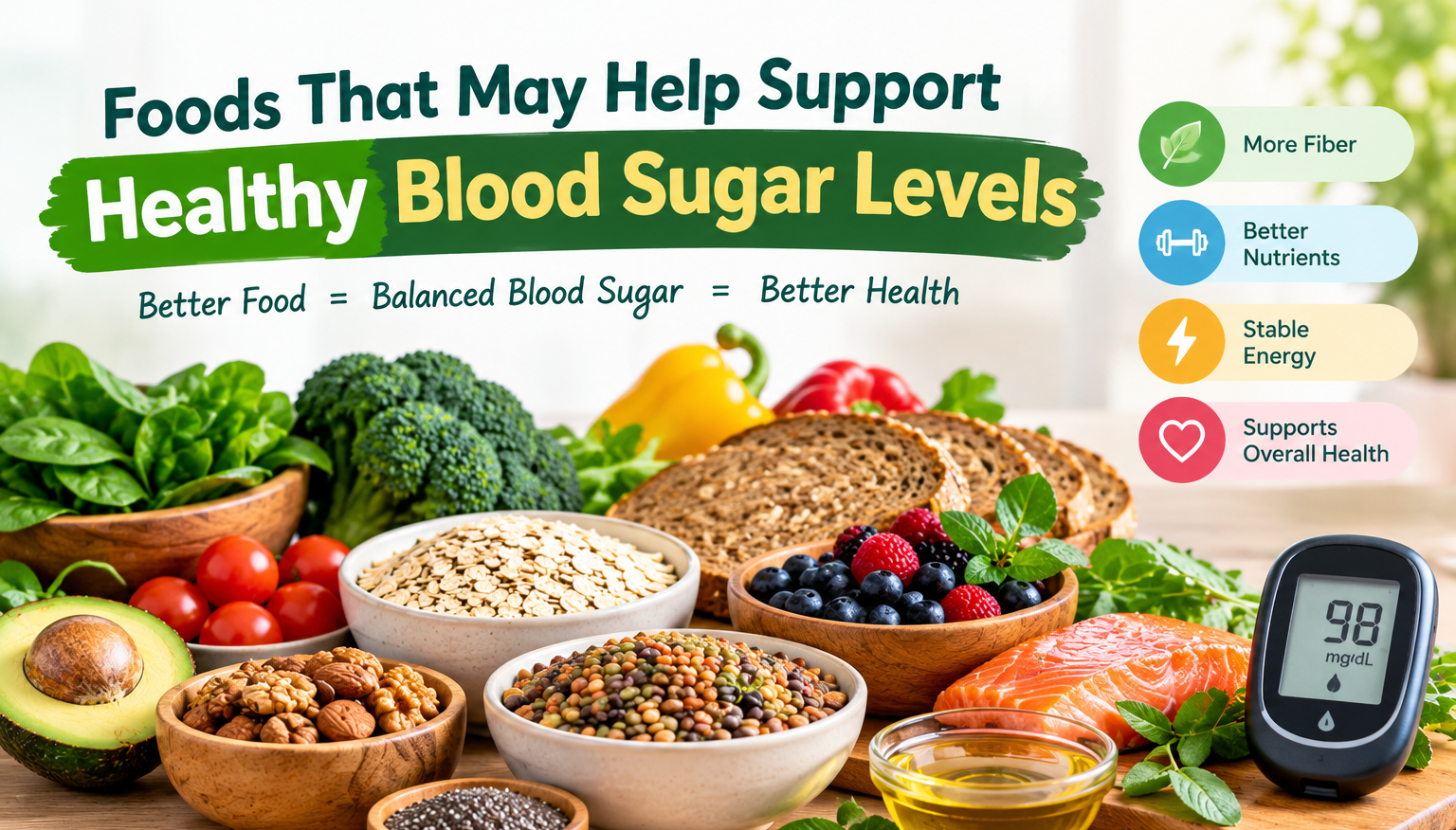
Foods That May Help Support Healthy Blood Sugar Levels
Maintaining healthy blood sugar levels is an important part of overall wellness. The foods support for Healthy Blood Sugar Levels you eat can influence how quickly blood glucose rises after meals, how satisfied you feel and how well your overall diet supports metabolic health. While no single food can control blood sugar on its own, choosing fiber rich foods, quality protein sources, healthy fats and minimally processed carbohydrates can help create a balanced eating pattern.
If you are looking for foods that may help support healthy blood sugar levels, this guide provides practical nutrition information and easy food choices to include in everyday meals. From leafy greens and beans to berries, nuts, whole grains and fatty fish many nutritious foods can fit into a blood sugar conscious diet.
It is important to remember that individual responses to foods can vary. People with diabetes, prediabetes or other medical conditions affecting blood glucose should follow advice from their healthcare professional.
What are Healthy Blood Sugar Levels?
Blood sugar also called blood glucose is the primary sugar circulating in your blood. Your body uses glucose as an important source of energy particularly for the brain and muscles.
After eating carbohydrate containing foods, the digestive system breaks carbohydrates down into glucose. Blood glucose then rises and the hormone insulin helps move glucose from the bloodstream into cells where it can be used or stored.
Healthy blood sugar management involves keeping glucose within an appropriate range throughout the day. Diet, physical activity, sleep, stress, medications, genetics and overall health can all influence blood glucose.
Rather than focusing on one particular food, it is generally more useful to consider your overall eating pattern.
How Food Can Affect Blood Sugar
Different foods can affect blood glucose in different ways.
Foods containing refined carbohydrates and added sugars may be digested relatively quickly, potentially causing a faster increase in blood glucose. In contrast, foods containing fiber, protein and healthy fats generally digest more slowly and can contribute to greater fullness.
For example, eating a piece of fruit by itself is different from eating fruit with plain Greek yogurt and nuts. The combination provides carbohydrates along with protein, fat and fiber.
This is why balanced meals for healthy blood sugar often include several food groups rather than eliminating carbohydrates completely.
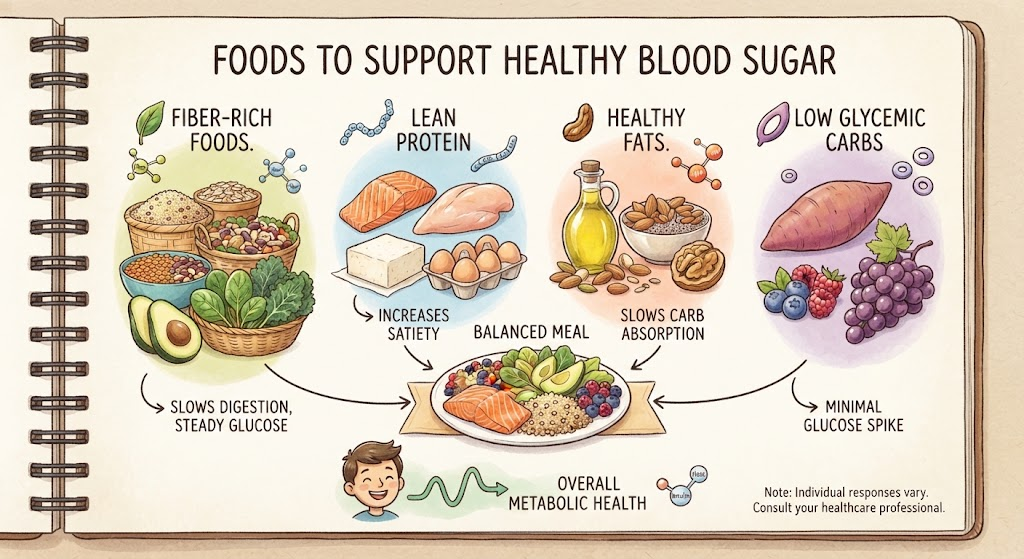
15 Foods That May Help Support Healthy Blood Sugar Levels
Foods support for Healthy Blood Sugar Levels are explained here.
1. Leafy Green Vegetables
Leafy greens such as spinach, kale, collard greens and Swiss chard are nutrient dense foods that can fit easily into a blood sugar conscious diet.
They are naturally low in carbohydrates and provide fiber, vitamins, minerals and plant compounds.
Try adding leafy greens to:
- Salads
- Omelets
- Soups
- Smoothies
- Stir fries
- Grain bowls
Using vegetables as a larger part of your meals can also help replace some refined carbohydrate foods.
2. Non Starchy Vegetables
Broccoli, cauliflower, zucchini, bell peppers, mushrooms, cucumbers and asparagus are examples of non starchy vegetables.
These foods tend to provide relatively few carbohydrates per serving while contributing fiber and important micronutrients.
A simple strategy for blood sugar friendly meals is to make non starchy vegetables a major part of lunch and dinner.
For example, pair grilled chicken with roasted broccoli and a modest serving of brown rice.
3. Beans
Beans such as black beans, kidney beans, chickpeas and navy beans are excellent sources of fiber and plant based protein.
Because fiber is not fully digested, it can help slow carbohydrate digestion and absorption. Beans can also make meals more filling.
Try adding beans to:
- Soups
- Salads
- Chili
- Grain bowls
- Wraps
- Vegetable dishes
Choose lower sodium canned beans when possible or rinse canned beans before eating.
4. Lentils
Lentils are another excellent source of fiber and plant protein.
They can be particularly useful when replacing highly refined carbohydrate foods in meals. For example, lentil soup or a lentil and vegetable bowl can provide a combination of complex carbohydrates, protein and fiber.
Different varieties, including green, brown, black and red lentils can add variety to a healthy diet.
5. Berries
Berries such as blueberries, strawberries, raspberries and blackberries contain fiber and naturally occurring plant compounds.
They can be a nutritious alternative to desserts or sugary snacks.
Try combining berries with:
- Plain Greek yogurt
- Chia seeds
- Nuts
- Oatmeal
- Cottage cheese
Portion size still matters because berries contain natural carbohydrates but they can fit comfortably into many balanced eating patterns.
6. Apples
Apples provide fiber particularly when the skin is eaten.
Whole fruit is generally a more filling choice than fruit juice because it contains the fruit’s fiber and requires more chewing.
For a balanced snack, pair an apple with a small serving of peanut butter or a handful of nuts.
This combination provides carbohydrates along with fat, protein and fiber.
7. Oats
Oats are a whole grain that provides soluble fiber including beta glucan.
A bowl of minimally processed oatmeal can be a nutritious breakfast option particularly when paired with protein and healthy fats.
Instead of adding large amounts of sugar consider topping oatmeal with:
- Berries
- Chia seeds
- Walnuts
- Cinnamon
- Plain Greek yogurt
Choosing minimally sweetened or unsweetened oats can also help reduce added sugar intake.
8. Barley
Barley is another whole grain that contains substantial amounts of fiber.
It can be used in soups, salads, grain bowls or as a side dish.
Replacing some refined grains with whole grains such as barley can increase dietary fiber and improve overall diet quality.
9. Nuts
Almonds, walnuts, pistachios and other nuts provide healthy fats, protein, fiber, vitamins and minerals.
Because nuts are calorie dense, portions are important but a small serving can make a satisfying snack.
Try pairing nuts with a piece of whole fruit or adding chopped nuts to oatmeal and yogurt.
Choose unsalted or lightly salted varieties when possible.
10. Seeds
Chia seeds, flaxseeds, pumpkin seeds and sunflower seeds can add fiber, healthy fats and nutrients to meals.
Chia and flaxseeds are particularly easy to incorporate into everyday foods.
You can add them to:
- Oatmeal
- Yogurt
- Smoothies
- Salads
- Homemade energy bites
Ground flaxseed is often easier to incorporate into meals than whole flaxseeds.
11. Avocados
Avocados are naturally low in carbohydrates and provide monounsaturated fats and fiber.
Their creamy texture makes them a useful replacement for some less nutritious spreads or highly processed foods.
Add avocado to salads, whole grain toast, vegetable bowls or sandwiches for a satisfying source of healthy fat.
12. Eggs
Eggs are a convenient source of high quality protein and contain relatively little carbohydrate.
Including protein rich foods such as eggs at breakfast may help make a meal more satisfying.
Try eggs with sauteed spinach, tomatoes, mushrooms and a serving of whole grain toast for a balanced breakfast.
13. Fatty Fish
Fatty fish such as salmon, sardines, trout and mackerel provide protein and omega-3 fatty acids.
These fish can be part of an overall heart healthy and nutrient rich diet.
Try eating fish with roasted vegetables and a modest serving of whole grains for a balanced meal.
If you do not eat fish other protein sources can still provide important nutritional benefits.
14. Plain Greek Yogurt
Unsweetened Greek yogurt provides protein and can be a convenient breakfast or snack.
Some varieties also contain live cultures that support a healthy gut microbiome.
For a blood sugar conscious option, choose plain yogurt and add your own berries, nuts or seeds instead of choosing heavily sweetened flavored varieties.
Always check the nutrition label because added sugar can vary significantly between products.
15. Cinnamon and Other Flavorful Spices
Cinnamon can add sweetness and flavor to foods without adding significant sugar.
Sprinkle it over oatmeal, yogurt, apples or smoothies.
However, cinnamon should not be viewed as a replacement for diabetes treatment or medication. Its potential effects on blood glucose are much smaller and less established than the benefits of an overall balanced diet.
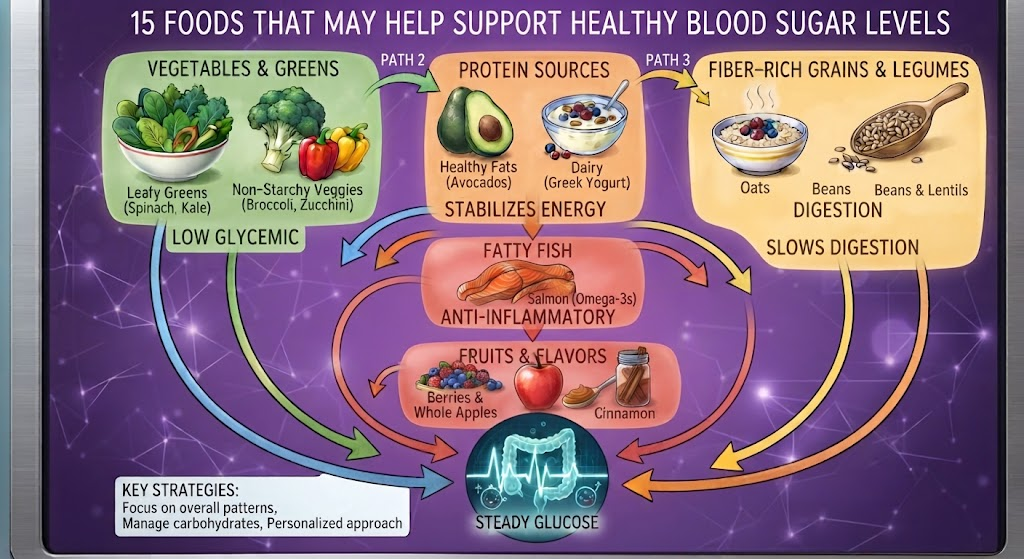
The Importance of Fiber for Blood Sugar Management
Fiber is one of the most important nutrients to consider when building a healthy eating pattern.
Unlike many other carbohydrates, dietary fiber is not completely broken down and absorbed by the body. Certain types of fiber can slow digestion and contribute to more gradual absorption of glucose.
Good sources of dietary fiber include: Foods support for Healthy Blood Sugar Levels are here mention.
- Beans
- Lentils
- Vegetables
- Fruits
- Whole grains
- Nuts
- Seeds
When increasing fiber intake do so gradually and drink enough fluids to help your digestive system adjust.
Choose Whole Carbohydrates More Often
Carbohydrates are not automatically unhealthy. The type and overall portion of carbohydrate matter.
Instead of frequently relying on refined carbohydrates such as sugary cereals, pastries white bread and sweetened snacks consider nutrient rich carbohydrate sources such as:
- Oats
- Barley
- Quinoa
- Brown rice
- Beans
- Lentils
- Whole fruit
- Sweet potatoes
- Non starchy vegetables
These foods can provide fiber, vitamins, minerals and other beneficial nutrients.
Pair Carbohydrates With Protein and Healthy Fat
One practical approach to supporting balanced blood sugar is combining carbohydrate-containing foods with protein, fiber and healthy fats.
For example:
Instead of:
Toast with sugary jam
Try:
Whole grain toast with eggs and avocado
Another example:
Instead of:
Sweetened cereal with little protein
Try:
Oatmeal topped with berries, walnuts, chia seeds and plain Greek yogurt
These combinations can make meals more satisfying while providing a broader range of nutrients.
Foods and Drinks to Limit
A blood sugar conscious diet does not necessarily require completely eliminating specific foods. However, some foods are best consumed less frequently or in smaller amounts.
These may include:
- Sugary soft drinks
- Energy drinks with added sugar
- Candy
- Cakes and pastries
- Sweetened breakfast cereals
- Cookies
- Highly refined snack foods
- Large portions of refined grains
- Sweetened coffee beverages
- Fruit drinks and sugary juices
Sugary beverages deserve particular attention because they can provide substantial amounts of sugar without offering much fiber or satiety.
Water, sparkling water without added sugar and unsweetened tea can be useful alternatives.
How to Build a Blood Sugar Friendly Plate
You do not need to calculate every carbohydrate or calorie to make healthier meals.
A simple plate method can help:
Fill about half your plate with non starchy vegetables
Examples include broccoli, spinach, peppers, cucumber, cauliflower, green beans and leafy greens.
Add a source of protein
Choose foods such as:
- Fish
- Chicken
- Eggs
- Tofu
- Beans
- Lentils
- Plain Greek yogurt
Include a moderate portion of high fiber carbohydrates
Options include:
- Brown rice
- Oats
- Quinoa
- Whole grain bread
- Beans
- Lentils
- Sweet potatoes
Add a source of healthy fat
Examples include avocado, nuts, seeds or olive oil.
This approach can make healthy eating simpler and more sustainable.
Sample One Day Meal Plan
Breakfast
Oatmeal topped with blueberries, chia seeds, walnuts and plain Greek yogurt.
Mid Morning Snack
An apple with a small handful of almonds.
Lunch
A large salad with leafy greens, chickpeas, grilled chicken, tomatoes, cucumber, avocado and an olive oil based dressing.
Afternoon Snack
Plain Greek yogurt with strawberries and ground flaxseed.
Dinner
Grilled salmon with roasted broccoli, cauliflower and a moderate serving of quinoa.
Evening Option
If hungry, consider a small serving of nuts or plain yogurt rather than a sugary snack.
This is only an example. Individual calorie and carbohydrate needs can vary considerably.
Lifestyle Habits That Also Matter
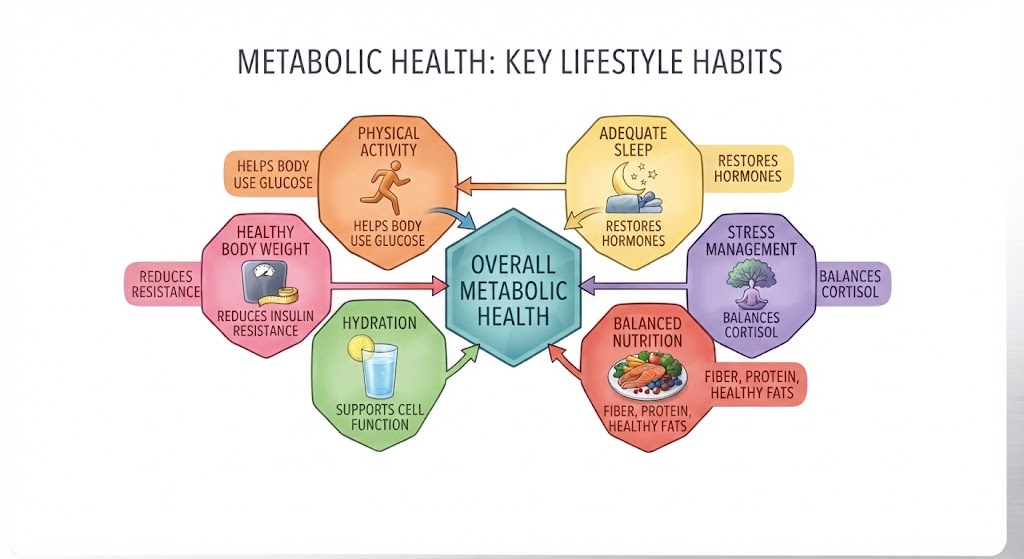
Food is only one part of healthy blood sugar management.
Regular physical activity can help the body use glucose for energy. Adequate sleep and stress management are also important components of overall metabolic health.
Helpful habits may include:
- Eating regular balanced meals
- Staying physically active
- Getting adequate sleep
- Drinking enough water
- Limiting sugary beverages
- Eating more high-fiber foods
- Maintaining a healthy body weight when appropriate
- Following prescribed medications as directed
If you have diabetes or another condition affecting blood glucose, lifestyle changes should complement, not replace your healthcare plan.
Frequently Asked Questions
What are the best foods for healthy blood sugar levels?
Foods rich in fiber, protein and nutrients can be useful choices. Examples include leafy greens, beans, lentils, berries, oats, nuts, seeds, whole grains, non starchy vegetables, fish, eggs and plain yogurt.
Can people with diabetes eat fruit?
Many people with diabetes can include fruit as part of a balanced diet. Whole fruits contain fiber and nutrients. Portion sizes and individual blood glucose responses are important so people with diabetes should follow personalized guidance from their healthcare professional.
Is oatmeal good for blood sugar?
Plain, minimally sweetened oatmeal can be a nutritious choice because oats contain fiber. Adding protein, nuts, seeds and berries can create a more balanced meal. Sweetened instant oatmeal products may contain substantial amounts of added sugar.
Are bananas bad for blood sugar?
Bananas contain carbohydrates and natural sugars but they also provide fiber and nutrients. They can fit into many healthy eating patterns when consumed in an appropriate portion and paired with other nutritious foods.
What drinks are better for blood sugar?
Water is an excellent everyday choice. Unsweetened tea, sparkling water without added sugar and other unsweetened beverages can also help reduce intake of added sugars.
Can cinnamon lower blood sugar?
Research has investigated cinnamon and blood glucose but evidence is not strong enough to consider cinnamon a treatment for diabetes. It is better viewed as a flavorful spice that can be part of a nutritious diet rather than a medical intervention.
When to Talk With a Healthcare Professional
If you frequently experience unusually high or low blood sugar, excessive thirst, frequent urination, unexplained weight changes, unusual fatigue or other concerning symptoms, speak with a healthcare professional.
People who have diabetes, prediabetes, take glucose lowering medication or have other medical conditions may need individualized nutrition advice.
A registered dietitian or qualified healthcare professional can help develop an eating plan based on your health needs, medications, activity level, food preferences and goals.
Conclusion
Choosing nutritious foods is an important part of supporting healthy blood sugar levels and overall metabolic health. Foods such as leafy greens, non starchy vegetables, beans, lentils, berries, oats, whole grains, nuts, seeds, avocado, eggs, fatty fish and plain Greek yogurt can provide fiber, protein, healthy fats, vitamins and minerals.
Rather than searching for one “best” food for blood sugar, focus on the overall quality and balance of your diet. Build meals around vegetables, include adequate protein, choose high fiber carbohydrates, add healthy fats and limit foods and drinks high in added sugar and refined carbohydrates.
Most importantly, remember that blood sugar management is highly individual. Nutrition works best alongside regular physical activity, adequate sleep, stress management and appropriate medical care when needed.
With consistent, balanced food choices, you can create an eating pattern that supports healthy blood sugar levels while also promoting overall wellness.
7 Responses
[…] body can also store carbohydrates as glycogen primarily in the muscles and liver for later […]
[…] Magnesium is an essential mineral and electrolyte required for normal body function. The body uses magnesium in numerous biochemical reactions involving energy production, protein formation, muscle function, nerve signaling and blood glucose regulation. […]
[…] people with diabetes, fiber rich foods can be an important part of an overall blood sugar management […]
[…] sweetened teas, energy drinks and other sugary beverages can add substantial amounts of sugar without providing much nutritional […]
[…] with diabetes or other blood sugar conditions should personalize carbohydrate intake with guidance from a qualified healthcare […]
[…] with diabetes or other blood sugar conditions should personalize their diet with guidance from a healthcare […]
[…] has explored connections between high glycemic diets and certain skin concerns, particularly acne although individual responses […]