

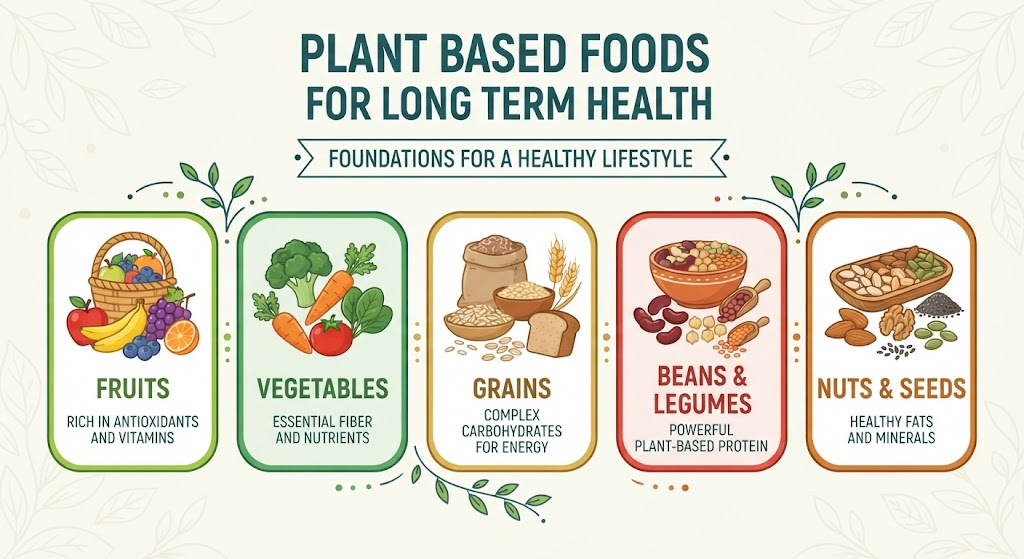
Eating more plant based foods can be a simple way to improve the nutritional quality of your everyday diet. Fruits, vegetables, beans, lentils, whole grains, nuts, seeds and other plant foods provide a wide range of nutrients and beneficial plant compounds that can support health throughout life.
A plant based diet does not necessarily mean becoming completely vegetarian or vegan. For many people, it simply means making plant foods a larger part of everyday meals while choosing animal foods in smaller or moderate amounts. The goal is to build a varied eating pattern that provides adequate protein, fiber, healthy fats, vitamins and minerals.
Plant based foods can support many aspects of health including heart health, digestive health, healthy blood sugar regulation, healthy weight management and overall nutritional well being. However, no individual food can prevent or cure disease by itself. Long term health depends on the overall diet, lifestyle, genetics, environment and access to appropriate healthcare.
This guide explores the best plant based foods for long term health, their key nutrients, potential benefits, practical meal ideas and simple ways to include more plant foods in your diet.
What are Plant Based Foods?
Plant based foods are foods that come primarily from plants.
They include:
- Fruits
- Vegetables
- Beans
- Lentils
- Peas
- Whole grains
- Nuts
- Seeds
- Avocados
- Olives
- Plant based protein foods
Some people use the term “plant based diet” to describe a completely vegan diet while others use it to describe an eating pattern that emphasizes plants but still includes eggs, dairy, fish or meat.
There is no requirement that a healthy diet follow one particular label. What matters is obtaining adequate nutrition and maintaining a balanced eating pattern.
Why Plant Based Foods Matter for Long Term Health
Plant foods can provide nutrients that are important for normal body function.
Many plant based foods are rich in:
- Dietary fiber
- Vitamins
- Minerals
- Unsaturated fats
- Complex carbohydrates
- Plant based protein
- Antioxidants
- Polyphenols
- Other beneficial plant compounds
Eating a variety of plant foods can also increase dietary diversity.
For example, leafy greens provide nutrients such as vitamin K and folate, citrus fruits provide vitamin C, legumes provide protein and fiber and nuts and seeds provide healthy fats and minerals.
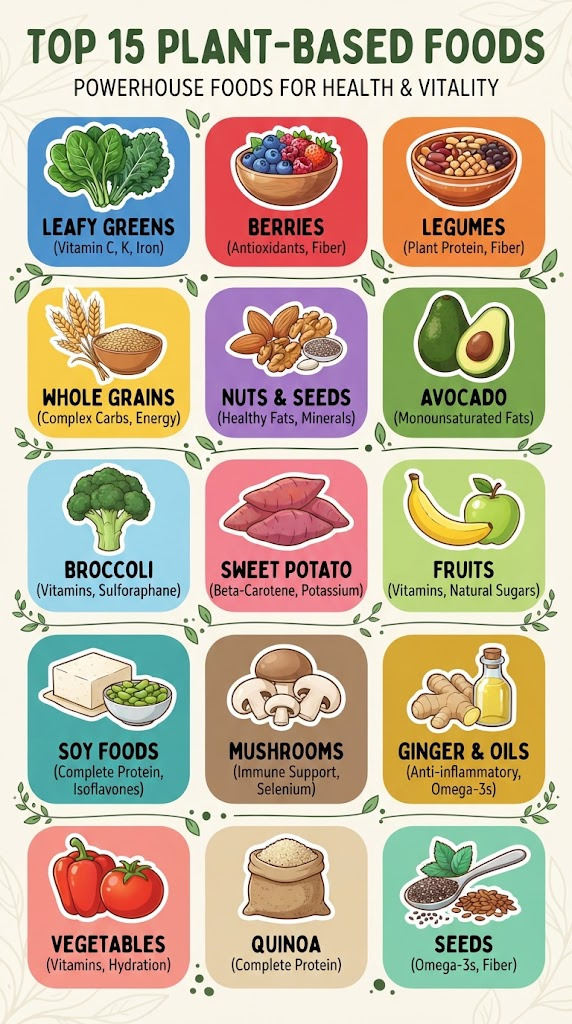
Top 15 Plants based foods:
1. Leafy Green Vegetables
Leafy greens are among the most nutrient dense plant foods.
Examples include:
- Spinach
- Kale
- Collard greens
- Swiss chard
- Romaine lettuce
- Bok choy
- Mustard greens
They provide fiber, folate, vitamin K, vitamin C, carotenoids and other plant compounds.
Try adding leafy greens to:
- Salads
- Soups
- Omelets
- Smoothies
- Stir fries
- Sandwiches
- Grain bowls
Using several types of leafy greens throughout the week can increase dietary variety.
2. Berries
Berries provide fiber, vitamin C and numerous plant compounds including anthocyanins.
Examples include:
- Blueberries
- Strawberries
- Raspberries
- Blackberries
Fresh and frozen berries can both be nutritious choices.
Add berries to:
- Oatmeal
- Plain yogurt
- Smoothies
- Whole grain pancakes
- Chia pudding
Whole berries are generally preferable to heavily sweetened fruit products because they provide naturally occurring fiber.
3. Beans
Beans are an affordable and versatile source of plant based protein and fiber.
Examples include:
- Black beans
- Kidney beans
- Pinto beans
- Navy beans
- Cannellini beans
- Chickpeas
Beans can be used in soups, salads, stews, wraps, grain bowls and homemade patties.
Regularly including legumes can make it easier to increase both protein and fiber intake.
4. Lentils
Lentils are another excellent plant based food for long term nutrition.
They provide:
- Protein
- Fiber
- Iron
- Folate
- Potassium
- Magnesium
Different varieties include red, green, brown and black lentils.
Lentils work particularly well in:
- Soups
- Curries
- Salads
- Stews
- Grain bowls
They cook relatively quickly compared with many dried beans making them convenient for home cooking.
5. Oats and Whole Grains
Whole grains provide carbohydrates for energy as well as fiber and other nutrients.
Examples include:
- Oats
- Brown rice
- Barley
- Quinoa
- Bulgur
- Whole wheat bread
- Whole wheat pasta
Oats are particularly useful because they contain soluble fiber including beta glucan.
Try replacing some refined grains with whole grains throughout the week.
6. Nuts
Nuts provide combinations of healthy fats, protein, fiber, vitamins and minerals.
Useful choices include:
- Walnuts
- Almonds
- Pistachios
- Cashews
- Pecans
- Hazelnuts
Walnuts are notable for their plant based omega-3 fatty acid content.
A small serving of nuts can make a nutritious snack or topping for oatmeal and salads.
Because nuts are energy dense, portion size can still matter for people managing their weight.
7. Seeds
Seeds can add concentrated nutrition to everyday meals.
Examples include:
- Chia seeds
- Flaxseeds
- Pumpkin seeds
- Sunflower seeds
- Sesame seeds
- Hemp seeds
Chia and flax provide plant based omega-3 fatty acids while pumpkin and sesame seeds provide minerals such as magnesium and zinc.
Ground flaxseed can be easier to incorporate into meals than whole flaxseed.
8. Avocados
Avocados are rich in monounsaturated fat and also provide fiber, potassium, folate and other nutrients.
They can be added to:
- Whole grain toast
- Salads
- Bean bowls
- Sandwiches
- Wraps
- Homemade dips
Although nutritious avocados are relatively energy dense so appropriate portions can be useful depending on individual needs.
9. Cruciferous Vegetables
Cruciferous vegetables contain fiber, vitamins, minerals and plant compounds called glucosinolates.
Examples include:
- Broccoli
- Cauliflower
- Brussels sprouts
- Cabbage
- Bok choy
- Kale
These vegetables can be steamed, roasted, stir fried or added to soups.
Try rotating several types rather than eating the same vegetable every day.
10. Tomatoes
Tomatoes provide vitamin C, potassium, folate and carotenoids including lycopene.
It can be eaten:
- Fresh
- Roasted
- In soups
- In sauces
- In salads
- With whole grains
- With beans and lentils
Cooked tomato products can also be a useful source of lycopene.
11. Sweet Potatoes
Sweet potatoes provide carbohydrates, fiber, potassium and beta carotene.
Beta carotene can be converted by the body into vitamin A which contributes to normal vision and immune function.
Healthy preparation methods include:
- Baking
- Roasting
- Steaming
- Boiling
Pair sweet potatoes with beans, lentils, tofu or other protein sources for a balanced meal.
12. Citrus Fruits
Oranges, grapefruit, lemons, limes and other citrus fruits provide vitamin C, folate, water and other plant compounds.
Vitamin C also helps improve the absorption of non-heme iron from plant foods.
For example, adding tomatoes, bell peppers, oranges or lemon juice to meals containing beans or lentils can help support iron absorption.
13. Apples and Pears
Apples and pears are convenient sources of fiber and natural carbohydrates.
They make easy snacks and can be combined with other nutritious foods.
Try:
Apple + peanut butter
or
Pear + plain yogurt + walnuts
Keeping whole fruit available can make healthier snacking easier.
14. Tofu and Tempeh
Tofu and tempeh are plant based protein foods made from soybeans.
They can provide:
- Protein
- Iron
- Calcium depending on the product
- Other nutrients
Tofu can be baked, stir fried, grilled or added to soups.
Tempeh has a firmer texture and can be used in sandwiches, bowls, stir fries and salads.
Soy foods can be useful for people who want to reduce their reliance on animal based protein.
15. Peas
Peas are legumes that provide fiber, plant based protein, vitamins and minerals.
Frozen peas are convenient and can be added to:
- Rice
- Pasta
- Soups
- Stews
- Vegetable dishes
- Grain bowls
Keeping frozen vegetables available can make it easier to include plant foods consistently.
How Plant Based Foods Support Heart Health
A diet rich in vegetables, fruits, legumes, whole grains, nuts and seeds can support cardiovascular health.
Many of these foods provide fiber and unsaturated fats while contributing relatively little saturated fat compared with some animal based foods.
Nuts, seeds, avocados and olive oil provide unsaturated fats while oats, beans, fruits and vegetables provide fiber.
A heart supportive diet should be considered as a whole rather than based on one specific food.
Plant Based Foods and Digestive Health
Fiber is one of the most important nutritional features of plant based foods.
Fiber can help support:
- Regular bowel movements
- Normal digestion
- A healthy gut environment
- Feelings of fullness
Beans, lentils, whole grains, vegetables, fruits, nuts and seeds are all useful fiber sources.
If your current diet contains little fiber, increase it gradually. A sudden increase may cause bloating or digestive discomfort.
Adequate fluid intake is also important.
Plant Based Foods and Healthy Weight Management
Many plant foods are high in fiber and water which can help add volume to meals.
Vegetables and fruits can provide substantial amounts of food with relatively low energy density, while beans, lentils, whole grains, nuts and seeds provide combinations of fiber, protein and healthy fats.
However, plant based does not automatically mean low calorie.
Foods such as nuts, seeds, nut butters, avocado, coconut products and plant based oils can be energy dense.
Healthy weight management depends on overall energy balance, dietary quality, physical activity, sleep and individual factors.
Plant Based Foods for Healthy Blood Sugar
Choosing minimally processed plant foods can provide fiber and nutrients while reducing reliance on refined carbohydrates.
Good options include:
- Beans
- Lentils
- Non starchy vegetables
- Whole grains
- Nuts
- Seeds
- Whole fruits
Pairing carbohydrate rich foods with protein, fiber or healthy fats can create a more balanced meal.
People with diabetes or other blood sugar conditions should personalize carbohydrate intake with guidance from a qualified healthcare professional.
Plant Based Foods and Long Term Brain Health
The brain requires a wide variety of nutrients to function normally.
Plant foods provide folate, vitamin C, vitamin E, magnesium, potassium, fiber and numerous plant compounds.
Nuts, seeds, leafy greens, berries, whole grains and legumes can all contribute to a diverse dietary pattern.
Fatty fish can also provide omega-3 fatty acids for people who include animal foods in their diets. Those following vegan diets can discuss algae-based omega-3 sources with a healthcare professional if needed.
How Much Plant Food Should You Eat?
There is no single number that applies to every person.
A practical strategy is to make plant foods a major part of most meals.
For example:
Breakfast: oatmeal + berries + chia seeds
Lunch: lentil soup + salad + whole grain bread
Snack: apple + almonds
Dinner: tofu + brown rice + mixed vegetables
This pattern provides a variety of plant foods throughout the day.
How to Eat More Plant Based Foods
You do not need to completely change your diet overnight.
Try these gradual strategies.
Add One Extra Vegetable
Add an extra serving of vegetables to lunch or dinner.
Eat Fruit Every Day
Keep apples, bananas, oranges, berries or other fruits available for convenient snacks.
Replace Some Meat With Legumes
Try replacing meat in one or two meals each week with beans, lentils, chickpeas or tofu.
Choose Whole Grains
Replace some refined grains with oats, brown rice, barley, quinoa or whole wheat products.
Add Nuts and Seeds
Sprinkle chia seeds or ground flaxseed on oatmeal or add a small serving of walnuts to a salad.
Try Meatless Meals
Experiment with plant based meals such as:
- Lentil curry
- Chickpea salad
- Bean tacos
- Vegetable stir fry with tofu
- Lentil soup
- Black bean bowls
A One Day Plant Based Meal Plan
Here is an example of a nutrient rich plant focused day.
Breakfast
Oatmeal topped with blueberries, banana, chia seeds and walnuts.
Morning Snack
An apple with a small serving of almonds.
Lunch
Lentil and vegetable soup with a whole grain salad and avocado.
Afternoon Snack
Carrot and cucumber sticks with hummus.
Dinner
Tofu stir-fry with broccoli, bell peppers, mushrooms and brown rice.
Dessert
Fresh berries with unsweetened plant based yogurt.
This example is only a general guide. Individual nutritional needs vary.
Important Nutrients on a Fully Plant-Based Diet
A well planned plant based diet can provide many nutrients but people following a fully vegan diet need to pay particular attention to certain nutrients.
Vitamin B12
Vitamin B12 is naturally concentrated in animal derived foods. People following a vegan diet generally need reliable sources of B12 from fortified foods or supplements.
Vitamin D
Vitamin D can be obtained from certain fortified foods, supplements and sunlight exposure, depending on individual circumstances.
Iron
Plant foods provide non-heme iron through foods such as beans, lentils, tofu, spinach and fortified grains.
Combining these foods with vitamin C rich foods can improve absorption.
Calcium
Calcium can come from fortified plant beverages, calcium set tofu, leafy greens and other fortified foods.
Omega-3 Fatty Acids
Chia seeds, flaxseeds, walnuts and certain algae based products provide plant derived omega-3s.
Zinc
Beans, lentils, nuts, seeds, whole grains and fortified foods can contribute zinc.
People following restrictive diets should consider discussing nutritional adequacy with a registered dietitian.
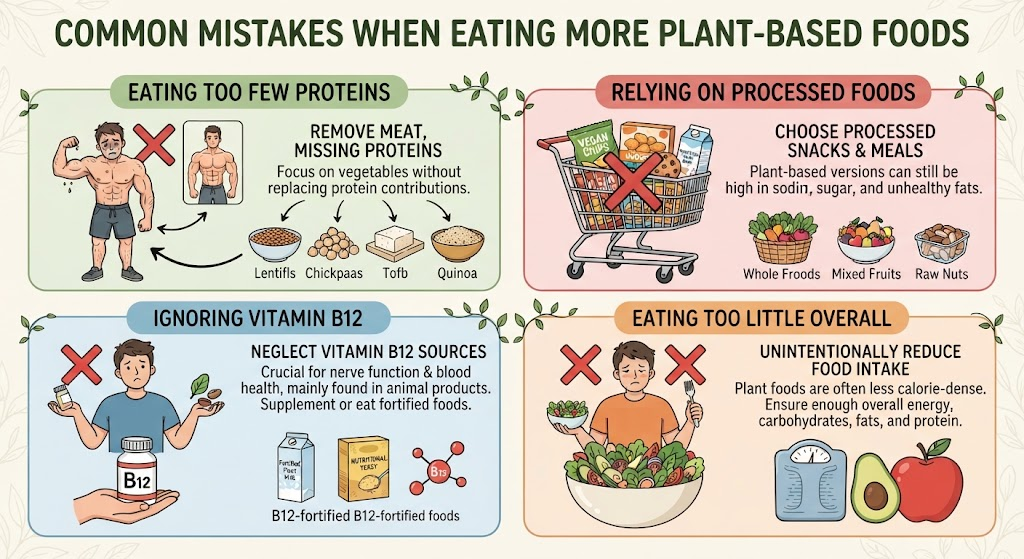
Common Mistakes When Eating More Plant Foods
Eating Too Few Protein Foods
Simply removing meat without replacing its protein contribution can make a diet less balanced.
Include beans, lentils, tofu, tempeh, nuts, seeds or other protein rich foods.
Relying Heavily on Processed Plant Based Foods
Plant based burgers, chips, cookies and sweetened beverages can be convenient but they should not replace whole plant foods as the foundation of the diet.
Ignoring Vitamin B12
People following fully vegan diets need a reliable source of vitamin B12.
Eating Too Little Overall
Some people unintentionally reduce their food intake too much when switching to a plant heavy diet. Make sure meals contain enough carbohydrates, protein, healthy fats and overall energy.
Frequently Asked Questions
What are the best plant based foods for long term health?
Vegetables, fruits, beans, lentils, whole grains, nuts, seeds, avocados and other minimally processed plant foods can form the foundation of a nutritious long term eating pattern.
Can plant based foods provide enough protein?
Yes. Beans, lentils, chickpeas, tofu, tempeh, peas, nuts, seeds and whole grains can contribute protein. A varied diet can provide protein from multiple sources.
Is a plant based diet healthy?
A well planned plant based diet can provide a wide range of nutrients and may support overall health. However nutritional needs vary and fully vegan diets require particular attention to nutrients such as vitamin B12.
Can plant foods help with heart health?
A diet rich in vegetables, fruits, legumes, whole grains, nuts and seeds can support cardiovascular health as part of an overall healthy lifestyle.
Are plant based foods good for digestion?
Many plant foods provide dietary fiber which supports normal digestive function. Increase fiber gradually and drink adequate fluids.
Can I eat meat and still follow a plant based diet?
Yes. “Plant based” is often used to describe an eating pattern that emphasizes plant foods rather than requiring complete elimination of animal products.
What is the easiest way to eat more plant foods?
Start by adding vegetables and fruit to your daily meals, choosing whole grains more often, eating beans or lentils regularly and keeping nuts and seeds available for snacks.
Conclusion
Including more plant based foods that support long term health can be a practical and flexible way to improve the nutritional quality of your diet. Vegetables, fruits, beans, lentils, whole grains, nuts, seeds, avocados and other minimally processed plant foods provide important nutrients such as fiber, vitamins, minerals, healthy fats and plant based protein.
The greatest benefit comes from variety rather than relying on one particular “superfood.” Eating different colors, types and categories of plant foods throughout the week can help provide a broad range of nutrients and beneficial plant compounds.
A plant focused diet can also be adapted to different lifestyles. You do not necessarily need to become vegetarian or vegan to benefit from eating more plants. Simply replacing some highly processed foods or animal based meals with beans, lentils, vegetables, fruits, whole grains, nuts, seeds or tofu can be a meaningful step.
If you follow a fully vegan diet pay particular attention to nutrients such as vitamin B12, vitamin D, iron, calcium, zinc and omega-3 fatty acids. Fortified foods and supplements may be appropriate for some people and a qualified healthcare professional or registered dietitian can provide personalized guidance.
Ultimately, long term health is influenced by the entire lifestyle not one food or one dietary rule. A varied plant rich diet combined with regular physical activity, adequate sleep, stress management and appropriate healthcare can provide a strong foundation for lifelong well being.
3 Responses
[…] turmeric as a spice can be part of a healthy diet while taking concentrated curcumin supplements is a different dietary and health […]
[…] getting the vitamins and minerals your body needs, food should generally be the starting point. A balanced diet can provide a wide variety of essential nutrients along with protein, fiber, healthy fats, […]
[…] green tea can complement a balanced diet as a low calorie […]