
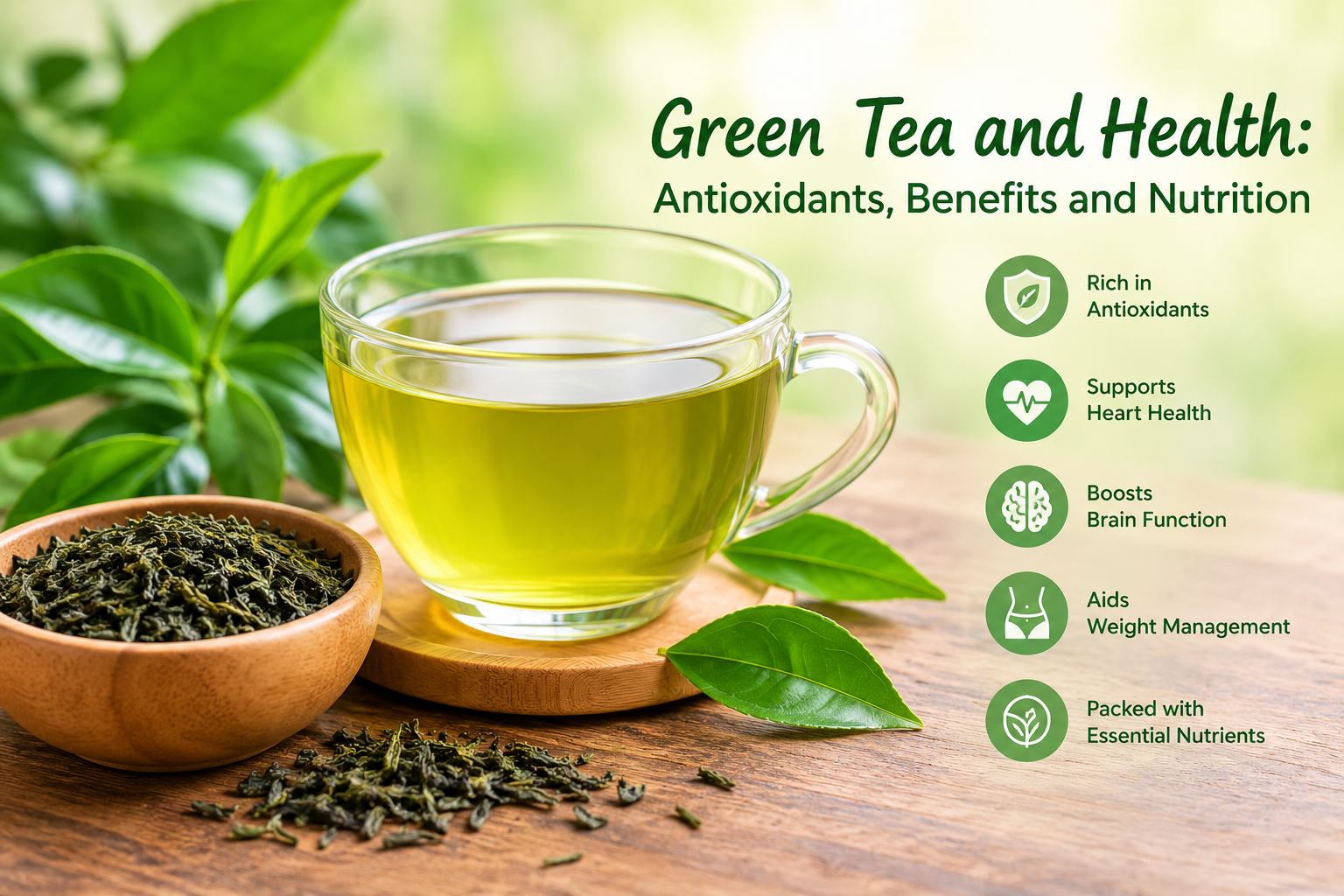
Green tea is one of the most widely consumed beverages in the world and has been studied for its potential role in a healthy lifestyle. Made from the leaves of the Camellia sinensis plant, green tea contains naturally occurring compounds called polyphenols including catechins that contribute to its antioxidant activity.
Unlike many sweetened beverages, plain green tea is naturally low in calories and sugar. It also provides small amounts of nutrients and contains caffeine making it a popular choice for people looking for a flavorful alternative to sugary drinks.
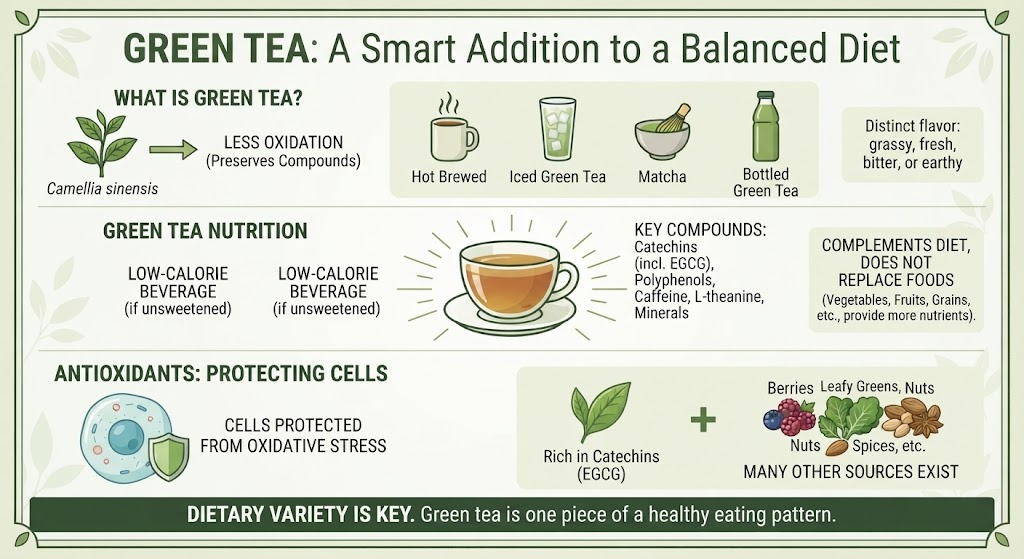
Research has explored green tea and health in several areas including antioxidant activity, heart health, metabolic health, brain function and weight management. However, green tea should be viewed as one part of an overall healthy dietary pattern rather than a cure or treatment for disease.
This guide explains green tea nutrition, antioxidants, potential health benefits, caffeine content, ways to drink green tea and important safety considerations.
What is Green Tea?
Green tea is produced from the leaves of the Camellia sinensis plant. Unlike black tea, green tea generally undergoes less oxidation during processing. This helps preserve many of the naturally occurring compounds found in the tea leaves.
Green tea is commonly consumed as:
- Hot brewed tea
- Iced green tea
- Matcha
- Unsweetened bottled green tea
- Green tea blends with herbs or spices
- Green tea used in certain foods and recipes
The flavor can range from grassy and fresh to slightly bitter or earthy depending on the variety, growing conditions, processing method and brewing technique.
Matcha is different from traditional brewed green tea because finely ground tea leaves are consumed rather than simply steeped and removed. As a result, matcha can provide a more concentrated amount of some compounds including caffeine.
Green Tea Nutrition: What Does It Contain?
Plain brewed green tea is a low calorie beverage. When prepared without sugar, honey, cream, or flavored syrups it contributes very few calories to the diet.
Its nutritional interest comes primarily from its naturally occurring plant compounds rather than large amounts of vitamins or minerals.
Green tea contains:
- Catechins
- Other polyphenols
- Caffeine
- L-theanine
- Small amounts of minerals
- Naturally occurring plant compounds
The exact nutritional composition can vary depending on the tea variety preparation method, serving size and brewing time.
It is important to remember that green tea should not replace nutrient rich foods. Vegetables, fruits, legumes, whole grains, nuts, seeds and other whole foods provide substantially more fiber, protein, vitamins, minerals and other essential nutrients.
Instead, green tea can complement a balanced diet as a low calorie beverage.
What are Antioxidants in Green Tea?
One of the main reasons green tea receives so much scientific attention is its antioxidant compounds.
Green tea contains polyphenols called catechins. One of the best known catechins is epigallocatechin gallate (EGCG).
Antioxidants are compounds that help protect cells from oxidative stress. Oxidative stress occurs when reactive molecules are produced in the body and antioxidant defenses are not sufficient to maintain balance.
Green tea is not the only source of antioxidants. Many plant foods contain different antioxidant compounds including:
- Berries
- Citrus fruits
- Leafy green vegetables
- Tomatoes
- Beans
- Nuts
- Seeds
- Whole grains
- Herbs and spices
This is why dietary variety is more important than relying on one antioxidant rich food or beverage.
Potential Health Benefits of Green Tea
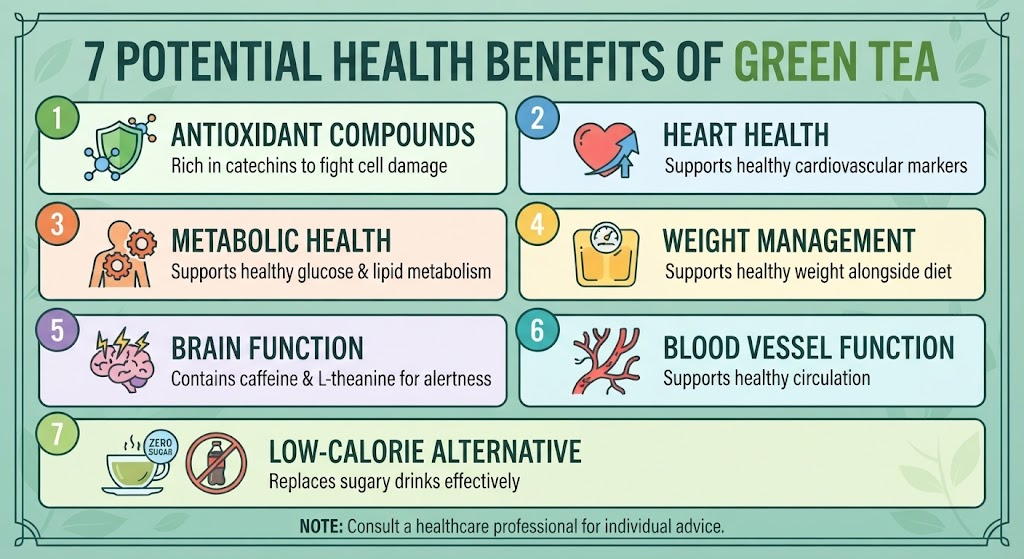
1. Green Tea Provides Antioxidant Compounds
Green tea is particularly well known for its catechin content.
Catechins have been studied for their antioxidant and other biological activities. These compounds are one reason researchers have investigated green tea in relation to several aspects of health.
However, laboratory evidence about antioxidant activity does not automatically mean that drinking green tea will prevent a particular disease.
The best approach is to think of green tea as one convenient source of plant compounds within an overall diet rich in vegetables, fruits, whole grains, legumes, nuts and seeds.
2. May Support Heart Health
Green tea has been investigated for its possible relationship with cardiovascular health.
Research has examined green tea consumption in connection with factors such as blood lipids, blood pressure, blood vessel function and other cardiovascular markers.
Some studies suggest that regular consumption of green tea may be associated with certain favorable cardiovascular outcomes. However, research findings vary and observational studies cannot prove that green tea itself causes a particular health outcome.
For better heart health green tea should be considered alongside more established lifestyle habits.
A heart supportive eating pattern can include:
- Plenty of vegetables and fruits
- Whole grains
- Beans and lentils
- Nuts and seeds
- Fish and other nutritious protein sources
- Unsaturated fats
- Adequate dietary fiber
It is also helpful to limit excessive sodium, added sugars and highly processed foods.
3. May Support Metabolic Health
Green tea and its catechins have also been studied in relation to metabolic health.
Researchers have investigated possible effects on glucose metabolism, insulin sensitivity, lipid levels and energy expenditure.
Some research suggests that green tea may have modest effects on certain metabolic markers, but results are not consistent enough to consider green tea a treatment for diabetes, high cholesterol or other metabolic conditions.
If you have a metabolic condition, prescribed treatment and professional medical advice remain important.
Green tea can simply be included as an unsweetened beverage within a balanced eating pattern.
4. Green Tea May Support Healthy Weight Management
Green tea is often marketed as a weight loss beverage. However, the scientific evidence is more nuanced than many advertisements suggest.
Green tea contains caffeine and catechins and researchers have investigated whether these compounds can influence energy expenditure and fat oxidation.
Some studies have found small effects on body weight or energy expenditure while other research has found limited or inconsistent benefits.
Therefore, green tea should not be viewed as a magic weight loss solution.
For healthy weight management the overall dietary pattern matters much more. A sustainable approach can include:
- Plenty of vegetables
- Whole fruits
- High fiber foods
- Protein rich foods
- Whole grains
- Healthy fats
- Regular physical activity
- Adequate sleep
- Reasonable portion sizes
Replacing sugary drinks with unsweetened green tea may be useful because it can reduce liquid calories and added sugar.
5. May Support Brain Function
Green tea contains both caffeine and L-theanine, a naturally occurring amino acid found in tea leaves.
Caffeine is a stimulant that can increase alertness and help reduce feelings of tiredness. L-theanine has also attracted scientific interest because of its potential effects on relaxation and attention.
The combination of caffeine and L-theanine has been investigated for possible effects on cognitive performance and mental alertness.
Long term research has also explored associations between tea consumption and cognitive health. However, more research is needed to determine how much green tea contributes to long term brain health.
Healthy brain aging involves much more than one beverage. Regular physical activity, adequate sleep, social engagement, managing cardiovascular risk factors and eating a nutrient rich diet all matter.
6. May Support Healthy Blood Vessel Function
The compounds in green tea have been investigated for their potential effects on vascular function.
Blood vessels need to remain flexible and responsive to support healthy circulation. Some research has examined whether tea consumption can influence endothelial function which refers to the activity of the cells lining blood vessels.
Although the findings are interesting, green tea should not be considered a replacement for medical treatment or a guaranteed way to prevent cardiovascular problems.
A healthy lifestyle remains the foundation of cardiovascular wellness.
7. May Provide a Lower Calorie Alternative to Sugary Drinks
One of the simplest potential benefits of green tea is not necessarily related to a special compound, it can be a practical beverage choice.
Plain green tea contains very few calories and no added sugar.
Replacing regularly consumed sugary beverages with unsweetened green tea can help reduce added sugar intake.
For example instead of regularly drinking:
- Sugary soda
- Sweetened iced tea
- Highly sweetened coffee drinks
- Energy drinks
- Fruit flavored beverages with added sugar
You can choose water or unsweetened tea more often.
Of course, adding large amounts of sugar or sweetened syrups can substantially change the nutritional profile of green tea.
Green Tea and Caffeine
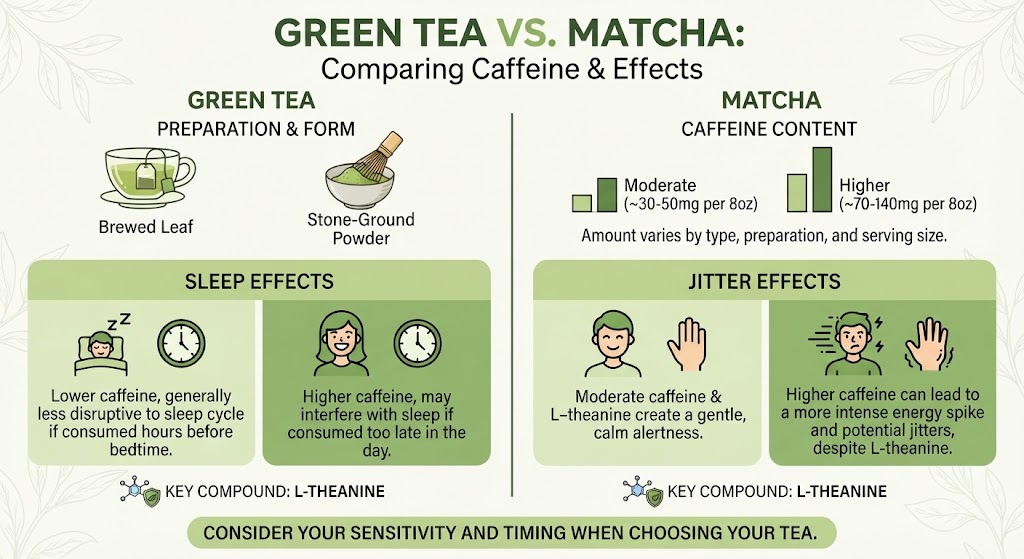
Green tea naturally contains caffeine. The amount varies depending on the type of tea serving size, brewing time, water temperature and preparation method.
Caffeine can have noticeable effects on alertness and energy. However, people respond to caffeine differently.
Some people may experience:
- Difficulty sleeping
- Nervousness
- Restlessness
- Increased heart rate
- Headaches
- Stomach discomfort
Drinking green tea later in the day may interfere with sleep for people who are sensitive to caffeine.
If you already consume coffee, energy drinks, cola or other caffeinated products remember that caffeine intake adds up throughout the day.
Green Tea vs. Matcha: What’s the Difference?
Green tea and matcha come from the same plant but their preparation differs.
Traditional green tea is made by steeping tea leaves in hot water. The leaves are generally removed before drinking.
Matcha is made from finely ground green tea leaves. The powder is whisked into water meaning the entire tea leaf is consumed.
Because of this difference matcha can provide more concentrated amounts of certain tea compounds and caffeine per serving depending on how much powder is used.
Both can fit into a healthy diet. The better choice depends on personal taste, caffeine tolerance and how the beverage is prepared.
How to Make Green Tea Healthier
Green tea itself can be a simple and nutritious beverage but preparation matters.
Choose Unsweetened Green Tea
Plain green tea is naturally low in calories. If you prefer sweetness, consider gradually reducing the amount of sugar you add.
Add Natural Flavor
You can make green tea more interesting by adding ingredients such as:
- Lemon
- Fresh ginger
- Mint
- Cinnamon
- Orange peel
These additions can provide flavor without requiring large amounts of added sugar.
Avoid Excessive Sweeteners
Sweetened bottled teas and cafe style tea beverages can contain significant amounts of added sugar.
Check the nutrition label when purchasing packaged green tea.
Drink It as Part of a Balanced Diet
Green tea works best as one small part of a varied eating pattern.
It should not replace meals, vegetables, fruits, protein rich foods or other nutrient dense foods.
When is the Best Time to Drink Green Tea?
There is no universally established “best” time to drink green tea.
Some people enjoy it in the morning because of its caffeine content. Others drink it between meals or in the afternoon.
If caffeine affects your sleep, avoid green tea several hours before bedtime.
People who experience stomach discomfort from caffeinated beverages may also prefer drinking green tea with or after food rather than on an empty stomach.
The ideal timing is therefore largely based on individual tolerance and lifestyle.
Can Green Tea Replace Water?
Green tea can contribute to your daily fluid intake but it should not necessarily be your only beverage.
Water remains an important source of hydration. Other beverages and water rich foods can also contribute to total fluid intake.
If you enjoy green tea, alternating it with water can be an easy way to stay hydrated while adding variety to your beverage choices.
Green Tea Safety and Important Considerations
For most healthy adults moderate consumption of brewed green tea is generally considered a reasonable beverage choice.
However, concentrated green tea extracts and supplements are different from ordinary brewed tea.
High dose green tea extracts have been associated with safety concerns including potential liver problems in some circumstances. Supplements can also provide much more concentrated amounts of compounds than a normal cup of tea.
It is especially important to speak with a healthcare professional before using concentrated green tea supplements if you:
- Take prescription medications
- Have liver disease
- Are pregnant or breastfeeding
- Have a medical condition
- Are sensitive to caffeine
- Are considering high-dose extracts
Green tea can also affect the absorption or activity of certain medications and nutrients in some situations. If you regularly take medication ask a pharmacist or healthcare professional whether green tea is appropriate for you.
Green Tea and Iron Absorption
Tea contains compounds that can interfere with the absorption of non heme iron which is the type of iron primarily found in plant foods.
People who have low iron levels or are at risk of iron deficiency may want to discuss tea timing with a healthcare professional.
For example, separating tea consumption from iron rich meals may be useful for some people.
Vitamin C rich foods, such as citrus fruits, tomatoes, bell peppers and berries can help improve the absorption of non heme iron when eaten as part of a meal.
This illustrates why overall dietary patterns and food combinations matter more than focusing on one individual food.
How Much Green Tea Should You Drink?
There is no single amount of green tea that is appropriate for everyone.
Individual tolerance depends on caffeine sensitivity, age, pregnancy status, medications, health conditions and overall caffeine intake.
For many people one or several cups of brewed green tea can fit comfortably into a balanced diet. However, more is not automatically better.
The goal should be to enjoy green tea as part of a varied dietary pattern rather than consuming very large amounts in pursuit of additional health benefits.
Green Tea as Part of a Healthy Lifestyle
Green tea can be a useful addition to a healthy lifestyle but it should not become the central focus of nutrition.
A nutritious eating pattern should provide a broad range of foods including:
Vegetables: Leafy greens, broccoli, carrots, peppers, tomatoes and other colorful vegetables.
Fruits: Berries, citrus fruits, apples, pears, bananas and other whole fruits.
Whole grains: Oats, brown rice, barley, quinoa and whole grain breads.
Protein foods: Beans, lentils, fish, eggs, poultry, tofu, yogurt, nuts and seeds.
Healthy fats: Nuts, seeds, avocado, olive oil and other sources of unsaturated fats.
Flavorful ingredients: Herbs, spices, garlic, ginger, turmeric and green tea can add variety and enjoyment.
This approach provides many different nutrients and plant compounds rather than relying on one “superfood.”
Frequently Asked Questions About Green Tea
Is green tea healthy?
Plain green tea can be part of a healthy diet. It provides catechins and other plant compounds while being naturally low in calories when consumed without added sugar.
Does green tea have antioxidants?
Yes. Green tea contains polyphenols, including catechins which have antioxidant activity.
Can green tea help with weight loss?
Research suggests green tea may have modest effects on energy expenditure and weight related measures in some circumstances but it is not a standalone weight loss solution. Diet, physical activity, sleep and overall lifestyle are much more important.
Does green tea contain caffeine?
Yes. Green tea naturally contains caffeine although the amount varies depending on the tea and brewing method.
Is matcha healthier than green tea?
Matcha and brewed green tea both contain beneficial plant compounds. Matcha involves consuming powdered tea leaves so it can provide more concentrated amounts of certain compounds and caffeine. Neither needs to be considered universally superior.
Can I drink green tea every day?
For many healthy adults, moderate amounts of brewed green tea can be consumed regularly. Individual caffeine tolerance and health circumstances should be considered.
Is green tea better than sugary drinks?
Unsweetened green tea is generally much lower in calories and added sugar than sugary beverages making it a useful alternative for people trying to reduce added sugar.
Conclusion
Green tea is a flavorful beverage that can provide catechins, antioxidants, caffeine, L-theanine and other naturally occurring plant compounds. Research has explored its potential relationship with heart health, metabolic health, brain function, weight management and other aspects of wellness.
However, the benefits of green tea should be kept in perspective. It is not a cure all and evidence does not support treating green tea as a replacement for medical care or a balanced diet.
The simplest way to include green tea in a healthy lifestyle is to enjoy it unsweetened or lightly sweetened while continuing to prioritize vegetables, fruits, whole grains, legumes, nuts, seeds and nutritious protein sources.
Ultimately, healthy eating is about dietary variety and consistency. Green tea can be one enjoyable part of that bigger picture providing flavor, hydration and beneficial plant compounds without needing to become the center of your nutrition plan.
No responses yet