
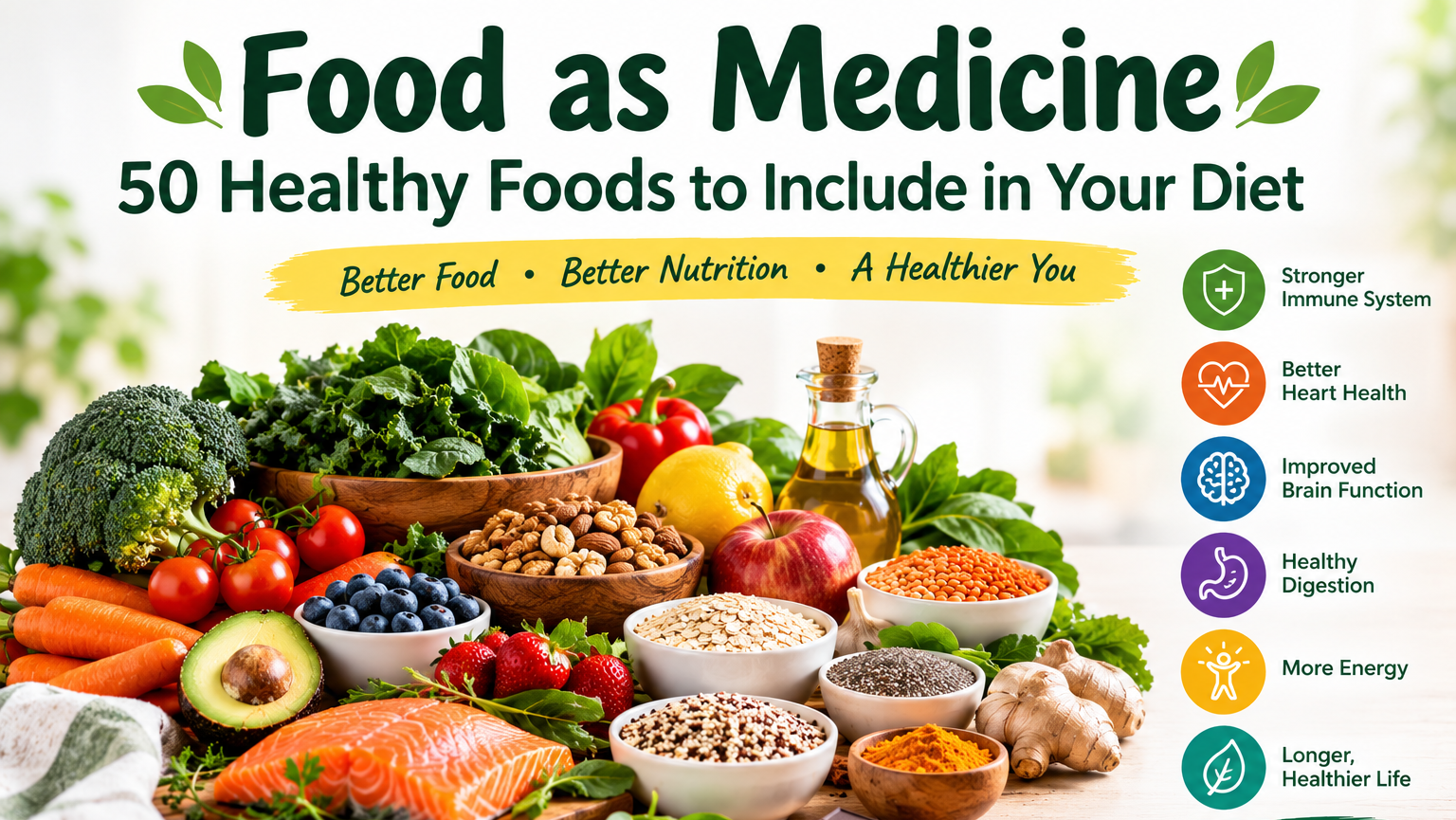
The idea of food as medicine is based on a simple principle. The foods we eat regularly can provide nutrients and plant compounds that support normal body functions and overall health. However, food cannot replace medical treatment, a nutritious diet can be an important part of a healthy lifestyle and may help support long term wellness.
A healthy diet does not require expensive superfoods or complicated meal plans. Many everyday foods including vegetables, fruits, beans, whole grains, nuts, seeds, fish, eggs and dairy products provide essential nutrients such as protein, fiber, vitamins, minerals and healthy fats.
The key is variety. Eating a wide range of nutrient dense foods makes it easier to obtain different nutrients and beneficial plant compounds.
In this guide, you’ll discover 50 healthy foods to include in your diet, their key nutritional qualities and simple ways to add them to everyday meals.
What Does “Food as Medicine” Mean?
“Food as medicine” does not mean that food can cure every disease or replace medication. Instead, it describes the role that nutritious foods and dietary patterns can play in supporting health.
For example, a diet rich in vegetables, fruits, whole grains, legumes, nuts, seeds and healthy protein sources can provide nutrients associated with normal immune function, digestion, heart health, bone health and energy metabolism.
Individual foods should therefore be viewed as parts of an overall dietary pattern rather than miracle cures.
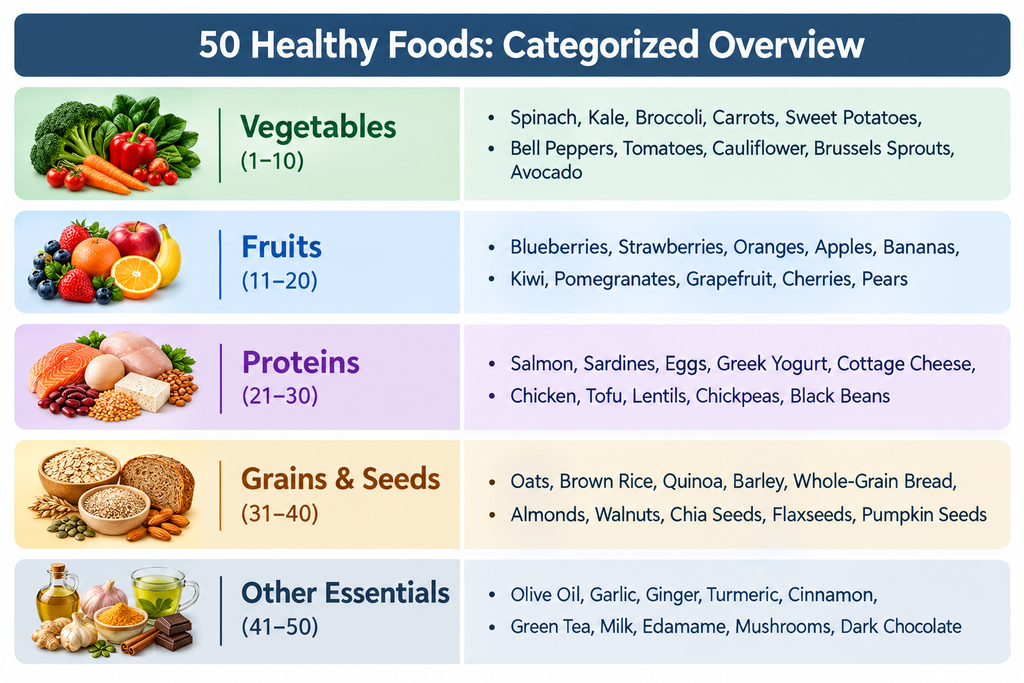
50 Healthy Foods to Include in Your Diet
1. Spinach
Spinach is a nutrient dense leafy green vegetable that provides folate, vitamin K, vitamin A and other nutrients.
How to eat it: Add spinach to salads, omelets, soups, smoothies or stir fries.
2. Kale
Kale is another nutrient rich leafy green containing fiber, vitamin K, vitamin C and carotenoid compounds.
How to eat it: Use it in salads, soups, wraps or roasted vegetable dishes.
3. Broccoli
Broccoli provides fiber, vitamin C, vitamin K and several plant compounds.
How to eat it: Steam, roast, stir fry or add it to soups.
4. Carrots
Carrots are particularly well known for their beta carotene content, which the body can convert into vitamin A.
How to eat them: Enjoy carrots raw, roasted, steamed or added to soups and stews.
5. Sweet Potatoes
Sweet potatoes provide complex carbohydrates, fiber, potassium and beta carotene.
How to eat them: Bake or roast them or add them to soups and grain bowls.
6. Bell Peppers
Bell peppers provide vitamin C and colorful plant compounds. Red, yellow, orange and green varieties offer slightly different nutrient profiles.
How to eat them: Add them to salads, omelets, stir fries, fajitas and roasted vegetable dishes.
7. Tomatoes
Tomatoes provide vitamin C, potassium and carotenoid compounds such as lycopene.
How to eat them: Add tomatoes to salads, sandwiches, soups, sauces and curries.
8. Cauliflower
Cauliflower is a versatile vegetable that provides fiber, vitamin C and other plant compounds.
How to eat it: Roast it, steam it, add it to curries or use it in soups.
9. Brussels Sprouts
Brussels sprouts are a fiber rich cruciferous vegetable that provides vitamin C, vitamin K and other nutrients.
How to eat them: Roast with herbs and spices or add them to vegetable bowls.
10. Avocado
Avocado provides monounsaturated fat, fiber, potassium and other nutrients.
How to eat it: Add avocado to whole grain toast, salads, sandwiches, grain bowls or homemade dips.
Healthy Fruits
11. Blueberries
Blueberries provide fiber, vitamin C, vitamin K and colorful plant compounds called anthocyanins.
How to eat them: Add them to oatmeal, yogurt, smoothies or eat them fresh.
12. Strawberries
Strawberries are rich in vitamin C and provide fiber and naturally occurring plant compounds.
How to eat them: Add them to yogurt, salads, oatmeal or smoothies.
13. Oranges
Oranges are well known for vitamin C and also provide water, fiber and other plant compounds.
How to eat them: Eat whole oranges rather than relying only on juice.
14. Apples
Apples provide fiber particularly when the skin is eaten along with various plant compounds.
How to eat them: Enjoy whole as a snack or slice them into oatmeal and salads.
15. Bananas
Bananas provide carbohydrates, potassium and vitamin B6.
How to eat them: Add bananas to oatmeal, yogurt, smoothies or eat them as a convenient snack.
16. Kiwi
Kiwi provides vitamin C, fiber and other nutrients.
How to eat it: Eat it fresh, add it to fruit salads or blend it into smoothies.
17. Pomegranates
Pomegranates contain fiber and various polyphenol compounds.
How to eat them: Add the seeds to yogurt, salads, oatmeal or grain bowls.
18. Grapefruit
Grapefruit provides vitamin C, water and other nutrients.
How to eat it: Eat it fresh as part of breakfast or a snack.
However, grapefruit can interact with certain medications so people taking prescription medicines should check with a healthcare professional before consuming it regularly.
19. Cherries
Cherries provide fiber, vitamin C, potassium and colorful plant compounds.
How to eat them: Enjoy fresh or frozen cherries in yogurt, oatmeal or smoothies.
20. Pears
Pears are a good source of fiber and provide vitamin C and other plant compounds.
How to eat them: Eat whole or slice them into salads and oatmeal.
Healthy Protein Foods
21. Salmon
Salmon provides high quality protein and omega-3 fatty acids. It also provides vitamin B12 and vitamin D.
How to eat it: Grill, bake or roast salmon and serve it with vegetables and whole grains.
22. Sardines
Sardines are nutrient dense fish that provide protein, omega-3 fatty acids, vitamin B12 and other nutrients.
How to eat them: Add them to salads, whole grain toast or rice dishes.
23. Eggs
Eggs provide high quality protein along with nutrients such as choline, vitamin B12 and selenium.
How to eat them: Try boiled, scrambled, poached or vegetable filled omelets.
24. Greek Yogurt
Greek yogurt provides protein and calcium. Some varieties also contain live cultures.
How to eat it: Choose plain yogurt and add berries, nuts, seeds or fruit.
25. Cottage Cheese
Cottage cheese is a protein rich dairy food that also provides calcium.
How to eat it: Pair it with fruit, vegetables, whole grain crackers or use it in savory dishes.
26. Chicken
Chicken provides high quality protein and several B vitamins.
How to eat it: Choose grilled, baked, roasted or otherwise minimally processed chicken.
27. Tofu
Tofu is a versatile plant based protein made from soybeans. It can provide protein, iron and other nutrients.
How to eat it: Add tofu to stir fries, curries, salads or grain bowls.
28. Lentils
Lentils provide plant protein, fiber, folate, iron, potassium and other nutrients.
How to eat them: Use lentils in soups, curries, salads or grain bowls.
29. Chickpeas
Chickpeas provide plant protein, fiber, folate, iron and other minerals.
How to eat them: Add chickpeas to salads, curries, soups or make homemade hummus.
30. Black Beans
Black beans provide protein, fiber, magnesium, folate and other nutrients.
How to eat them: Add them to tacos, soups, salads, rice dishes or vegetable bowls.
Healthy Whole Grains
31. Oats
Oats provide complex carbohydrates, fiber and a type of soluble fiber called beta glucan.
How to eat them: Make oatmeal or add oats to homemade breakfast recipes.
32. Brown Rice
Brown rice is a whole grain that provides carbohydrates, fiber, magnesium and other nutrients.
How to eat it: Serve it with vegetables, beans, fish, tofu or chicken.
33. Quinoa
Quinoa provides carbohydrates, fiber and plant protein and contains all nine essential amino acids.
How to eat it: Use quinoa in salads, bowls, soups or as a side dish.
34. Barley
Barley is a fiber rich whole grain containing beta glucan and other nutrients.
How to eat it: Add barley to soups, stews, salads or grain bowls.
35. Whole Grain Bread
Whole grain bread can provide fiber, B vitamins, minerals and complex carbohydrates.
How to eat it: Use it for sandwiches, avocado toast or breakfast with eggs.
Nuts and Seeds
36. Almonds
Almonds provide healthy fats, protein, fiber, magnesium and vitamin E.
How to eat them: Enjoy a small handful as a snack or add them to yogurt and oatmeal.
37. Walnuts
Walnuts provide healthy fats including plant based omega-3 fatty acid ALA.
How to eat them: Add walnuts to oatmeal, salads, yogurt or whole grain dishes.
38. Chia Seeds
Chia seeds provide fiber, plant based omega-3 ALA, protein and minerals.
How to eat them: Add them to oatmeal, yogurt, smoothies or chia pudding.
39. Flaxseeds
Ground flaxseeds provide fiber, ALA omega-3 fatty acids and lignans.
How to eat them: Use ground flaxseed in oatmeal, smoothies, yogurt or baked foods.
40. Pumpkin Seeds
Pumpkin seeds provide protein, magnesium, zinc and healthy fats.
How to eat them: Sprinkle them over salads, oatmeal, soups or yogurt.
Other Nutrient Dense Foods
41. Olive Oil
Extra virgin olive oil is rich in monounsaturated fat and various plant compounds.
How to use it: Use it for salad dressings, vegetables or moderate heat cooking.
42. Garlic
Garlic adds strong flavor while providing sulfur containing plant compounds.
How to use it: Add fresh garlic to vegetables, beans, soups, sauces, curries and marinades.
43. Ginger
Ginger provides naturally occurring compounds such as gingerols and adds distinctive flavor to meals.
How to use it: Add fresh ginger to stir fries, soups, curries, teas and smoothies.
44. Turmeric
Turmeric contains curcuminoids including curcumin and is commonly used as a culinary spice.
How to use it: Add turmeric to curries, rice, lentils, roasted vegetables and soups.
45. Cinnamon
Cinnamon contains aromatic plant compounds and can add sweetness like flavor without adding much sugar.
How to use it: Sprinkle it on oatmeal, yogurt, fruit or whole grain breakfasts.
46. Green Tea
Green tea contains polyphenols and provides a low calorie beverage option when consumed without excessive added sugar.
How to use it: Enjoy it hot or chilled.
47. Milk
Milk provides protein, calcium, vitamin B12 and other nutrients. Many milk products are also fortified with vitamin D.
How to use it: Drink it with meals or add it to oatmeal and smoothies.
48. Edamame
Edamame or young soybeans provide plant protein fiber, folate and other nutrients.
How to eat it: Add cooked edamame to salads, rice bowls, stir fries or enjoy it as a snack.
49. Mushrooms
Mushrooms provide B vitamins, minerals, fiber and various bioactive compounds. Some varieties can also provide vitamin D when exposed to ultraviolet light.
How to eat them: Add mushrooms to omelets, soups, stir fries, pasta or grain bowls.
50. Dark Chocolate
Dark chocolate with a relatively high cocoa content provides cocoa flavanols and minerals such as magnesium and iron.
How to eat it: Enjoy a small portion as an occasional treat.
Choose products with less added sugar when possible.
How to Build a Food as Medicine Diet
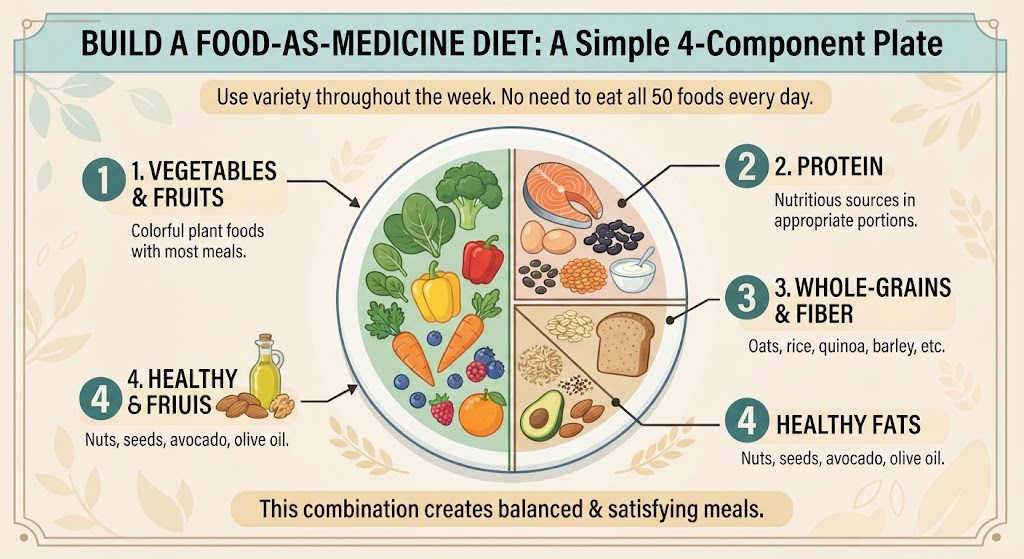
Eating 50 healthy foods does not mean you need to eat all of them every day. Instead, use the list to create variety throughout the week.
A simple approach is to build meals around four components:
1. Vegetables or Fruits
Try to include colorful plant foods with most meals.
2. Protein
Choose beans, lentils, eggs, fish, poultry, tofu, yogurt or another nutritious protein source.
3. Whole Grain or Fiber Rich Carbohydrates
Options include oats, brown rice, quinoa, barley, potatoes and whole grain bread.
4. Healthy Fats
Include foods such as nuts, seeds, avocado and olive oil in appropriate portions.
This combination can create balanced and satisfying meals.
Sample One Day Food as Medicine Meal Plan
Breakfast
Oatmeal topped with blueberries, chia seeds, walnuts and cinnamon.
Morning Snack
An apple with a small handful of almonds.
Lunch
Lentil and vegetable bowl with spinach, tomatoes, carrots, brown rice and avocado.
Afternoon Snack
Plain Greek yogurt with strawberries and ground flaxseed.
Dinner
Baked salmon or tofu with broccoli, sweet potato and a mixed salad dressed with olive oil and lemon.
Evening
A cup of unsweetened green tea if desired.
This type of menu combines protein, fiber, healthy fats, whole grains, fruits, vegetables and a wide variety of plant compounds.
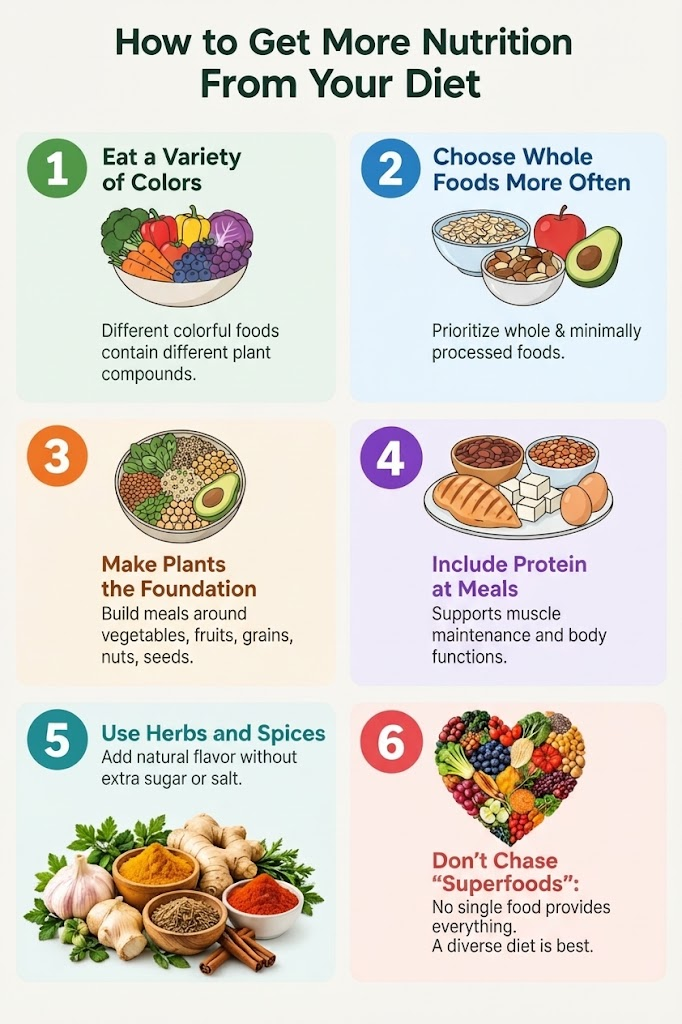
How to Get More Nutrition From Your Diet
Eat a Variety of Colors
Different colorful foods contain different plant compounds. Include green, red, orange, yellow, blue, purple and white plant foods throughout the week.
Choose Whole Foods More Often
Whole and minimally processed foods can make it easier to obtain fiber and a broad range of nutrients.
Make Plants the Foundation
Vegetables, fruits, beans, lentils, whole grains, nuts and seeds can form the foundation of many healthy eating patterns.
Include Protein at Meals
Protein supports muscle maintenance and many other body functions. Include a protein source at meals and snacks when appropriate.
Use Herbs and Spices
Garlic, ginger, turmeric, cinnamon, cumin, paprika and other spices can make nutritious foods more flavorful without relying heavily on sugar or excessive salt.
Don’t Chase “Superfoods”
No single food provides everything your body needs. A diverse diet is generally more useful than focusing heavily on one trendy ingredient.
Food as Medicine: Important Limitations
The phrase “food as medicine” can sometimes create unrealistic expectations.
Food can support health but it does not mean that eating a particular food can cure a disease.
For example, eating blueberries does not guarantee protection from illness and eating garlic does not replace prescribed treatment for high blood pressure or other medical conditions.
Nutrition works over time and as part of an overall lifestyle.
Sleep, physical activity, stress management, medical care and other lifestyle factors also contribute to health.
If you have a medical condition follow the treatment plan recommended by your healthcare professional.
Frequently Asked Questions
What is food as medicine?
Food as medicine refers to using nutritious foods and healthy dietary patterns to support overall health and well being. It does not mean that food can replace medication or cure every disease.
What are the healthiest foods to eat every day?
There is no single list of foods that everyone must eat every day. A balanced diet can regularly include vegetables, fruits, whole grains, legumes, nuts, seeds, healthy proteins and healthy fats.
What are the best foods for overall health?
Nutrient dense foods such as leafy greens, berries, beans, lentils, whole grains, nuts, seeds, fish, eggs, yogurt and colorful vegetables can contribute to a balanced diet.
Can food prevent disease?
A healthy dietary pattern may help support lower risk for some chronic diseases but individual foods should not be viewed as guaranteed disease prevention or treatment tools.
How many healthy foods should I eat each day?
Rather than focusing on a specific number, aim for variety across food groups. Eating different vegetables, fruits, protein sources, whole grains, nuts and seeds throughout the week can improve dietary variety.
Are frozen fruits and vegetables healthy?
Yes. Frozen fruits and vegetables can be nutritious and convenient. They can be particularly useful when fresh produce is unavailable or expensive.
Is organic food more nutritious?
Organic and conventionally grown foods can both contribute to a healthy diet. The most important priority for many people is eating enough vegetables, fruits, whole grains, legumes and other nutritious foods.
Can healthy food replace medicine?
No. Nutritious food can support health but should not replace prescribed medication or professional medical care.
Conclusion
Food as medicine is best understood as a food first approach to supporting overall health rather than a promise that individual foods can cure disease. A balanced diet provides the body with a wide variety of essential nutrients, fiber, healthy fats, protein, vitamins, minerals and naturally occurring plant compounds.
The 50 healthy foods in this guide offer plenty of options, from spinach, broccoli, carrots and sweet potatoes to berries, apples, oranges, salmon, eggs, lentils, chickpeas, oats, quinoa, almonds, walnuts, chia seeds, olive oil, garlic, ginger and turmeric.
You do not need to eat every food on the list every day. Instead, focus on variety and build meals around nutrient dense ingredients. Include colorful vegetables and fruits, choose quality protein sources, eat whole grains and legumes regularly and add healthy fats from foods such as nuts, seeds, avocado and olive oil.
It is also helpful to remember that healthy eating does not need to be perfect. Consistent habits over time matter more than one individual meal or ingredient.
Food can be an important part of a healthy lifestyle but it works alongside other factors such as physical activity, sleep, stress management and appropriate medical care.
Ultimately, the goal of food as medicine is not to find one magical food. It is to create a diverse, enjoyable, nutrient rich eating pattern that supports your body’s nutritional needs and can be maintained for the long term.
One response
[…] has explored green tea and health in several areas including antioxidant activity, heart health, metabolic health, brain function and […]