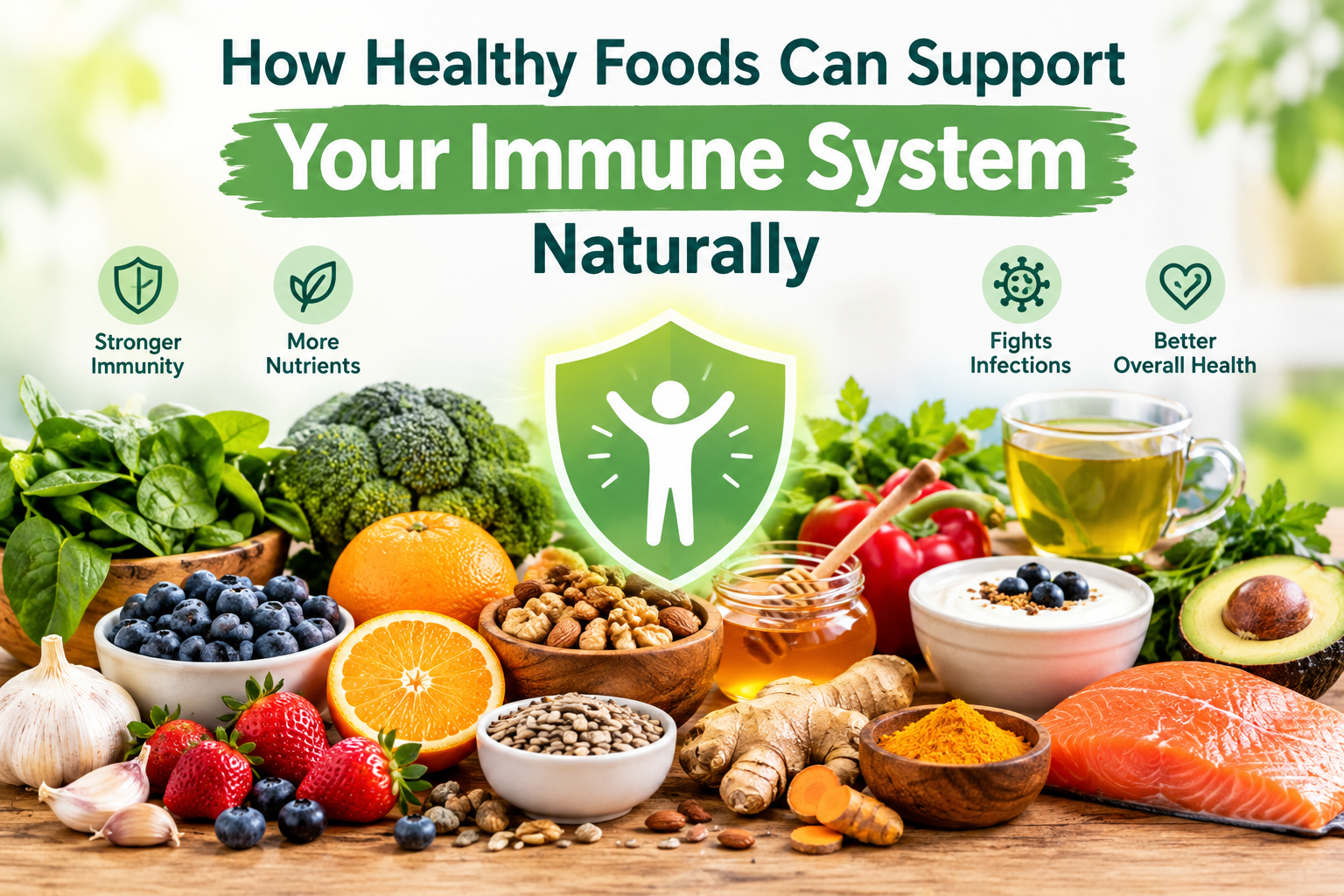
Your immune system is your body’s natural defense network, helping protect you from bacteria, viruses and other harmful substances. While no single food can prevent illness or instantly “boost” immunity. Eating a balanced diet rich in essential nutrients can help your immune system function properly.
Choosing healthy foods for the immune system is one practical way to support overall health. Nutrient dense foods provide vitamins, minerals, antioxidants, protein, healthy fats and other compounds that your body needs to maintain normal immune function.
From colorful fruits and vegetables to whole grains, beans, nuts, seeds and fermented foods, a variety of nutritious choices can form the foundation of an immune supporting diet.
In this guide, we’ll explore how healthy foods can support your immune system naturally, which nutrients matter most, the best foods to include in your meals and simple ways to build healthier eating habits.
What is the Immune System?
The immune system is a complex network of cells, tissues, organs and biological processes that work together to defend the body.
Components such as white blood cells, antibodies, the lymphatic system, bone marrow and skin and mucous membranes. That provide physical barriers against unwanted substances.
Your immune system also interacts with other systems in your body. For example, the digestive system and gut microbiome can influence immune activity.
Because the immune system is so complex, maintaining it isn’t about finding one “superfood.”
Instead, it is about providing your body with the nutrients and energy it needs.
A healthy immune system diet should focus on variety, balance and nutrient density.
Can Healthy Food Really Support Immunity?
Yes, nutrition plays an important role in normal immune function.
Your immune cells require energy and nutrients to develop, communicate and perform their functions. Inadequate intake of certain nutrients can negatively affect immune function. A balanced diet can help provide the nutrients your body needs.
However, it’s important to understand the difference between supporting immune health and “boosting” immunity.
Main goal is to support normal immune function rather than trying to make the immune system permanently more active.
A nutritious diet is one part of a healthy lifestyle that can also include adequate sleep, regular physical activity, stress management, good hygiene and appropriate medical care.
Best Nutrients for Immune System Health
Several vitamins and minerals are particularly important for normal immune function.
Vitamin C
Vitamin C is a well known antioxidant that contributes to normal immune function. It is also involved in collagen production and helps protect cells from oxidative stress.
Good food sources include:
- Oranges and other citrus fruits
- Kiwi
- Strawberries
- Bell peppers
- Broccoli
- Tomatoes
- Brussels sprouts
Adding different fruits and vegetables to your meals can make it easier to get vitamin C through your diet.
Vitamin A
Vitamin A supports the health of the skin and tissues that form important barriers against the outside environment. It also plays a role in normal immune function.
Foods containing vitamin A or carotenoids that the body can convert to vitamin A include:
- Carrots
- Sweet potatoes
- Pumpkin
- Spinach
- Kale
- Eggs
- Dairy products
Orange and dark green vegetables are particularly useful additions to a varied diet.
Vitamin D
Vitamin D is involved in immune function as well as bone health and other processes in the body.
Food sources include:
- Fatty fish
- Egg yolks
- Fortified milk
- Fortified plant based beverages
- Some fortified cereals
Vitamin D can be difficult to obtain from food alone and dietary needs vary between individuals. If you are concerned about your vitamin D status, discuss testing and supplementation with a healthcare professional.
Zinc
Zinc is a mineral required for many biological processes including normal immune function.
Foods containing zinc include:
- Oysters and other seafood
- Meat
- Poultry
- Beans
- Lentils
- Pumpkin seeds
- Nuts
- Dairy products
Plant based sources can be part of a healthy diet, when you regularly consume a variety of legumes, nuts, seeds and whole grains.
Selenium
Selenium is an essential mineral involved in antioxidant defense and immune related processes.
Food sources include:
- Fish
- Seafood
- Eggs
- Meat
- Whole grains
- Nuts and seeds
Brazil nuts are particularly rich in selenium so only small amounts may be needed.
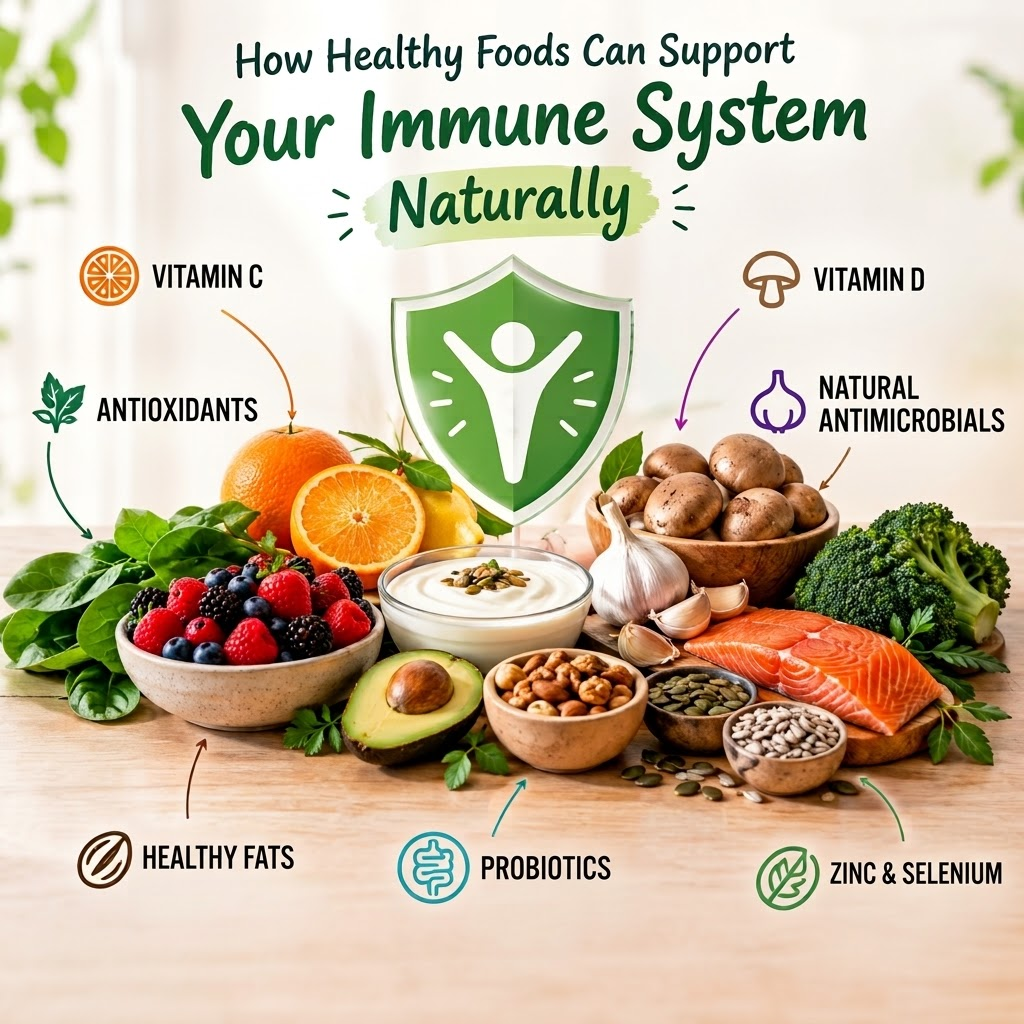
12 Healthy Foods That Support Immune Health
Rather than focusing on a single food, build your diet around a wide range of nutrient rich choices.
1. Citrus Fruits
Oranges, grapefruit, lemons, limes and mandarins are popular sources of vitamin C.
They can be eaten whole, added to salads or used to flavor meals and water.
Whole fruit is generally preferable to fruit juice because it also provides dietary fiber.
2. Berries
Strawberries, blueberries, raspberries and blackberries provide vitamins, minerals, fiber and antioxidant compounds.
Their naturally sweet flavor makes them an easy addition to:
- Oatmeal
- Yogurt
- Smoothies
- Fruit salads
- Whole grain breakfasts
Eating a variety of colorful fruits helps increase the range of nutrients in your diet.
3. Leafy Green Vegetables
Spinach, kale, Swiss chard and other leafy greens contain several nutrients including folate, vitamin C, vitamin K, carotenoids and minerals.
Try adding leafy greens to:
- Soups
- Omelets
- Salads
- Stir fries
- Sandwiches
- Smoothies
4. Garlic
Garlic has been used in traditional cooking and food practices for centuries. It contains sulfur containing compounds and can add strong flavor to meals without requiring large amounts of salt.
Use fresh garlic in vegetable dishes, soups, sauces, curries and roasted meals.
Garlic can be part of a healthy diet although it should not be considered a cure for infections.
5. Ginger
Ginger contains naturally occurring compounds and can add flavor to both sweet and savory dishes.
You can use fresh ginger in:
- Herbal drinks
- Stir fries
- Soups
- Curries
- Marinades
- Smoothies
It is another example of a flavorful ingredient that can contribute to a varied plant rich diet.
6. Fatty Fish
Salmon, sardines, trout, mackerel and similar fish provide protein and are rich sources of omega-3 fatty acids.
Fatty fish can be included in a balanced diet several times a week, depending on individual dietary preferences and recommendations.
They can be baked, grilled, steamed or added to salads and grain bowls.
7. Yogurt and Fermented Foods
The digestive tract is home to a large community of microorganisms known as the gut microbiome. Diet is one factor that can influence this microbial community.
Yogurt containing live cultures can provide beneficial microorganisms while foods such as kefir, kimchi, sauerkraut and other fermented products can add variety.
When choosing packaged fermented foods check labels for added sugar and excessive sodium.
8. Nuts and Seeds
Almonds, walnuts, pumpkin seeds, sunflower seeds, chia seeds and flaxseeds provide combinations of protein, healthy fats, fiber, vitamins and minerals.
They make convenient snacks and can be added to:
- Oatmeal
- Yogurt
- Salads
- Smoothies
- Whole grain cereals
Because nuts and seeds are energy dense, reasonable portions can help maintain balance.
9. Beans and Lentils
Beans, chickpeas, peas and lentils are excellent sources of plant based protein and dietary fiber.
They also provide minerals such as zinc and iron depending on the specific food.
Try adding legumes to soups, salads, curries, wraps or grain bowls.
10. Whole Grains
Whole grains such as oats, brown rice, barley, quinoa and whole wheat products provide fiber and various vitamins and minerals.
Replacing some refined grains with whole grains can increase the nutritional quality of your meals.
For example, you could choose oatmeal for breakfast, brown rice with lunch or whole grain bread for a sandwich.
11. Colorful Vegetables
A simple way to improve your diet is to eat vegetables in different colors.
Red tomatoes, orange carrots, yellow peppers, green broccoli, purple cabbage and dark leafy greens contain different combinations of plant compounds and nutrients.
Eating a “rainbow” of vegetables can make meals more visually appealing while increasing dietary variety.
12. Eggs
Eggs provide high quality protein and contain several vitamins and minerals.
Protein is important because immune cells and antibodies are made from proteins and require adequate nutritional support.
For many people, eggs can be a convenient component of a balanced breakfast, lunch or dinner.

How Gut Health and Immunity Are Connected
A significant portion of immune activity is associated with the gastrointestinal system.
The gut microbiome contains trillions of microorganisms that interact with the digestive system and immune system.
Dietary fiber from vegetables, fruits, legumes and whole grains can help support a diverse gut microbiome.
Fermented foods may also provide live microorganisms depending on how they are produced and processed.
This doesn’t mean that eating one probiotic food will automatically improve immunity. Instead, long term dietary patterns matter.
A diet rich in plant foods and fiber can provide the foundation for digestive and overall health.
Foods to Limit for Better Overall Health
Supporting your immune system isn’t only about what you add to your diet. It can also be useful to moderate foods that provide lots of calories but relatively few essential nutrients.
Consider limiting excessive amounts of:
- Sugar sweetened beverages
- Highly processed snack foods
- Foods high in added sugars
- Highly refined grains
- Processed meats
- Foods high in unhealthy fats
- Excessive alcohol
You don’t have to eliminate every processed food. The goal is to make nutrient dense foods the foundation of your overall eating pattern.
How to Build an Immune Supporting Meal
You don’t need complicated recipes to create a nutritious meal.
A simple approach is to combine several food groups.
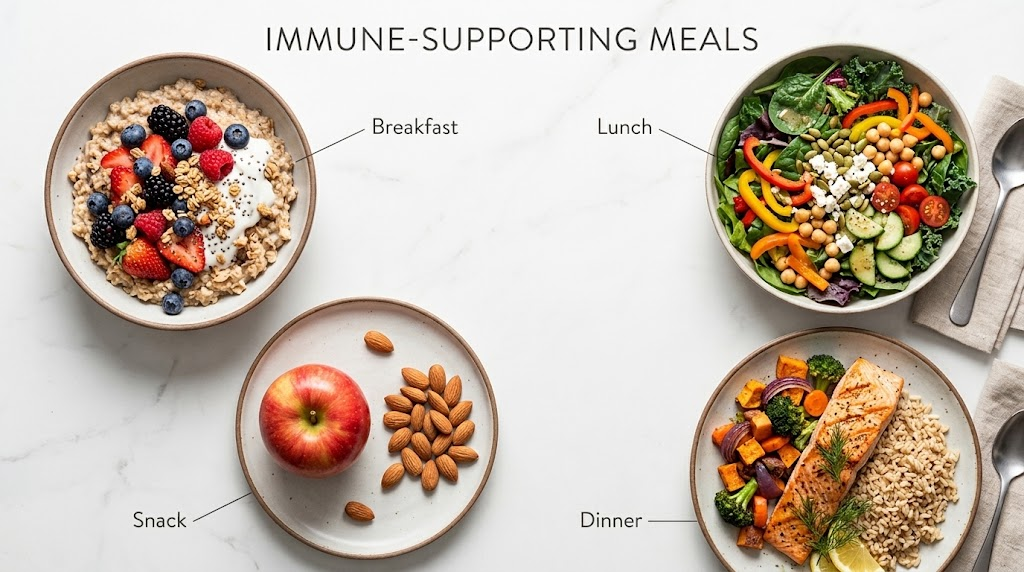
For example:
Breakfast:
Oatmeal topped with berries, chia seeds and yogurt.
Lunch:
A large salad containing leafy greens, chickpeas, tomatoes, colorful peppers and olive oil based dressing.
Snack:
An apple with a small handful of almonds.
Dinner:
Grilled salmon with roasted vegetables and brown rice.
Alternative vegetarian dinner:
Lentil curry with spinach and brown rice.
The exact foods can change according to your culture, budget, dietary preferences and nutritional needs.
Simple Tips for Eating for Immune Health
Building healthier eating habits doesn’t have to happen overnight.
Eat More Variety
Try to include different fruits, vegetables, whole grains, legumes, nuts, seeds and protein sources throughout the week.
Choose Whole Foods More Often
Foods that are minimally processed can make it easier to obtain important nutrients and dietary fiber.
Add Color to Your Plate
Different colored fruits and vegetables provide different combinations of plant compounds.
Prioritize Protein
Include protein sources such as fish, eggs, poultry, beans, lentils, yogurt, nuts, seeds or other suitable options.
Drink Enough Fluids
Water supports many normal processes in the body. Staying hydrated is an important part of overall health.
Don’t Depend on Supplements Alone
Supplements can be useful for people who have nutritional deficiencies or specific dietary requirements but they shouldn’t replace a balanced diet.
If you are considering high dose supplements, speak with a healthcare professional because more isn’t always better.
Other Lifestyle Habits That Support Immune Health
Food is only one piece of the picture.
A healthy immune supporting lifestyle can also include:
- Getting enough quality sleep
- Staying physically active
- Managing chronic stress
- Maintaining a healthy weight
- Avoiding smoking
- Practicing good hygiene
- Staying up to date with recommended vaccinations
- Following appropriate medical advice
These habits work together rather than independently.
Can Food Prevent Colds and Infections?
No, specific food can guarantee that you will avoid a cold, flu or other infection.
Nutrition can support normal immune function but infections depend on many factors including exposure to pathogens, individual health, age, vaccination status and other environmental and biological factors.
Be cautious of products or diets that promise to “supercharge” your immune system or cure infections.
A balanced diet is a long term health strategy not a substitute for appropriate medical treatment.
Frequently Asked Questions
What are the best healthy foods for the immune system?
There isn’t one best food. A varied diet containing fruits, vegetables, whole grains, legumes, nuts, seeds, fish, eggs and other nutrient rich foods can provide many nutrients needed for normal immune function.
Which fruit is best for immunity?
Citrus fruits, berries, kiwi and other fruits can provide vitamin C and other beneficial nutrients. Rather than focusing on one fruit, eating several types regularly provides greater variety.
Does vitamin C boost the immune system?
Vitamin C contributes to normal immune function. However, taking large amounts does not necessarily make the immune system stronger or prevent every illness. Getting vitamin C from a varied diet is generally a good approach.
Are probiotics good for immune health?
Certain probiotic foods and supplements may influence the gut microbiome but effects can vary depending on the specific microorganism and individual. Fermented foods such as yogurt with live cultures can be part of a balanced diet.
Can a healthy diet replace medicine?
No, healthy eating supports overall health but does not replace medical diagnosis, prescribed treatment, vaccination or professional healthcare.
How quickly can food improve immune health?
There is no specific timeline. Nutrition affects the body continuously, and the benefits of a healthy eating pattern are best understood as part of long term health rather than an immediate solution to illness.
Conclusion
Eating healthy foods for the immune system is one practical way to support your body’s natural defenses. Your immune system needs a wide range of nutrients to function normally, and those nutrients are best obtained through a varied and balanced eating pattern.
Fruits and vegetables provide vitamins, minerals, fiber and plant compounds. Beans, lentils, whole grains, nuts and seeds provide fiber, protein and important micronutrients. Fish, eggs, yogurt and other nutritious foods can contribute additional protein, vitamins, minerals and healthy fats.
Rather than searching for a single “immune-boosting” food, focus on your overall diet. Fill your plate with colorful plant foods, choose nutrient dense sources of protein, include healthy fats, drink enough water and limit excessive amounts of highly processed foods and added sugars.
Most importantly, remember that food is one part of immune health. Adequate sleep, regular physical activity, stress management, good hygiene, preventive healthcare and appropriate medical treatment also matter.
The best immune supporting diet is not necessarily complicated or expensive. It is a consistent pattern of eating a variety of nutritious foods that gives your body the building blocks it needs to stay healthy.
5 Responses
[…] Yes. In fact, combining prebiotic rich and probiotic containing foods can be a practical way to support a varied gut health diet. […]
[…] is an essential mineral that your body needs for many important functions including immune system support, wound healing, DNA production, protein synthesis and normal growth and development. […]
[…] can be converted by the body into vitamin A which is important for normal vision, immune function and other biological […]
[…] the nutrients behind heart healthy foods can make it easier to build balanced […]
[…] proteins and amino acids contribute to immune system function. Adequate nutrition including sufficient protein helps support normal immune […]