

Ginger as Food Medicine: Nutrition, Uses and Potential Benefits
Ginger health benefits are known all over the world. Ginger is one of the most Known for its warm slightly spicy flavor and distinctive aroma. Ginger has been used in cooking and traditional food practices for centuries. Today, modern research has also investigated ginger health benefits particularly its relationship with digestion, nausea, inflammation and overall wellness.
Fresh ginger can be added to stir fries, soups, curries, marinades, teas, smoothies and many other foods. Dried ginger is used in spice blends, baked goods and beverages.
Because ginger is a food as well as a traditional ingredient it fits naturally into the concept of food as medicine. However, ginger should not be as a cure for disease or a replacement for professional medical treatment.
This guide explains ginger nutrition, common uses, potential health benefits, ways to add ginger to your diet, safety considerations and practical tips for using this flavorful root every day.
What is Ginger?
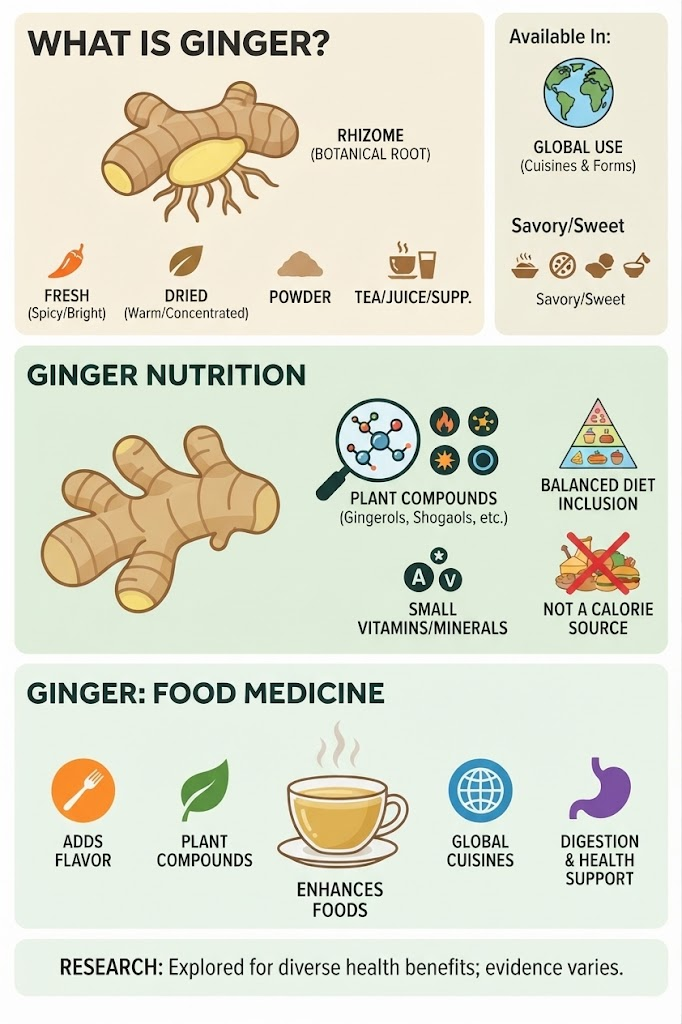
Ginger comes from the underground stem or rhizome of the Zingiber officinale plant. So, it is called a root, ginger is botanically a rhizome.
It is available in several forms, including:
- Fresh ginger root
- Dried ginger
- Ground ginger powder
- Pickled ginger
- Ginger tea
- Ginger juice
- Ginger extracts and supplements
Fresh ginger has a bright spicy flavor while dried ginger tends to have a warmer and more concentrated taste.
It is particularly common in Asian, Middle Eastern, African and Caribbean cuisines.
Ginger Health benefits: What Does Ginger Contain?
Ginger is eaten in small amounts so it is not normally a major source of calories, protein or macronutrients.
However, ginger contains naturally occurring plant compounds called gingerols, shogaols and related compounds. These substances contribute to ginger’s characteristic flavor and have been investigated for their biological effects.
Ginger also contains small amounts of various vitamins and minerals.
Its nutritional value is best understood as part of the overall diet rather than as a replacement for nutrient rich foods such as vegetables, fruits, whole grains, legumes, nuts, seeds and protein rich foods.
Why is Ginger Considered a Food Medicine?
The concept focuses on using nutritious foods and dietary patterns to support overall health.
Ginger fits into this approach because it can:
- Add flavor to nutritious meals
- Provide naturally occurring plant compounds
- Help make healthy foods more enjoyable
- Potentially support certain aspects of digestive and overall health
Scientific research has investigated ginger for several specific health outcomes. Some areas have stronger evidence than others.
Potential Health Benefits of Ginger
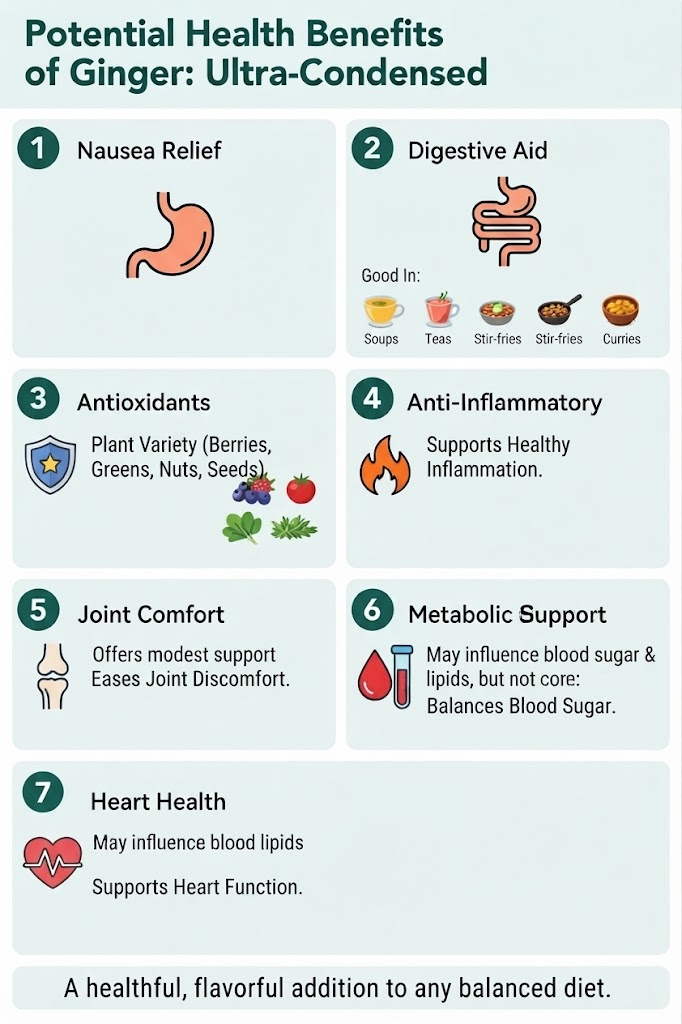
1. Ginger May Help With Nausea
One of the best known uses of ginger is for nausea.
Research has investigated ginger for nausea associated with several situations including pregnancy related nausea and nausea following certain medical procedures.
Some studies suggest that ginger may help reduce nausea symptoms in certain circumstances.
However, the appropriate amount and form of ginger can vary depending on the situation.
If nausea is severely persistent accompanied by dehydration or associated with other concerning symptoms, medical advice is important rather than relying solely on ginger.
2. Ginger May Support Digestion
Ginger has a long history of culinary and traditional use for digestive comfort.
Research has explored whether ginger may influence gastrointestinal movement and other digestive processes.
Some people find ginger tea or small amounts of fresh ginger soothing after meals.
You can add ginger to:
- Vegetable soups
- Lentil dishes
- Stir fries
- Curries
- Tea
- Smoothies
- Homemade dressings
Ginger should be viewed as one dietary option rather than a guaranteed solution for digestive problems.
Bloating, abdominal pain, vomiting, unexplained weight loss or changes in bowel habits should be evaluated by a healthcare professional.
3. Ginger Contains Antioxidant Compounds
Ginger contains naturally occurring compounds with antioxidant activity.
Antioxidants help protect cells from oxidative damage associated with reactive molecules produced during normal metabolism and in response to various environmental factors.
A diet rich in plant foods provides many different antioxidant compounds.
Along with ginger consider eating:
- Berries
- Citrus fruits
- Leafy greens
- Tomatoes
- Beans
- Nuts
- Seeds
- Whole grains
- Other herbs and spices
The goal is dietary variety rather than relying on one antioxidant rich food.
4. Ginger May Support a Healthy Inflammatory Response
Inflammation is a normal biological process that helps the body respond to injury and infection. Long term inflammatory processes are associated with many chronic health conditions.
Ginger’s naturally occurring compounds have been studied for their potential effects on inflammatory pathways.
Some research suggests ginger may influence certain markers associated with inflammation although study results vary.
Eating ginger as part of a balanced diet can contribute plant compounds without requiring concentrated supplements.
It is important however not to interpret these findings as proof that ginger can treat inflammatory diseases.
5. Ginger May Support Joint Comfort
Because ginger contains compounds that may influence inflammatory pathways, researchers have investigated its potential role in joint health.
Some studies have examined ginger in people with osteoarthritis and other sources of joint discomfort.
Results suggest that ginger may provide modest symptom support for some people but evidence varies between studies and products.
If you experience persistent joint pain, swelling, stiffness or reduced movement, professional evaluation can help identify the cause.
Ginger can complement a healthy lifestyle but should not replace appropriate medical care.
6. Ginger May Support Metabolic Health
Researchers have also studied ginger in relation to blood sugar regulation, insulin sensitivity and other aspects of metabolic health.
Some clinical studies suggest ginger consumption or supplementation may influence certain metabolic markers but the evidence is not conclusive enough to treat ginger as a therapy for diabetes or metabolic disease.
For metabolic health the overall dietary pattern matters much more than any single food.
A balanced approach includes:
- High fiber vegetables
- Whole fruits
- Beans and lentils
- Whole grains
- Protein rich foods
- Nuts and seeds
- Healthy fats
- Limited highly processed foods
Ginger can be a flavorful addition to this type of eating pattern.
7. Ginger May Support Cardiovascular Wellness
Some research has examined ginger’s possible effects on cardiovascular related markers such as blood lipids, blood pressure and inflammation.
Although preliminary findings can be interesting they do not establish ginger as a treatment or prevention strategy for cardiovascular disease.
A heart supportive diet should emphasize vegetables, fruits, whole grains, legumes, nuts, seeds, fish or other healthy protein sources and unsaturated fats.
Ginger can add flavor to these foods helping make a heart conscious diet more enjoyable.
Fresh Ginger vs. Ground Ginger
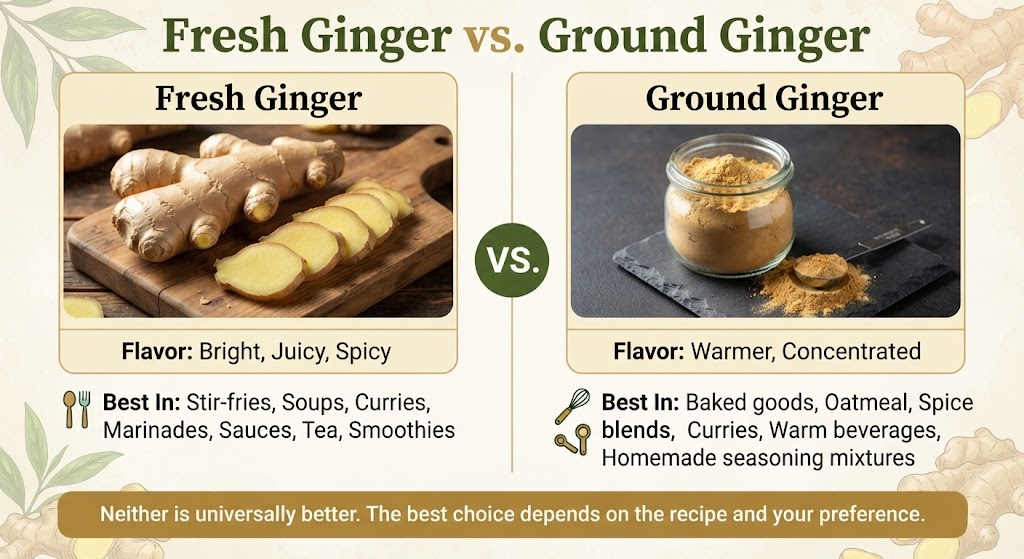
Both fresh and dried ginger can be useful but they have different culinary characteristics.
Fresh Ginger
Fresh ginger has a bright, juicy & spicy flavor.
It works well in:
- Stir fries
- Soups
- Curries
- Marinades
- Sauces
- Tea
- Smoothies
Ground Ginger
Ground ginger has a warmer and more concentrated flavor.
It is used in:
- Baked goods
- Oatmeal
- Spice blends
- Curries
- Warm beverages
- Homemade seasoning mixtures
Considered universally “better.” The best option depends on the recipe and how you prefer to use ginger.
How to Add Ginger to a Healthy Diet
Adding ginger to your diet is relatively easy.
Add Fresh Ginger to Stir Fries
Grate or finely chop fresh ginger and combine it with vegetables, tofu, chicken, fish or other protein sources.
Garlic, ginger and a small amount of low sodium soy sauce can create a flavorful base for a vegetable stir fry.
Make Ginger Tea
Fresh ginger can be sliced or grated and steeped in hot water.
For additional flavor consider adding:
- Lemon
- Cinnamon
- Mint
If you add sweetener keep the amount moderate.
Add Ginger to Smoothies
A small piece of fresh ginger can add a spicy flavor to smoothies containing:
- Berries
- Banana
- Spinach
- Yogurt
- Citrus fruits
- Milk or plant based milk
Because ginger has a strong flavor, it starts with a small amount.
Use Ginger in Soups
Ginger works particularly well in vegetable, carrot, pumpkin, lentil and chicken soups.
It can provide warmth and complexity without requiring heavy sauces.
Add Ginger to Oatmeal
Ground ginger pairs well with oatmeal especially when combined with cinnamon, berries, apples, nuts or seeds.
This is a simple way to add variety to a nutrient rich breakfast.
Use Ginger in Marinades
Fresh ginger can be combined with garlic, citrus juice, herbs and spices to make flavorful marinades for fish, chicken, tofu or vegetables.
Ginger as a Natural Flavor Enhancer
One of the simplest benefits of ginger is its ability to make nutritious food taste better.
For example, steamed vegetables may taste plain when served without seasoning. Adding ginger, garlic, black pepper and a small amount of olive oil can create a much more flavorful dish.
This matters because enjoyable food is easier to include consistently in a healthy lifestyle.
It can also help reduce dependence on heavy sauces, excessive sugar or large amounts of salt when used alongside other herbs and spices.
Ginger and Lemon: A Popular Combination
Ginger and lemon are mostly combined in teas and beverages
Lemon provides vitamin C and a refreshing acidic flavor while ginger contributes its characteristic spicy taste and plant compounds.
A simple ginger lemon drink can be made by steeping fresh ginger in hot water and adding lemon after the drink has cooled.
Avoid turning healthy drinks into high sugar beverages by adding excessive amounts of honey or other sweeteners.
Ginger and Turmeric: A Flavorful Pair
Ginger and turmeric are closely related plants and are frequently used together in South Asian and other cuisines.
They can be combined in:
- Curries
- Soups
- Rice dishes
- Vegetable recipes
- Warm beverages
- Smoothies
Both contain naturally occurring plant compounds that have been studied for their biological properties.
However, combining two ingredients does not mean their effects automatically become stronger. Their main practical advantage is that they create a flavorful and versatile combination.
Ginger for Different Dietary Patterns
Ginger can fit into almost any dietary pattern.
Vegetarian Diet
Use ginger in lentil curries, vegetable stir fries, soups and grain bowls.
Vegan Diet
Ginger pairs well with tofu, tempeh, beans, lentils, vegetables and plant based sauces.
Mediterranean Style Eating
Use ginger with vegetables, whole grains, legumes, fish and olive oil for flavor variety.
High Protein Diets
Ginger can season chicken, fish, eggs, tofu and other protein rich foods.
Balanced Family Meals
Ginger can be added into soups, rice dishes, vegetables and mild curries that appeal to different age groups.
Ginger Supplements vs. Ginger as Food
There is an important difference between eating ginger and taking concentrated ginger supplements.
Ginger as Food
Fresh or dried ginger used in cooking provides relatively small amounts of ginger’s active compounds and is generally easy to incorporate into meals.
Ginger Supplements
Supplements can provide more concentrated amounts and may be marketed for specific health purposes.
More concentrated does not necessarily mean better.
Supplements may also interact with medications or cause side effects in some people.
If you are considering ginger supplements for a specific medical condition consult a qualified healthcare professional before starting them.
Possible Side Effects of Ginger
Ginger is generally well tolerated when consumed in normal food amounts.
However, larger quantities may cause digestive discomfort in some people.
Potential side effects can include:
- Heartburn
- Stomach discomfort
- Diarrhea
- Mouth irritation
- Gas
Tolerance varies between individuals.
People taking medications that affect blood clotting or those preparing for surgery should discuss concentrated ginger supplements with a healthcare professional.
People with certain medical conditions may also need individualized guidance.
The amount of ginger used in normal cooking is different from the higher amounts sometimes found in supplements.
How to Choose and Store Fresh Ginger
When buying fresh ginger look for pieces that are firm and relatively smooth.
Avoid ginger that is:
- Very soft
- Moldy
- Extremely shriveled
- Wet or visibly spoiled
Fresh ginger can be stored in the refrigerator to help maintain its quality.
You can peel ginger with a small spoon or vegetable peeler. It can then be sliced, chopped, grated depending on the recipe.
Ground ginger should be kept in a tightly sealed container in a cool dry place.
A Simple One Day Meal Plan Featuring Ginger
Here is an example of how ginger can fit into a balanced day.
Breakfast
Oatmeal topped with berries, walnuts, cinnamon and a small amount of grated ginger.
Morning Drink
Warm ginger and lemon water without excessive added sugar.
Lunch
Vegetable and lentil curry seasoned with ginger, garlic, turmeric, cumin and coriander served with brown rice.
Snack
Plain yogurt with fruit and a small sprinkle of ground ginger.
Dinner
Ginger garlic vegetable stir fry with tofu or chicken and a serving of whole grains.
Evening
A mild ginger tea if desired.
This type of meal plan uses ginger for flavor while emphasizing a wide variety of nutritious foods.
Common Myths About Ginger
Myth 1: Ginger Can Cure Every Digestive Problem
Ginger may help with certain types of nausea and digestive discomfort but it is not a universal treatment for digestive diseases.
Myth 2: More Ginger Means More Health Benefits
Higher amounts are not necessarily better. Large quantities or concentrated supplements may cause side effects.
Myth 3: Ginger Can Replace Medication
Ginger should not replace prescribed medication or professional medical treatment.
Myth 4: Ginger Tea is Always Healthy
Ginger tea can be a healthy beverage but commercial ginger drinks may contain substantial amounts of added sugar.
Check the nutrition label when purchasing prepared beverages.
Myth 5: Fresh Ginger is Always Better Than Ground Ginger
Fresh and dried ginger have different culinary uses and contain different profiles of naturally occurring compounds. Both can be useful in a varied diet.
Tips for Using Ginger as Food Medicine
If you want to make ginger part of your healthy eating routine:
- Use fresh ginger in stir fries and soups.
- Add small amounts to smoothies.
- Try ginger tea instead of sugary beverages.
- Combine ginger with vegetables and legumes.
- Use ground ginger in oatmeal and whole grain breakfasts.
- Pair ginger with garlic, turmeric, cumin or cinnamon.
- Choose minimally processed ginger products when possible.
- Keep added sugar moderate in ginger beverages.
- Use culinary amounts rather than excessive quantities.
- Discuss concentrated supplements with a healthcare professional when appropriate.
Frequently Asked Questions
What are the main health benefits of ginger?
Ginger has been studied for potential benefits related to nausea, digestion, inflammation, joint comfort and certain metabolic markers. The strength of evidence varies depending on the specific health outcome.
Is ginger good for digestion?
Ginger has been used to support digestion and research suggests it may influence gastrointestinal movement and help with certain types of nausea. However, persistent digestive symptoms require professional evaluation.
Can you eat ginger every day?
Many people can safely consume ginger regularly in normal culinary amounts. However, individual tolerance varies and high dose supplements may have different safety considerations.
Is fresh ginger better than ginger powder?
Neither is universally better. Fresh ginger has a brighter flavor while ground ginger is more concentrated and convenient for certain recipes.
Can ginger help with inflammation?
Ginger contains compounds that have been studied for their potential effects on inflammatory pathways. Some research is promising but ginger should not be considered a treatment for inflammatory diseases.
Is ginger tea healthy?
Unsweetened ginger tea can be a flavorful low calorie beverage. However, some commercial ginger drinks contain significant amounts of added sugar so checking labels is important.
Can ginger replace medicine?
No. Ginger can be part of a healthy diet but should not replace prescribed medication or professional medical care.
Conclusion
Ginger is a flavorful and versatile food ingredient that can fit naturally into a healthy diet. It provides naturally occurring plant compounds such as gingerols and related compounds while adding distinctive flavor to meals and beverages.
Research has explored ginger for nausea, digestive health, inflammation, joint comfort, metabolic health and cardiovascular wellness. Some findings are encouraging particularly for certain types of nausea but the strength of evidence varies and ginger should not be considered a cure for disease.
One of the simplest ways to benefit from ginger is to use it as a culinary ingredient. Add fresh ginger to stir fries, soups, curries and marinades or use ground ginger in oatmeal, baked foods and spice blends. Ginger tea can also be a flavorful alternative to heavily sweetened beverages.
The most important point is that ginger works best as part of an overall healthy eating pattern. Combine it with vegetables, fruits, whole grains, beans, lentils, nuts, seeds, healthy fats and adequate protein to create a varied and nutrient rich diet.
For most people, culinary ginger can be an enjoyable addition to everyday meals. If you are considering concentrated ginger supplements especially if you take medication or have an existing health condition speak with a qualified healthcare professional first.
Ginger as food medicine is less about relying on one powerful ingredient and more about using flavorful, nutrient rich foods to build healthier eating habits that can be maintained over time.
One response
[…] Ginger provides naturally occurring compounds such as gingerols and adds distinctive flavor to meals. […]