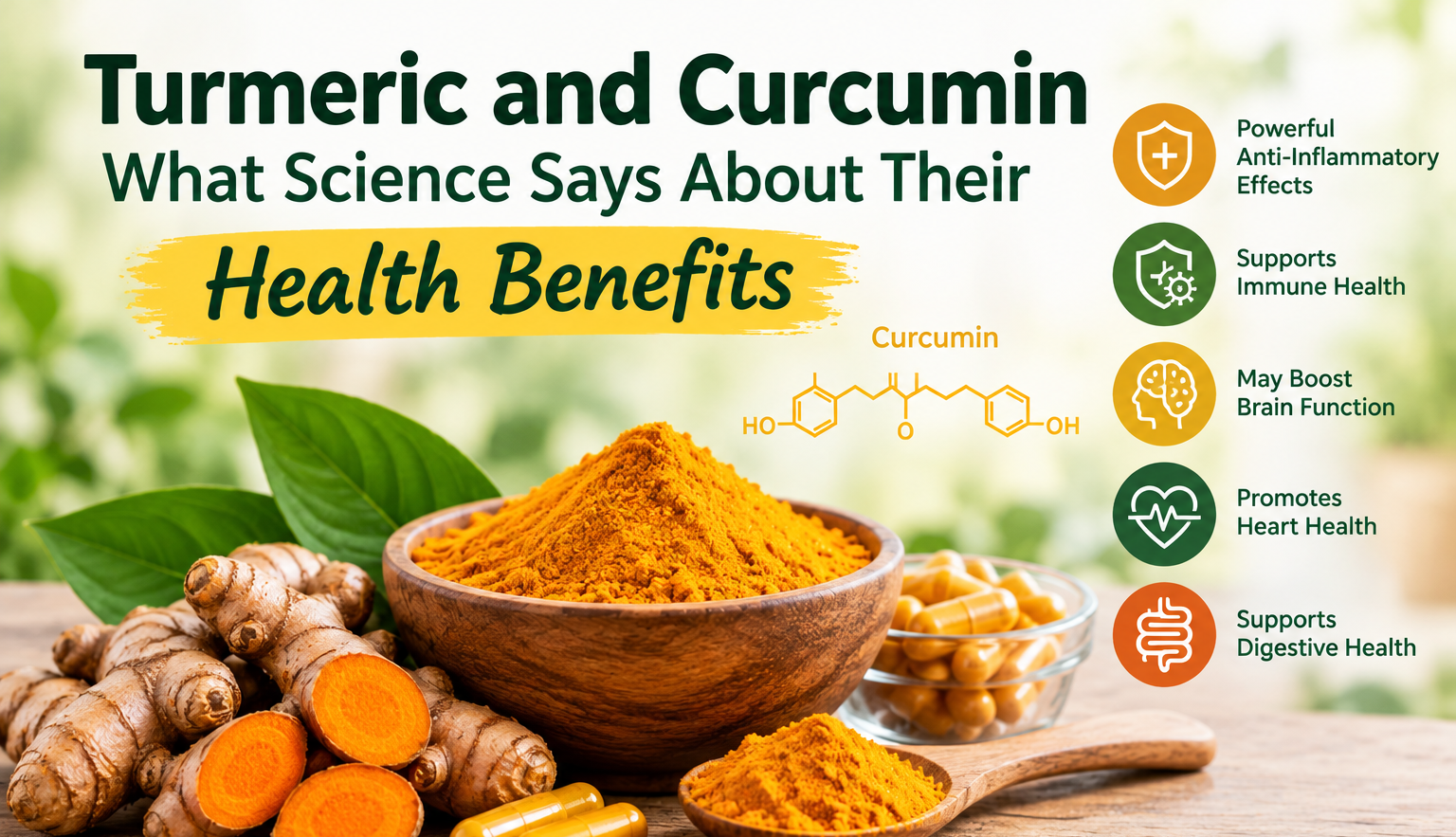
Turmeric has been used in traditional cooking and wellness practices for centuries. Today it has also attracted significant scientific interest because of curcumin, a group of compounds responsible for much of turmeric’s bright yellow color and many of its studied biological effects.
Research on turmeric and curcumin has explored their potential relationship with inflammation, oxidative stress, joint health, metabolic health, brain function and other areas. However, popular claims about turmeric sometimes go further than the available evidence supports.
So, what does science actually say about turmeric and curcumin?
This guide explains the difference between turmeric and curcumin, their potential health benefits, how they may work in the body, how to include turmeric in a balanced diet and important safety considerations.
What is Turmeric?
Turmeric is a flowering plant belonging to the ginger family. Its underground stem, called a rhizome, is dried and ground into the familiar yellow orange spice used in many cuisines.
Turmeric is especially common in:
- Indian cuisine
- South Asian cooking
- Middle Eastern dishes
- Southeast Asian foods
- Curries
- Soups
- Rice dishes
- Vegetable recipes
Turmeric contains many naturally occurring compounds including curcuminoids. Curcumin is the best known curcuminoid and has been extensively studied in laboratory and human research.
Turmeric is therefore a whole food ingredient while curcumin is a specific group of compounds found within turmeric.
Turmeric vs. Curcumin: What’s the Difference?
The terms turmeric and curcumin are sometimes used interchangeably but they are not the same thing.
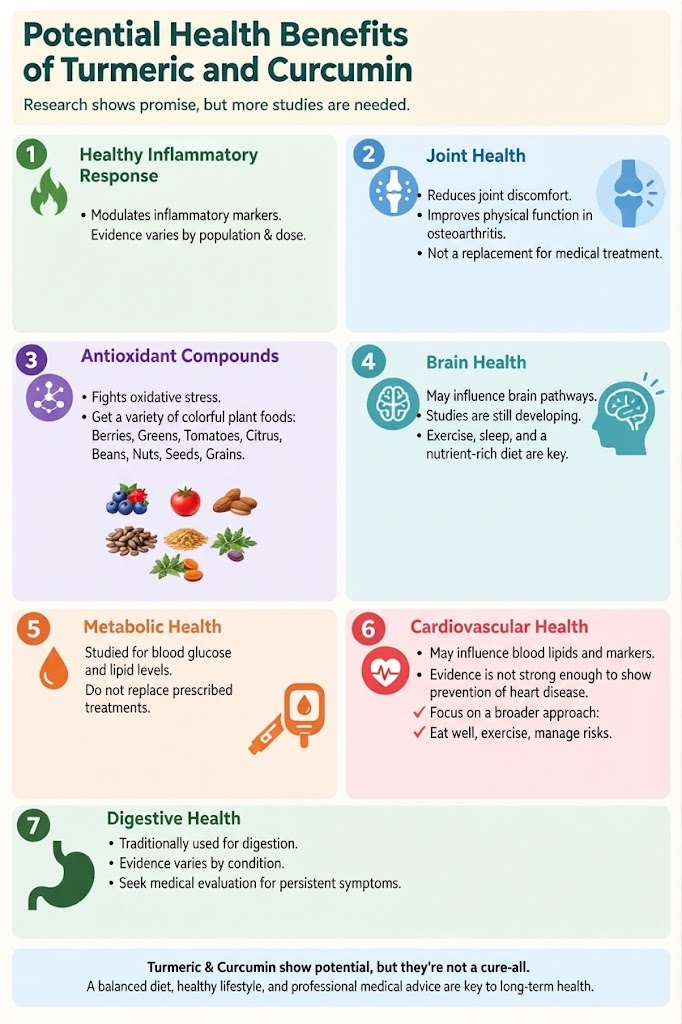
Turmeric is the whole spice. It contains curcuminoids along with essential oils and other naturally occurring compounds.
Curcumin refers primarily to the major curcuminoid compounds found in turmeric. Many research studies use standardized curcumin extracts rather than ordinary culinary turmeric.
This distinction is important because results from studies of concentrated curcumin supplements cannot automatically be applied to the amount of turmeric typically used in cooking.
Eating turmeric as a spice can be part of a healthy diet while taking concentrated curcumin supplements is a different dietary and health decision.
Why is Curcumin Being Studied?
Curcumin has attracted scientific interest because laboratory research suggests that it can influence several biological pathways.
Researchers have studied its potential effects on:
- Inflammatory signaling
- Oxidative stress
- Cellular processes
- Metabolic pathways
- Joint function
- Brain related processes
Curcumin has antioxidant properties and may influence inflammatory pathways. These mechanisms help explain why scientists have investigated its potential role in conditions associated with inflammation and oxidative stress.
However, biological activity in laboratory experiments does not automatically mean that a supplement will prevent or treat a disease in humans.
Human clinical trials are therefore particularly important when evaluating health claims.
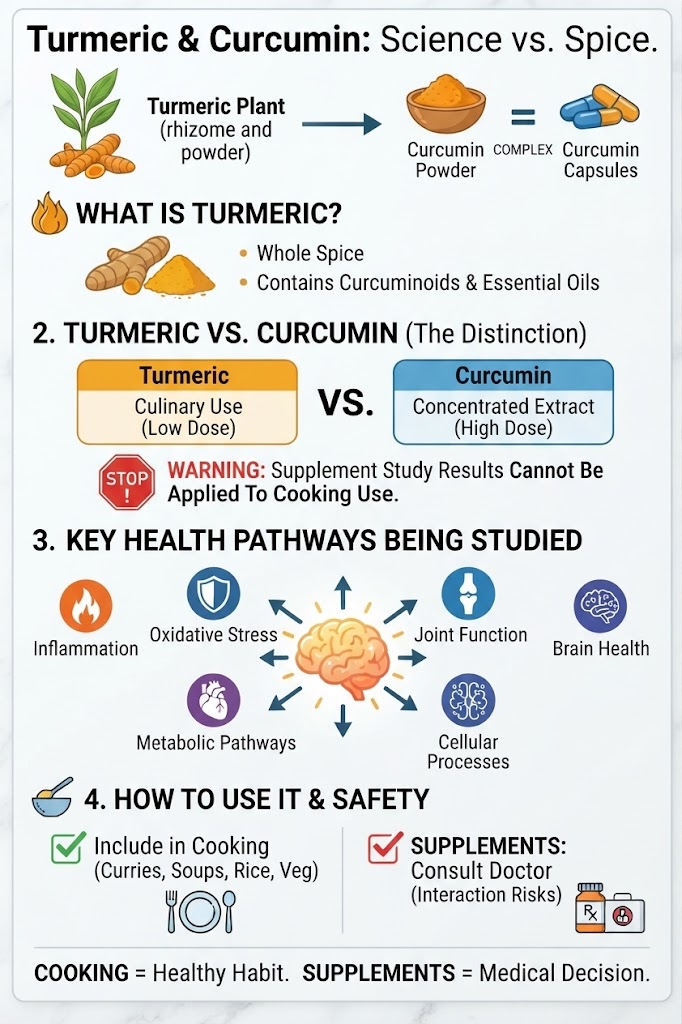
Potential Health Benefits of Turmeric and Curcumin
1. May Support a Healthy Inflammatory Response
Inflammation is a normal part of the body’s immune response. It helps the body respond to injury, infection and other challenges.
Problems can arise when inflammatory processes become persistent or dysregulated.
Curcumin has been studied for its ability to influence molecules and pathways involved in inflammation. Some human studies suggest that curcumin supplementation may have modest effects on certain inflammatory markers.
However, the evidence varies depending on the population, dose, formulation and duration of supplementation.
For everyday nutrition, the practical approach is to include turmeric as part of a diet rich in vegetables, fruits, whole grains, legumes, nuts, seeds and other minimally processed foods.
2. May Support Joint Health
One of the most studied potential applications of curcumin is joint health particularly in people experiencing osteoarthritis related symptoms.
Some clinical trials and reviews have found that certain curcumin preparations may help reduce joint discomfort and improve aspects of physical function.
This is one of the areas where research is promising but the quality and formulation of supplements vary considerably.
Curcumin should not be viewed as a replacement for medical treatment, physical therapy, exercise or other evidence based approaches to joint problems.
If you have persistent joint pain, swelling or reduced mobility a healthcare professional can help determine the underlying cause and appropriate treatment.
3. Provides Antioxidant Compounds
Oxidative stress occurs when the production of reactive molecules exceeds the body’s ability to manage them.
Curcumin has antioxidant properties and has been studied for its potential effects on oxidative stress.
Turmeric is also part of a larger group of plant foods that provide phytochemicals and antioxidants.
Rather than focusing on one antioxidant rich ingredient a balanced diet should include a variety of colorful plant foods such as:
- Berries
- Leafy greens
- Tomatoes
- Citrus fruits
- Beans
- Nuts
- Seeds
- Whole grains
- Herbs and spices
Dietary variety provides a broader range of naturally occurring plant compounds.
4. May Support Brain Health
Scientists have also investigated curcumin in relation to brain health and cognitive function.
Laboratory studies suggest that curcumin may influence pathways involved in oxidative stress and inflammation which are relevant to neurological health.
However, evidence from human studies is still developing. Factors such as curcumin’s absorption, dosage, formulation and ability to reach relevant tissues make the research complicated.
There is currently no basis for treating turmeric or curcumin as a guaranteed way to prevent memory loss or neurological disease.
For long term brain health, established lifestyle factors remain important including regular physical activity, adequate sleep, social engagement and a nutrient rich dietary pattern.
5. May Support Metabolic Health
Curcumin has been studied in relation to several markers of metabolic health including blood glucose regulation and lipid levels.
Some clinical research suggests that certain curcumin preparations may produce modest changes in metabolic markers in specific populations.
However, results have not been consistent across all studies.
People with diabetes, high cholesterol or other metabolic conditions should not replace prescribed treatments with turmeric or curcumin supplements.
Instead, turmeric can be used as one flavorful ingredient within a balanced dietary pattern.
6. May Support Cardiovascular Health
Because inflammation and oxidative stress are involved in cardiovascular health, researchers have investigated whether curcumin may influence cardiovascular risk related pathways.
Some studies have examined effects on blood lipids, blood pressure, endothelial function and other markers.
The evidence is not strong enough to conclude that turmeric or curcumin supplements prevent cardiovascular disease.
For heart health, a much broader approach is important. This includes eating plenty of vegetables and fruits, choosing whole grains, consuming adequate fiber, limiting excess sodium and added sugars, avoiding tobacco, staying physically active and managing other established risk factors.
7. May Support Digestive Health
Turmeric has traditionally been used in various food and wellness practices related to digestion.
Curcumin and turmeric have also been investigated for their potential effects on gastrointestinal processes and inflammatory conditions of the digestive system.
However, evidence differs significantly depending on the specific digestive condition.
People experiencing persistent abdominal pain, unexplained weight loss, blood in the stool, ongoing diarrhea or other concerning digestive symptoms should seek medical evaluation rather than relying on turmeric.
Why Curcumin Absorption Matters
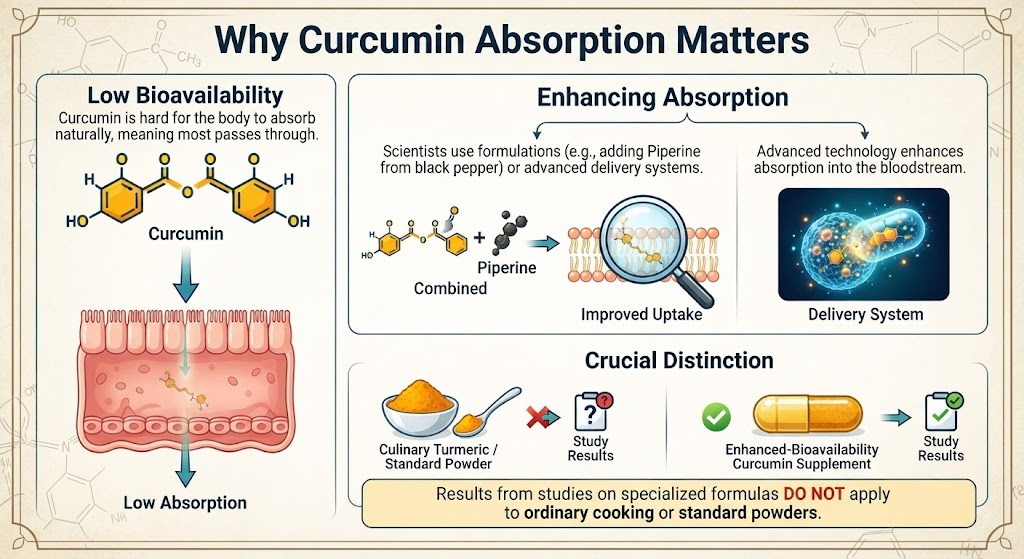
One of the major challenges in curcumin research is its relatively low bioavailability.
In simple terms, consuming curcumin does not mean that large amounts will necessarily be absorbed and available throughout the body.
Researchers have therefore developed formulations intended to improve curcumin absorption.
Some products combine curcumin with compounds such as piperine, a component of black pepper. Other formulations use different delivery systems.
This creates an important distinction between:
- Culinary turmeric
- Standard turmeric powder
- Concentrated curcumin extracts
- Enhanced bioavailability curcumin supplements
Results from a study using a specialized curcumin formulation cannot automatically be applied to ordinary turmeric powder.
How to Add Turmeric to Your Diet
You do not need to take supplements to enjoy turmeric.
Using turmeric as a culinary spice is an easy way to include it in your diet.
Try adding turmeric to:
Curries
Turmeric works naturally in vegetable, chicken, fish, bean and lentil curries.
Rice
A small amount of turmeric can add color and earthy flavor to rice dishes.
Soups
Add turmeric to vegetable, lentil or chicken soups.
Roasted Vegetables
Combine turmeric with black pepper, garlic and a small amount of olive oil before roasting vegetables.
Eggs
Turmeric can add color and flavor to scrambled eggs or vegetable omelets.
Smoothies
A small amount of turmeric can be added to smoothies containing fruits, vegetables, yogurt or milk.
Golden Milk
A turmeric based warm drink can be prepared with milk or a milk alternative, turmeric, cinnamon, ginger and other ingredients.
Keep added sugar moderate to maintain the nutritional quality of the drink.
Turmeric and Black Pepper: Why Are They Often Combined?
Turmeric is frequently paired with black pepper because piperine, a compound found in black pepper, can increase the absorption of curcumin.
This combination is common in cooking and in some supplement formulations.
However, increased absorption is not automatically equivalent to greater health benefits. Black pepper and piperine can also affect the absorption or metabolism of certain medications.
Therefore, people taking prescription medicines should be cautious with concentrated curcumin products containing piperine and discuss supplement use with a healthcare professional when appropriate.
Turmeric Supplements vs. Culinary Turmeric
This is one of the most important distinctions to understand.
Culinary Turmeric
Using turmeric in cooking generally involves relatively small amounts. It can contribute flavor and plant compounds to meals.
Curcumin Supplements
Supplements may contain concentrated amounts of curcuminoids and sometimes use specialized formulations designed to increase absorption.
Because supplements can deliver much higher doses than food they also require more consideration of potential interactions and side effects.
More is not necessarily better.
If your goal is simply to add flavor and variety to a healthy diet, using turmeric in everyday cooking is a straightforward option.
Possible Side Effects and Safety Considerations
Turmeric used in normal culinary amounts is generally well tolerated by many people.
However, concentrated curcumin supplements may cause side effects in some individuals.
Potential issues can include:
- Stomach upset
- Nausea
- Diarrhea
- Abdominal discomfort
- Headache in some cases
Certain high-dose or enhanced bioavailability formulations have also raised safety concerns in some circumstances.
People who take medications that affect blood clotting have gallbladder or bile duct problems have certain gastrointestinal conditions or are preparing for surgery should discuss concentrated turmeric or curcumin supplements with a healthcare professional.
Pregnant or breastfeeding individuals should also seek professional advice before using concentrated supplements.
These considerations are much more relevant to supplements than to the ordinary amounts of turmeric used in cooking.
Can Turmeric Cure Inflammation or Disease?
No, single food or spice should be described as a cure for disease.
Curcumin research is interesting because it suggests possible effects on inflammation, oxidative stress and other biological pathways. Some human studies have reported benefits for particular outcomes.
But research findings depend on the formulation, dose, population and condition being studied.
A food or supplement should not replace medical treatment prescribed for a diagnosed condition.
A better way to think about turmeric is as one component of a healthy dietary pattern rather than a miracle ingredient.
How Much Turmeric Should You Eat?
There is no universally established amount of culinary turmeric that everyone needs to consume for health benefits.
In cooking turmeric can simply be used according to taste and the recipe.
Supplement doses are a different matter because products vary significantly in concentration and formulation.
If you are considering curcumin supplementation for a specific health condition, it is better to discuss the appropriate product and dose with a qualified healthcare professional rather than choosing a high dose supplement based solely on online claims.
A Healthy Diet That Includes Turmeric
Turmeric is most useful when it complements an already nutritious diet.
A balanced day might include:
Breakfast: Oatmeal with berries, nuts, cinnamon and yogurt.
Lunch: Lentil and vegetable curry seasoned with turmeric, cumin, ginger and garlic served with brown rice.
Snack: Fruit with a handful of unsalted nuts.
Dinner: Grilled fish or tofu with roasted vegetables seasoned with turmeric, black pepper and herbs.
This approach provides much more nutritional value than focusing on turmeric alone.
Tips for Buying and Storing Turmeric
When buying turmeric powder look for a product from a reputable food supplier.
Store ground turmeric in a cool dry dark location and keep the container tightly closed.
Over time, spices lose aroma and flavor. Although older turmeric may still be usable, fresher spices generally provide a stronger culinary experience.
If purchasing curcumin supplements look carefully at:
- The amount of curcuminoids
- The specific formulation
- Additional ingredients
- Quality testing
- Manufacturer information
- Suggested serving size
- Potential medication interactions
Avoid assuming that a product is effective simply because it uses terms such as “high potency” or “maximum strength.”
Frequently Asked Questions
Is turmeric the same as curcumin?
No. Turmeric is the whole spice while curcumin refers primarily to a group of compounds found in turmeric. Curcumin is responsible for much of turmeric’s yellow color and has been extensively studied.
What are the main health benefits of turmeric?
Research has investigated turmeric and curcumin for potential effects on inflammation, oxidative stress, joint health, metabolic health, brain health and cardiovascular related markers. The strength of evidence varies by health outcome.
Does turmeric reduce inflammation?
Curcumin can influence inflammatory pathways and some human studies suggest it may affect certain inflammatory markers. However, turmeric should not be considered a cure for chronic inflammatory diseases.
Should I take turmeric with black pepper?
Black pepper contains piperine which can increase curcumin absorption. However, piperine can also affect how some medications are absorbed or processed. Culinary use is generally different from taking concentrated supplements.
Is turmeric safe to consume every day?
Turmeric used in normal culinary amounts is generally well tolerated by many people. Concentrated supplements are different and may not be appropriate for everyone.
Can turmeric replace medication?
No. Turmeric and curcumin should not replace prescribed medication or professional medical treatment.
Is turmeric good for joint health?
Some research suggests that certain curcumin preparations may help with joint discomfort and physical function, particularly in osteoarthritis. However, more research is needed and supplements should be considered alongside instead of appropriate medical care.
Conclusion
Turmeric is a flavorful and versatile spice that can easily fit into a balanced nutrient rich diet. Its best known compound curcumin has attracted substantial scientific interest because of its antioxidant properties and potential effects on inflammatory and other biological pathways.
Research has explored turmeric and curcumin for joint health, inflammation, oxidative stress, metabolic health, cardiovascular health, brain function and digestive health. Some findings are encouraging particularly for certain aspects of joint health but the evidence is not equally strong for every proposed benefit.
It is also important to distinguish between turmeric used in cooking and concentrated curcumin supplements. Many studies use specialized formulations that may provide substantially different amounts of curcumin than ordinary culinary turmeric. Absorption, dosage, formulation and individual health factors can all affect results.
For most people a practical approach is to enjoy turmeric as part of flavorful meals containing vegetables, fruits, legumes, whole grains, healthy fats and quality protein sources. If you are considering a concentrated curcumin supplement especially if you take medication or have an existing health condition talk with a qualified healthcare professional first.
Ultimately, turmeric can be a valuable part of healthy eating but its potential benefits should be viewed in the context of the entire diet and lifestyle rather than as a miracle cure.
One response
[…] Turmeric contains curcuminoids including curcumin and is commonly used as a culinary spice. […]