
Food plays an important role in supporting your overall health. Every day your body needs a variety of nutrients to produce energy, maintain tissues, support the immune system, protect cells and keep essential processes working properly. While no single food can cure disease, choosing nutrient rich foods regularly can help create a healthier diet and support your body’s normal functions.
This is where the idea of healing foods comes in. The term is often used to describe foods that are rich in vitamins, minerals, fiber, healthy fats, protein, antioxidants and other beneficial nutrients. Rather than thinking of these foods as medicines that can replace medical treatment, it is more accurate to view them as nutritious foods that can contribute to a balanced eating pattern.
Furthermore a variety of nutrient dense foods to your daily meals can also make healthy eating easier and more enjoyable. From leafy greens and berries to fatty fish, legumes, nuts and whole grains, there are many simple options to choose from.
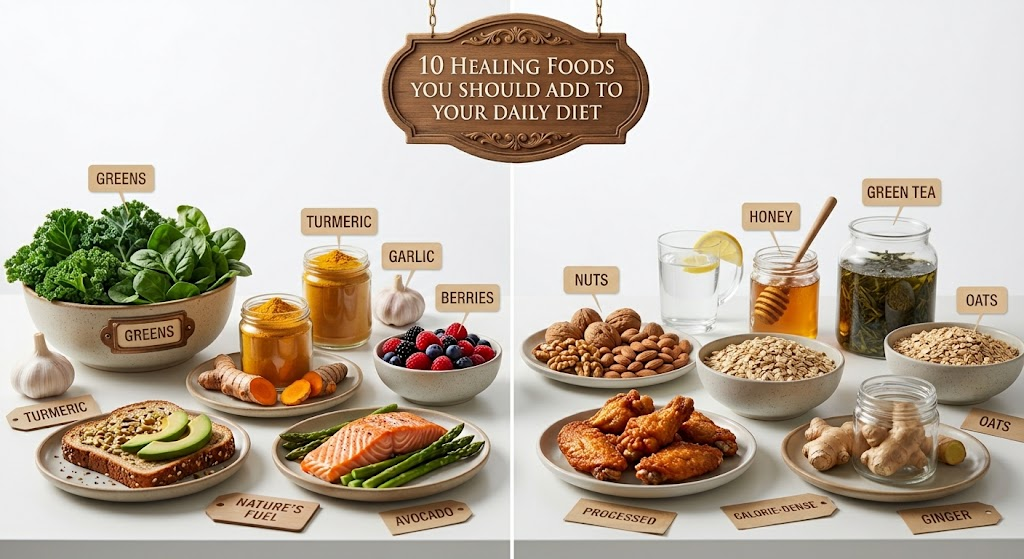
In this guide, we explore 10 healing foods you should consider adding to your daily diet, their nutritional benefits and easy ways to include them in your meals.
What are Healing Foods?
Before looking at the list it is important to understand what the term healing foods means.
“Healing food” is not a formal medical category. It is commonly used to describe foods that provide nutrients and other compounds that support normal body functions and overall wellness.
A nutritious food may provide:
- Vitamins and minerals
- Dietary fiber
- Protein
- Healthy fats
- Complex carbohydrates
- Antioxidants and other plant compounds
Eating these foods as part of a varied diet can help you meet your nutritional needs.
However, no food should be considered a guaranteed treatment or cure for a disease. If you have a medical condition, nutrition should be considered alongside appropriate professional medical care.
1. Berries
Berries are among the most nutrient rich fruits you can add to your diet.
For example Strawberries, blueberries, raspberries and blackberries provide fiber, vitamins and naturally occurring plant compounds. In addition , their vibrant colors come partly from compounds called polyphenols.
Berries can be a convenient addition to breakfast, snacks and desserts.
Why Add Berries to Your Diet?
Berries can:
- Provide dietary fiber
- Add vitamins and minerals to your diet
- Provide naturally occurring plant compounds
- Add natural sweetness to meals
- Help increase fruit variety
You can add berries to oatmeal, yogurt, smoothies, salads or eat them as a snack.
Fresh or frozen berries can both be convenient choices. Frozen berries can also make it easier to keep fruit available throughout the year.
2. Leafy Green Vegetables
Leafy greens such as spinach, kale, collard greens and other dark green vegetables are excellent sources of nutrients.
Depending on the variety they can provide folate vitamin K, vitamin C, carotenoids, fiber and minerals. As a result, adding these vegetables to meals can help increase your nutrient intake.
Why are Leafy Greens Important?
Including leafy vegetables regularly can help increase your intake of important nutrients while adding relatively few calories to many meals.
They can be used in:
- Salads
- Soups
- Omelets
- Sandwiches
- Smoothies
- Stir fries
- Curries
If you do not enjoy raw greens try cooking them with garlic herbs or spices.
Adding leafy vegetables to meals is one of the simplest ways to make your diet more nutrient dense.
3. Fatty Fish
Fatty fish such as salmon, sardines, trout and mackerel can provide high quality protein and omega-3 fatty acids.
These essential fats involved in several important functions in the body.
Depending on the type , fish can also provide nutrients such as vitamin D and selenium.
Why include Fatty Fish?
Regularly including fish in a balanced diet can provide:
- High quality protein
- Omega-3 fatty acids
- Vitamins and minerals
- A nutrient rich alternative to some other protein sources
Try grilled, baked, steamed or roasted fish rather than relying on heavily fried preparations.
If you do not eat fish, plant foods such as walnuts, chia seeds and flaxseeds can provide alpha-linolenic acid, a plant based omega-3 fatty acid.
4. Garlic
Garlic has been used in traditional food cultures for centuries and is now widely recognized as a flavorful and nutritious ingredient.
Its contain sulfur compounds and can add significant flavor without requiring large amounts of salt.
How Can You Use Garlic?
Garlic can be added to:
- Soups
- Vegetable dishes
- Curries
- Stir fries
- Sauces
- Roasted vegetables
- Bean dishes
Rather than thinking of garlic as a cure for illness consider it a flavorful ingredient that can help make nutritious meals more enjoyable.
Using herbs, spices, garlic and other flavoring ingredients can also help you create satisfying meals without relying heavily on salt.
5. Oats
Oats are a nutritious whole grain and a convenient breakfast option.
They also provide carbohydrates, protein, fiber, vitamins, minerals and other naturally occurring compounds.
One particularly beneficial component is beta glucan, a type of soluble fiber.
Why eat Oats?
Oats can:
- Provide dietary fiber
- Contribute whole grains to your diet
- Make a filling breakfast
- Provide a convenient source of carbohydrates
- Pair easily with other nutrient rich foods
Try preparing oatmeal with berries, banana, nuts, seeds or plain yogurt.
Choose minimally processed oats more often and be mindful of flavored instant oatmeal products that may contain substantial amounts of added sugar.
6. Beans and Lentils
Beans and lentils are nutritional powerhouses that can fit into almost any healthy eating pattern.
For Example include black beans, kidney beans, chickpeas, green lentils, red lentils and many other varieties.
They provide plant based protein, fiber, carbohydrates, vitamins and minerals.
Benefits of Beans and Lentils
Including legumes in your diet can help you:
- Increase fiber intake
- Add plant based protein
- Create satisfying meals
- Increase dietary variety
- Prepare affordable nutritious meals
Beans and lentils work well in soups, curries, salads, stews, wraps and grain bowls.
For people trying to eat less meat, legumes can be particularly useful as part of a varied diet.
7. Nuts and Seeds
Nuts and seeds are small foods with a wide range of nutrients.
Almonds, walnuts, pistachios, peanuts, chia seeds, flaxseeds, pumpkin seeds and sunflower seeds provide combinations of healthy fats, protein, fiber, vitamins and minerals.
Why Add Nuts and Seeds?
They can be a convenient way to increase the nutritional value of meals and snacks.
Try adding them to:
- Oatmeal
- Yogurt
- Salads
- Smoothies
- Whole grain cereals
- Homemade energy bites
Because nuts and seeds are calorie dense a moderate portion can be enough to enjoy their nutritional benefits.
Choose unsalted or lightly salted varieties when possible if you are trying to reduce sodium intake.
8. Greek Yogurt
Greek yogurt is a convenient source of protein and can also provide calcium.
Depending on the product, yogurt may contain live cultures. However, not all products have the same nutritional characteristics so reading the label can help you choose an option that fits your dietary needs.
How to Eat Greek Yogurt
Try combining plain Greek yogurt with:
- Berries
- Bananas
- Nuts
- Chia seeds
- Oats
- Cinnamon
Plain varieties often contain less added sugar than flavored versions.
Greek yogurt can also be used as a base for savory dips and sauces.
If you avoid dairy fortified plant based yogurt alternatives may provide similar nutritional benefits although their protein and nutrient content varies.
9. Sweet Potatoes
Sweet potatoes are a nutritious root vegetable that can add color, carbohydrates, fiber and other nutrients to meals.
They are particularly known for their beta carotene content, especially orange fleshed varieties.
Beta-carotene can be converted by the body into vitamin A which supports normal vision, immune function and other physiological processes.
Ways to Add Sweet Potatoes to Your Diet
You can:
- Roast them
- Bake them
- Add them to soups
- Mash them
- Add them to grain bowls
- Use them in stews
Try seasoning sweet potatoes with herbs and spices instead of relying on large amounts of salt or sugary toppings.
10. Green Tea
Green tea is a beverage rather than a food but it can be included in a nutrient conscious lifestyle.
Its contains naturally occurring polyphenols and is generally low in calories when consumed without added sugar.
Why Consider Green Tea?
Unsweetened green tea can be a flavorful alternative to sugary beverages.
It can be enjoyed:
- In the morning
- With breakfast
- As an afternoon beverage
- After meals
However, green tea should not be viewed as a weight loss treatment or cure for disease.
People who are sensitive to caffeine should also consider their individual tolerance.
How to Add These Healing Foods to Your Daily Diet
Knowing which foods are nutritious is only half the challenge. The next step is making them part of your normal routine.
Here is an example of how you could incorporate these foods throughout the day.
Breakfast
Start with oatmeal topped with berries, chia seeds and plain Greek yogurt.
This combination provides whole grains, fruit, protein, fiber and healthy fats.
Alternatively, you could prepare eggs with leafy greens and whole grain toast.
Lunch
Try a large salad containing leafy greens, chickpeas, vegetables, nuts and a simple dressing.
You could also prepare a lentil or bean soup with whole grain bread.
Afternoon Snack
Choose plain yogurt with berries or a small portion of nuts.
Alternatively, enjoy a piece of fruit with nut butter.
Dinner
Try baked salmon with roasted sweet potatoes and green vegetables.
Another option is a lentil or chickpea curry served with vegetables and a whole grain.
Beverage
Choose water as your primary beverage and consider unsweetened green tea if you enjoy it.
How Healing Foods Support a Balanced Diet
The biggest benefit of these foods comes from how they fit into your overall eating pattern.
For example, berries provide antioxidants and fiber but they do not provide all the nutrients your body needs.
Similarly, fatty fish provides protein and omega-3 fatty acids but it does not replace vegetables, fruits, whole grains or legumes.
This is why dietary variety is essential.
A balanced diet should include different food groups because each contributes different nutrients.
Instead of asking, “What is the one healthiest food?” ask:
“How can I create a varied diet that gives me a wide range of nutrients?”
This approach is more practical and sustainable.

Foods to Limit Alongside Nutrient Rich Foods
Adding nutritious foods is important but it is also useful to consider foods that you may want to consume less frequently.
Try to limit excessive consumption of:
- Sugar sweetened beverages
- Foods high in added sugar
- Highly processed snack foods
- Excessively salty foods
- Processed meats
- Foods high in saturated fat
- Highly refined grains
This does not mean that you need to completely eliminate your favorite foods.
Healthy eating is about your overall dietary pattern rather than individual meals.
An occasional dessert or favorite snack can fit into an otherwise nutritious diet.

Common Mistakes to Avoid
When people start researching healing foods they may encounter exaggerated claims.
Here are some common mistakes to avoid.
Believing One Food Can Cure Disease
No single food should be considered a universal cure.
Nutrition can support health but medical conditions may require professional treatment.
Following Extremely Restrictive Diets
Removing large numbers of foods without a medical reason can make it difficult to obtain adequate nutrients.
Ignoring Portion Sizes
Even nutritious foods can contribute significant calories when eaten in very large quantities.
Depending on Supplements
Supplements can be useful for people with specific nutritional needs but they should not automatically replace a varied diet.
Expecting Instant Results
Healthy eating is a long term habit. The benefits of better nutrition should be viewed as part of an ongoing lifestyle rather than a quick fix.
Tips for Making Healthy Eating Easier
Healthy eating becomes easier when nutritious choices are convenient.
Try these strategies:
Keep Healthy Foods Visible
Place fruit where you can easily see it.
Prepare Ingredients Ahead
Wash vegetables, cook grains or prepare legumes ahead of time.
Plan Your Shopping List
Write down the vegetables, fruits, protein sources, grains and snacks you want before going grocery shopping.
Use Frozen Foods
Frozen vegetables and fruits can be convenient and nutritious options.
Experiment With Flavors
Use garlic, ginger, herbs, spices, lemon and other ingredients to make healthy meals more enjoyable.
Make One Change at a Time
You do not need to completely redesign your diet overnight. Start by adding one nutrient rich food to your daily routine and build from there.
Frequently Asked Questions About Healing Foods
What are healing foods?
“Healing foods” is an informal term generally used for nutrient rich foods that can support a healthy dietary pattern. Examples include vegetables, fruits, whole grains, legumes, nuts, seeds and fish.
What is the most healing food?
There is no single food that can be considered the most healing for everyone. Different foods provide different nutrients so dietary variety is more important than focusing on one food.
Can healing foods cure diseases?
No, nutritious foods can support overall health but they should not be considered a replacement for medical diagnosis or treatment.
How many healing foods should I eat every day?
There is no specific number required. Instead aim to include a variety of vegetables, fruits, whole grains, legumes, protein sources and healthy fats throughout your diet.
Are frozen fruits and vegetables healthy?
Frozen fruits and vegetables can be convenient options and can contribute to a healthy diet. Choose products without unnecessary added sugar, sauces or excessive sodium when possible.
Can I eat these foods if I am trying to lose weight?
Many of these foods can fit into a weight management diet because they provide nutrients and in many cases, fiber or protein. However, overall calorie intake, portions, physical activity and individual needs also matter.
Conclusion
Adding nutrient rich foods to your everyday meals is one of the simplest ways to improve the overall quality of your diet. The 10 healing foods discussed in this guide: berries, leafy green vegetables, fatty fish, garlic, oats, beans and lentils, nuts and seeds, Greek yogurt, sweet potatoes and green tea can each contribute valuable nutrients to a balanced eating pattern.
However, the idea of healing foods should be approached realistically. Nevertheless, no individual food can replace medical treatment or guarantee protection from disease. The greatest benefits come from eating a varied diet that provides a broad range of nutrients over time.
Focus on adding more whole and minimally processed foods to your meals. Combine vegetables and fruits with whole grains, legumes, healthy fats and nutritious protein sources. Drink water regularly, limit excessive added sugars and sodium and make changes that you can maintain for the long term.
Healthy eating does not have to be complicated. Start with one food, one meal or one small habit at a time. Ultimately, a varied and balanced diet is a more sustainable approach to supporting your overall well-being.
8 Responses
[…] who avoid dairy can choose appropriately fortified plant based […]
[…] simple way to improve your diet is to eat vegetables in different […]
[…] simple strategy for blood sugar friendly meals is to make non starchy vegetables a major part of lunch and […]
[…] contributes to the structure of bone tissue and is part of an overall diet that supports bone […]
[…] Whole grains can be an important part of an anti-inflammatory eating pattern. […]
[…] Whole fruit is generally more filling than juice because it retains its fiber. […]
[…] coffee can be part of a healthy diet and research has associated regular coffee consumption with liver health benefits in various […]
[…] Their fiber content can contribute to overall digestive health. […]