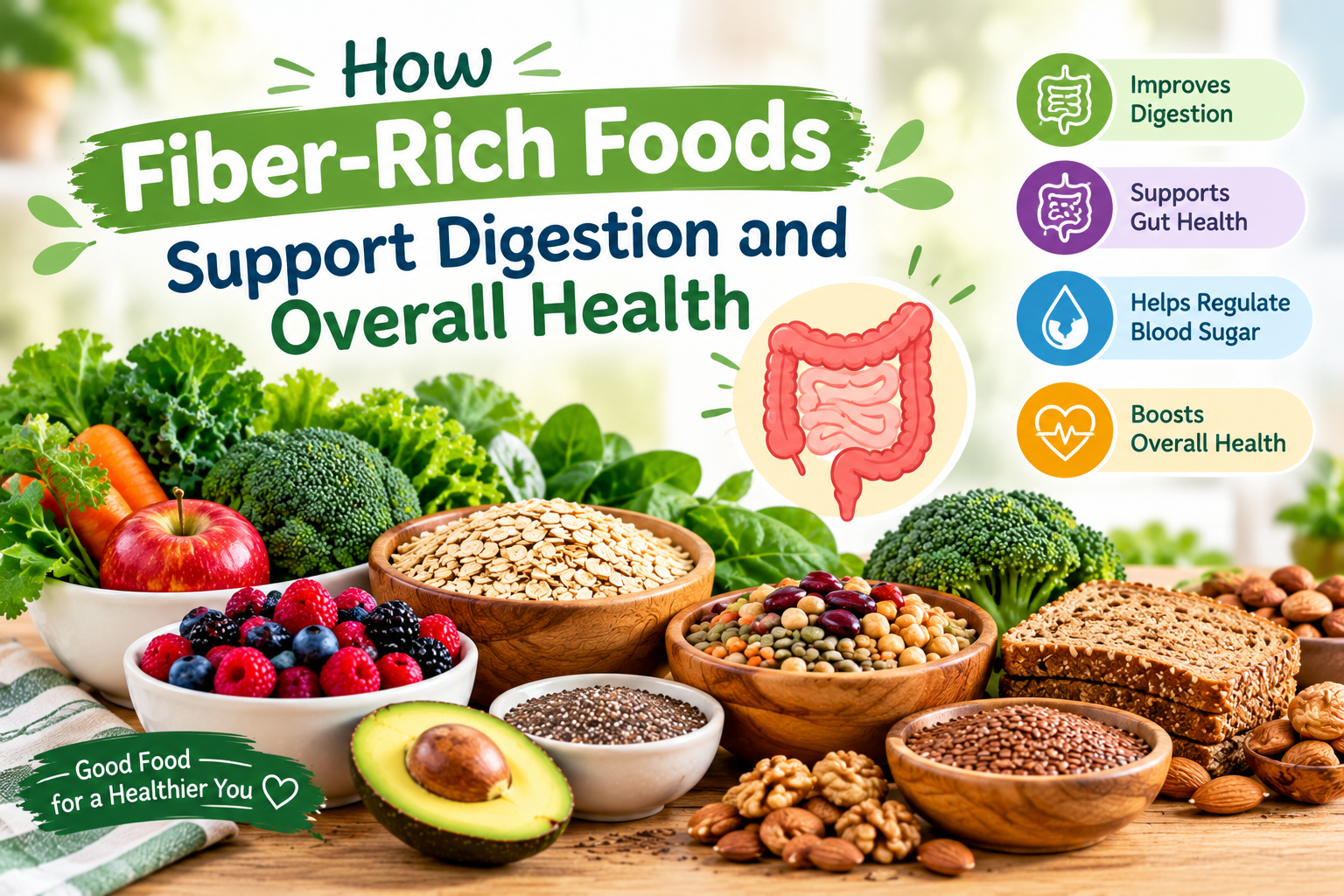
Fiber is one of the most important nutrients for digestive health yet many people do not get enough of it in their everyday diet. Found naturally in fruits, vegetables, whole grains, beans, lentils, nuts and seeds, dietary fiber does much more than help keep digestion regular. It can also support heart health, blood sugar management, healthy cholesterol levels and a balanced gut microbiome.
Unlike other carbohydrates, fiber is not fully broken down and absorbed by the body. Instead, it travels through the digestive system and performs several important functions along the way. Some types of fiber add bulk to stool while others are fermented by beneficial gut bacteria.
Understanding how fiber rich foods support digestion and overall health can help you make better food choices and build a balanced eating pattern.
This beginner friendly guide explains the benefits of dietary fiber, the best high fiber foods to eat, how much fiber you may need and practical ways to increase your intake without causing digestive discomfort.
What is Dietary Fiber?
Dietary fiber is a type of carbohydrate found primarily in plant foods. Unlike sugars and starches, fiber is not completely digested in the small intestine.
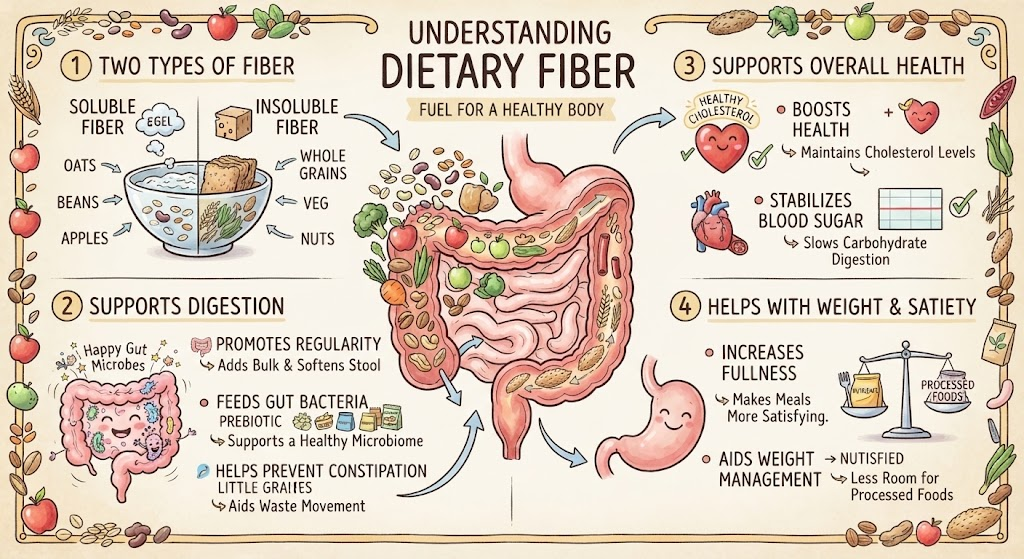
There are two commonly discussed types of dietary fiber.
- soluble
- insoluble fiber.
Soluble Fiber
Soluble fiber dissolves in water and forms a gel-like substance during digestion.
It can be found in foods such as:
- Oats
- Barley
- Beans
- Lentils
- Apples
- Citrus fruits
- Chia seeds
- Flaxseeds
Soluble fiber can help slow digestion and may support healthy blood cholesterol and blood sugar levels.
Insoluble Fiber
Insoluble fiber does not dissolve in water. It adds bulk to stool and helps food move through the digestive tract.
Good sources include:
- Whole grains
- Wheat bran
- Vegetables
- Nuts
- Seeds
- Fruit skins
Most plant foods contain a combination of both soluble and insoluble fiber.
How Fiber Supports Digestion
One of the most well known benefits of fiber is its effect on digestive health.
1. Promotes Regular Bowel Movements
Fiber adds bulk to stool and can help promote regular bowel movements.
Insoluble fiber can increase stool volume while soluble fiber can help soften stool by holding water.
A diet containing adequate fiber may therefore help reduce occasional constipation.
However, fiber works best when combined with adequate fluid intake. Increasing fiber significantly without drinking enough fluids may make constipation worse for some people.
2. Supports a Healthy Gut Microbiome
Certain types of fiber are fermented by bacteria in the large intestine.
These fibers act as food for beneficial gut microorganisms and are often referred to as prebiotic fibers.
When gut bacteria ferment certain fibers they produce compounds called short chain fatty acids. These substances can contribute to the health of the intestinal environment.
Foods containing fermentable fibers include:
- Onions
- Garlic
- Oats
- Beans
- Lentils
- Bananas
- Asparagus
- Whole grains
Eating a variety of plant foods can help provide different types of fiber for your gut microbiome.
3. May Help Prevent Constipation
Constipation can occur for many reasons including low fiber intake, inadequate fluid consumption, limited physical activity, medications and certain medical conditions.
Increasing fiber rich foods gradually can help improve stool bulk and regularity for many people.
Examples include adding oatmeal at breakfast, vegetables to lunch and dinner and fruit as a snack.
How Fiber Supports Overall Health
The benefits of fiber extend beyond digestion.
1. Supports Heart Health
Some types of soluble fiber can help maintain healthy cholesterol levels by influencing how cholesterol and bile acids are handled in the digestive system.
High fiber eating patterns are also often rich in fruits, vegetables, whole grains, legumes, nuts and seeds.
These foods provide other nutrients that support cardiovascular health.
2. Helps Support Healthy Blood Sugar
Fiber can slow the digestion and absorption of carbohydrates.
This may help reduce rapid increases in blood sugar after meals particularly when high fiber foods replace refined carbohydrate sources.
Foods such as beans, lentils, oats, vegetables, berries and whole grains can provide carbohydrates along with fiber and other nutrients.
For people with diabetes, fiber rich foods can be an important part of an overall blood sugar management plan.
3. Helps With Fullness and Appetite
High fiber foods often take longer to chew and digest than many highly processed foods.
Fiber can increase feelings of fullness which may make it easier to maintain appropriate portions.
For example, a bowl of oatmeal with berries and chia seeds can be more filling than a low fiber breakfast made primarily from refined carbohydrates.
4. Supports Healthy Weight Management
Fiber itself does not cause weight loss but fiber rich foods can make a healthy eating pattern more satisfying.
Fruits, vegetables, beans, lentils and whole grains can provide substantial volume and nutrients without relying heavily on highly processed foods.
Replacing low fiber processed foods with whole, fiber rich foods can be a useful strategy for long term healthy eating.
5. Supports Gut Health
A diverse diet containing different types of plant foods can provide various forms of fiber and other beneficial plant compounds.
A healthy gut environment is associated with many aspects of overall well being.
This is one reason nutrition experts often encourage people to eat a variety of fruits, vegetables, legumes, nuts, seeds and whole grains rather than relying on only a few foods.
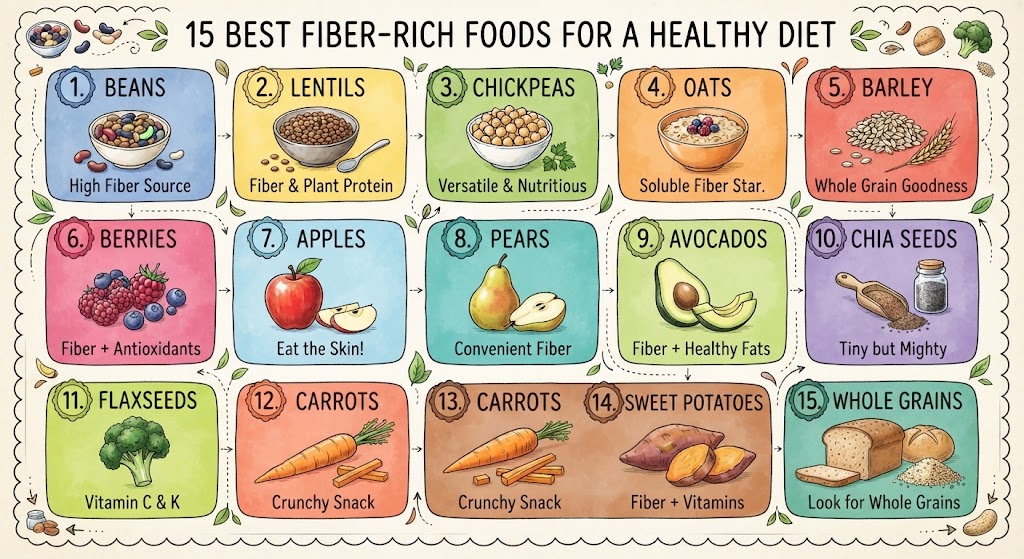
15 Best Fiber Rich Foods to Add to Your Diet
1. Beans
Black beans, kidney beans, navy beans and other varieties are excellent sources of dietary fiber.
They can be added to soups, salads, chili, rice dishes and wraps.
Choose low sodium canned beans when possible or rinse canned beans before using them.
2. Lentils
Lentils are rich in fiber and plant based protein.
They are especially useful in soups, curries, stews, salads and grain bowls.
Because they cook relatively quickly, lentils can also be a convenient option for home cooking.
3. Chickpeas
Chickpeas provide fiber, plant protein and several important nutrients.
Use them in hummus, salads, roasted snacks, soups or Mediterranean style grain bowls.
4. Oats
Oats are particularly well known for their soluble fiber content.
A warm bowl of oatmeal can be topped with berries, apples, chia seeds, walnuts or cinnamon.
Choose plain oats rather than highly sweetened flavored varieties when possible.
5. Barley
Barley is another whole grain that contains soluble fiber.
It can be used in soups, salads, grain bowls, and side dishes.
Replacing some refined grains with barley can increase your overall fiber intake.
6. Raspberries and Other Berries
Berries provide fiber along with vitamins and antioxidant plant compounds.
Raspberries are particularly fiber rich compared with many other fruits.
Add berries to yogurt, oatmeal, smoothies or salads.
7. Apples
Apples provide fiber particularly when the skin is eaten.
Wash apples thoroughly and enjoy them whole rather than relying only on apple juice.
Pairing an apple with nuts or nut butter can create a satisfying snack.
8. Pears
Pears are another convenient fruit containing dietary fiber.
They can be eaten on their own, added to salads or paired with yogurt and nuts.
Keeping whole fruit available at home can make it easier to choose fiber rich snacks.
9. Avocados
Avocados provide fiber along with healthy unsaturated fats.
Add avocado to salads, whole grain toast, wraps or grain bowls.
Because avocados are calorie dense, portion size can still be important depending on your nutritional goals.
10. Chia Seeds
Chia seeds are small but provide fiber and other nutrients.
When mixed with liquid, chia seeds absorb water and develop a gel-like texture.
Try adding them to oatmeal, yogurt, smoothies or homemade chia pudding.
11. Flaxseeds
Ground flaxseeds can be an easy way to add fiber to meals.
They can be mixed into oatmeal, smoothies, yogurt or whole grain baked foods.
Ground flaxseed is generally easier to incorporate into meals than whole seeds.
12. Broccoli
Broccoli provides fiber, vitamin C, vitamin K and other plant compounds.
Roast it with olive oil and herbs, steam it as a side dish or add it to stir fries.
13. Carrots
Carrots provide fiber and naturally occurring plant compounds.
They can be eaten raw as a snack or cooked into soups, stews and vegetable dishes.
14. Sweet Potatoes
Sweet potatoes contain fiber, vitamins and naturally occurring carbohydrates.
Eating the skin when properly washed and prepared can increase the fiber content.
Try baked sweet potatoes topped with beans and vegetables for a filling meal.
15. Whole Grain Foods
Whole grain bread, brown rice, whole wheat pasta, quinoa, oats and other minimally processed grains can help increase fiber intake.
When shopping, look for products that identify a whole grain as a primary ingredient.
How Much Fiber Do You Need?
Fiber needs vary based on age, sex, calorie intake and individual health requirements.
For many adults, a daily intake around 25 to 30 grams of fiber is a useful general target, although individual recommendations may differ.
Instead of trying to reach a specific number overnight, gradually increase your intake.
For example:
Breakfast: Oatmeal with berries and chia seeds
Lunch: Lentil soup with a whole grain side
Snack: Apple with unsalted nuts
Dinner: Brown rice, beans and roasted vegetables
This type of eating pattern can provide fiber throughout the day rather than concentrating it into one meal.
How to Increase Fiber Without Digestive Discomfort
If you currently eat very little fiber, suddenly adding large amounts can cause gas, bloating or abdominal discomfort.
Increase fiber gradually.
Drink Enough Fluids
Fiber absorbs water so adequate hydration is important.
Water is generally the simplest choice.
People with certain medical conditions including some kidney and heart conditions may have fluid restrictions and should follow their healthcare professional’s guidance.
Increase Fiber Slowly
Add one high fiber food at a time.
For example, start by adding fruit to breakfast and vegetables to dinner before making several other changes.
Choose a Variety of Foods
Different foods provide different types of fiber.
Instead of eating large quantities of one food include beans, whole grains, vegetables, fruits, nuts and seeds throughout the week.
Stay Physically Active
Regular movement can support normal bowel function.
Walking after meals, cycling, swimming or other appropriate activities can complement a fiber rich diet.
Fiber Rich Meal Ideas
Eating more fiber does not have to be complicated.
High Fiber Breakfast
Try oatmeal topped with berries, chia seeds and walnuts.
High Fiber Lunch
Build a bowl with lentils, leafy greens, tomatoes, carrots, brown rice and a simple olive oil dressing.
High Fiber Snack
Choose an apple, pear, berries or a small serving of nuts and seeds.
High Fiber Dinner
Try grilled fish or another protein with roasted broccoli, sweet potato and a bean based side dish.
Simple Smoothie
Blend berries, spinach, plain yogurt, chia seeds and a suitable liquid for a fiber rich breakfast or snack.
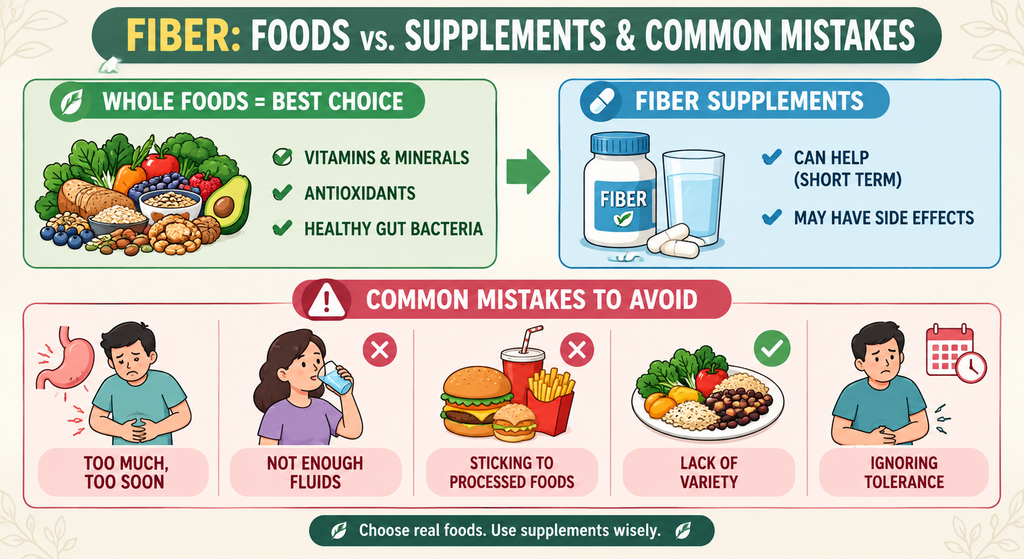
Fiber Rich Foods vs. Fiber Supplements
Whole foods are generally the best starting point for increasing dietary fiber.
Foods provide fiber alongside vitamins, minerals, antioxidants, protein, healthy fats and other beneficial compounds.
Fiber supplements can be useful in some situations but they should not automatically replace a varied diet.
If you are considering a fiber supplement because of persistent constipation or another digestive concern speak with a healthcare professional first.
Some supplements may interact with medications or may not be appropriate for certain digestive conditions.
Common Mistakes When Increasing Fiber
Eating Too Much Fiber Too Quickly
A sudden increase can cause gas and bloating.
Increase gradually instead.
Forgetting About Fluids
Fiber and fluid work together to support normal bowel movements.
Relying Only on Fiber Fortified Processed Foods
Some packaged foods contain added fiber but whole plant foods provide a broader range of nutrients.
Eating Only One Type of Fiber
Variety matters. Include fruits, vegetables, legumes, whole grains, nuts and seeds.
Ignoring Individual Tolerance
Some people may experience digestive symptoms from particular high fiber foods.
Pay attention to how your body responds and discuss persistent symptoms with a healthcare professional.
Frequently Asked Questions
What are the best fiber rich foods?
Some excellent choices include beans, lentils, chickpeas, oats, barley, berries, apples, pears, avocados, chia seeds, flaxseeds, broccoli, carrots, sweet potatoes and whole grains.
Does fiber help digestion?
Yes. Fiber can help promote regular bowel movements, increase stool bulk and support beneficial gut bacteria. Different types of fiber work in different ways.
Can fiber help with constipation?
Increasing dietary fiber can help many people with constipation particularly when combined with adequate fluid intake and regular physical activity. Persistent constipation should be evaluated by a healthcare professional.
Can eating too much fiber cause bloating?
Yes. A rapid increase in fiber can cause gas, bloating or abdominal discomfort. Gradually increasing fiber gives your digestive system time to adjust.
Is fruit high in fiber?
Many whole fruits are good sources of fiber, particularly when eaten with their edible skins. Berries, pears, apples, oranges and kiwis are examples.
Are fiber supplements necessary?
Not necessarily. Many people can meet their fiber needs through a varied diet. Supplements may be appropriate in some circumstances but it is best to discuss them with a healthcare professional.
Does fiber help blood sugar?
Certain types of fiber can slow carbohydrate digestion and absorption which may help support healthier blood sugar responses. The overall meal, portion size and individual health condition also matter.
When to Talk to a Healthcare Professional
Occasional digestive changes are common but persistent or severe symptoms should not simply be treated by adding more fiber.
Speak with a healthcare professional if you experience:
- Persistent constipation
- Severe or ongoing abdominal pain
- Blood in the stool
- Unexplained weight loss
- Persistent diarrhea
- Repeated vomiting
- Significant or unexplained changes in bowel habits
People with inflammatory bowel disease, bowel obstruction, certain digestive disorders or other medical conditions may need individualized advice about fiber intake.
Conclusion
Fiber rich foods support digestion and overall health by helping promote regular bowel movements, feeding beneficial gut bacteria, supporting healthy cholesterol and blood sugar levels and contributing to fullness and healthy eating patterns.
The best way to increase fiber is to focus on a variety of whole and minimally processed plant foods. Beans, lentils, oats, berries, apples, pears, vegetables, whole grains, nuts and seeds can all contribute to a balanced high fiber diet.
If your current diet is low in fiber don’t try to change everything at once. Increase your intake gradually, drink appropriate amounts of fluid, stay physically active and give your digestive system time to adjust.
Most importantly, remember that fiber is only one part of a healthy diet. Pair fiber rich foods with adequate protein, healthy fats, a variety of fruits and vegetables and minimally processed foods to create a well rounded eating pattern.
By making small, consistent changes such as choosing oatmeal instead of refined breakfast foods, adding beans to lunch, eating whole fruit instead of juice and including vegetables with dinner. You can naturally increase your fiber intake and build eating habits that support both digestive health and long term overall wellness.
2 Responses
[…] are types of dietary components that beneficial microorganisms in the body can use as food. Many prebiotics are specific types of […]
[…] provide dietary fiber and plant compounds particularly when eaten with the […]