
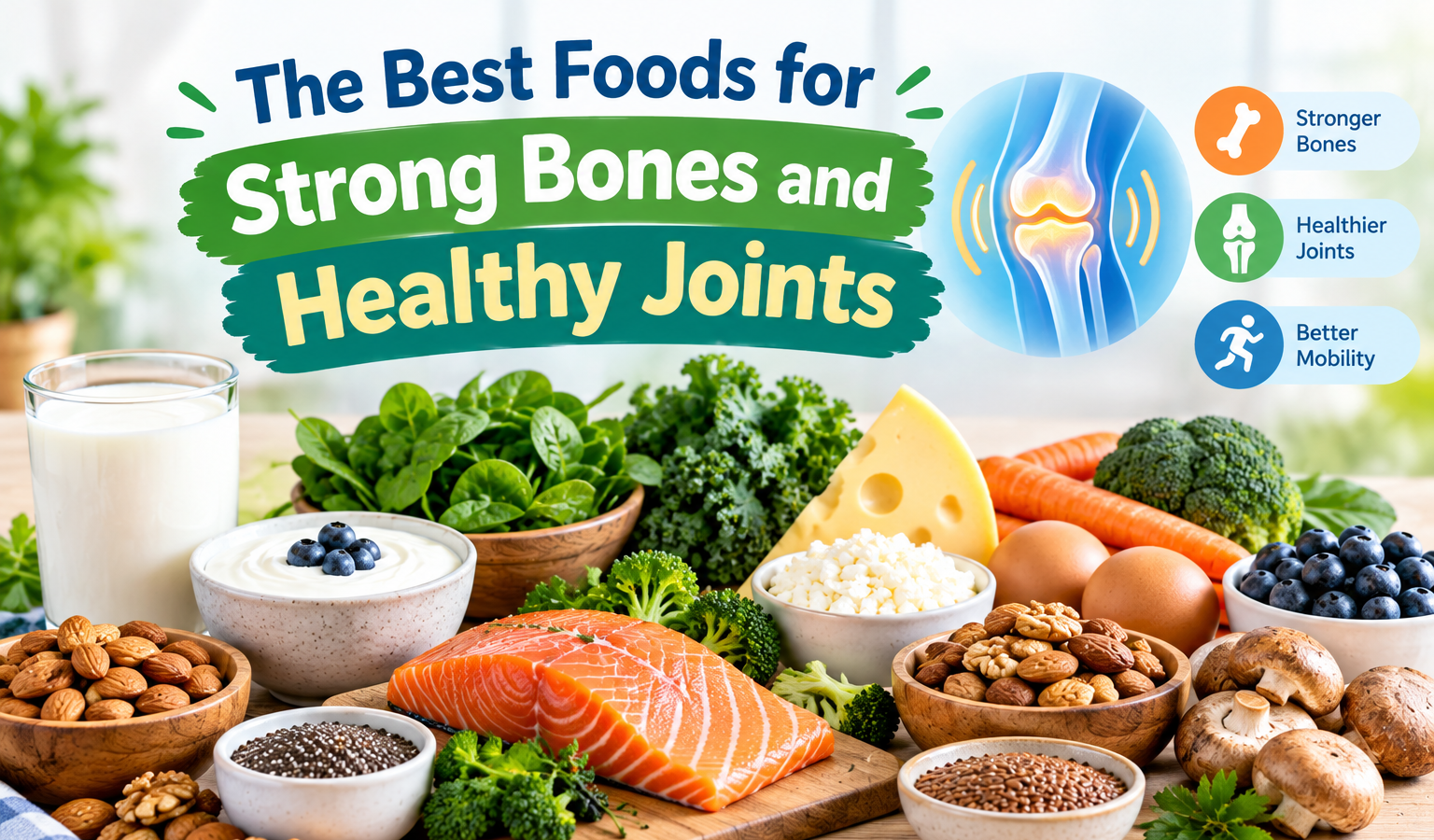
Strong bones and healthy joints are essential for staying active, maintaining mobility and supporting overall quality of life. Bone health depends on more than just calcium. Your body also needs vitamin D, protein, magnesium, vitamin K, phosphorus and other nutrients to maintain normal bone structure and function. Similarly, a balanced diet rich in nutrient dense foods can support the tissues and systems involved in healthy joints.
If you are looking for the best foods for strong bones and healthy joints, building a varied balanced diet is a practical place to start. Dairy products, leafy green vegetables, fatty fish, nuts, seeds, beans, fruits and whole grains can all contribute valuable nutrients.
Food cannot reverse every bone or joint condition and nutrition should not replace medical treatment. However, consistently choosing nutritious foods can help provide the building blocks your body needs for healthy bones and normal movement.
Why Bone and Joint Health Matter
Bones are living tissues that constantly undergo a process of breakdown and rebuilding. Throughout life, the body removes older bone tissue and replaces it with new tissue.
Bone strength is influenced by factors such as age, genetics, physical activity, hormones, body weight and nutrition.
Joints are where two or more bones meet. They include cartilage, connective tissues, muscles, tendons and other structures that help the body move smoothly.
A healthy lifestyle that combines nutritious food, regular physical activity, sufficient sleep and appropriate healthcare can support both skeletal and joint health.
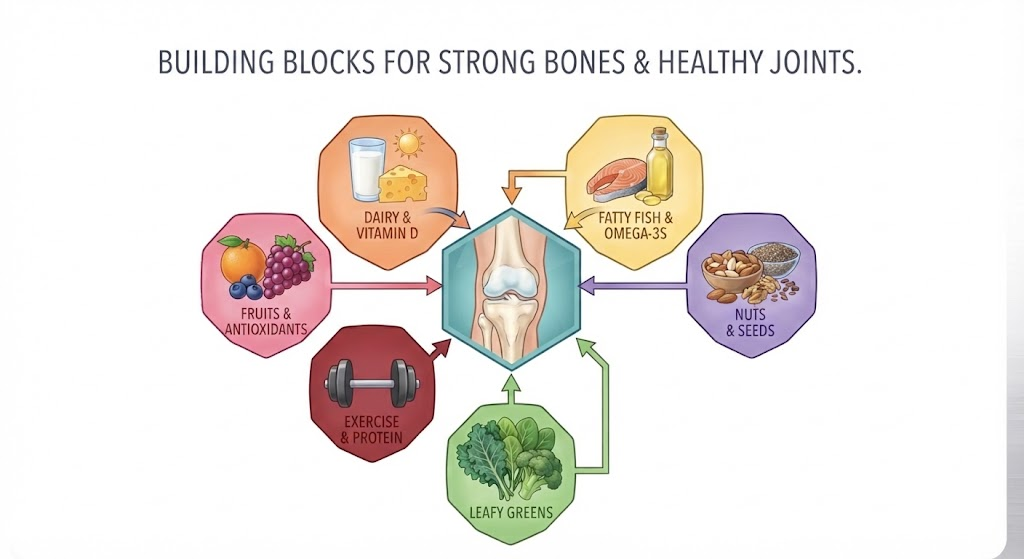
Key Nutrients for Strong Bones and Healthy Joints
Before looking at individual foods, it helps to understand the nutrients that play important roles in bone and joint health.
Calcium
Calcium is one of the primary minerals found in bones and teeth. The body also needs calcium for normal muscle contraction and nerve function.
Good sources include:
- Milk
- Yogurt
- Cheese
- Calcium fortified plant milks
- Tofu made with calcium
- Sardines
- Leafy green vegetables
- Some beans
Vitamin D
Vitamin D helps the body absorb calcium and plays an important role in bone health.
Food sources include fatty fish, egg yolks and fortified foods. The body can also produce vitamin D through exposure to sunlight although factors such as skin type, location, season, clothing and sunscreen use affect vitamin D production.
Protein
Protein provides amino acids needed for tissues throughout the body including bone and muscle.
Adequate protein intake can be supported through foods such as fish, eggs, poultry, dairy products, beans, lentils, nuts, seeds and tofu.
Vitamin K
Vitamin K is involved in normal blood clotting and bone metabolism. Leafy green vegetables such as kale, spinach and collard greens are especially rich in vitamin K.
Magnesium
Magnesium contributes to numerous processes in the body and is involved in normal bone structure.
Nuts, seeds, legumes, whole grains and leafy greens are useful sources.
Omega-3 Fatty Acids
Fatty fish such as salmon, sardines and mackerel provide omega-3 fatty acids. Including these foods in an overall balanced diet can contribute to cardiovascular and general health.
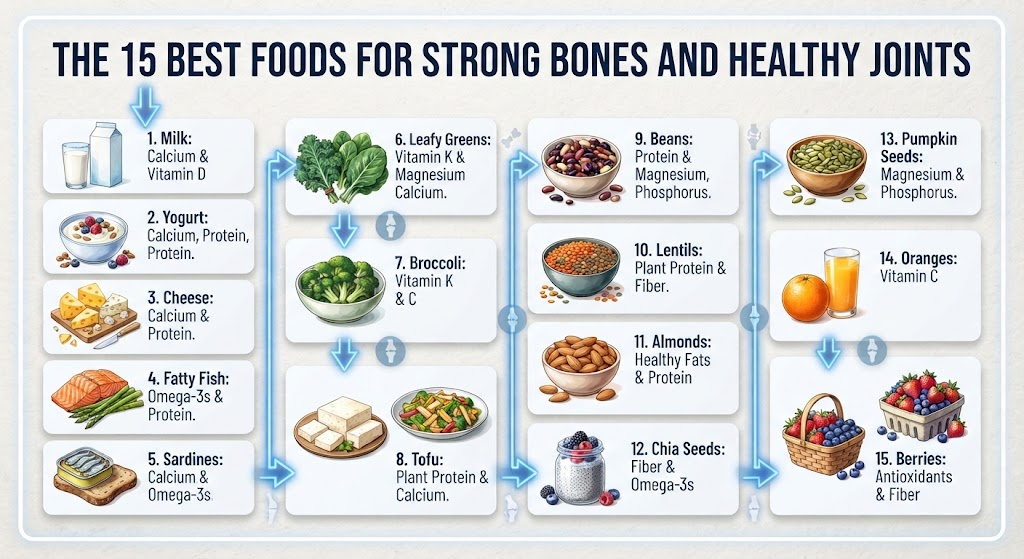
15 Best Foods for Strong Bones and Healthy Joints
1. Milk
Milk is a well known source of calcium and also provides protein. Many types of milk are fortified with vitamin D, making them a convenient choice for supporting bone health.
If you drink dairy milk choosing low fat or reduced fat varieties can provide these nutrients without as much saturated fat.
People who avoid dairy can choose calcium and vitamin D fortified plant based alternatives.
2. Yogurt
Yogurt provides calcium and protein making it another useful food for a bone supporting diet.
Some yogurts also contain live cultures. For a nutritious option, choose plain yogurt and add fresh berries, nuts, seeds or fruit for flavor.
Greek yogurt can be particularly useful for people looking to increase protein intake.
3. Cheese
Cheese can contribute calcium and protein to the diet.
Because some cheeses are relatively high in saturated fat and sodium, portion size matters. Adding a small amount of cheese to meals can provide nutrients without making it the main component of the meal.
Try adding cheese to whole grain sandwiches, salads, vegetable dishes or omelets.
4. Fatty Fish
Salmon, sardines, trout and mackerel are nutrient rich foods that can support an overall healthy diet.
Fatty fish provide protein and omega-3 fatty acids. Some varieties particularly fish eaten with their bones such as canned sardines can also provide significant calcium.
Try serving grilled salmon with leafy greens and a whole grain for a balanced meal.
5. Sardines
Sardines deserve special attention because canned sardines with edible bones can provide both calcium and protein.
They are also a source of omega-3 fatty acids and other nutrients.
If you enjoy sardines, try adding them to salads, whole grain toast or vegetable based meals.
6. Leafy Green Vegetables
Kale, collard greens, spinach and other leafy vegetables provide vitamin K, magnesium and other nutrients.
Some leafy greens also contribute calcium.
Add greens to:
- Salads
- Soups
- Omelets
- Stir fries
- Smoothies
- Grain bowls
Eating a variety of vegetables helps ensure you receive a broader range of nutrients.
7. Broccoli
Broccoli is a nutrient dense vegetable that provides vitamin K, vitamin C, fiber and other beneficial nutrients.
It is easy to add to meals and can be steamed, roasted, stir fried or added to soups.
For a bone friendly dinner, combine roasted broccoli with salmon, tofu or beans.
8. Tofu
Tofu can be an excellent plant based protein source.
Some tofu products are made with calcium salts and can therefore provide substantial calcium. Check the nutrition label to determine the calcium content of a particular product.
Tofu can be used in stir fries, curries, soups, salads and grain bowls.
9. Beans
Beans provide protein, magnesium, phosphorus, fiber and other nutrients.
Black beans, kidney beans, chickpeas and other legumes can be incorporated into many different meals.
Try using beans as a partial replacement for processed meats or refined carbohydrate foods.
10. Lentils
Lentils are another nutrient rich legume.
They provide plant protein, fiber, magnesium and other minerals that contribute to a balanced diet.
Lentil soups, curries, salads and grain bowls are easy ways to include them regularly.
11. Almonds
Almonds provide magnesium, protein, healthy fats and other nutrients.
A small handful can make a convenient snack or topping for yogurt and oatmeal.
Because nuts are calorie dense, moderate portions are generally appropriate.
12. Chia Seeds
Chia seeds provide fiber, plant based omega-3 fatty acids and minerals including calcium and magnesium.
They can be added to:
- Oatmeal
- Yogurt
- Smoothies
- Chia pudding
- Whole grain cereals
Using seeds as toppings can make everyday meals more nutrient dense.
13. Pumpkin Seeds
Pumpkin seeds are a source of magnesium, phosphorus, protein and healthy fats.
Sprinkle them over salads, soups, yogurt or oatmeal.
They can also be eaten as a simple snack.
14. Oranges
Oranges provide vitamin C which the body needs to produce collagen. Collagen is an important structural protein found in bones and connective tissues.
Whole oranges also provide fiber and water.
Other vitamin-C rich foods include strawberries, kiwi, bell peppers, tomatoes and citrus fruits.
15. Berries
Strawberries, blueberries, raspberries and blackberries provide vitamin C, fiber and various plant compounds.
Adding different fruits to your diet can increase the overall variety of vitamins, minerals and plant nutrients you consume.
Try adding berries to plain yogurt, oatmeal or a smoothie.
Whole Grains for Bone and Joint Nutrition
Whole grains such as oats, quinoa, barley and brown rice provide nutrients including magnesium, phosphorus, fiber and protein.
Replacing some refined grains with whole grains can improve the overall nutrient quality of your diet.
For example, consider choosing:
- Oatmeal instead of sugary breakfast cereals
- Brown rice instead of highly refined rice products
- Whole grain bread instead of refined white bread
- Quinoa or barley for grain bowls and salads
Healthy Fats and Joint Supporting Nutrition
Healthy fats are an important part of a balanced diet.
Foods such as avocado, olive oil, nuts, seeds and fatty fish can provide unsaturated fats.
Rather than focusing on individual “joint healing foods” consider building an overall eating pattern that emphasizes vegetables, fruits, whole grains, legumes, fish, nuts and other minimally processed foods.
Foods to Limit for Better Bone Health
A healthy diet is not only about what you add. It is also useful to consider foods that may displace more nutritious choices when consumed frequently.
Consider limiting excessive intake of:
- Highly processed snack foods
- Sugary drinks
- Excessive added sugar
- Foods high in sodium
- Heavily processed meats
- Excessive alcohol
A balanced diet can include occasional treats but nutrient rich foods should make up the foundation of everyday eating.
How to Build a Bone Healthy Meal
Creating balanced meals can be simple.
Try using this formula:
Half the plate: vegetables and fruit
One quarter: protein rich food
One quarter: whole grains or other nutrient rich carbohydrates
Add: a source of healthy fat
For example, a balanced dinner could include grilled salmon, roasted broccoli, quinoa, avocado and a piece of fruit.
Another option could be tofu stir fried with mixed vegetables and served with brown rice.
Bone Health and Physical Activity
Nutrition is only one part of maintaining strong bones.
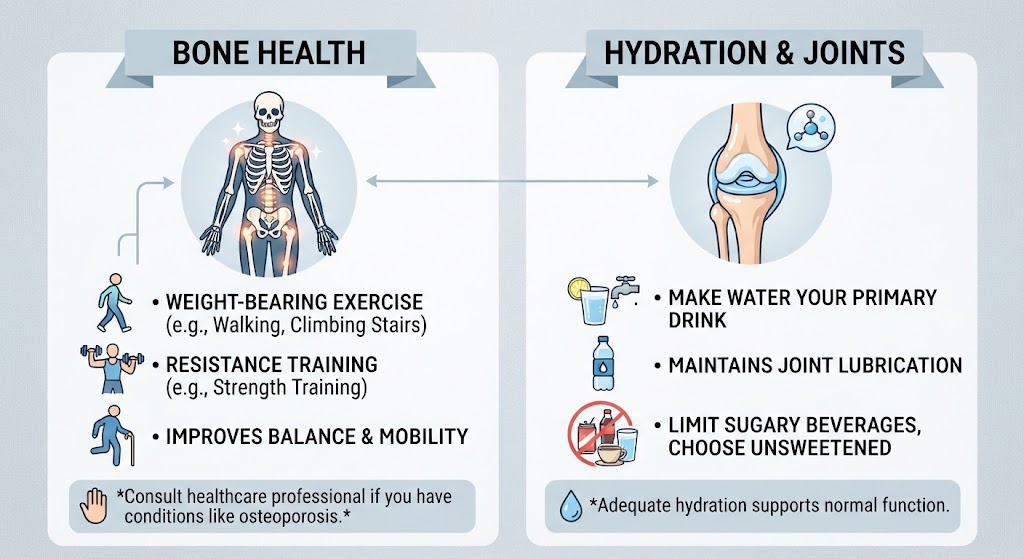
Weight bearing and resistance exercises can support bone strength and muscle function. Activities may include walking, climbing stairs, dancing, strength training and other exercises appropriate for your fitness level.
Strong muscles can also support balance and mobility.
If you have osteoporosis, a history of fractures, severe joint problems or another health condition ask a healthcare professional which types of exercise are appropriate for you.
Hydration and Joint Health
Water is essential for many functions throughout the body.
Although drinking water is not a cure for joint problems, maintaining adequate hydration supports normal physiological functions.
Instead of relying heavily on sugary drinks, make water your primary beverage whenever possible.
Herbal tea and other unsweetened beverages can also contribute to fluid intake.
Sample One Day Meal Plan for Bone and Joint Health
Breakfast
Plain Greek yogurt with berries, chia seeds and almonds.
Morning Snack
An orange with a small handful of pumpkin seeds.
Lunch
A large salad containing leafy greens, chickpeas, grilled chicken or tofu, tomatoes, cucumber, avocado and olive oil dressing.
Afternoon Snack
A small serving of cheese with whole grain crackers.
Dinner
Grilled salmon with roasted broccoli and quinoa.
Evening Option
A glass of calcium fortified milk or an unsweetened fortified plant based beverage, depending on your dietary preferences.
This is only a general example. Individual nutritional requirements vary based on age, activity level, health conditions, dietary preferences and other factors.
Tips for Improving Bone and Joint Nutrition
1. Eat a variety of foods
No single food provides every nutrient your bones and joints need. Variety helps create a more complete nutritional pattern.
2. Include calcium rich foods regularly
Instead of trying to consume all your calcium at one meal, include calcium containing foods throughout the day.
3. Prioritize protein
Include a protein source at meals and snacks when appropriate.
4. Eat plenty of vegetables
Dark leafy greens and other colorful vegetables provide a broad range of vitamins, minerals and plant compounds.
5. Choose whole foods more often
Minimally processed foods generally provide more nutrients than many highly processed alternatives.
6. Read nutrition labels
Look for calcium, vitamin D, protein, sodium and added sugar content when comparing packaged foods.
7. Maintain a healthy lifestyle
Regular physical activity, sufficient sleep, avoiding tobacco and moderate alcohol intake can complement a nutritious diet.
Frequently Asked Questions
What are the best foods for strong bones?
Calcium rich foods such as yogurt, milk, cheese, calcium fortified plant beverages, tofu and sardines can support bone nutrition. Leafy greens, nuts, seeds, beans and fatty fish also provide nutrients involved in maintaining healthy bones.
What foods are good for healthy joints?
A varied diet containing fatty fish, vegetables, fruits, nuts, seeds, whole grains, beans and other minimally processed foods can support overall health and provide nutrients important for connective tissues and normal body function.
Is milk necessary for strong bones?
Milk is one convenient source of calcium and protein but it is not the only option. Yogurt, cheese, fortified plant beverages, calcium set tofu, certain leafy greens and sardines can also contribute calcium.
Is calcium enough for strong bones?
Calcium is important but bone health involves more than calcium alone. Vitamin D, protein, vitamin K, magnesium, phosphorus, physical activity, hormones and other factors also play roles.
Are nuts good for bone health?
Nuts such as almonds provide magnesium, protein, healthy fats and other nutrients. They can be included as part of a balanced diet.
Can diet prevent joint problems?
A healthy diet can support overall health and provide important nutrients but diet alone cannot prevent every joint condition. Genetics, age, injuries, activity, body weight and medical conditions can all influence joint health.
When to Seek Professional Advice
If you experience persistent joint pain, swelling, stiffness, reduced mobility, repeated fractures or other concerning symptoms consult a healthcare professional rather than relying solely on dietary changes.
People with osteoporosis, arthritis, nutrient deficiencies, kidney conditions or other medical issues may have specific nutritional requirements.
A registered dietitian or healthcare professional can help you determine whether you are getting enough calcium, vitamin D, protein and other nutrients based on your individual needs.
Conclusion
Eating a nutritious, varied diet is one practical way to support strong bones and healthy joints throughout life. Foods such as yogurt, milk, cheese, fatty fish, sardines, leafy greens, broccoli, tofu, beans, lentils, almonds, chia seeds, pumpkin seeds, oranges and berries provide important nutrients that contribute to overall skeletal and connective tissue health.
However, bone and joint health involves much more than individual foods. Adequate calcium and vitamin D, sufficient protein, regular physical activity, healthy body composition, good sleep and other lifestyle habits all contribute to a strong foundation for mobility and wellness.
Instead of searching for one miracle food, focus on creating balanced meals built around vegetables, fruits, protein rich foods, whole grains, healthy fats and calcium rich choices. Consistent healthy habits over time can help provide your body with the nutrients it needs to maintain normal bone structure and support an active lifestyle.
6 Responses
[…] guide explains the best calcium rich foods, how calcium supports bone health, which nutrients work alongside calcium, how to improve calcium intake through everyday meals and […]
[…] of the most studied potential applications of curcumin is joint health particularly in people experiencing osteoarthritis related […]
[…] Milk also provides calcium and protein making fortified milk particularly helpful for people looking for foods that support bone health. […]
[…] Greek yogurt can provide protein and calcium, two nutrients that become particularly important for maintaining muscle and bone health. […]
[…] Because ginger contains compounds that may influence inflammatory pathways, researchers have investigated its potential role in joint health. […]
[…] muscle strength becomes increasingly important with age. Adequate protein combined with resistance exercise can […]