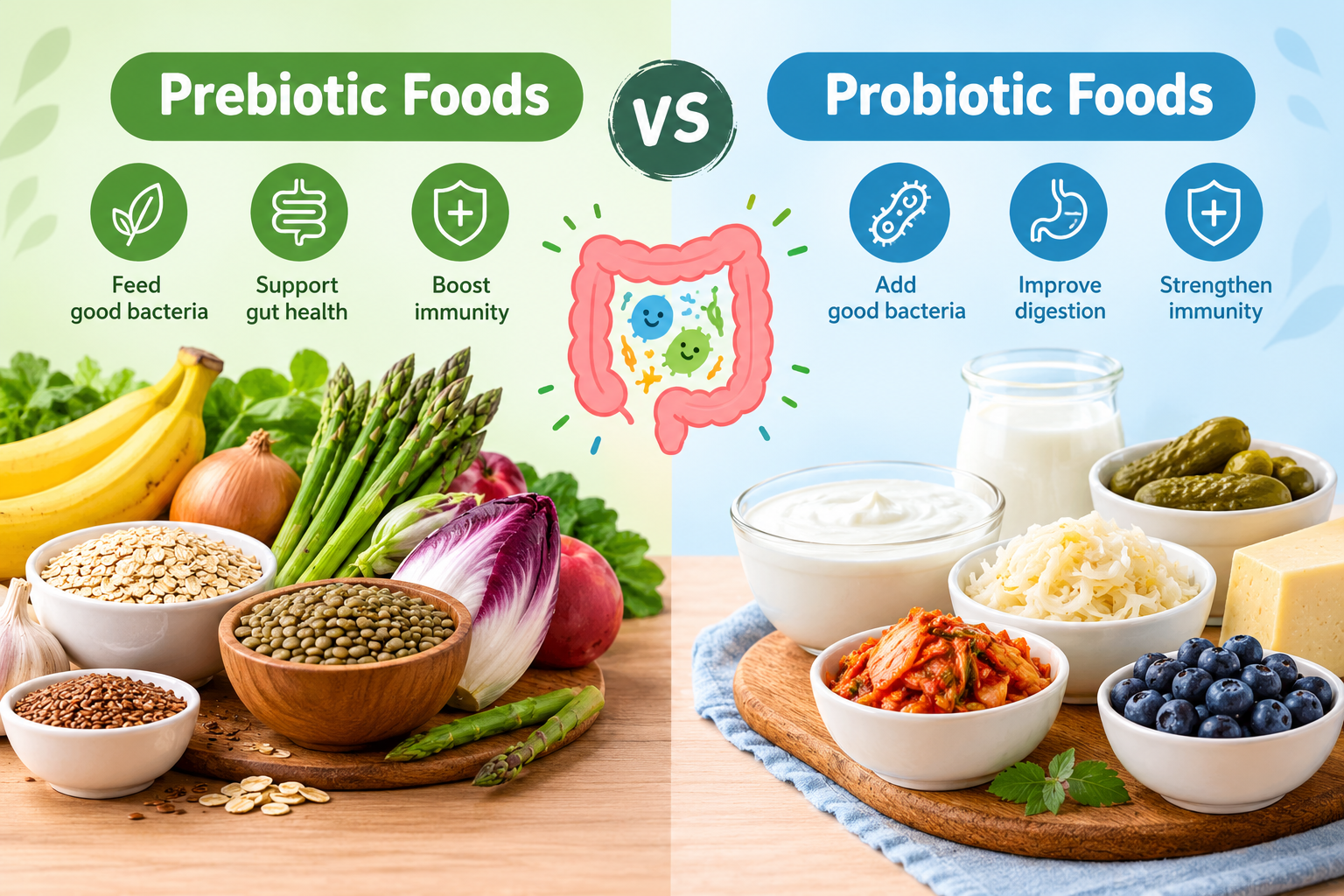
Understanding the difference between prebiotic vs. probiotic foods can make it easier to build a diet that supports digestion, a healthy gut microbiome and overall wellness. Prebiotics provide food for beneficial gut bacteria while probiotics are beneficial live microorganisms found in certain fermented foods and dietary products.
Both can be part of a balanced eating pattern and they work in complementary ways. In this guide, we’ll explain what prebiotics and probiotics are, how they differ, which foods contain them and how to include both in your daily diet.
What are Prebiotics?
Prebiotics are types of dietary components that beneficial microorganisms in the body can use as food. Many prebiotics are specific types of dietary fiber and resistant carbohydrates that pass through the upper digestive tract without being fully digested.
Once they reach the large intestine, gut microorganisms can ferment them and use them as an energy source.
In simple terms:
Prebiotics feed beneficial gut bacteria.
Prebiotic foods are therefore an important part of a high fiber plant rich diet.
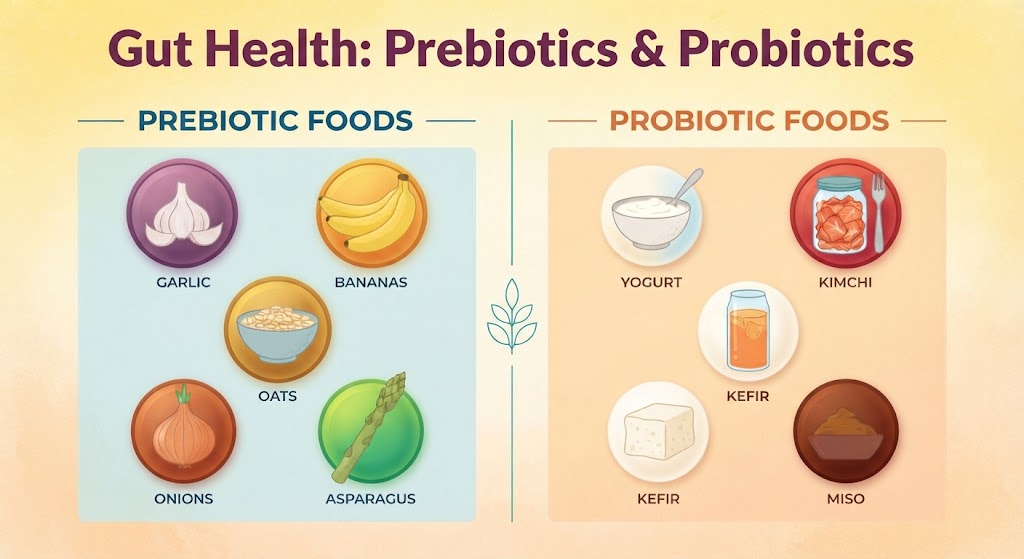
Common Prebiotic Foods
Some foods naturally contain prebiotic fibers and compounds including:
- Garlic
- Onions
- Leeks
- Asparagus
- Bananas
- Oats
- Barley
- Apples
- Chicory root
- Jerusalem artichokes
- Beans
- Lentils
- Chickpeas
- Flaxseeds
The amount and type of prebiotic compounds can vary from one food to another.
What are Probiotics?
Probiotics are live microorganisms that can provide health benefits when consumed in adequate amounts. Certain fermented foods contain live microorganisms although not every fermented food necessarily contains probiotic strains with demonstrated health benefits.
In simple terms:
Probiotics add beneficial microorganisms to your diet.
Common probiotic containing foods include:
- Yogurt with live cultures
- Kefir
- Certain fermented vegetables
- Sauerkraut that has not been heat-treated
- Kimchi
- Some fermented soy foods
- Certain cultured dairy products
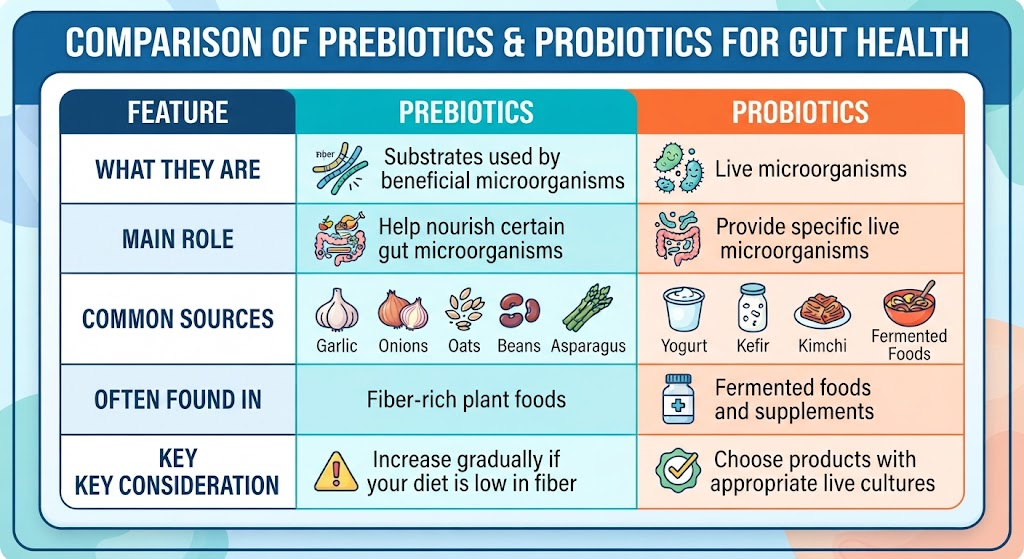
When shopping for probiotic foods, look for labels indicating live and active cultures when appropriate.
Prebiotic vs. Probiotic: The Main Difference
The easiest way to remember the difference is:
Prebiotics = food for beneficial gut microorganisms
Probiotics = live microorganisms
Think of your gut microbiome as a garden. Probiotics are like adding useful organisms to the garden while prebiotics provide nourishment that helps support the organisms already living there.
Both can contribute to a healthy dietary pattern but they are not interchangeable.
Why is the Gut Microbiome Important?
Your digestive tract is home to a complex community of bacteria and other microorganisms. Collectively these microorganisms are commonly referred to as the gut microbiome.
The composition of the microbiome can be influenced by many factors including diet, lifestyle, age, medications and other aspects of health.
A varied diet rich in plant foods provides different types of fibers and other compounds that gut microorganisms can use.
This is one reason nutrition experts often encourage people to eat a wide variety of vegetables, fruits, whole grains, legumes, nuts and seeds.
Benefits of Prebiotic Foods
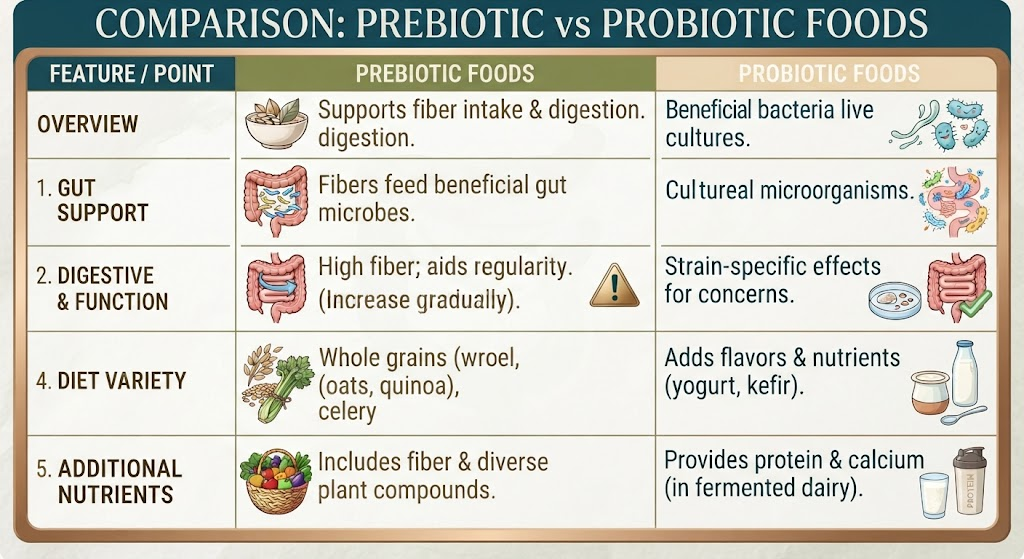
Eating a variety of prebiotic rich foods can support a fiber rich dietary pattern and healthy digestion.
1. Supports Beneficial Gut Microorganisms
Prebiotic fibers can be fermented by certain microorganisms in the colon. This process produces compounds including short chain fatty acids that are involved in the gut environment.
Different types of fibers support different microorganisms which is one reason variety matters.
2. Support Digestive Health
Many prebiotic foods are naturally high in dietary fiber. Fiber can help support regular bowel movements and healthy digestion.
However, increasing fiber too quickly may cause temporary gas or bloating. Gradually increasing fiber intake can make the transition easier.
3. Support Regularity
Foods such as oats, beans, lentils, fruits, vegetables and whole grains provide fiber that can help support normal bowel function.
Adequate fluid intake is also important when increasing dietary fiber.
4. Helps Create a Diverse Diet
Prebiotic foods come from many plant sources. Eating a variety of these foods can increase the diversity of fibers and plant compounds in your diet.
Benefits of Probiotic Foods
Probiotic foods can provide specific live microorganisms. Their effects can depend on the particular microorganism, the amount consumed and the individual.
1. Supports the Gut Microbiome
Fermented foods containing live cultures can introduce microorganisms into the digestive tract.
The effects are not necessarily permanent, which is one reason fermented foods may be included regularly as part of a balanced diet.
2. May Support Digestive Function
Certain probiotic strains have been studied for specific digestive concerns. However, probiotic effects are strain specific, meaning one probiotic should not automatically be assumed to have the same effect as another.
3. Adds Variety to the Diet
Foods such as yogurt, kefir, kimchi and fermented vegetables can add different flavors, textures and nutrients to meals.
4. Provides Additional Nutrients
Many probiotic foods are nutritious for reasons beyond their microorganisms.
For example yogurt and kefir can provide protein, calcium and other nutrients depending on the product.
Best Prebiotic Foods to Add to Your Diet
If you want to increase your intake of prebiotic foods, focus on a wide variety of plant based foods.
Garlic and Onions
Garlic and onions are flavorful sources of compounds and fibers that can be used by gut microorganisms. Add them to soups, vegetables, sauces, eggs or whole grain dishes.
Asparagus
Asparagus provides fiber and can be roasted, steamed, grilled or added to salads.
Bananas
Bananas are convenient and versatile. Slightly less ripe bananas contain more resistant starch than very ripe bananas.
Oats
Oats provide soluble fiber including beta glucan. They make an easy breakfast base and can be combined with berries, nuts, seeds and yogurt.
Beans and Lentils
Legumes are excellent sources of dietary fiber and plant protein. Try adding lentils to soups or using beans in salads, chili and grain bowls.
Apples
Apples provide fiber and can be eaten whole as a snack or added to oatmeal and salads.
Whole Grains
Barley, whole grain breads, brown rice and other minimally processed whole grains can contribute fiber to your diet.
Best Probiotic Foods to Include
Not all fermented foods contain probiotics with established health benefits so it’s useful to distinguish fermented foods from foods containing specific probiotic microorganisms.
Yogurt
Yogurt containing live cultures is one of the easiest probiotic foods to include in a regular diet.
Choose plain or lower added sugar varieties when possible and combine yogurt with fruit, oats, nuts or seeds.
Kefir
Kefir is a fermented milk drink that can contain a variety of microorganisms. It can be enjoyed on its own or blended into smoothies.
Kimchi
Kimchi is a fermented vegetable dish traditionally associated with Korean cuisine. It can add flavor and fermented vegetables to rice bowls, eggs and other meals.
Sauerkraut
Sauerkraut is fermented cabbage. If you’re specifically looking for live cultures, check the product label because heat treatment can affect live microorganisms.
Fermented Soy Foods
Some fermented soy foods can contain microorganisms produced during fermentation. Examples include certain varieties of tempeh and miso although their microbial content varies by product and processing.
Can You Eat Prebiotics and Probiotics Together?
Yes. In fact, combining prebiotic rich and probiotic containing foods can be a practical way to support a varied gut health diet.
A meal might include:
Plain yogurt + oats + banana + berries + chia seeds
Here yogurt can provide live cultures while oats, banana, berries and chia seeds provide fiber and other plant compounds.
Another option could be:
Lentil and vegetable bowl + fermented vegetables
The lentils and vegetables provide fiber, while the fermented vegetables may provide live microorganisms if they have not been heat treated.
This combination is sometimes described informally as a synbiotic approach particularly when specific prebiotic and probiotic combinations are intentionally paired.
Prebiotic vs. Probiotic Supplements: Do You Need Them?
Supplements are widely marketed for gut health but they are not automatically necessary for everyone.
For many people a diverse diet containing vegetables, fruits, whole grains, legumes, nuts, seeds and fermented foods can provide a strong nutritional foundation.
Probiotic supplements can contain specific strains in measured amounts and some have been studied for particular health situations. However, effects vary substantially by strain and condition.
Prebiotic supplements may provide concentrated forms of fermentable fibers but suddenly consuming large amounts can cause gas, bloating or abdominal discomfort.
If you’re considering a supplement because of a digestive condition, recent antibiotic use, pregnancy, immune related concerns or another health issue, discuss the choice with a healthcare professional.
How Much Prebiotic Fiber Should You Eat?
There is no single daily amount of “prebiotics” that everyone needs because prebiotic compounds vary considerably.
Instead, focus on meeting your overall dietary fiber needs and eating a variety of plant foods.
A practical approach is to gradually include:
- Vegetables at lunch and dinner
- Fruit as snacks
- Oatmeal or other whole grains at breakfast
- Beans or lentils several times a week
- Nuts and seeds regularly
- Whole grain options instead of refined grains
If your current diet is low in fiber, increase these foods gradually and drink enough fluids.
How to Add More Prebiotic and Probiotic Foods
You don’t need to completely change your diet. Small consistent changes can make your meals more gut friendly.
Start Breakfast With Fiber
Try oatmeal topped with banana, berries, walnuts and plain yogurt.
Add Legumes to Lunch
Include chickpeas, beans, or lentils in salads, soups, wraps or grain bowls.
Include Fermented Foods
Add a serving of yogurt, kefir, kimchi or another suitable fermented food to meals based on your preferences and tolerance.
Eat More Plant Variety
Instead of eating the same vegetable every day, rotate among leafy greens, broccoli, carrots, asparagus, peppers, cabbage and other vegetables.
Choose Whole Grains
Replace some refined grains with oats, barley, brown rice, quinoa or whole grain bread.
Sample One Day Gut Friendly Meal Plan
Here’s an example of how prebiotic and probiotic foods can fit into a balanced day.
Breakfast:
Oatmeal with plain yogurt, banana, blueberries, chia seeds and walnuts.
Morning snack:
An apple with a small handful of almonds.
Lunch:
Lentil and vegetable bowl with leafy greens, tomatoes, carrots, whole grains and a side of fermented vegetables.
Afternoon snack:
Plain kefir with berries.
Dinner:
Grilled salmon with roasted asparagus, broccoli and a serving of brown rice.
Evening option:
A small serving of plain yogurt with fruit if desired.
This is only an example. Your nutritional needs and food tolerances may differ.
Foods to Limit for Better Gut Health
Adding prebiotic and probiotic foods is only one part of a healthy diet. Overall dietary quality matters too.
Try to limit excessive intake of:
- Highly processed snack foods
- Sugar sweetened beverages
- Foods high in added sugars
- Excessively refined carbohydrates
- Highly processed meats
- Excessive alcohol
- Meals that are consistently low in fiber
You don’t need to completely eliminate every processed food. Instead, focus on making minimally processed and nutrient rich foods the foundation of your diet.
What if Prebiotic Foods Cause Bloating?
Some highly fermentable foods can cause gas or bloating particularly when you suddenly increase fiber intake.
This does not necessarily mean that all high fiber foods are unsuitable for you.
Try:
- Increasing fiber gradually.
- Introducing one new food at a time.
- Drinking adequate fluids.
- Eating smaller portions initially.
- Paying attention to your individual tolerance.
People with certain digestive conditions may have specific dietary requirements, so persistent symptoms should be discussed with a qualified healthcare professional.
Common Myths About Prebiotics and Probiotics
Myth 1: All Fermented Foods Are Probiotics
Not necessarily. Fermentation does not automatically mean that a food contains probiotic microorganisms with demonstrated health benefits. Processing and heat treatment can also affect live cultures.
Myth 2: More Probiotics Are Always Better
More is not automatically better. Probiotic effects depend on the microorganism, dose, individual and reason for use.
Myth 3: You Need Supplements for a Healthy Gut
Not everyone needs supplements. A varied fiber rich diet can provide many of the components associated with a healthy gut microbiome.
Myth 4: Prebiotics and Probiotics Do the Same Thing
They are different. Prebiotics provide substrates that microorganisms can use while probiotics are live microorganisms.
Frequently Asked Questions
What is the difference between prebiotics and probiotics?
Prebiotics are substances often containing certain fibers and resistant carbohydrates that beneficial microorganisms can use as food. Probiotics are live microorganisms that can provide health benefits when consumed in adequate amounts.
Is yogurt a prebiotic or probiotic food?
Yogurt containing live cultures can be considered a probiotic food. It is not generally classified as a prebiotic food, although yogurt can be combined with prebiotic rich foods such as oats, bananas, berries and seeds.
Are bananas prebiotic foods?
Bananas contain carbohydrates and fiber including resistant starch in less ripe bananas. They can therefore contribute to a diet containing prebiotic substrates.
Are oats prebiotic?
Oats contain fiber including beta glucan and other carbohydrates that can be utilized by gut microorganisms. They are a useful part of a high fiber diet.
Can I take prebiotics and probiotics together?
Yes. They can be consumed together through foods or when appropriate supplements. A simple food combination is plain yogurt with oats, berries, banana and seeds.
How quickly do probiotics work?
There is no universal timeline. Effects depend on the particular microorganism, the individual and the reason it is being used. Some people may notice digestive changes while others may not experience obvious effects.
Are probiotic supplements better than probiotic foods?
Not necessarily. Supplements provide specific microorganisms in controlled amounts while fermented foods can provide microorganisms alongside other nutrients. The best choice depends on individual needs and the specific health goal.
When to Talk With a Healthcare Professional
Diet can play an important role in digestive and overall health but persistent digestive symptoms should not simply be attributed to an unhealthy gut microbiome.
Speak with a healthcare professional if you experience ongoing or severe:
- Abdominal pain
- Bloating
- Diarrhea
- Constipation
- Unexplained weight loss
- Blood in the stool
- Persistent changes in bowel habits
- Vomiting or difficulty eating
People with diagnosed digestive disorders, weakened immune systems or other medical conditions may also need individualized dietary guidance.
Conclusion
Understanding prebiotic vs. probiotic foods can help you make more informed choices about your diet and gut health. The key difference is simple. Prebiotics provide nourishment for certain gut microorganisms, while probiotics are live microorganisms that can provide health benefits when consumed in adequate amounts.
Prebiotic rich foods include garlic, onions, asparagus, bananas, oats, apples, beans, lentils and whole grains. Probiotic containing foods can include yogurt with live cultures, kefir, kimchi and certain fermented vegetables.
Rather than focusing on a single “superfood” or supplement, aim for a diverse fiber rich diet with plenty of plant foods while incorporating suitable fermented foods when you enjoy and tolerate them.
A healthy gut supporting diet is ultimately about variety, balance, consistency and choosing nutritious foods that fit your individual needs.
5 Responses
[…] this guide, we’ll explore the best foods for a healthy gut microbiome, how they support digestive health, what foods to limit and simple ways to build gut friendly […]
[…] yogurt provides protein and calcium. Some varieties also contain live […]
[…] is found naturally in plant foods and can support digestive health and feelings of […]
[…] Greek yogurt can be particularly useful when you want more protein. […]
[…] Oats contain starch and dietary fiber and are generally considered a nutrient rich complex carbohydrate […]