

Feeling tired from time to time is common especially after a busy day, poor sleep, intense exercise or a demanding schedule. However, the foods you regularly eat can play an important role in how well your body produces and maintains energy throughout the day. Choosing balanced meals and nutrient dense snacks can provide your body with carbohydrates, protein, healthy fats, vitamins, minerals and fluids needed for normal energy metabolism.
If you are searching for foods that support natural energy and reduce tiredness, it helps to focus on overall dietary quality rather than relying on sugary drinks, energy drinks or highly processed snacks. Foods such as oats, eggs, bananas, berries, nuts, seeds, beans, leafy greens, whole grains, yogurt and fatty fish can all contribute valuable nutrients to a balanced diet.
This guide explains how food affects energy, which nutrients matter most, the best foods for sustained energy and practical ways to build meals that help you stay fueled throughout the day.
How Food Affects Energy Levels
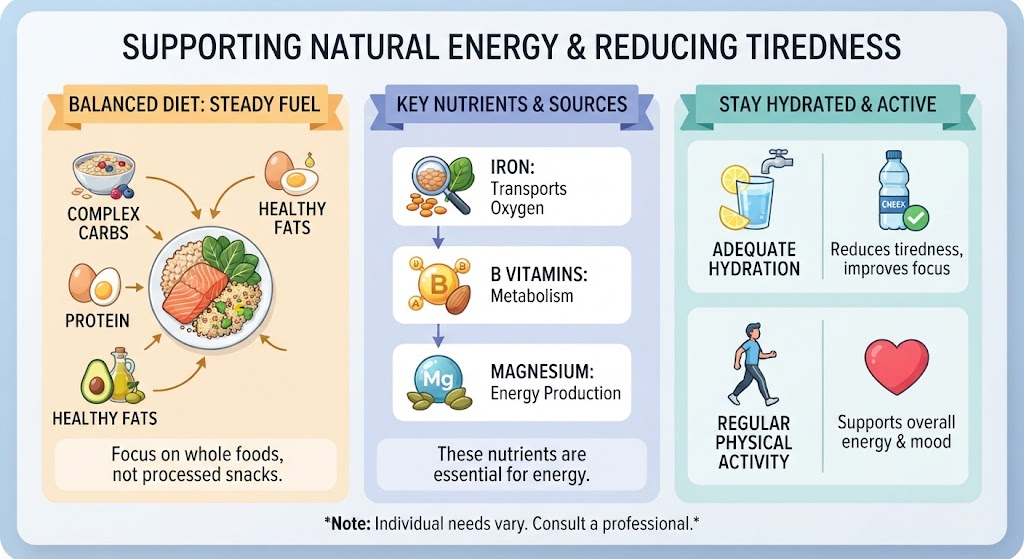
Your body gets energy primarily from carbohydrates, fats and proteins. Carbohydrates are broken down into glucose which can be used as an important source of energy. Fats provide a concentrated source of energy while protein supplies amino acids needed for muscles, tissues, enzymes and many other functions.
However, eating more calories does not necessarily mean having more energy. The quality, timing and balance of your meals can also matter.
For example a meal dominated by refined carbohydrates and added sugars may provide quick energy but may not keep you satisfied for very long. A balanced meal containing complex carbohydrates, protein, fiber and healthy fats can provide a broader range of nutrients and help support steady energy.
Hydration also matters. Even mild dehydration can contribute to feelings of tiredness and reduced concentration.
Nutrients That Help Support Natural Energy
Several nutrients are particularly important for normal energy metabolism and overall vitality.
Complex Carbohydrates
Carbohydrates are an important fuel source for the body. Whole grains, fruits, vegetables, beans and lentils can provide carbohydrates along with fiber and other nutrients.
Protein
Protein helps build and maintain muscles and tissues. Including protein with meals and snacks can also make foods more filling.
Healthy Fats
Unsaturated fats found in foods such as nuts, seeds, avocado, olive oil and fatty fish provide energy and support many normal body functions.
Iron
Iron is involved in transporting oxygen through the body. Low iron status can contribute to tiredness and weakness particularly when a deficiency develops.
Food sources include lentils, beans, leafy greens, meat, seafood, eggs and fortified foods.
B Vitamins
Several B vitamins participate in the body’s normal energy metabolism. They are found in foods including whole grains, eggs, meat, dairy products, legumes, leafy greens, nuts and seeds.
Magnesium
Magnesium contributes to many biochemical reactions including processes involved in energy production.
Good sources include pumpkin seeds, almonds, beans, whole grains, leafy greens and avocado.
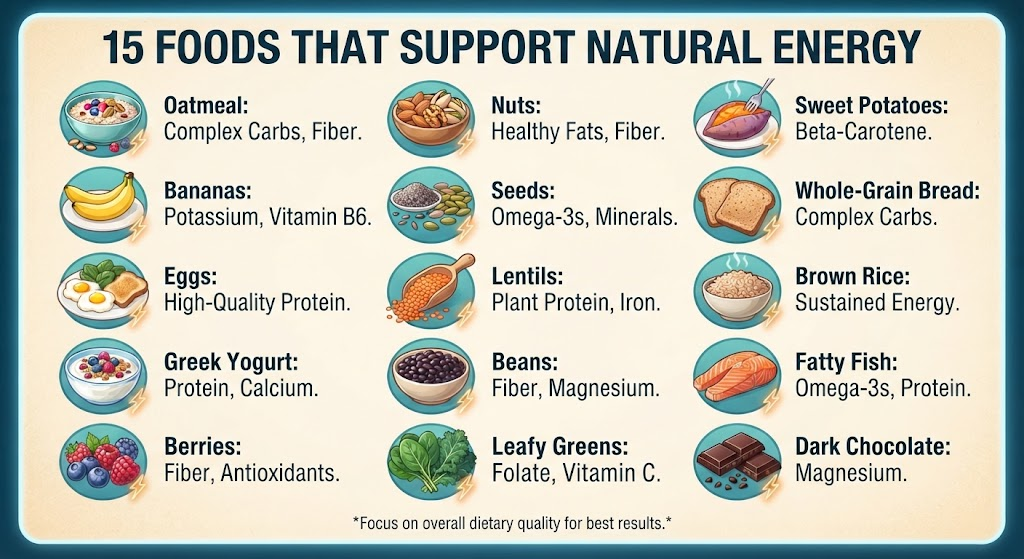
15 Foods That Support Natural Energy
1. Oatmeal
Oats are an excellent breakfast choice for sustained nutrition. They provide complex carbohydrates, fiber, magnesium and other nutrients.
Instead of relying on heavily sweetened instant oatmeal try plain oats topped with:
- Berries
- Banana
- Chia seeds
- Walnuts
- Cinnamon
- Plain Greek yogurt
Combining oats with protein and healthy fats can make breakfast more satisfying.
2. Bananas
Bananas are a convenient source of carbohydrates and provide potassium and vitamin B6.
They can be particularly practical before physical activity because they are portable and easy to digest for many people.
For a more balanced snack, pair a banana with peanut butter, Greek yogurt or a small handful of nuts.
3. Eggs
Eggs provide high quality protein along with several vitamins and minerals.
A protein rich breakfast may help you feel satisfied and provide nutrients needed for normal body function.
Try scrambled eggs with spinach and whole grain toast for a balanced morning meal.
4. Greek Yogurt
Plain Greek yogurt provides protein, calcium and other nutrients.
It can make an excellent snack when paired with berries, nuts, seeds or fruit.
Choose unsweetened varieties when possible to reduce unnecessary added sugar.
5. Berries
Blueberries, strawberries, raspberries and blackberries provide carbohydrates, fiber, vitamin C and various plant compounds.
They can add natural sweetness to breakfast without relying heavily on added sugar.
Add berries to oatmeal, yogurt, smoothies or whole grain cereal.
6. Nuts
Almonds, walnuts, pistachios and other nuts provide healthy fats, protein, fiber, magnesium and other nutrients.
A small handful can be a convenient snack when you need something more substantial than a sugary treat.
Because nuts are energy dense, moderate portions are generally appropriate.
7. Seeds
Chia seeds, pumpkin seeds, flaxseeds and sunflower seeds provide healthy fats, fiber, protein and minerals.
Pumpkin seeds are particularly rich in magnesium, while chia and flax seeds provide plant based omega-3 fatty acids.
Sprinkle seeds over oatmeal, yogurt, salads or smoothies.
8. Lentils
Lentils provide complex carbohydrates, plant protein, fiber, iron and other minerals.
Their combination of protein and fiber makes them a useful ingredient for satisfying meals.
Try lentil soup, lentil curry or a lentil and vegetable grain bowl for lunch or dinner.
9. Beans
Black beans, kidney beans, chickpeas and other legumes can contribute carbohydrates, protein, fiber, iron, magnesium and other nutrients.
They can be added to salads, soups, chili, wraps and grain bowls.
Including beans regularly can also help increase overall dietary fiber intake.
10. Leafy Green Vegetables
Spinach, kale, collard greens and other leafy vegetables provide folate, magnesium, vitamin C, vitamin K and other nutrients.
Some leafy greens also provide iron.
Add greens to eggs, soups, smoothies, stir fries or salads to increase the nutritional value of meals.
11. Sweet Potatoes
Sweet potatoes provide carbohydrates, fiber, potassium and beta-carotene.
They can be roasted, baked, mashed or added to grain bowls.
Pair a baked sweet potato with beans, chicken, fish or another protein source for a balanced meal.
12. Whole Grain Bread
Whole grain bread can provide complex carbohydrates, fiber, B vitamins and minerals.
For a more balanced breakfast or snack top whole grain toast with eggs, avocado, cottage cheese or natural nut butter.
Check ingredient labels because some breads marketed as “multigrain” or “wheat” may not be primarily whole grain.
13. Brown Rice and Other Whole Grains
Brown rice, quinoa, barley, oats and other whole grains provide carbohydrates and fiber.
Whole grains can be useful foundations for lunch and dinner because they pair well with vegetables and protein.
For example, combine brown rice with grilled chicken, broccoli and avocado.
14. Fatty Fish
Salmon, sardines, trout and mackerel provide protein and omega-3 fatty acids.
Fatty fish can be part of an overall nutrient rich eating pattern and can help diversify your protein sources.
Serve fish with vegetables and a whole grain for a balanced meal.
15. Dark Chocolate
Dark chocolate with a high cocoa content can provide magnesium, iron and other plant compounds.
However, chocolate can also contain added sugar and significant calories so portion size matters.
A small amount can be paired with nuts or fruit as an occasional snack.
Best Foods for Morning Energy
Breakfast does not need to be large to be nutritious. The goal is to combine several nutrients that can help provide sustained nourishment.
Good breakfast combinations include:
Oatmeal + berries + walnuts + Greek yogurt
Eggs + whole-grain toast + avocado + vegetables
Plain yogurt + banana + chia seeds + almonds
Whole grain toast + peanut butter + sliced banana
The best choice depends on your appetite, schedule, activity level and dietary preferences.
Healthy Snacks for Sustained Energy
Instead of reaching for candy, pastries or sugary drinks when hunger strikes, consider snacks that combine carbohydrates with protein, fiber or healthy fats.
Examples include:
- Apple with peanut butter
- Banana with almonds
- Greek yogurt with berries
- Hummus with vegetables
- Whole grain crackers with cheese
- Hard boiled egg with fruit
- Trail mix containing nuts and seeds
- Cottage cheese with berries
These options can provide a wider range of nutrients than many highly processed snacks.
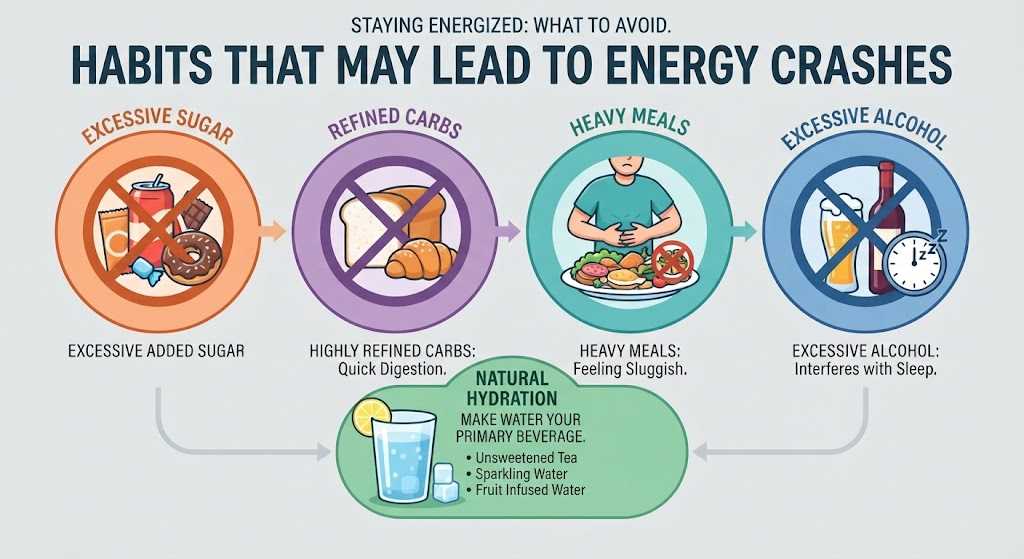
Foods That May Contribute to Energy Crashes
Certain eating habits can make it harder to maintain steady energy.
Excessive Added Sugar
Sugary drinks, candy, pastries and other foods high in added sugar can provide lots of calories without many essential nutrients.
Highly Refined Carbohydrates
White bread, some sweetened cereals, pastries and other refined carbohydrate foods may be digested quickly.
This does not mean these foods must be completely eliminated but choosing whole or minimally processed carbohydrate sources more often can improve overall diet quality.
Heavy Meals
Very large meals can leave some people feeling sluggish particularly if they contain substantial amounts of fat and refined carbohydrates.
Smaller balanced meals may work better for some individuals.
Excessive Alcohol
Alcohol can interfere with sleep quality and contribute to dehydration which may leave you feeling tired the following day.
Hydration and Natural Energy
Water is essential for numerous processes in the body.
Not drinking enough fluids can contribute to headaches, reduced concentration and feelings of fatigue.
Make water your primary beverage and consider drinking regularly throughout the day rather than waiting until you are extremely thirsty.
Other options can include:
- Unsweetened tea
- Sparkling water
- Water infused with fruit
- Low sugar beverages
Remember that hydration needs vary based on factors such as activity, temperature, diet and individual health.
How to Build a Meal for Sustained Energy
A simple meal building formula can help you create balanced dishes without complicated calculations.
Start with a high fiber carbohydrate
Choose oats, brown rice, quinoa, beans, lentils, sweet potatoes or whole grain bread.
Add protein
Consider eggs, fish, chicken, Greek yogurt, tofu, beans, lentils or cottage cheese.
Add vegetables or fruit
Include colorful produce to increase fiber, vitamins, minerals and plant compounds.
Add healthy fat
Use avocado, nuts, seeds or olive oil.
For example, a quinoa bowl with chickpeas, spinach, roasted vegetables, avocado and olive oil provides carbohydrates, protein, fiber and healthy fats in one meal.
Sample One Day Meal Plan for Natural Energy
Breakfast
Oatmeal with blueberries, banana slices, chia seeds, walnuts and plain Greek yogurt.
Morning Snack
An apple with a small serving of almonds.
Lunch
Grilled chicken or chickpea salad with leafy greens, cucumber, tomatoes, avocado and quinoa.
Afternoon Snack
Plain Greek yogurt with strawberries and pumpkin seeds.
Dinner
Grilled salmon with roasted sweet potato and steamed broccoli.
Evening Option
If you are genuinely hungry, consider a small serving of fruit with plain yogurt or a handful of nuts.
This meal plan is a general example rather than a personalized nutrition prescription.
Lifestyle Habits That Support Energy
Food is only one factor affecting tiredness. Several everyday habits can influence energy levels.
Get Consistent Sleep
Most adults benefit from a regular sleep schedule and adequate sleep duration. Poor sleep can make it harder to feel energetic even when your diet is nutritious.
Stay Physically Active
Regular movement can support cardiovascular fitness, muscle function, mood and overall health.
Manage Stress
Long term stress can contribute to fatigue and poor sleep. Relaxation techniques, social connection, outdoor activity and other stress management strategies may help.
Eat Regularly
Some people feel better when meals and snacks are distributed relatively consistently throughout the day.
However, meal timing can vary considerably between individuals.
When Tiredness May Need Medical Attention
Occasional tiredness is normal but persistent or unexplained fatigue should not automatically be blamed on diet.
Ongoing tiredness can have many possible causes, including insufficient sleep, stress, certain nutrient deficiencies, medications, infections, thyroid problems, anemia, sleep disorders and other health conditions.
If fatigue is persistent, severe, worsening, or accompanied by other concerning symptoms, talk with a healthcare professional.
A healthcare professional can help determine whether testing or other evaluation is appropriate.
Frequently Asked Questions
What foods give you energy naturally?
Foods containing complex carbohydrates, protein, healthy fats, vitamins and minerals can support normal energy production. Examples include oats, bananas, eggs, Greek yogurt, beans, lentils, nuts, seeds, whole grains, sweet potatoes, leafy greens and fatty fish.
What is the best food to eat when feeling tired?
There is no single best food for everyone. A balanced snack containing carbohydrates plus protein or healthy fat can be a practical option. Examples include an apple with peanut butter, yogurt with berries or a banana with nuts.
Can bananas help with tiredness?
Bananas provide carbohydrates and potassium and can be a convenient source of fuel. Pairing a banana with protein or healthy fat can create a more balanced snack.
What should I eat for sustained energy?
Meals based on whole grains, vegetables, fruits, legumes, protein rich foods, nuts, seeds and healthy fats can provide a broad range of nutrients. Combining carbohydrates with protein and fiber can also make meals more satisfying.
Can drinking more water reduce tiredness?
If you are not getting enough fluids, improving hydration may help with symptoms associated with dehydration. However, persistent tiredness can have many causes and should not automatically be attributed to dehydration.
Are energy drinks a good way to fight tiredness?
Energy drinks can contain substantial amounts of caffeine and added sugar. They may temporarily increase alertness but they are not a substitute for adequate sleep, balanced nutrition and healthy lifestyle habits. Excessive caffeine can also interfere with sleep.
Conclusion
Choosing the right foods can help provide the nutrients your body needs for normal energy metabolism and everyday activity. Foods that support natural energy, including oats, bananas, eggs, Greek yogurt, berries, nuts, seeds, beans, lentils, leafy greens, sweet potatoes, whole grains and fatty fish can form the foundation of a balanced diet.
The key is not to depend on one “energy boosting” food. Instead, build balanced meals that combine high fiber carbohydrates, protein, healthy fats, fruits and vegetables. Staying hydrated, getting adequate sleep, staying physically active and managing stress are equally important for maintaining healthy energy levels.
If you regularly feel tired despite eating well and getting enough rest, consider speaking with a healthcare professional. Persistent fatigue may have an underlying cause that requires attention.
With consistent nutrition and healthy daily habits, you can create a sustainable approach to supporting natural energy and reducing everyday tiredness.
One response
[…] than focusing on a single “superfood” it is more useful to think about your overall eating pattern. A variety of minimally processed […]